
28-04-2026 20:07
 Lothar Krieglsteiner
... on twig in the air at standing Ceratonia siliq
11-05-2026 12:32
 Bernard CLESSE
Pourriez-vous m'aider à identifier cette héloti
29-04-2026 10:44
Lothar Krieglsteiner
growing at moist, drying-out soil at the side of a
05-04-2026 22:46
Lothar Krieglsteiner
on wood of Ceratonia, Algarve, 3.4.2026.The color
10-05-2026 16:18
brigitte vignotbonjour trouvée en Ariège sur bois une petite
10-05-2026 23:17
 Andreas Gminder
Hello,today we found in a moist steep decidous for
27-04-2026 17:16
Lothar Krieglsteiner
.. Algarve, moist lying.The conidiomata look like
10-05-2026 09:02
Buckwheat PeteHello everybody, ould this be Lachnum subvirgineu
unknown chaetomium
Joop van der Lee,
13-11-2013 14:20
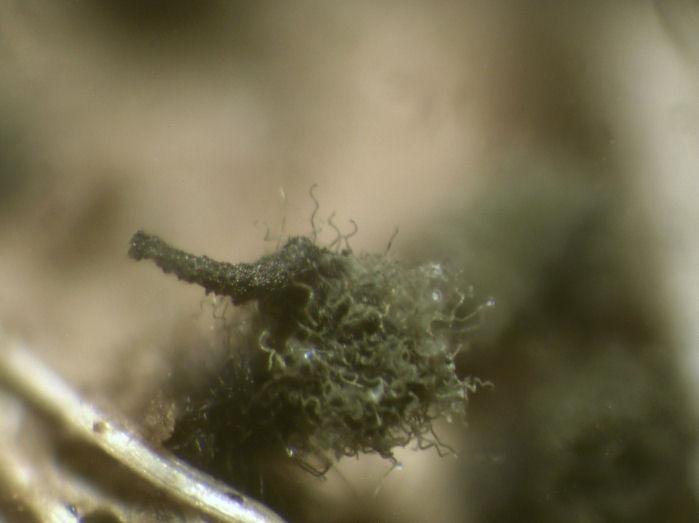
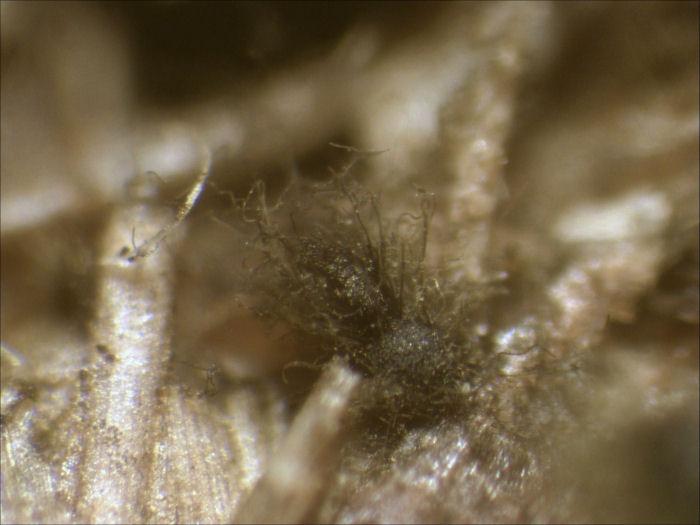
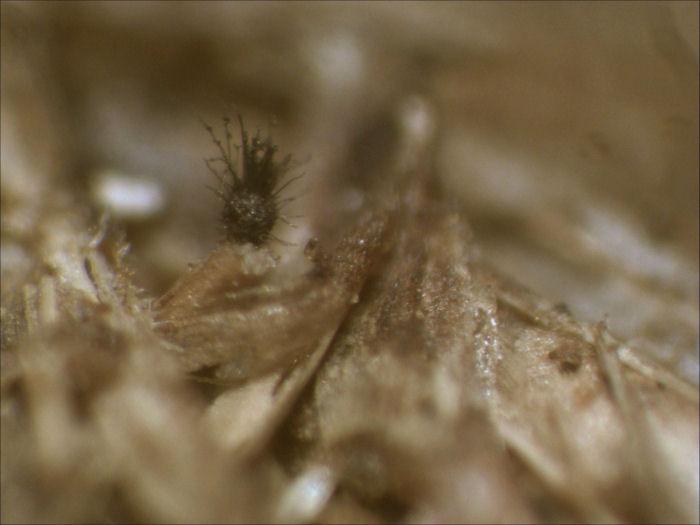
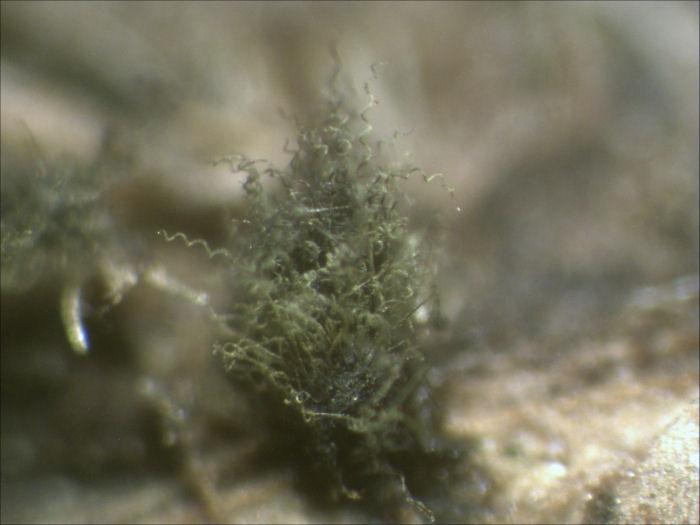
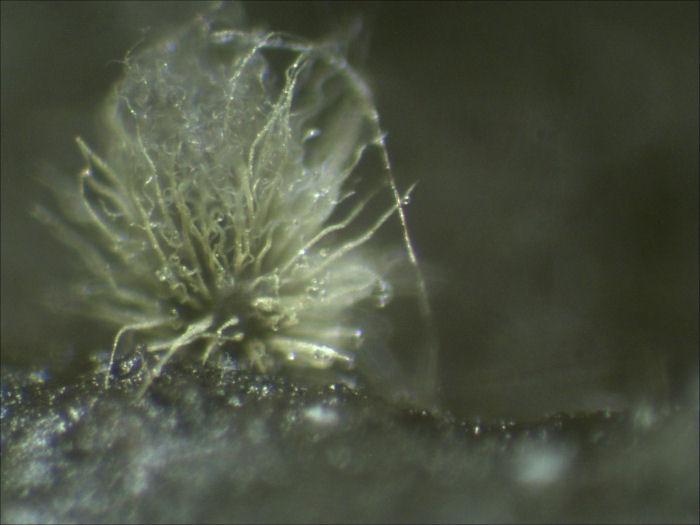
 Found on horse dung also found on sheep dung in the same area.
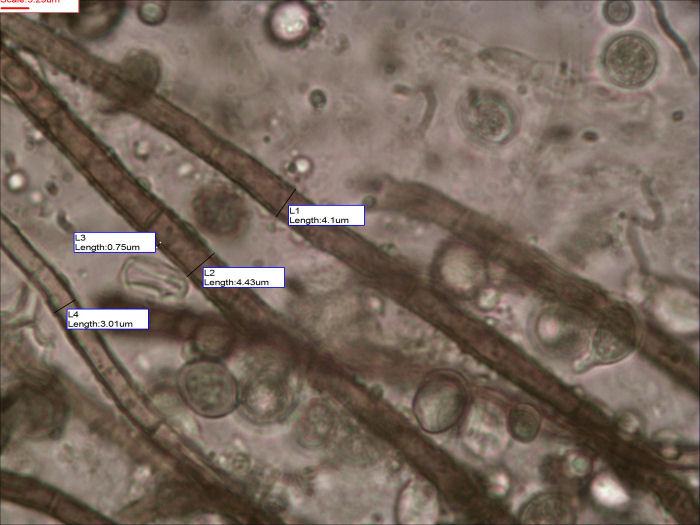
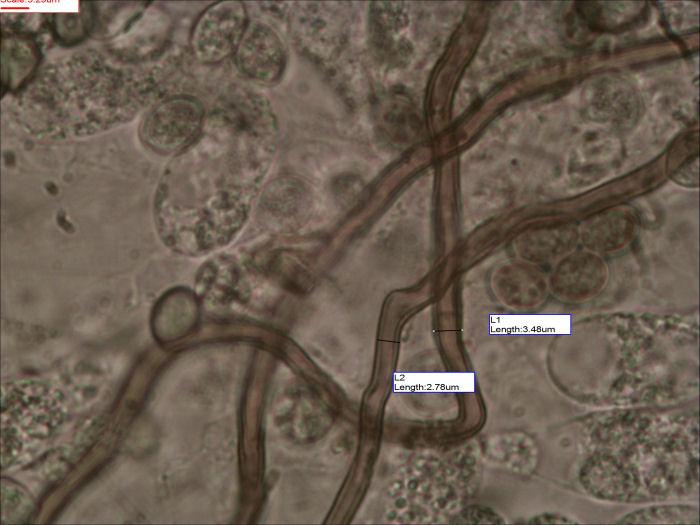
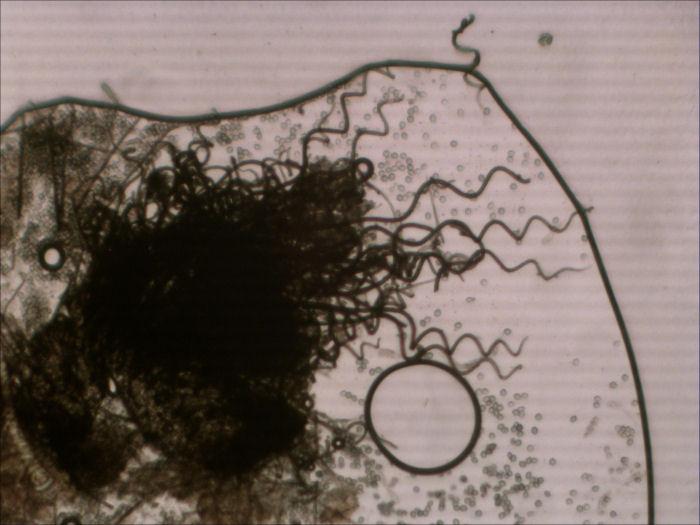
Perithium is covered with non septated, non crustated, thickwalled curled hairs 2.7u8-3.48 um wide
Upper part has rigid stiff and curled, septated thick walled hairs 4.27-5.22 um wide.
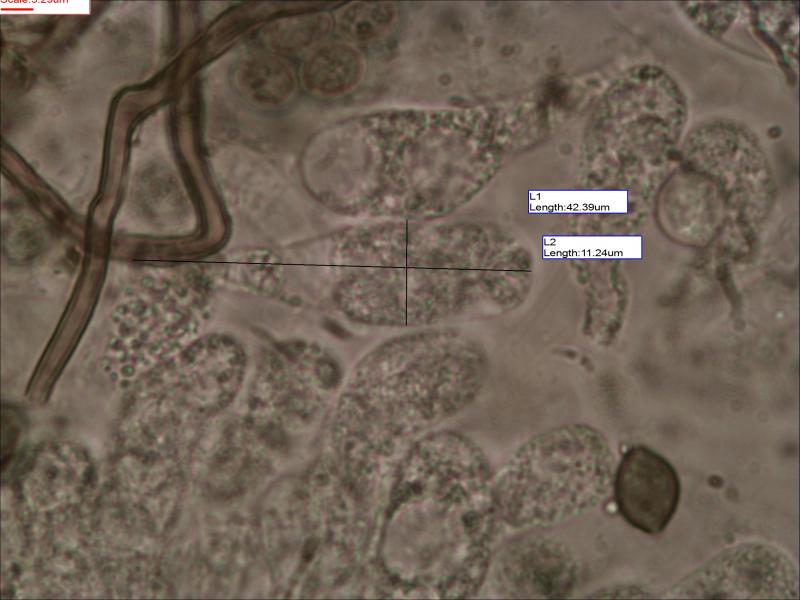
Asci: 8-spored, 42.39x11.24 um
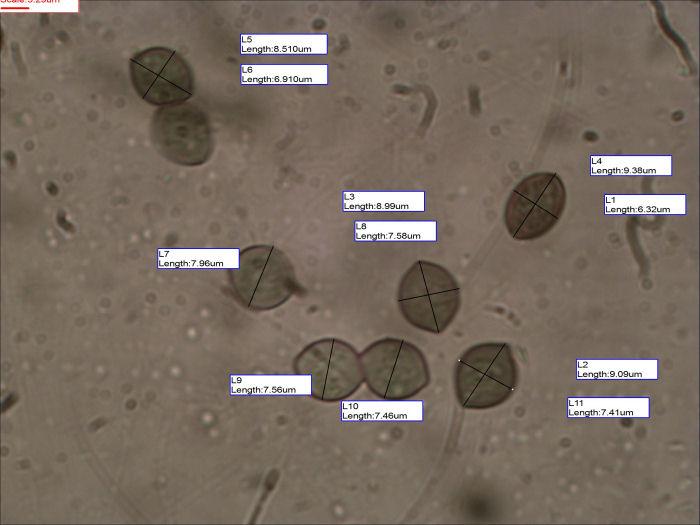
Spores: lemon shaped, 8.51-9.38xs7.41-7.96x6.32-6.91 um
When young they have an olive-green colour.
It also has a funnel to assist in releasing spores, when process is completed only the fruitbody with rigid non curling hairs remain.
Norbert Heine,
13-11-2013 17:45

Re : unknown Chaetomium
Hello Joop,
species of the genus Chaetomium are difficult to determinate!
It needs a lot of literature like Arx et al - The Ascomycete Genus Chaetomium, 1986 or Doveri - An update on the genus Chaetomium, PdM 29, 2008.
And it needs a lot of experience and patience.
Even then the determination is not easy!
There are some species with nearly the same spore size and similar hairs!
Maybe that your species is Ch. crispatum, but Ch. convolutum is also an option.
The common Ch. bostrychodes has similar, but slightly smaller spores.
An updated world wide key you can find in the latest work by Francesco Doveri.
http://www.mycosphere.org/pdfs/MC4_4_No17.pdf
Best wishes
Norbert
species of the genus Chaetomium are difficult to determinate!
It needs a lot of literature like Arx et al - The Ascomycete Genus Chaetomium, 1986 or Doveri - An update on the genus Chaetomium, PdM 29, 2008.
And it needs a lot of experience and patience.
Even then the determination is not easy!
There are some species with nearly the same spore size and similar hairs!
Maybe that your species is Ch. crispatum, but Ch. convolutum is also an option.
The common Ch. bostrychodes has similar, but slightly smaller spores.
An updated world wide key you can find in the latest work by Francesco Doveri.
http://www.mycosphere.org/pdfs/MC4_4_No17.pdf
Best wishes
Norbert