
26-05-2026 22:44
Ethan CrensonHi all, I think I have Incrucipulum capitatum her
26-05-2026 21:25
Dirk GerstnerHello everyone, I'm completely stumped by this li
22-05-2026 14:44
 Lothar Krieglsteiner
in unripe condition citrine yellow, then soon fadi
25-05-2026 16:44
François BartholomeeusenHi forum members,During an excursion organised by
23-05-2026 11:44
 Charles Grapinet
Hello, I am having trouble identifying this copro
25-05-2026 16:35
 Bernard CLESSE
Bonjour à toutes et tous,J'ai trouvé récemment,
22-05-2026 13:29
Gernot FriebesHi,I am curious to hear your opinion on this mater
23-05-2026 18:57
Sylvie Le GoffBonjour à tousRécolté sur une branchette de Sal
22-05-2026 21:35
Steve ClementsBonjour, I expected this find on old wood on our
Allophylaria clavuliformis?
Marcus Yeo,
07-10-2013 20:56
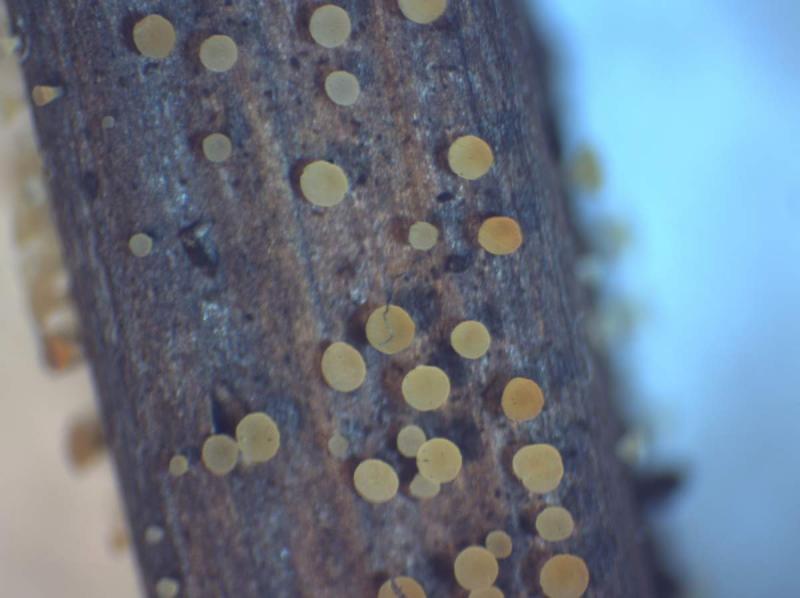
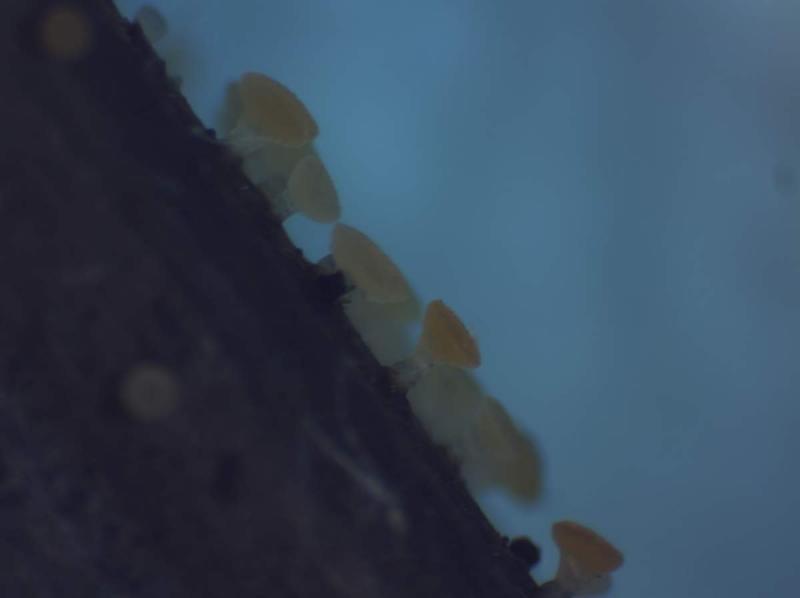
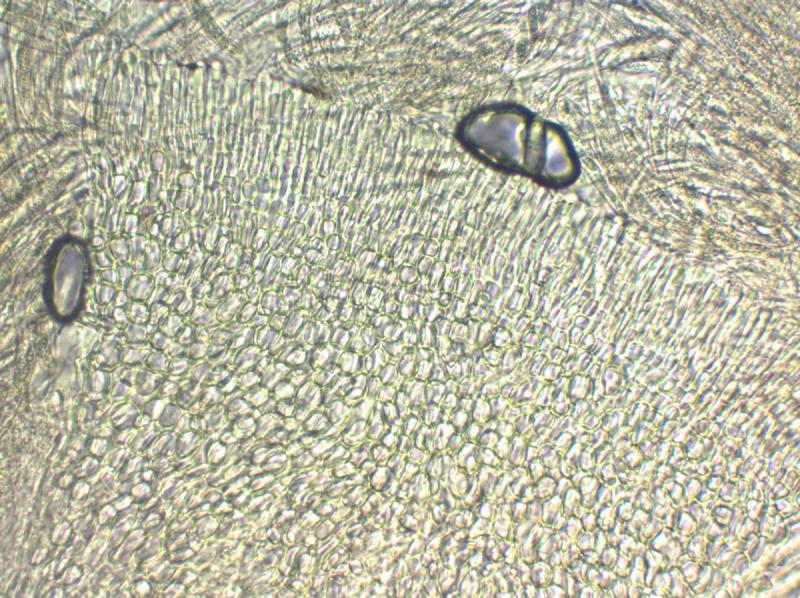
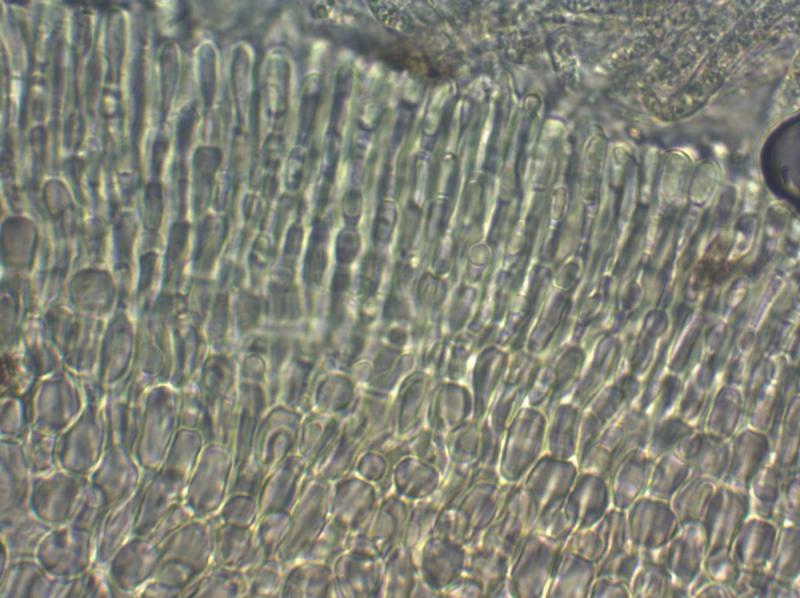
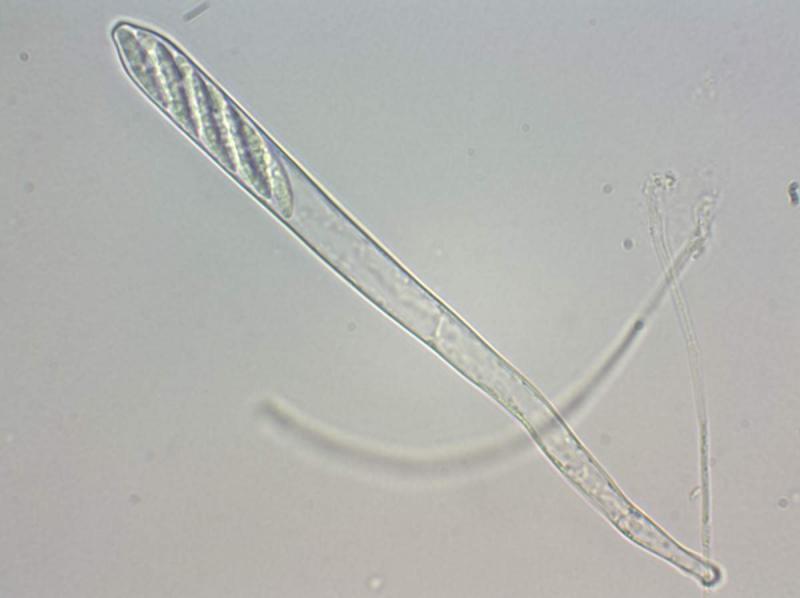
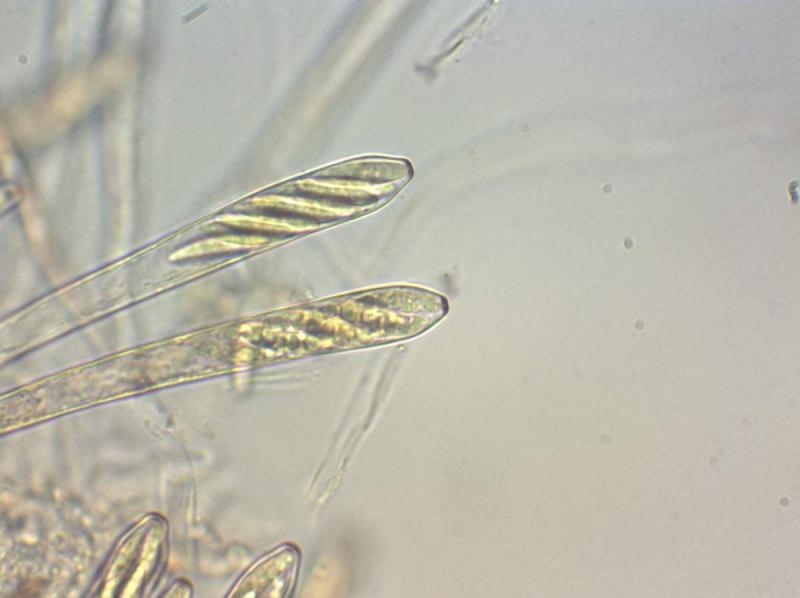
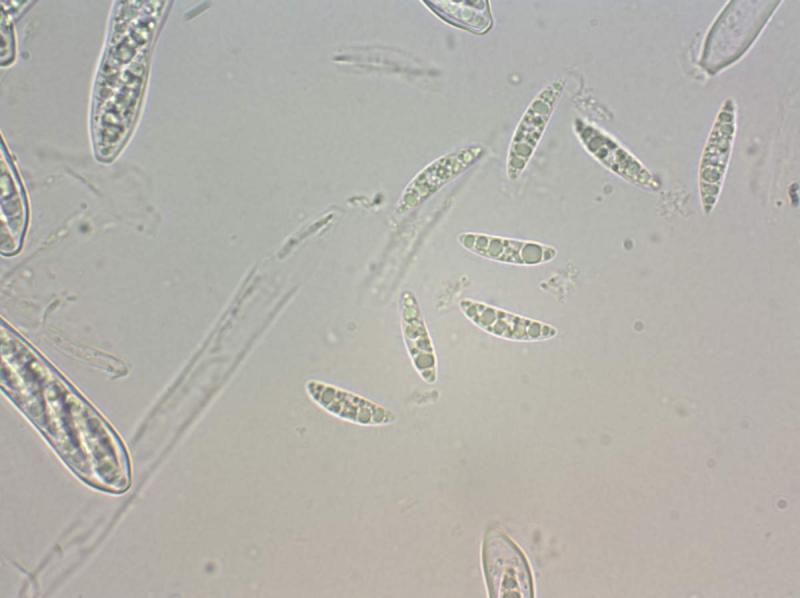
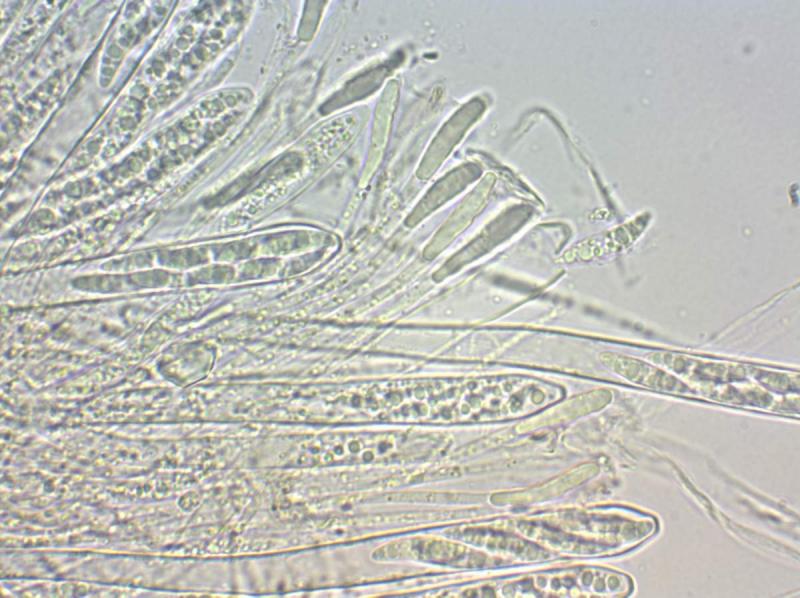
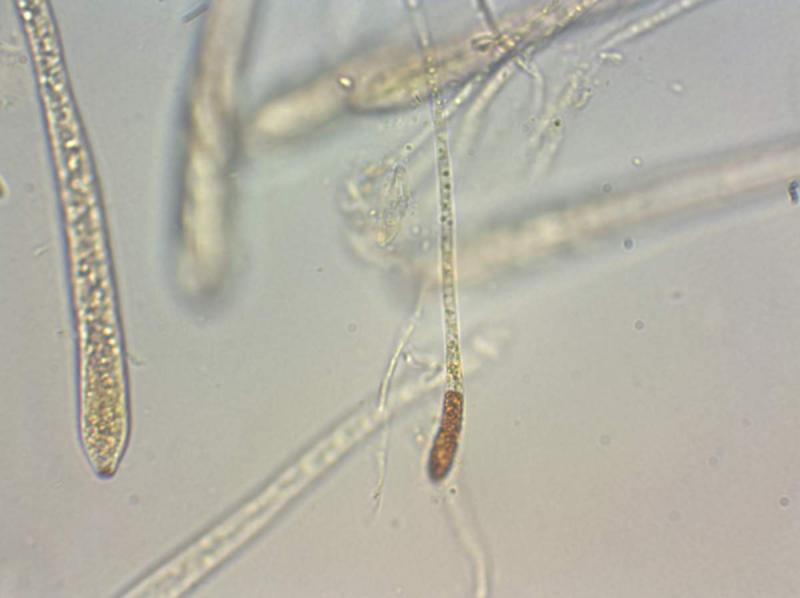
Apothecia are < ca 0.5 mm across; pale yellow with a short white stalk. Excipular cells are rectangular away from the margin, longer and thick-walled towards the margin (textura oblita?).
Asci are 110-130 x 7-9 µm; tip turning red in IKI.
Spores are 15-16 x 3.5-4 µm; no septa; with several large oil bodies and many smaller ones; some flattened on one side.
Paraphyses are ca 1-2 µm wide, with slightly swollen tips with conspicuous oily contents.
Because of the ascus reaction to IKI and the excipular structure, I provisionally identified it as an Allophylaria. A clavuliformis seems to be the best fit, but I have very little information on this species. I'd be grateful for any guidance.
Thanks in advance.
Marcus
Michel Hairaud,
07-10-2013 23:14

Re : Allophylaria clavuliformis?
Hi Marcus,
Did you consider A. Byssacea ?
It's not rare in wet zones such as Le Marais Poitevin, and Lycopus europaeus is the most frequent substrate.
Amitiés
Michel
Did you consider A. Byssacea ?
It's not rare in wet zones such as Le Marais Poitevin, and Lycopus europaeus is the most frequent substrate.
Amitiés
Michel
Hans-Otto Baral,
08-10-2013 08:29

Re : Allophylaria clavuliformis?
Yes I agree. Wonderful documentation!
Zotto
Zotto
Marcus Yeo,
08-10-2013 21:18
Re : Allophylaria clavuliformis?
Zotto - thank you for your help.
How does A. byssacea, which Michel mentions, differ from A. clavuliformis?
Hans-Otto Baral,
08-10-2013 21:53
Re : Allophylaria clavuliformis?
Good question!
I am unaware of a good redescription. Karsten published it 10 years after byssacea, and perhaps he thought - like me - that on dicots grows another fungus than on monocots.
I first thought the spores are wider on dicots but finally i gave up this distinction.
Zotto
I am unaware of a good redescription. Karsten published it 10 years after byssacea, and perhaps he thought - like me - that on dicots grows another fungus than on monocots.
I first thought the spores are wider on dicots but finally i gave up this distinction.
Zotto