
23-05-2026 11:44
 Charles Grapinet
Hello, I am having trouble identifying this copro
25-05-2026 16:44
François BartholomeeusenHi forum members,During an excursion organised by
25-05-2026 16:35
 Bernard CLESSE
Bonjour à toutes et tous,J'ai trouvé récemment,
22-05-2026 13:29
Gernot FriebesHi,I am curious to hear your opinion on this mater
23-05-2026 18:57
Sylvie Le GoffBonjour à tousRécolté sur une branchette de Sal
22-05-2026 14:44
 Lothar Krieglsteiner
in unripe condition citrine yellow, then soon fadi
22-05-2026 21:35
Steve ClementsBonjour, I expected this find on old wood on our
22-05-2026 18:12
Lothar Krieglsteiner
... in moist chamber from Portugal.As the fungus s
22-05-2026 20:08
Ethan CrensonHello all, Yesterday in NYC I was visiting an e
 Hi evrybody,
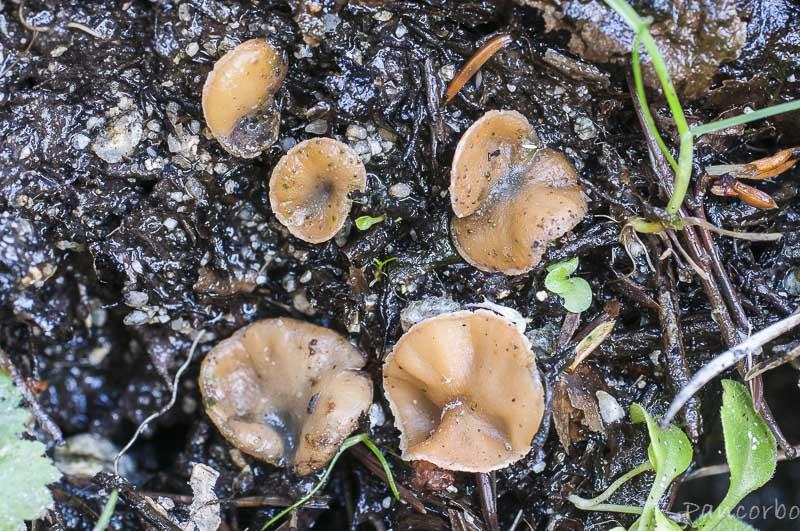
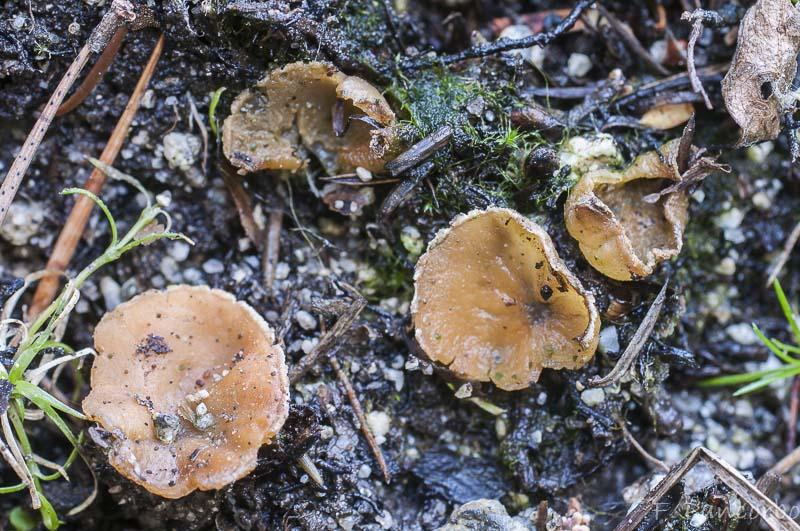
Apothecia 7-15mm in diameter, on a small slope of a mountain stream to 1826 m. in altitude between roots of Juniperus communis and next to bryophytes. Stalk very short, almost hidden in the adhering earth. Smell unpleasant, sulfurous components.
Microscopy:
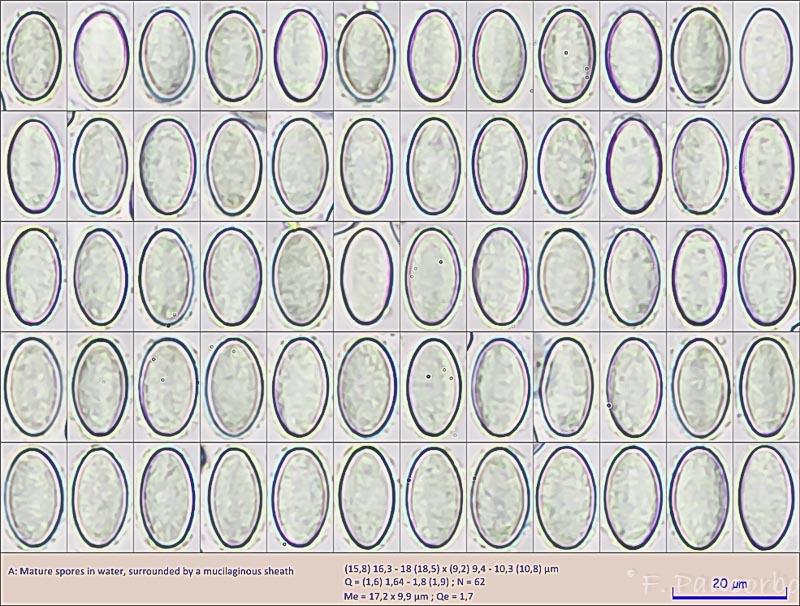
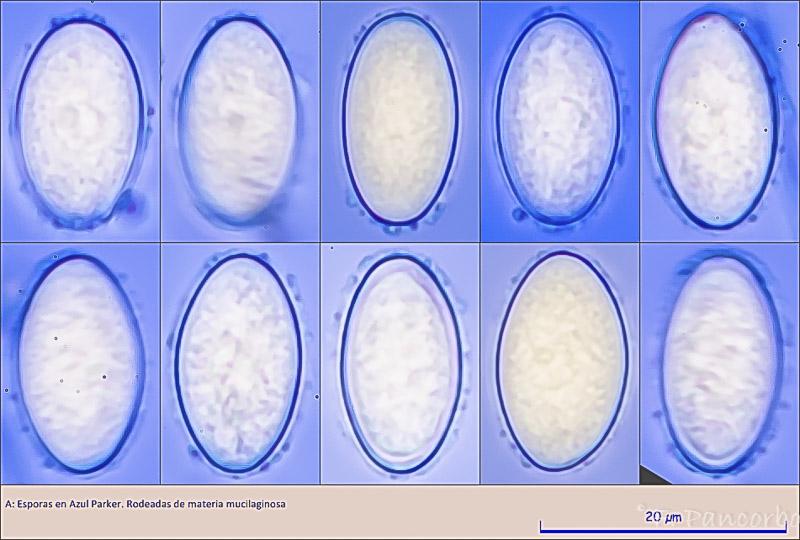
Spores oval, smooth, (15.8) 16.3 to 18 (18.5) x (9.2) 9.4 to 10.3 (10.8) µm, Q = (1.6) 1.64 to 1.8 (1.9), N = 62;I = 17.2 x 9.9 µm; Qe = 1.7, enveloped in a mucilaginous sheath (0.9) 0.95 to 1.5 (1.7) µm;Me = 1.2 µm.
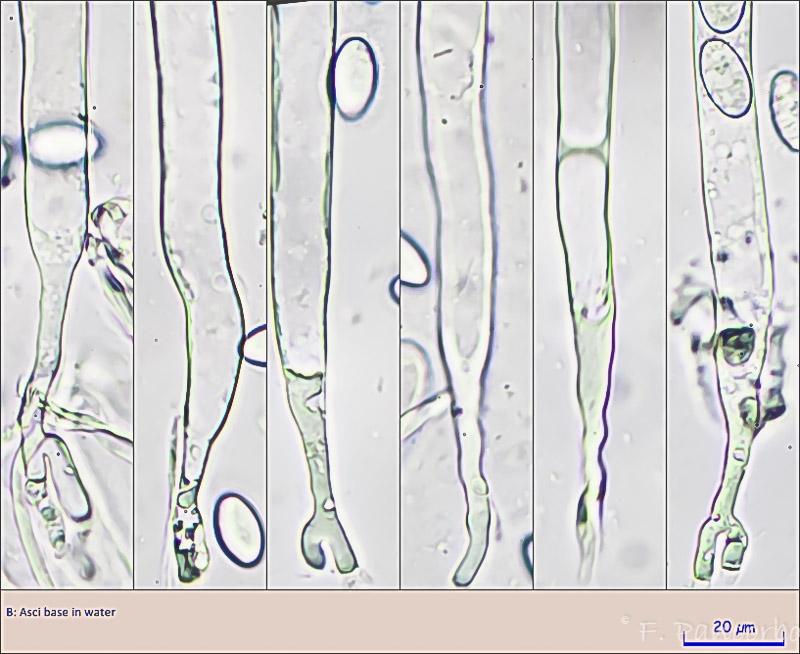
Asci no amyloid, 266.8 to 295.9 x 13.2 to 15.2 µm; I = 282.6 x 14.4 m. Bifurcated or single base.
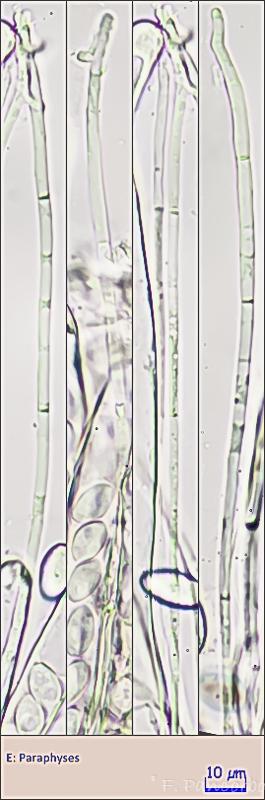
Paraphyses filiform, septate, slightly widened at apex, often with diverticulate growths.
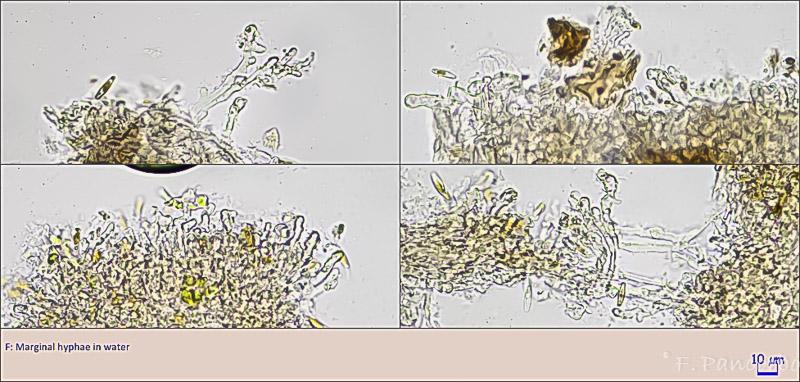
Marginal hyphae septate, sinuous and rather variable morphology, apex widened, more or less diverticulate (3.8) 3.9 to 6.9 (7.7) µm thick.
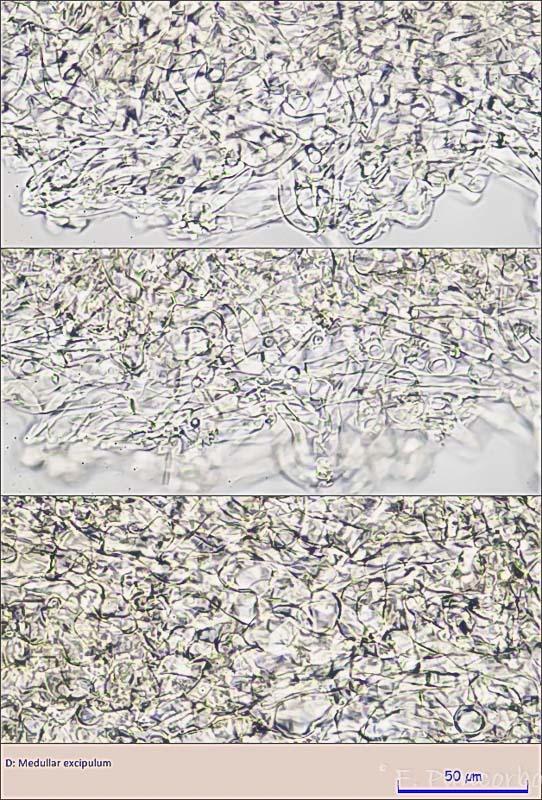
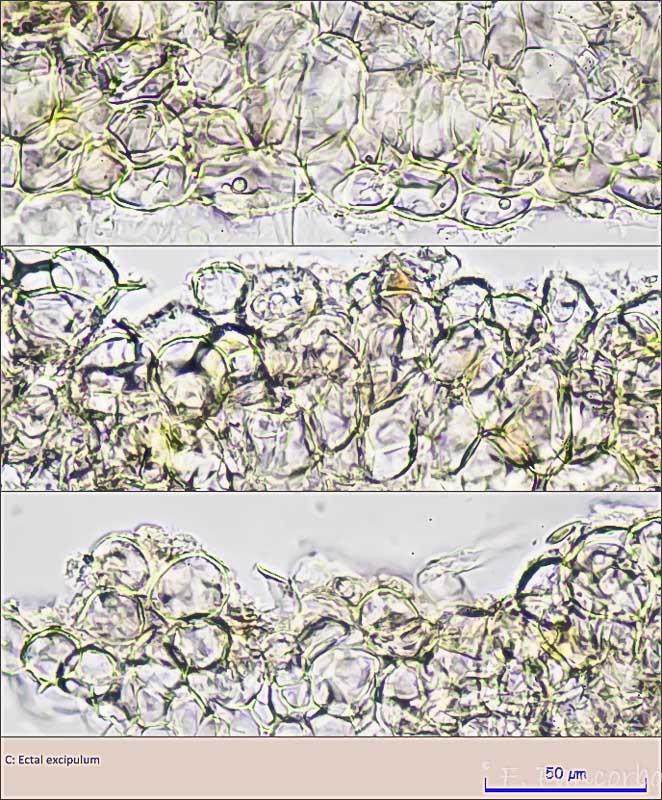
Texture of two types: under hymenium, texture intricata from 160.9 to 181.7µm formed by hyphae (4.5) from 5.1 to 8 (9.4) ?m. Then, texture
globuloso-angularis 90.7 to 102.89 µm, with elements of (17.3) 19.2 to 27.7 (28.8) µm in diameter.
According to the work "GARNWEIDNER, E., T. R. LOHMEYER, H. MARXMÜLLER (1991) Vel-Geopysis foetida., G. Alpine v. Taxa nahestehende und Höhnel - mehr als Fragen Antworten", mucilaginous sheath of spores and stipe barely evident, appears to be an important element that distinguishes Geopysis alpina.
My spores measurements are somewhat larger than those defined in this work, but I do not know how important it can be.
I would like to seek your opinion on this collection.
I have write Geopysis instead of Geopyxis!!

Hi Fermin.
This collection enters in the alpina/foetida complex. I sequenced collections with and without smell, and all are the same...
Nico
I'm afraid that.