
29-05-2026 15:35
daniel FERREBonjour à tous,Je voudrais votre aide pour cette
28-05-2026 16:15
James MitchellHello,Does anyone have the original publication of
28-05-2026 11:06
Thomas Læssøehttps://svampe.databasen.org/observations/10596750
23-05-2026 11:44
 Charles Grapinet
Hello, I am having trouble identifying this copro
25-05-2026 16:44
François BartholomeeusenHi forum members,During an excursion organised by
26-05-2026 21:25
Dirk GerstnerHello everyone, I'm completely stumped by this li
26-05-2026 22:44
Ethan CrensonHi all, I think I have Incrucipulum capitatum her
22-05-2026 14:44
 Lothar Krieglsteiner
in unripe condition citrine yellow, then soon fadi
25-05-2026 16:35
 Bernard CLESSE
Bonjour à toutes et tous,J'ai trouvé récemment,
22-05-2026 13:29
Gernot FriebesHi,I am curious to hear your opinion on this mater
 Ascomas azulados, latex acuoso al corte
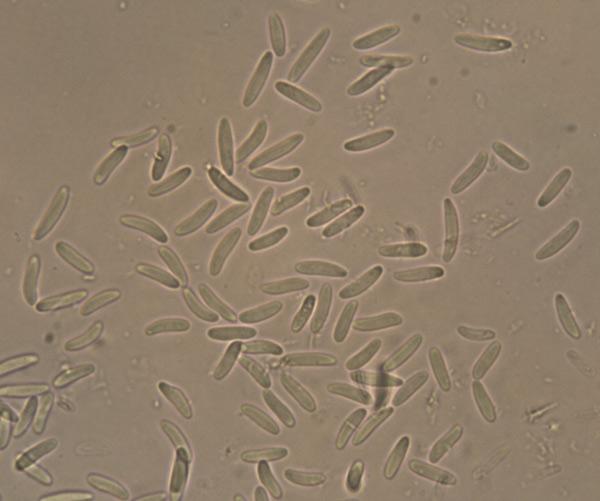
Esporas 9-14 x 2-3, fusiformes, curvadas y lisas.
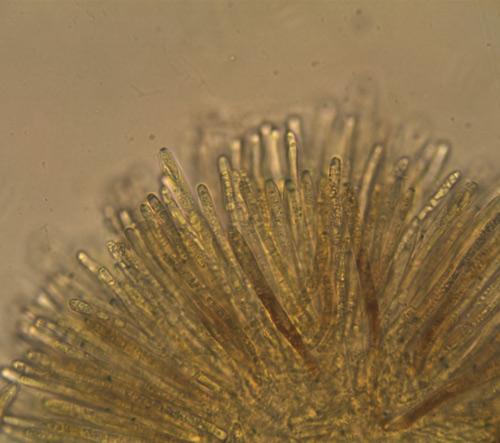
Parafisis 60-70 x 3-4 cilindricas, sin septos y llenas de aceite refringente.
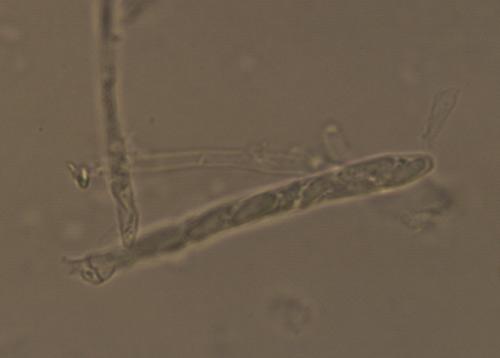
Ascas 60-75x5,6, 8 esporas, biseriadas, croziers +, IKI+.
Hifas basales marrones, alargadas y septadas.
Excipulo de estructura globosa.
Dudo entre Tapesia lividofusca y Tapesia fusca.
Alguna idea?
Saludos
Javier
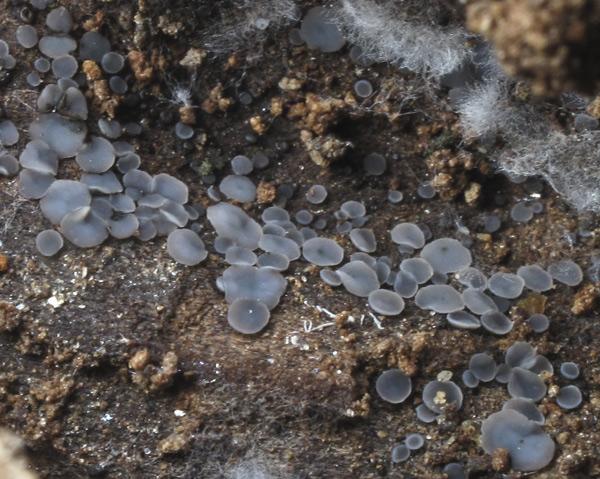
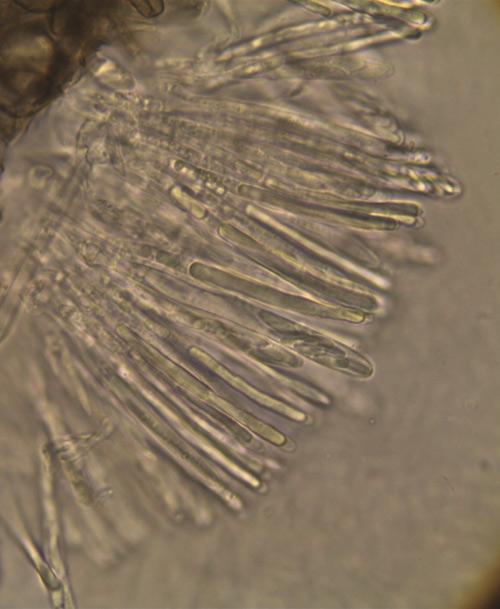
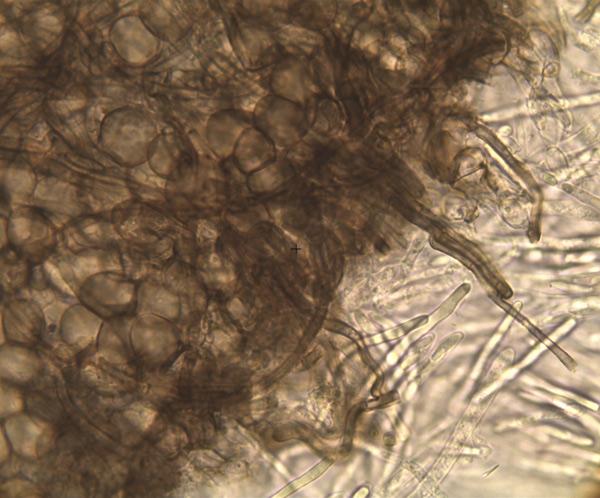
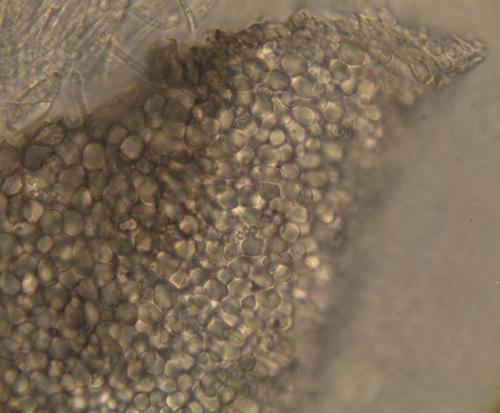

Normally, Mollisia (Tapesia) lividofusca should be quite easy to recognize.
Did you look at Andreas Gminder's key? http://www.mollisia.de/Word_Dokumente/key.doc? (in English)
Now you have to make a thin cut o the apothecia and check the ectal excipulum and the medullar excipulum (or subhymenium). In M. lividofusca, the subhymenium is partially colored in brown. Kinda like on this photo below.
With the colors of the apothecia's, not especially dark externally, my guess would rather be Mollisia (Tapesia) fusca. (Tapesia is now grouped with Mollisia, because there's a gradient in the thickness of the subiculum, and intermediates.)
Cheers - LUC.
EDIT: More here: http://www.ascofrance.fr/search_recolte/1365?
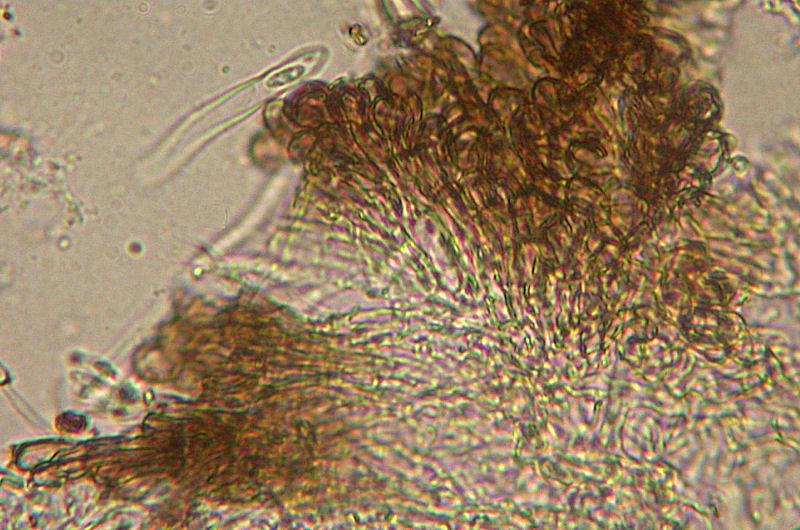
Hola Luc, en cuanto pueda hare la preparación que me indicas, es normal una medida esporal tan larga para T. fusca?
Gracias y saludos
Javier
The spores size matches fine with Mollisia fusca: yours are a bit smaller, but that's not annoying IMO. Also, there are no oil drops visible in the spores of your sample, with matches fine with M. fusca as well.
Cheers - LUC.

I am not sure with fusca. That species has well some oil droplets near the ends. But a striking feature is the yellow KOH reaction. You can check this also macroscopically, as is seen in this photo made from M. fusca by Ingo Wagner. Also the characteristic prominent subiculum can be seen on this photo.
Zotto
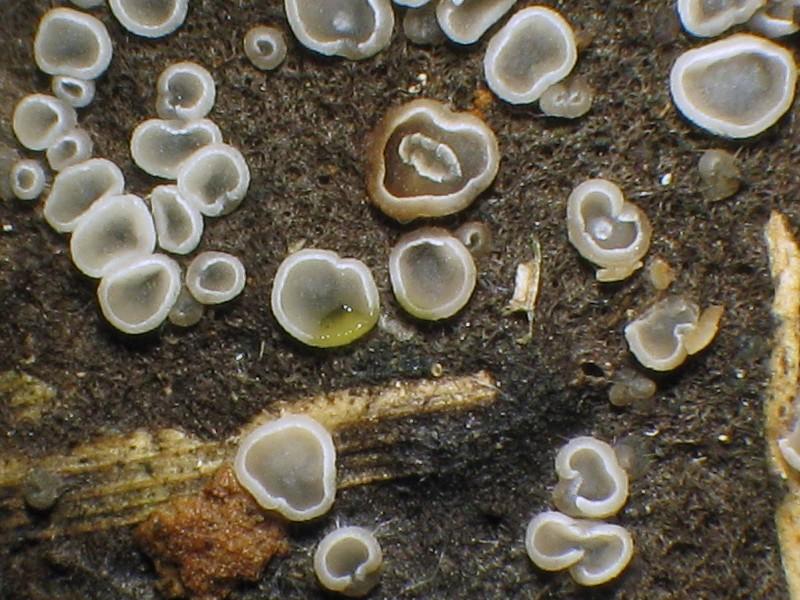
Hola Zotto, la reacción al KOH no es amarilla, esto ya descarta T fusca?.
Gracias
Javier
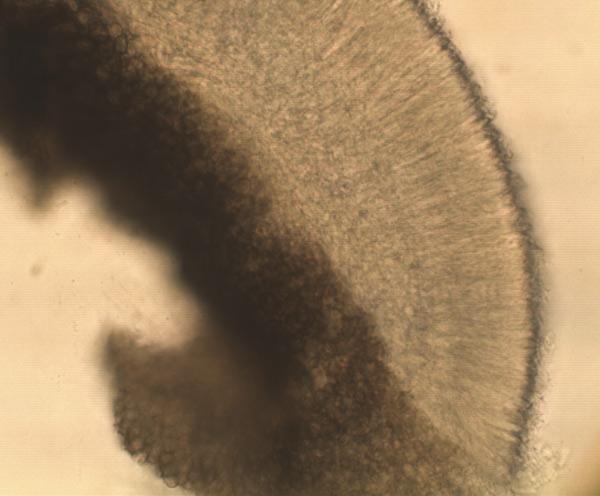
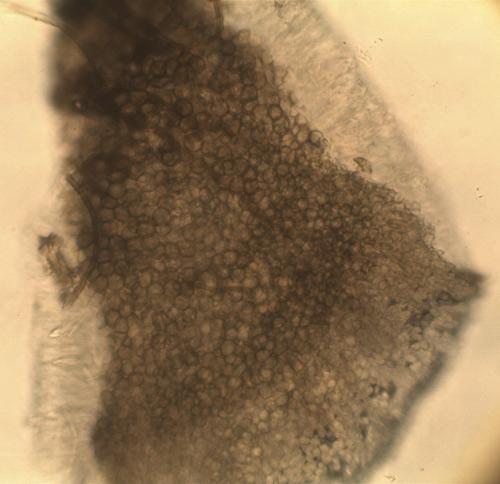
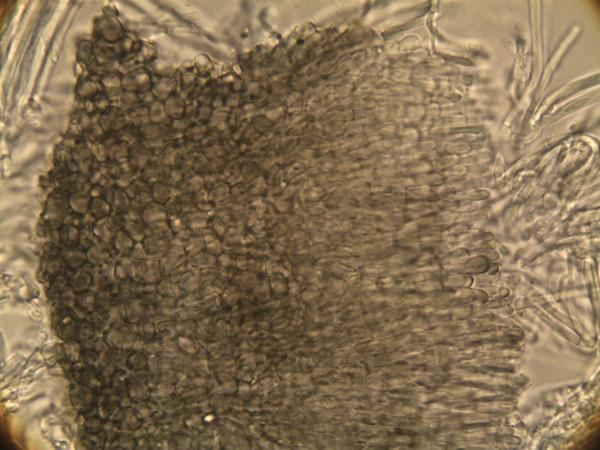
Saludos
Javier
But according to Andreas Gminder, M. benesuada has guttules also, most of the time at least.
If the spores of your sample are without oil, and if KOH on the paraphyses is not yellow, check also M. cinerea, which can have some subiculum.
For M. cinerea the spores are too long.
Zotto