
11-01-2022 16:36
 Jason Karakehian
Hi does anyone have a digital copy of Raitviir A (
20-05-2026 17:47
Margot en Geert VullingsWe found this Mollisia on dead Juncus stems mown l
22-05-2026 14:47
Gernot FriebesHi,superficial ascomata collected on bark of a liv
22-05-2026 14:44
 Lothar Krieglsteiner
in unripe condition citrine yellow, then soon fadi
22-05-2026 13:29
Gernot FriebesHi,I am curious to hear your opinion on this mater
22-05-2026 10:59
 Nicolas VAN VOOREN
Trouvé sur Phragmites, ce que je pense être un L
20-05-2026 21:49
Margot en Geert VullingsWe found this Lachnum on Juncus stems mown last ye
21-05-2026 17:01
Pierre RepellinBonjour à toutes et à tous,Je recherche l'articl
20-05-2026 20:08
 Andreas Millinger
Good evening,another quite distinctive find from M
20-05-2026 12:57
 Ingo Ibelshäuser
Hello everybody, on decayed hardwood e.g. Quercus
Tarzetta
Salvador Tello,
16-01-2013 08:42
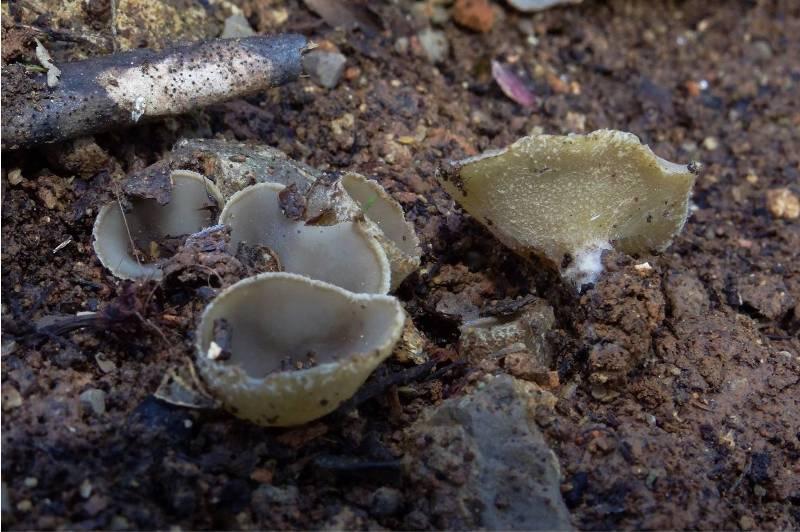
Este ascomiceto se encontraba sobre trierra, bajo hojas de Quercus ilex y Olea europaea.
Miden hasta 2 cm, algunos apotecios son sésiles y otros tienen algo de pie.
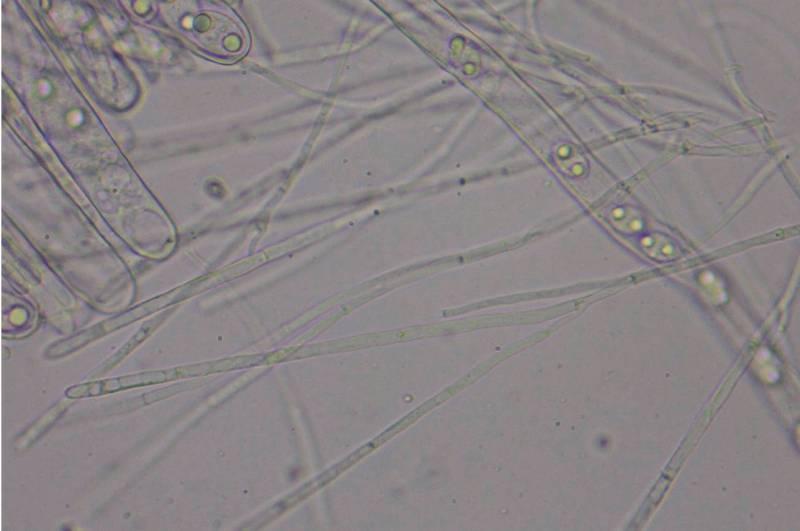
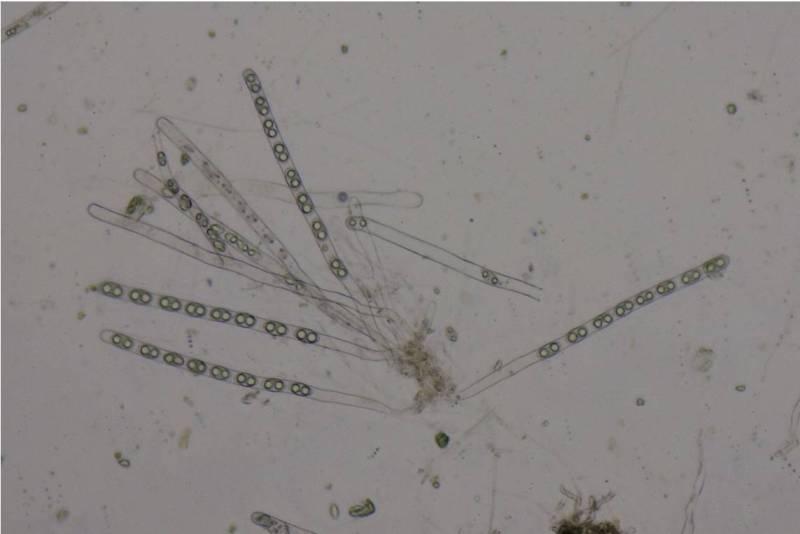
Las ascas miden Me = 313,4 x 12,2 µm ; Qe = 25,8 y no son amiloides.
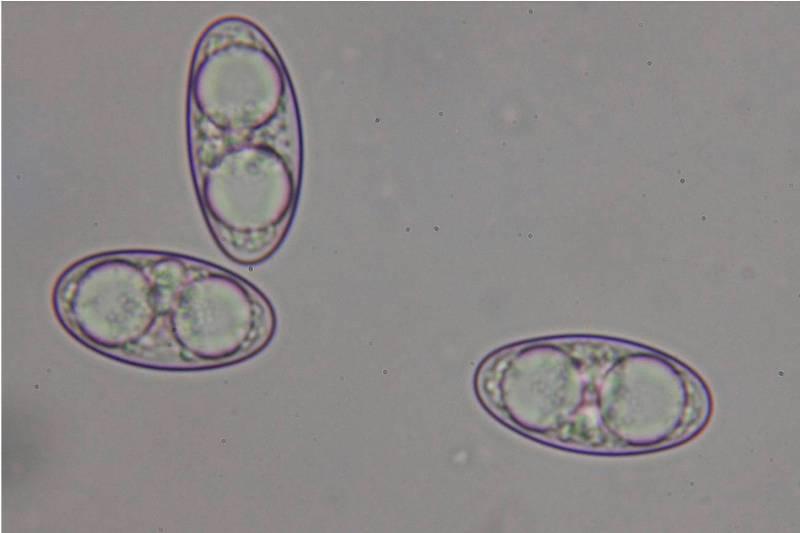
Las paráfisis son sectadas y bifurcadas y las esporas son lisas, hialinas, con dos grandes gútulas en los extremos, de Me = 23,1 x 11,4 µm ; Qe = 2.
Yo pienso que es Tarzetta catinus. ¿Que opinais?
Ueli Graf,
16-01-2013 18:14

Re : Tarzetta
I think it's Tarzetta catinus or T. cupularis.
I think the two can not be distinguished clearly.
I think the two can not be distinguished clearly.
Greetings Ueli
Salvador Tello,
16-01-2013 19:26
Re : Tarzetta
Gracias Ueli.
Yo me había decidido por T. catinus por que he leido que T. cupularis tiene las esporas de 13 a 15 micras de anchura.
Yo me había decidido por T. catinus por que he leido que T. cupularis tiene las esporas de 13 a 15 micras de anchura.