
17-04-2026 19:16
 Enrique Rubio
Hi to everybodyI would appreciate any assistance r
14-04-2026 05:32
Ethan CrensonHi all, A few weeks back a friend pointed out som
17-04-2026 15:14
 Bruno Coué
Bonjour.Récoltes du 16/04/2026, sur feuilles mort
12-04-2026 15:52
Gernot FriebesHi,I'm looking for help with this anamorph collect
14-04-2026 21:52
Gernot FriebesHi,found on dead leaves of Carex elata. Conidia: 4
16-04-2026 22:09
Buckwheat PeteHello, I'd like to ask about this older specimen:
15-04-2026 19:33
Fátima Durán ManzanequeHi!! I need help, I found this Ascomycete but I d
14-04-2026 20:31
Gernot FriebesHi,can this be Psilachnum lateritioalbum on Phragm
12-04-2026 17:56
 Hardware Tony
Found on dead stems in February earlier this year
12-04-2026 12:22
 William Slosse
In a dune grassland in Oostduinkerke (Belgium), on
 Bonjour tous
I recently collected this discomycete which was producing numerous apothecia on the petioles and veins of last year's leaves of Aesculus hippocastanum.
Previous Yorkshire records from the same substratum have been assigned to Hymenoscyphus albidus, or (mostly, and including previous records of mine) to H. caudatus (probably following Ellis and Ellis I)?.
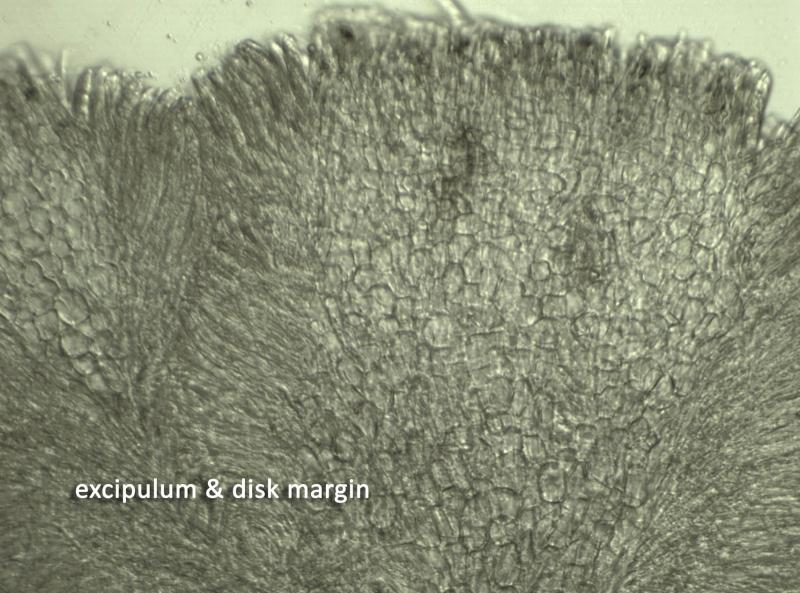
However, now having the luxury of Zotto's DVD I note he has a "Hymenoscyphus aesculi" - = Lanzia aesculi (Velen.) Svrcek; I would welcome any comments/suggestions, also if anyone has access to Svrcek's paper in Sb. nár. Mus. Praze 40B(3-4): 131 (1985)? I would be exceedingly grateful. Details of the fungus here; apothecia with distinctive blackened stem bases, asci IKI blue, ascospores (15.4) 17.3-19.5 x 3.8-3.9 (4.4)µm - many of the spores - immature? - with only one or two very large oil globules (as can be seen in the second to last photo):
amitiés
Chris
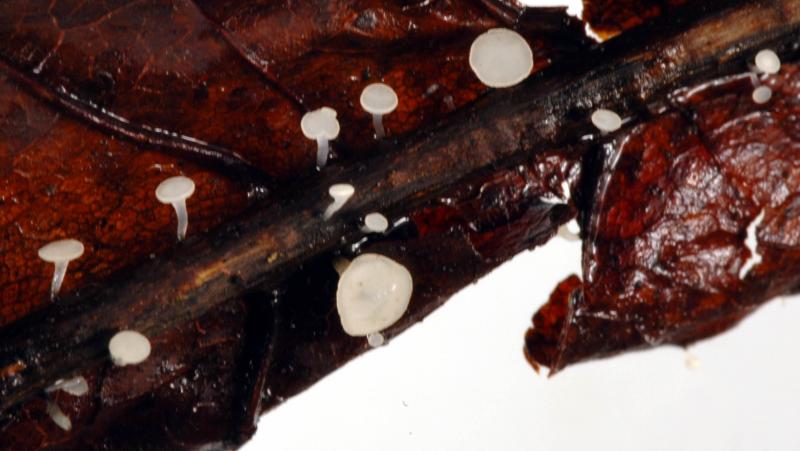
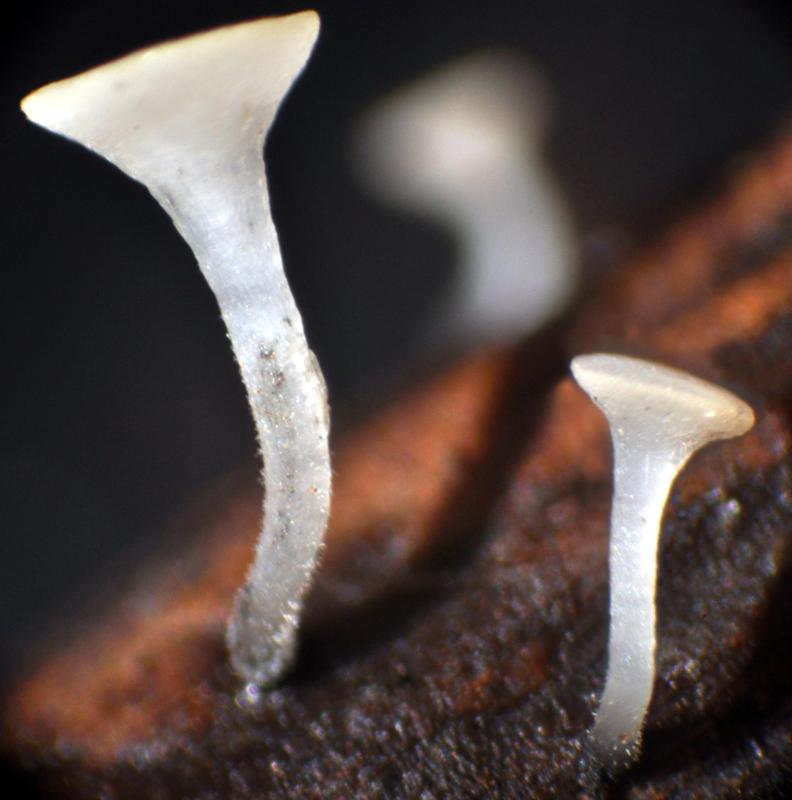
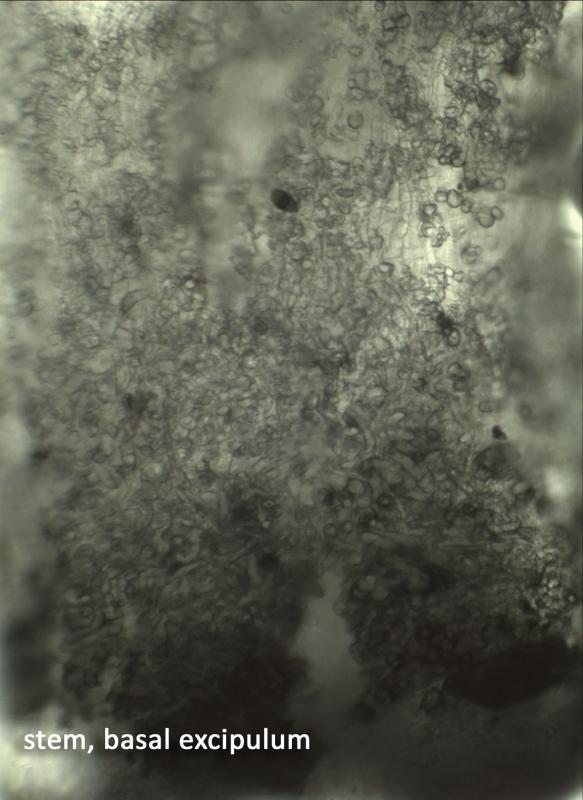
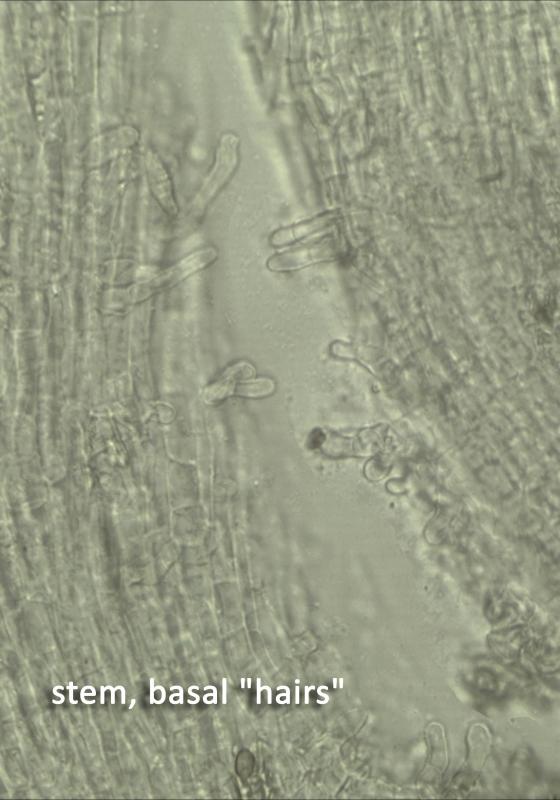
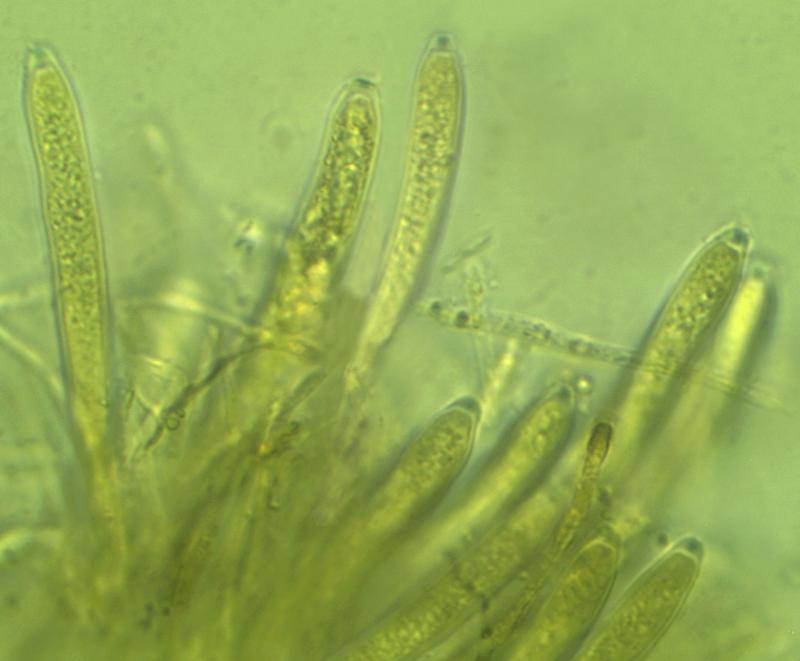
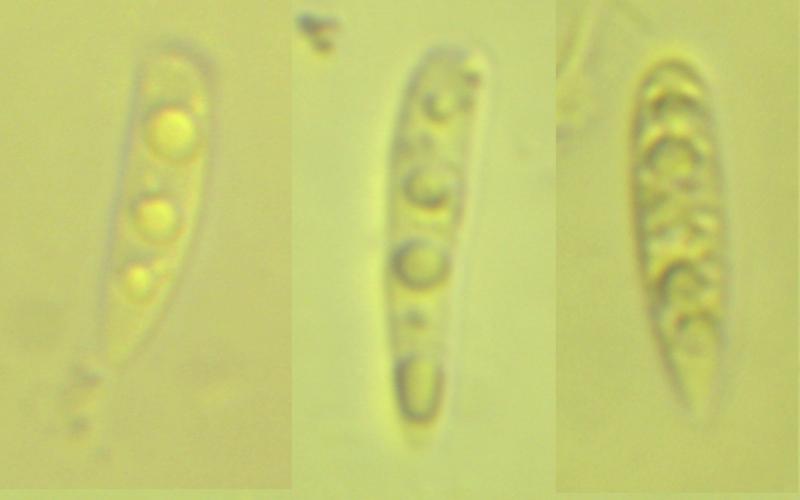
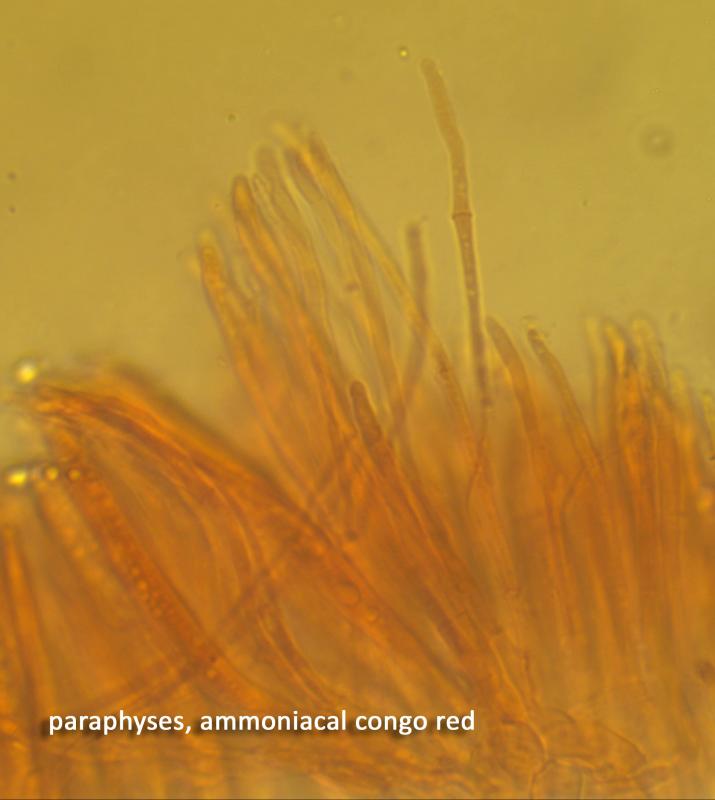

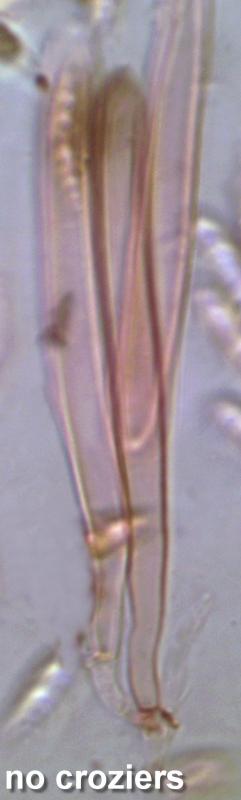
that's fine! Yes, this is H. aesculi, a close relative of H. albidus. What you could do is to look for the croziers (they should be absent), also living free spores woudl be welcome (they surely develop and are ejected in a water squash mount if you have the fungus still fresh). The single elongate drop is characteristic of dead spores, also your middle spore shows a basal elongate oil drop and certainly is not alive. The spores of H. aesculi often have a strange inflation in the middle of the spore, but must not.
If you succeed to make a median section with a razor blade I would be curious for the medulla which I once saw not as intricata but as upwards oriented prismatica.
Old apothecia, especially when dry, tend to get dark grey-olive-brown to almost black, a feature never seen in H. (pseudo)albidus.
And please let me know the collection data, I would like to cite your specimen in our paper. Certainly this fungus can be found under the name H. albidus and also H. caudatus in British and other herbaria.
Zotto

Hi Chris,
not very much to learn there. He announced a further discussion of this fungus that possibly was not published.
Otherwise I can't add anything to Zotto's remarks. Except asking you if you possibly excluded "strange" looking spores from your documentation (those mentioned by Zotto as beeing "inflated") considering them as "dead" ones.
Best regards,
Martin
Zotto
@ Martin - there were very few good mature spores, so I am keeping this collection damp for a couple of days in the hope they may develop, failing which I shall collect more in a week or so; and I shall certainly keep an eye out for the "inflated" spores
best wishes
Chris
Zotto
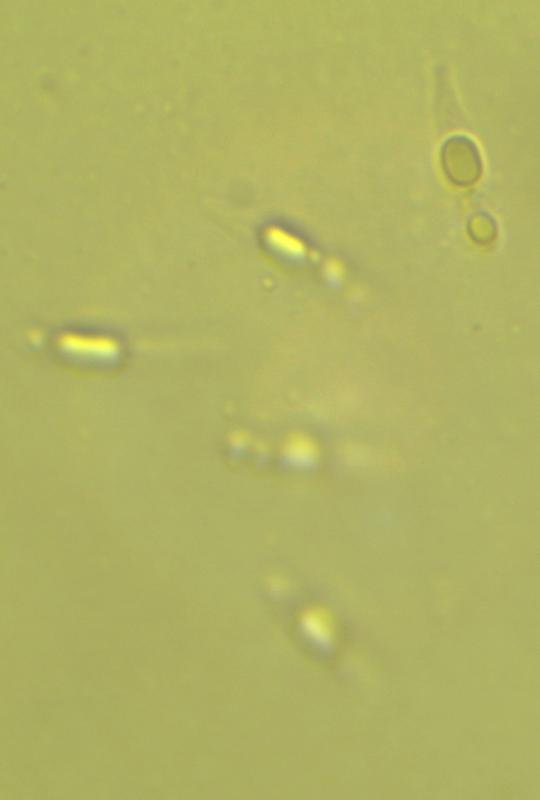
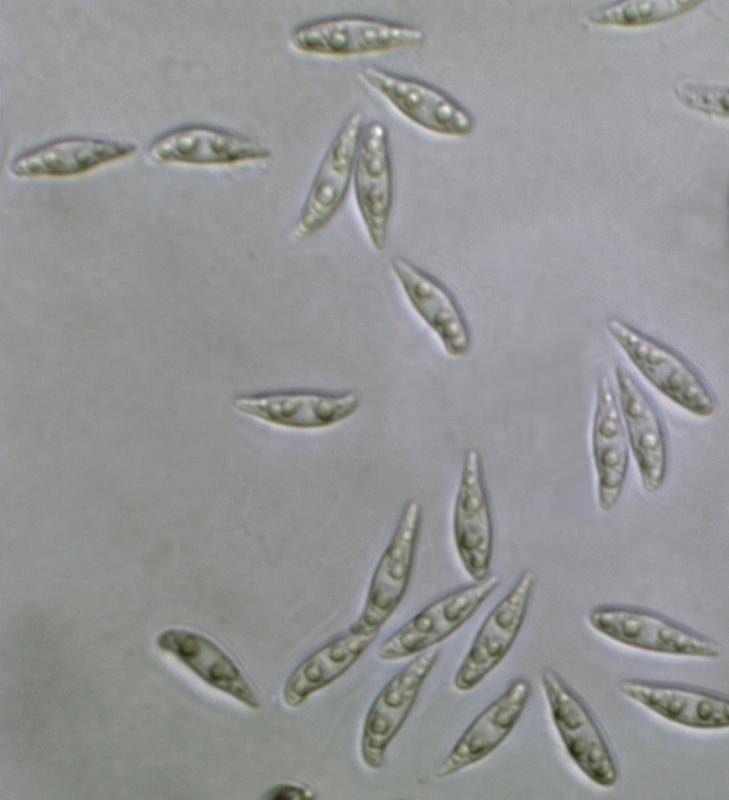
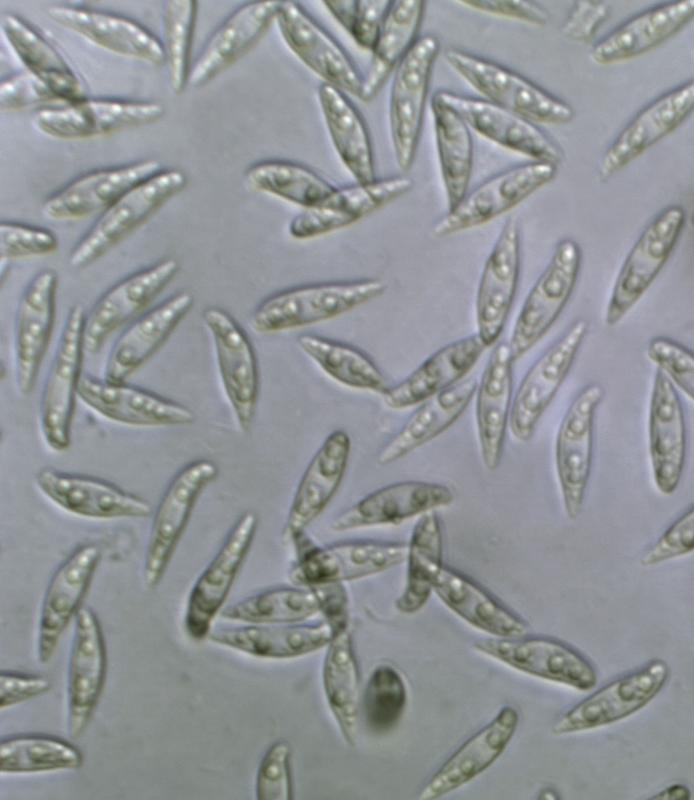
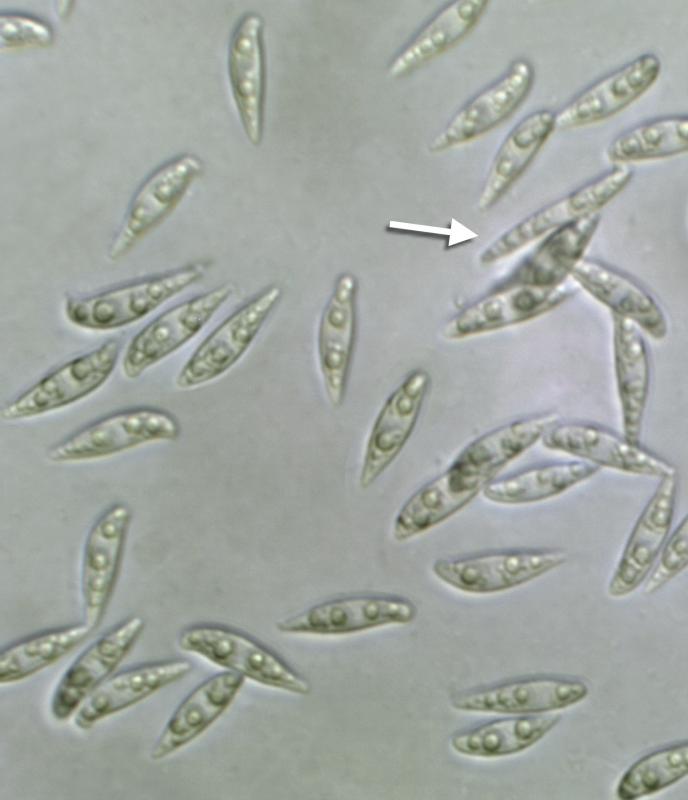
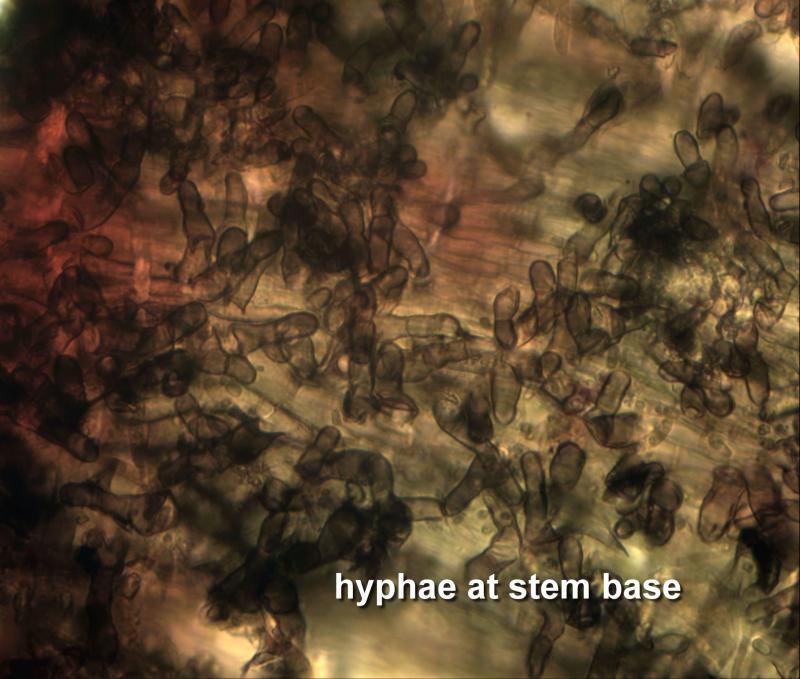
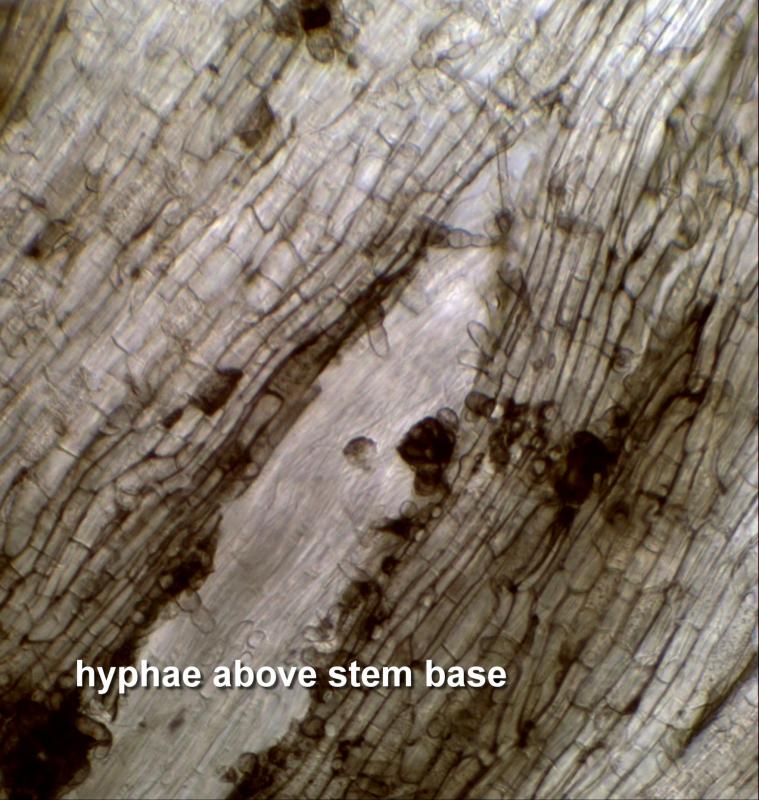
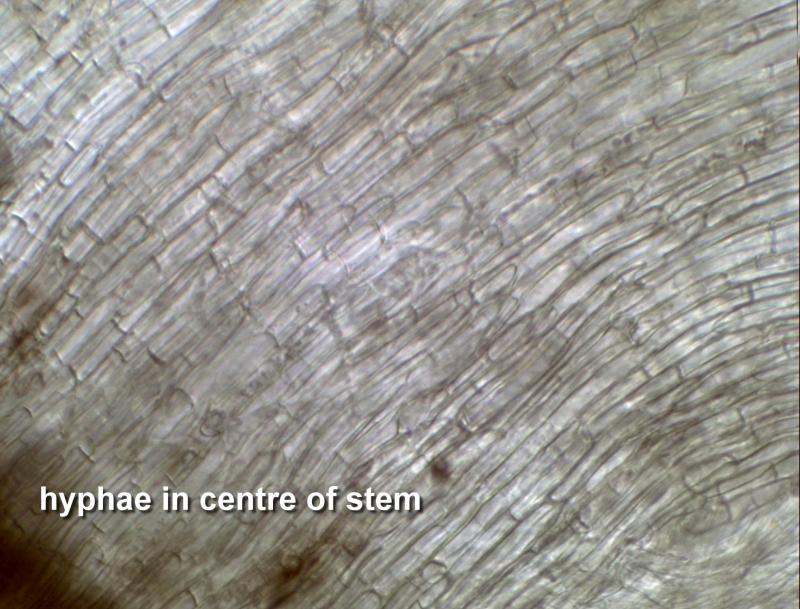
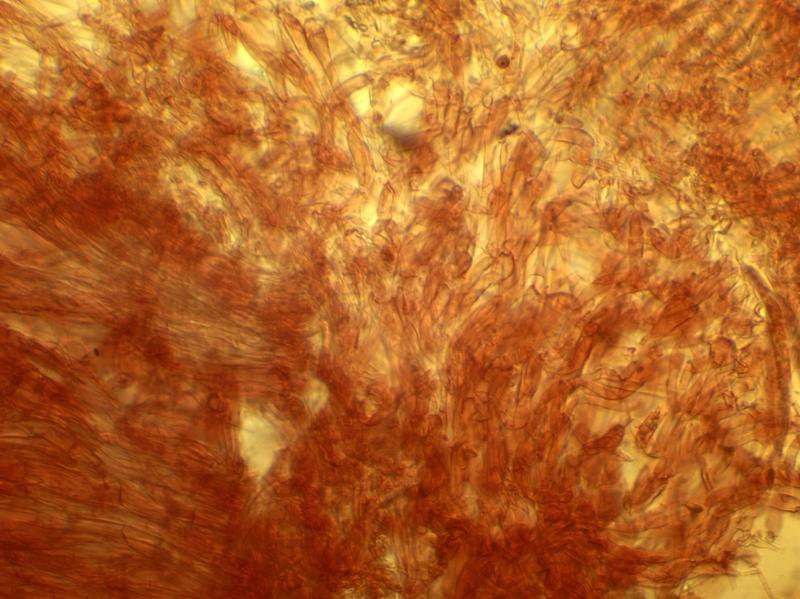
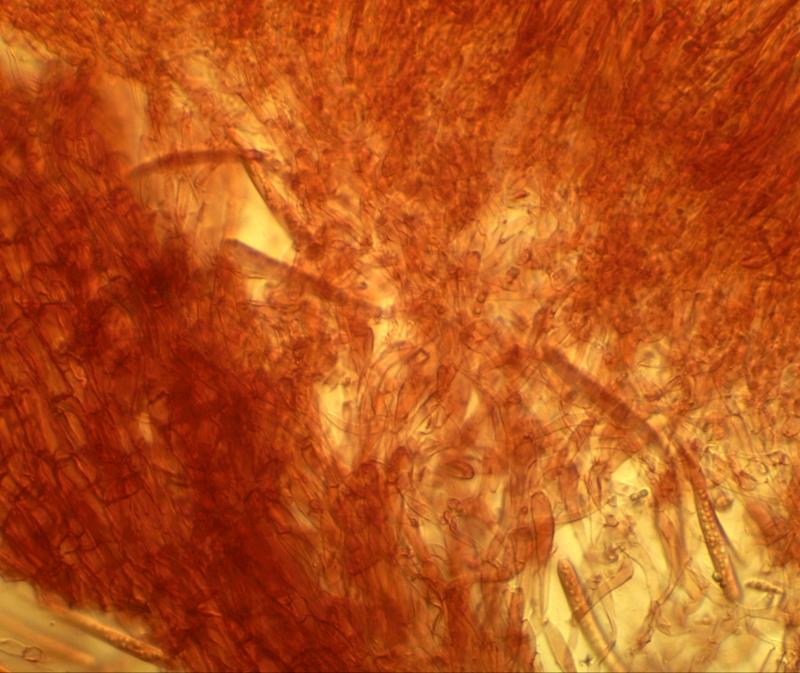
so here are images of the spores (and yes I did see some of the strange ones swollen in the middle also the occasional elongate one (arrowed), the stem cells from darkened base through to regular prismatica in the middle of the stem; also noted was the absence of croziers; the apothecia have not, however darkened particularly on drying - perhaps this develops over time . . .
collection details are:
on Aesculus hippocastanum petioles and leaf-veins
Edgerton area, Huddersfield, West Yorkshire, England
53°39'22.85"N 1°48'23.26"W
leg. C.S.V.Yeates; 24th August 2012
Hb. CSVY/F/2194
regards
Chris
PS - the attached KMZ file will indicate the find spot when opened in Google Earth
 Hymenoscyphus-aesculi-0001.kmz
this is exactly the spore shape I expected! Wonderful. These elongate ones are abnormal. But I did not understand what you compared with them.
Dark apothecia possibly only appear if you let them get senescent and then dry.
I only miss a section of the receptacle showing the ?medulla. I assume you will find a text. intricata with intercellular space.
Zotto
Cordialement
Chris
Zotto

about that slender and elongated spore - could it perhaps belong to Cyathicula fraxinicola (contamination from another apothecium)?
Viktorie
yes, this thread, the single different spore in 3rd photo from 29-08-2012: http://ascofrance.fr/uploads/forum/b08c3bac8665564ed6373f5712f178e7b8fc059f.jpg
Viktorie