
12-06-2026 14:50
 François Freléchoux
Bonjour, Voici la brève description d'une Mollis
10-06-2026 21:16
François Freléchoux
Bonsoir,Le dernier du jour, en attendant votre avi
11-06-2026 19:01
 William Slosse
Hello all,In an attempt to make a culture of a sus
11-06-2026 19:03
 Nicolas VAN VOOREN
Chers membres d'Ascofrance,Le site sera placé en

09-06-2026 18:32
Camille MertensSur morceau de roseau immergé 0,5 - 0,7 mm de dia
10-06-2026 12:54
Steve ClementsBonjour encore, Pouvez-vous m'aider, s'il vous pl
10-06-2026 21:07
François Freléchoux
Toutes les tiges de gentianes jaunes de l'an passÃ
10-06-2026 13:41
François Freléchoux
Bonjour à nouveau, Voici une trouvaille d'hier.
Pyreno on Sambucus
Gernot Friebes,
21-07-2012 23:04
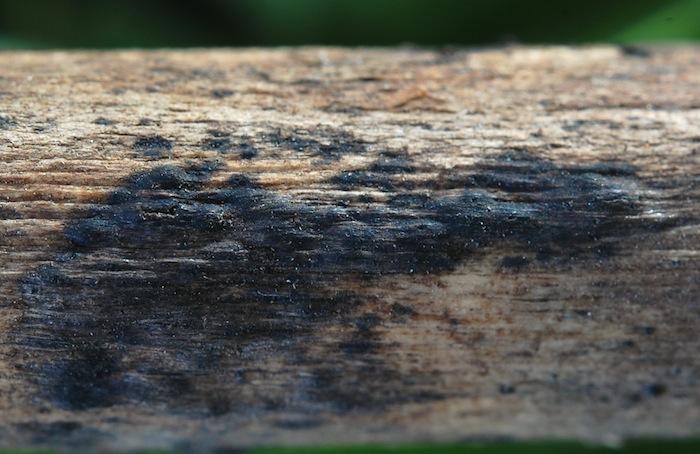
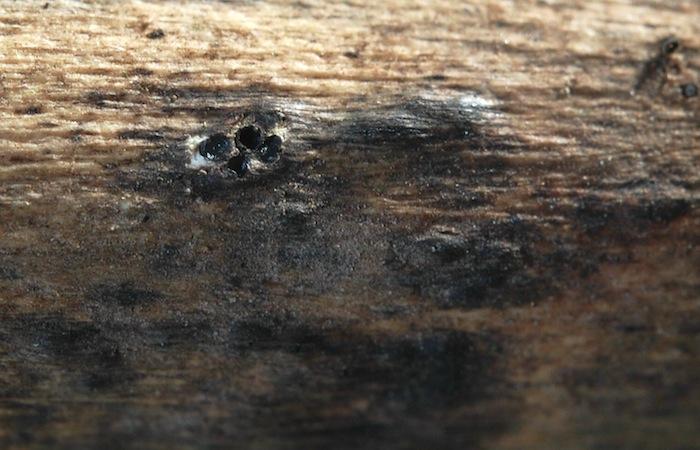
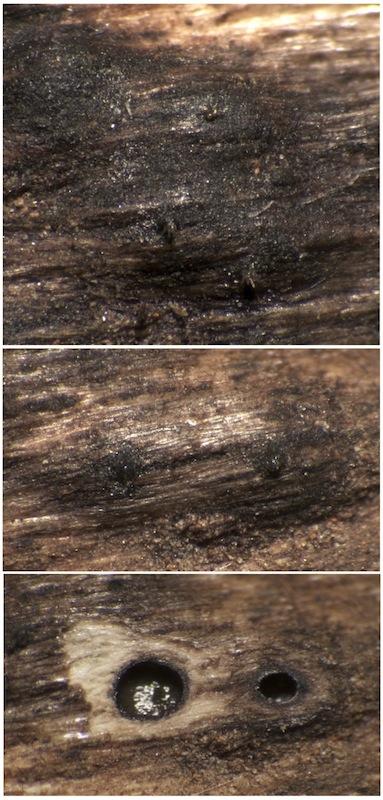
we are looking for help with this quite conspicuous pyrenomycete collected on Sambucus.
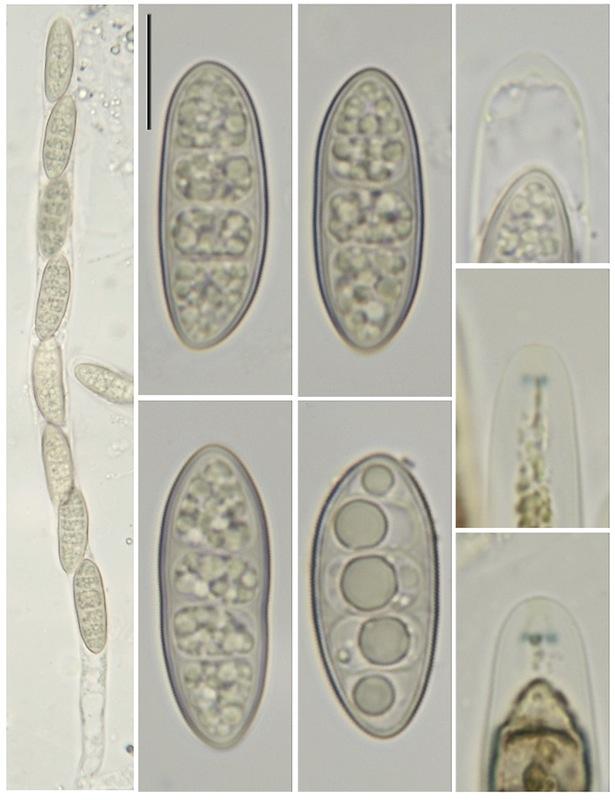
Ascospores: 23-30 x 8,5-10 µm, brown when mature, smooth-walled but sometimes with a gel coating, with 3 to 5 pseudo-septa. Asci: 200-240 x 11-12 µm, 8-spored, uniseriate, long cylindrical, unitunicate, with a somewhat thickened apical apparatus which reacts blue in Lugol. Hamathecium: consists of numerous hyaline, septate paraphyses.
Thanks for any help!
Best wishes,
Gernot
Björn Wergen,
22-07-2012 00:46

Re : Pyreno on Sambucus
Servus Gernot,
I think this is a member of Annulatascaceae, it has similarities with Annulusmagnus triseptatus, but this species should have a "real" apical apparatus which gets a red colour in Lugol.
regards,
bjrön
I think this is a member of Annulatascaceae, it has similarities with Annulusmagnus triseptatus, but this species should have a "real" apical apparatus which gets a red colour in Lugol.
regards,
bjrön
Bernard Declercq,
22-07-2012 11:41

Re : Pyreno on Sambucus
Hi Gernot,
I think this is Lepteutypa hederae (Fuckel) Rappaz, a taxon originally described on Viburnum but mostly (in my region) collected on Sambucus nigra.
Best regards,
Bernard
I think this is Lepteutypa hederae (Fuckel) Rappaz, a taxon originally described on Viburnum but mostly (in my region) collected on Sambucus nigra.
Best regards,
Bernard
Gernot Friebes,
22-07-2012 12:43
Re : Pyreno on Sambucus
Hi Björn and Bernard,
thank you for your suggestions! I think Lepteutypa fits very well for what I have seen here: http://www.bcrc.firdi.org.tw/fungi/fungal_detail.jsp?id=FU200802060062 (different species though). Could someone please provide me a description of L. hederae? I found no literature on this species...
Best wishes,
Gernot
thank you for your suggestions! I think Lepteutypa fits very well for what I have seen here: http://www.bcrc.firdi.org.tw/fungi/fungal_detail.jsp?id=FU200802060062 (different species though). Could someone please provide me a description of L. hederae? I found no literature on this species...
Best wishes,
Gernot
Martin Bemmann,
22-07-2012 12:55

Re : Pyreno on Sambucus
Hi Gernot,
check this link:
http://doc.rero.ch/lm.php?url=1000,43,2,20120711163638-QJ/rap_ant.pdf?
Regards,
Martin
check this link:
http://doc.rero.ch/lm.php?url=1000,43,2,20120711163638-QJ/rap_ant.pdf?
Regards,
Martin
Gernot Friebes,
22-07-2012 13:08
Re : Pyreno on Sambucus
Thank you very much Martin, great to see this work available online!
Best wishes,
Gernot
Best wishes,
Gernot
Martin Bemmann,
22-07-2012 13:14
Re : Pyreno on Sambucus
On the same server I found also his work on Diatrypacées à asques octosporés:
http://doc.rero.ch/lm.php?url=1000,43,2,20120511100432-HA/rap_tnd.pdf?
http://doc.rero.ch/lm.php?url=1000,43,2,20120511100432-HA/rap_tnd.pdf?
Gernot Friebes,
22-07-2012 13:19
Re : Pyreno on Sambucus
one more question: Rappaz gives "transversal septa 3 rarely 1 or 2" for the ascospores and "apical ring I-" which disagrees with our collection. It would be great if someone who already examined this species could bring in some personal experience concerning these characteristics.
Best wishes,
Gernot
PS.: @Martin: I already have the part on the Diatrypaceae but it's always nice to find these works as PDFs (fewer books when traveling :-)).
Best wishes,
Gernot
PS.: @Martin: I already have the part on the Diatrypaceae but it's always nice to find these works as PDFs (fewer books when traveling :-)).