
25-05-2026 16:44
François BartholomeeusenHi forum members,During an excursion organised by
25-05-2026 16:35
 Bernard CLESSE
Bonjour à toutes et tous,J'ai trouvé récemment,
22-05-2026 13:29
Gernot FriebesHi,I am curious to hear your opinion on this mater
23-05-2026 11:44
 Charles Grapinet
Hello, I am having trouble identifying this copro
23-05-2026 18:57
Sylvie Le GoffBonjour à tousRécolté sur une branchette de Sal
22-05-2026 14:44
 Lothar Krieglsteiner
in unripe condition citrine yellow, then soon fadi
22-05-2026 21:35
Steve ClementsBonjour, I expected this find on old wood on our
22-05-2026 18:12
Lothar Krieglsteiner
... in moist chamber from Portugal.As the fungus s
22-05-2026 20:08
Ethan CrensonHello all, Yesterday in NYC I was visiting an e
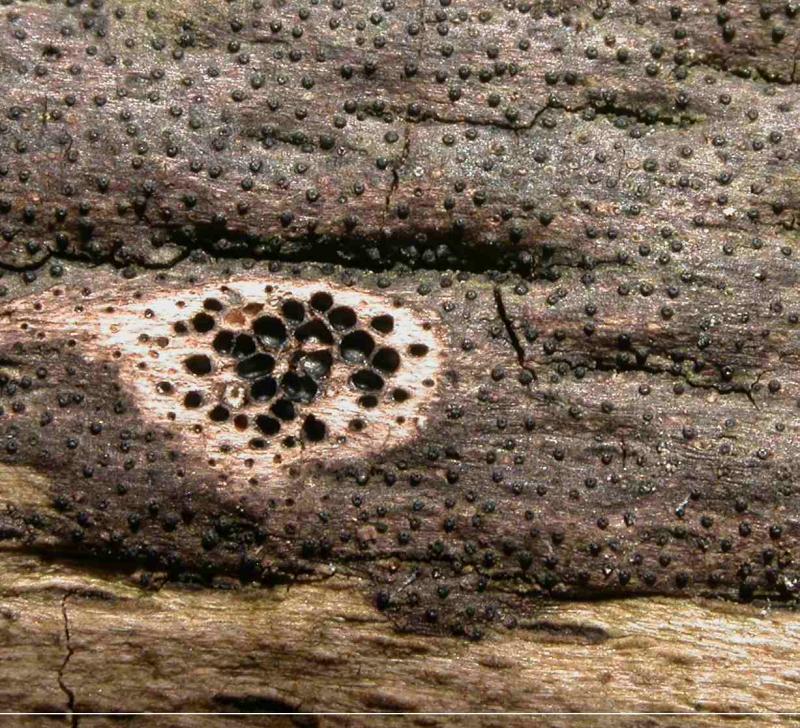
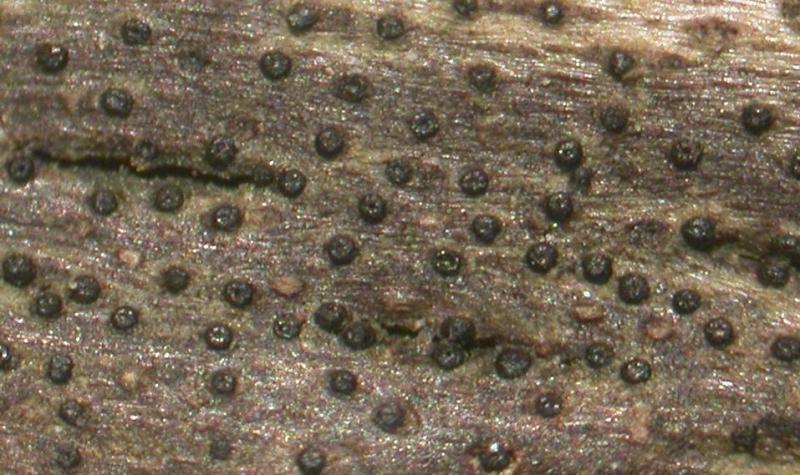
Related to the thread of Daniel Ghysenlinck I know put data about my unidentified Eutypa collections which were made on Fagus sylvatica.
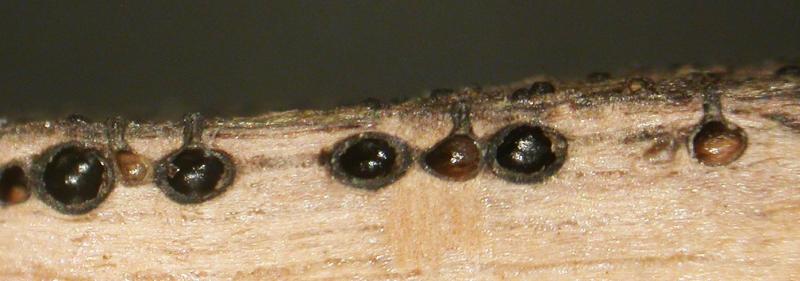
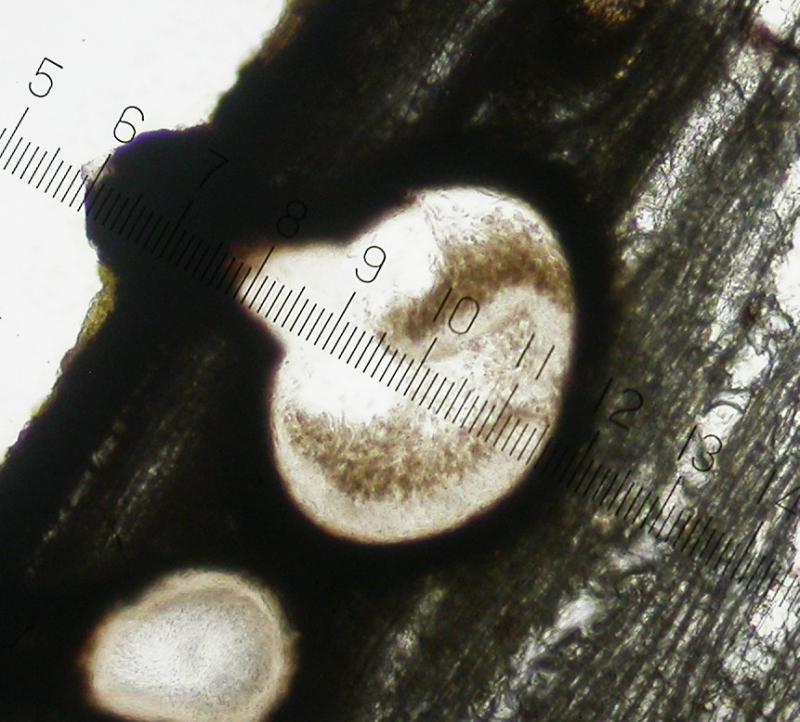
Description: Fruitbodies very inconspicuous, from some distance only a darkening of the wood. With the naked eye the ostioles could just be seen as tiny black dots on the blackish surface. The Stroma with the scattered perithecia is about 0.5 - 0.6 mm thick. Perithecia are about 0.4 mm broad and 0.3 mm high with a neck length of about 0.25 mm. About 0.15 mm of the neck is within the stroma and only some 0.1 mm protruding as a semiglobous structure (see photos).
Microscopy: Asci are typically long stalked with a spore bearing part of about 25-35 micrometers. Apical apparatus is very faintly and inconspicuously bluish in Iodine. Spores are brownish, allantoid and 6-9 x 1.8-2.2 micrometers with 7 x 2 beeing the average.
Ideas are very welcome. Ask if you need further morphological details.
Thanks very much
Stefan


I have not checked microscopic characters, but why not consider Diatrype decorticata ?
Yannick
This seems to be a good idea to follow. Thanks for the Input!
Stefan

Alain
I think Alain is right.
Yannick
This is definitly a name I came by during my researches. Can't remember why I discarded it again. Probably because there is little illustration and documentation on the species. But I will definitly focus on this now and compare characters with literature about E. lata.
Thanks again
Stefan