
11-05-2026 12:32
 Bernard CLESSE
Pourriez-vous m'aider à identifier cette héloti
11-05-2026 20:22
 Lothar Krieglsteiner
on attached twig of standing Ficus caricaquite uns
28-04-2026 20:07
Lothar Krieglsteiner
... on twig in the air at standing Ceratonia siliq
29-04-2026 10:44
Lothar Krieglsteiner
growing at moist, drying-out soil at the side of a
05-04-2026 22:46
Lothar Krieglsteiner
on wood of Ceratonia, Algarve, 3.4.2026.The color
10-05-2026 16:18
brigitte vignotbonjour trouvée en Ariège sur bois une petite
10-05-2026 23:17
 Andreas Gminder
Hello,today we found in a moist steep decidous for
27-04-2026 17:16
Lothar Krieglsteiner
.. Algarve, moist lying.The conidiomata look like
 I have recently been re-examining some older, un-named specimens, collected years ago. One was a discomycete found on a dead stem of Lamium album (in 1986 - so no vital taxonomy here!). It is very small and has dried to an orange yellow colour.
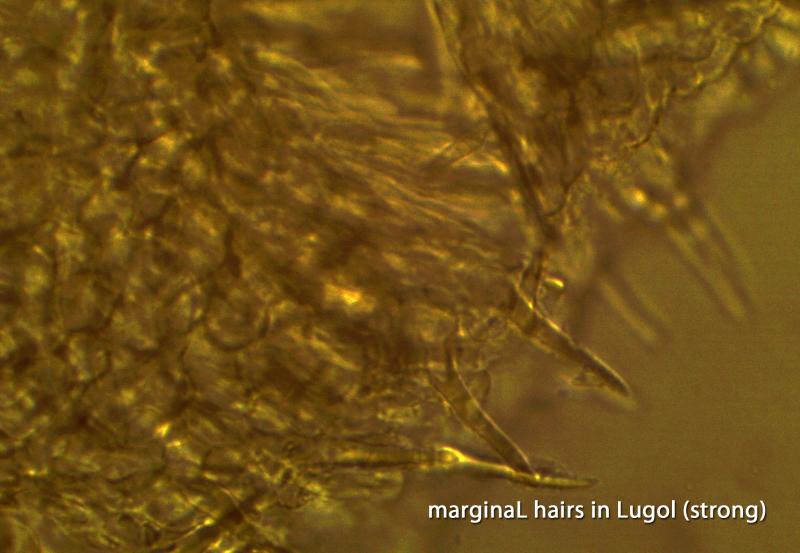
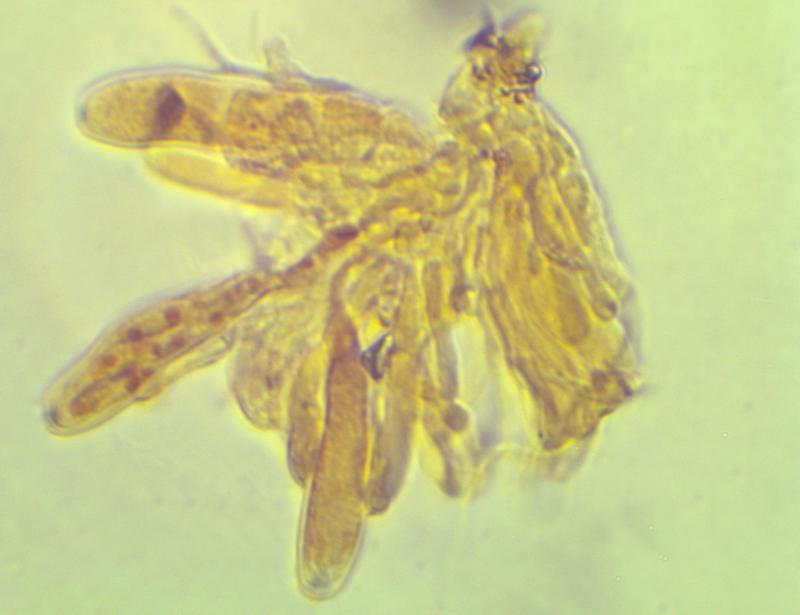
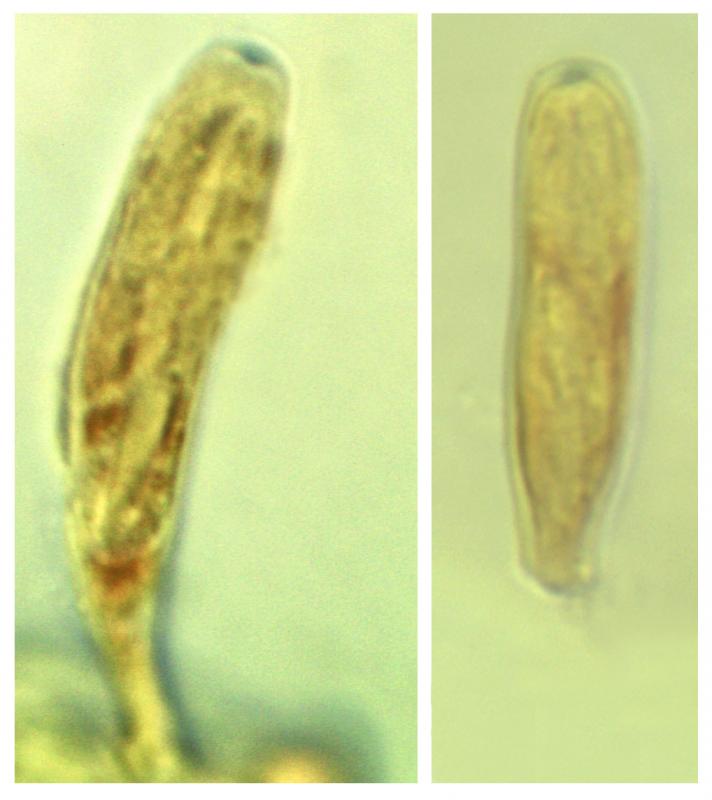
Notes made from living material were: hairs rather sparse, often curved and with basal lumen, up to 25-30µm long; asci apparently J- (Melzer); ascospores hyaline, fusiform-cylindric, often slightly curved, some becoming 1-septate (12)13.5-16.5 x 2.5-3µm
this seems very close to Enrique Rubio's Hyalopeziza raripila - http://www.ascofrance.com/search_recolte/2730
However Seppo Huhtinen in:
Five glassy-haired Hyaloscyphaceae
Karstenia 27: 8-14.1987(1988)
writes of H. raripila "Asci cylindrical-clavate, arising from croziers, 40-55(-65) x 6-8 um, eight- spored, pore wall I-, clearly amyloid after KOH pretreatment.
Ascospores ellipsoid, straight to slightly curved, 8-12 X 2-3 um, aseptate, prominently guttulate. Paraphyses cylindrical, 1.5-2.0 um broad, not exceeding the asci, terminal cells 15-25 um long".
the spore measurements of my fungus while matching Enrique's, clearly do not match the above description. Any helpful comments very welcome!
Chris
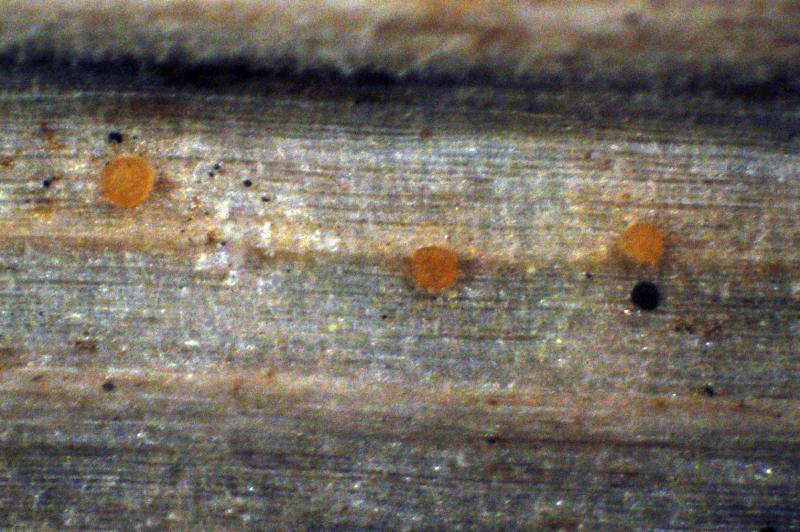
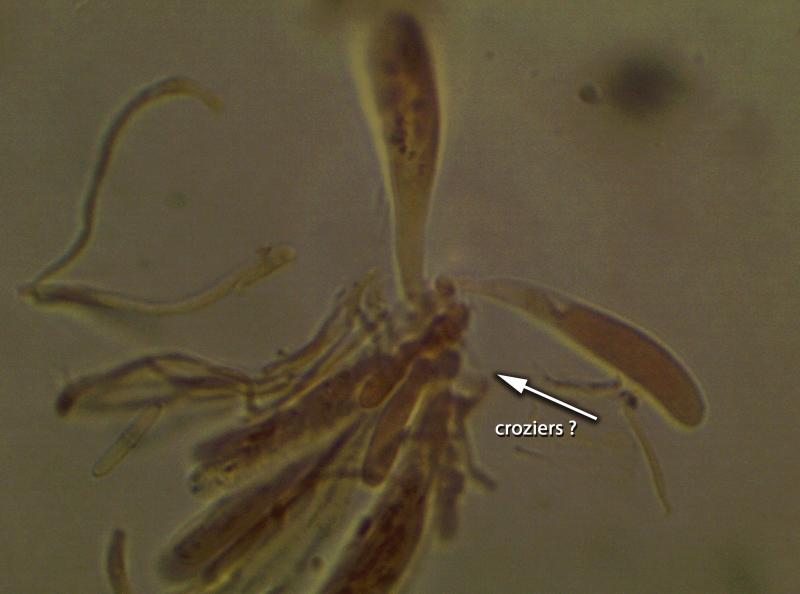
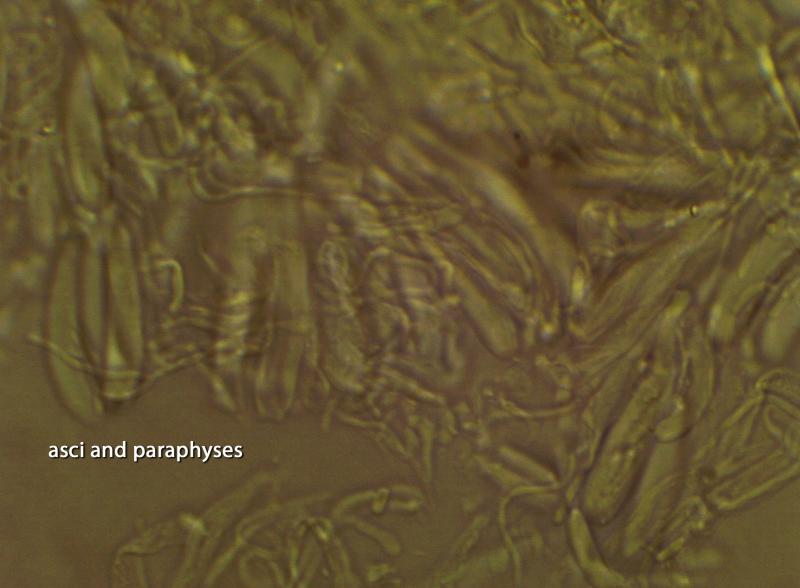
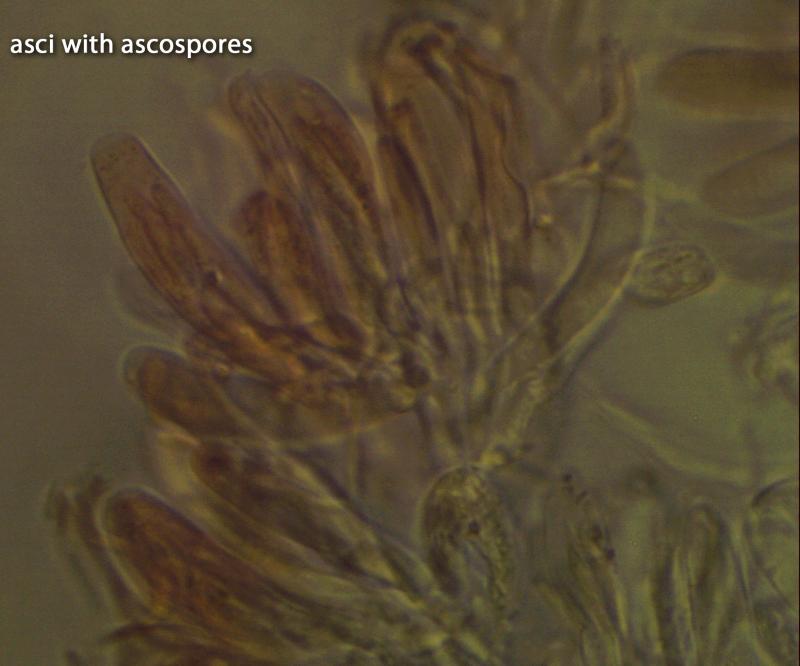
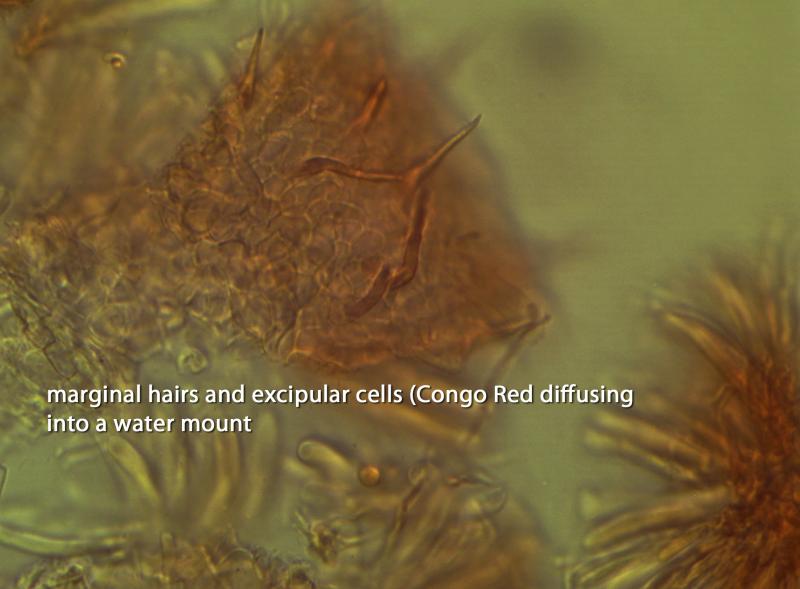
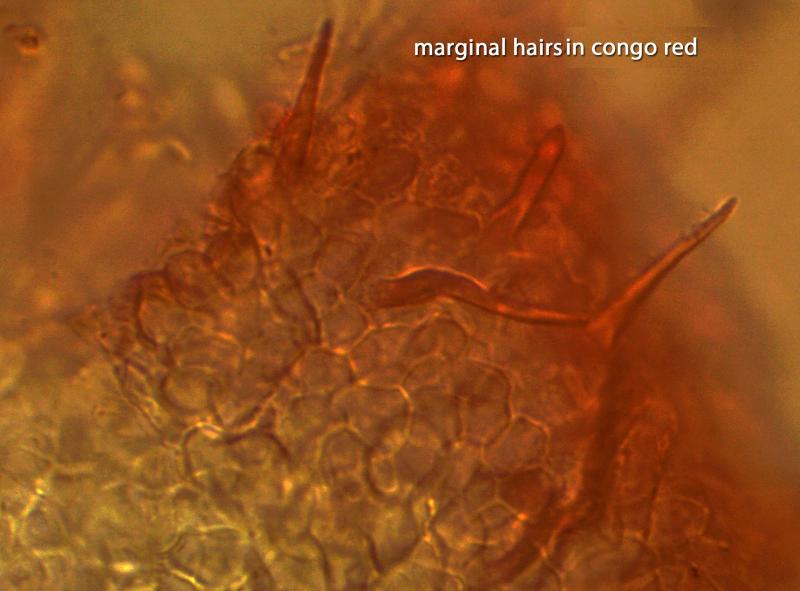

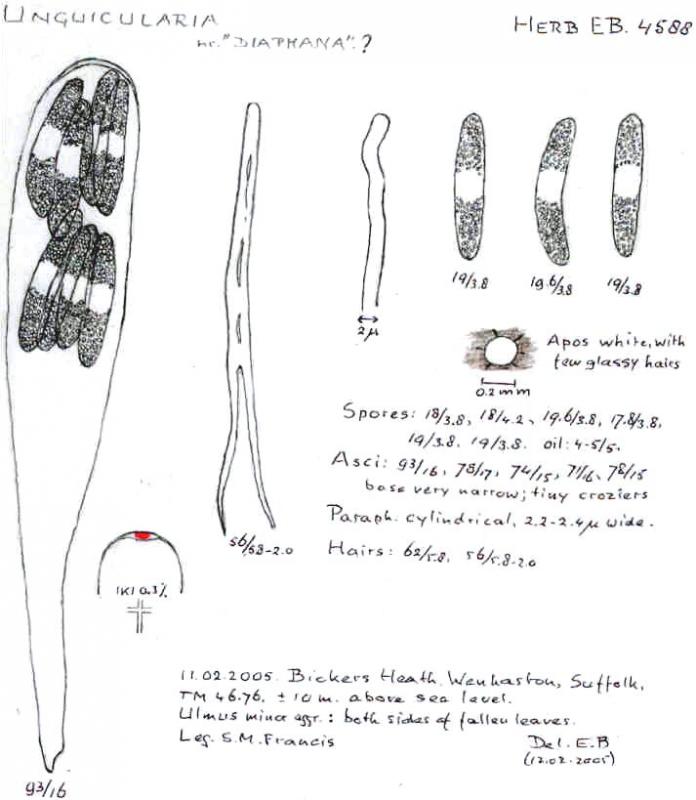
I have here a nice drawing by Ted Batten, made on living material. It shows a high oil content of the spores, a bit unusual for H. raripila, but indeed only very gradually different from Enriques spores or those of my drawing HB 4092b. Seppos drawing shows rather short spores, but actually with not much oil inside.
Yes, I see your problem is mainly spore length. I do not know why Seppo found 8-12 µm. In 1985 I wrote 15-20 µm (!). In the type of U. raripila Raschle (1977) found the spores 11-15 x 2-3 µm, so alive they were perhaps 12-16 µm long.
What you can still do is to check in Lugol: you will perhaps get a more or less clear red reaction, and after treatment with KOH and removing with water you get a blue one as Seppo writes.
On the DVD this species is found under the Naevioideae, in dir. Iridinea, at least it is presently there in my files.?
Zotto
thanks again
Chris
Zotto