
15-04-2026 19:33
Fátima Durán ManzanequeHi!! I need help, I found this Ascomycete but I d
14-04-2026 05:32
Ethan CrensonHi all, A few weeks back a friend pointed out som
14-04-2026 21:52
Gernot FriebesHi,found on dead leaves of Carex elata. Conidia: 4
14-04-2026 20:31
Gernot FriebesHi,can this be Psilachnum lateritioalbum on Phragm
12-04-2026 17:56
 Hardware Tony
Found on dead stems in February earlier this year
12-04-2026 15:52
Gernot FriebesHi,I'm looking for help with this anamorph collect
12-04-2026 12:22
 William Slosse
In a dune grassland in Oostduinkerke (Belgium), on
11-04-2026 15:45
 Zuzana Sochorová (Egertová)
Please, could anyone send me this paper?Moyne G.,
11-04-2026 13:34
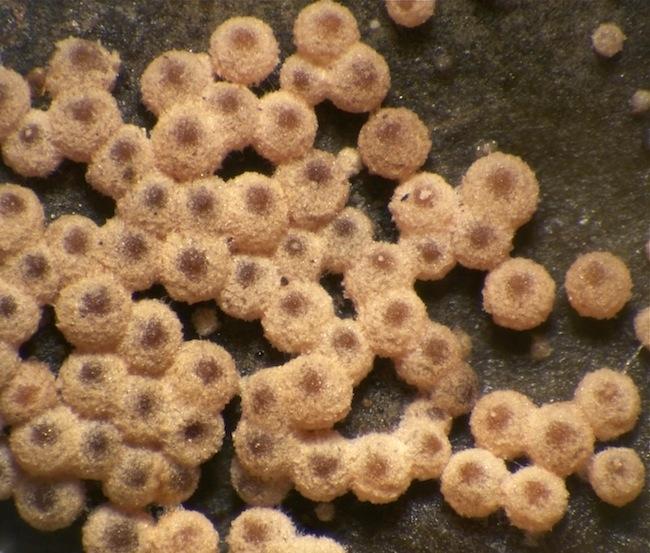
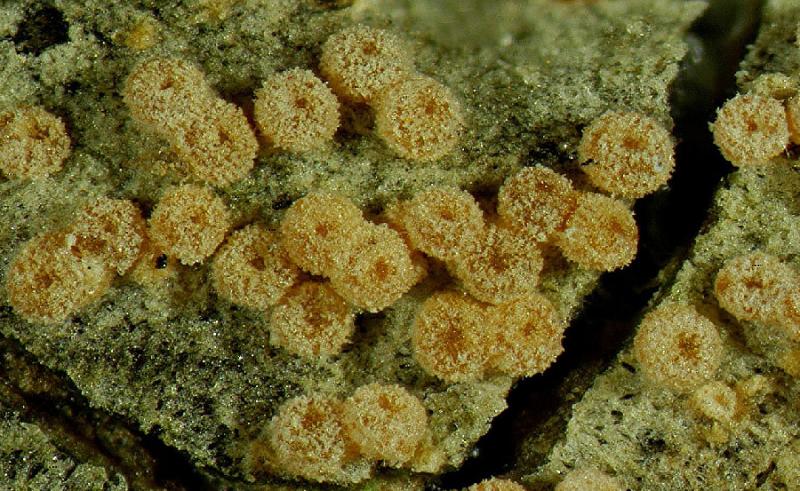
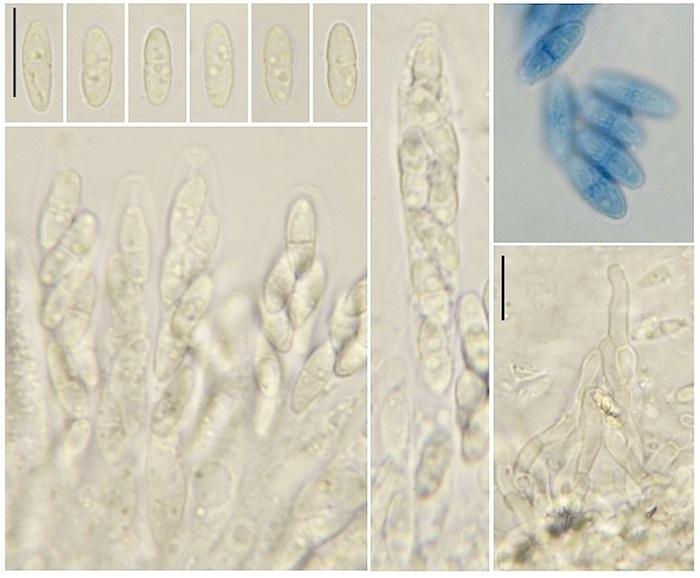
Artem PtukhaHello, I am seeking assistance with the identific

I am looking for the part of the following article that deals with Nectriopsis lecanodes:
Sérusiaux, E.; Diederich, P.; Brand, A.M.; Boom, P. 1999 - New or interesting lichens and lichenicolous fungi from Belgium and Luxembourg. VIII. Lejeunia 162: 1-95.
It'd be great if somebody could send me these pages.
Best wishes,
Gernot

y

I haven't those pages but I know this species quite well (Christian too). If you want confirmation, please give your observations.
Alain
Yannick
Alain
thanks but I'm not actually looking for confirmation but for a recent description with synonyms and maybe further literatur given for this species. Also I'm not sure if the correct basionym is Sphaeria lecanodes Ces. 1857 or Nectria lecanodes Ces. 1863...
Best wishes,
Gernot

here is the basionyme of N. lecanodes:
Nectriopsis lecanodes (Ces.) Diederich & Schroers
Basionym: Nectria lecanodes Ces., in Rabenhorst, Herb. mycol. ed. 2: 525, 1863.
However, ?I think that it is not the genus Nectriopsis but the genus Lasionectria, I'm working to a new combination. In section, ascomatal wall >40 µm thick composed of two regions fits better to the genus Lasionectria
Best wishes
Christian

Hi Gernot.
I can get these pages, but only on the next Monday.
@Christian: Thanks for this information! I thought there already was a combination to the genus Lasionectria? (http://www.cybertruffle.org.uk/cyberliber/59351/0021/003/0267.htm)
@Nicolas: That would be great, thank you!
Best wishes,
Gernot
 p56-0001.pdf
Best wishes,
Gernot
But, it's obviously 'Nectriopsis' lecanodes.
Alain
thanks for sharing your experience! Maybe the different descriptions result from different maturities of the material examined in literature.
Best wishes,
Gernot