
27-04-2026 09:59
Pauline. PennaBonjour Can anyone advise me on these pycnidia fo

22-04-2026 20:54
 Enrique Rubio
Hi to everybody.This Pyrenopeziza grew in moist le
24-04-2026 03:16
 David Chapados
Found while looking at something else from wood in
22-04-2026 01:06
 Richard VALERI
Bonjour à tous.Je vous présente cette Nectria s.
22-04-2026 20:17
 Marian Jagers
Is anyone familiar with the Hyphomycetes genus Pse

21-04-2026 22:14
Margot en Geert VullingsThis cup fungus was found on April 10, 2026, on lo
Orbilia de Quercus
Javier Ormad,
10-11-2011 00:12
 Hola a todos.
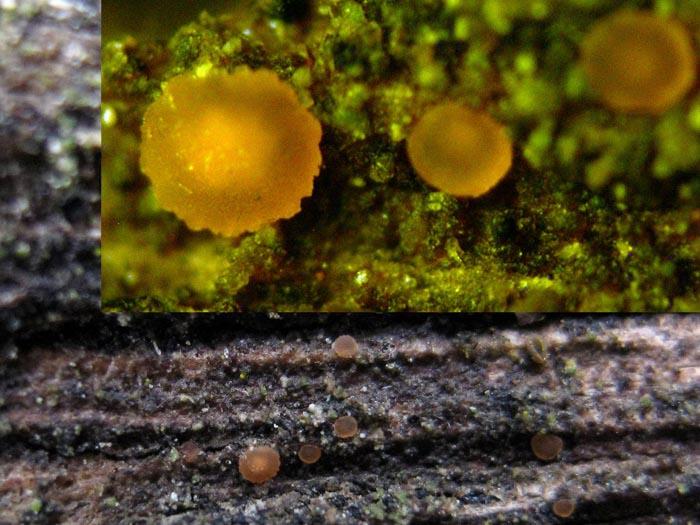
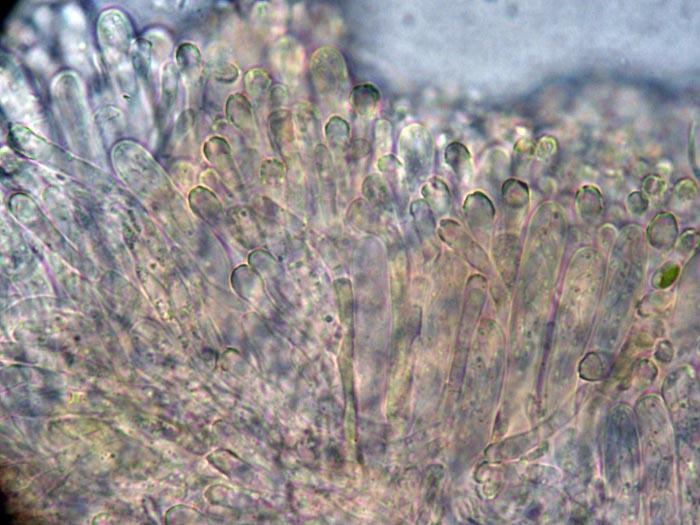
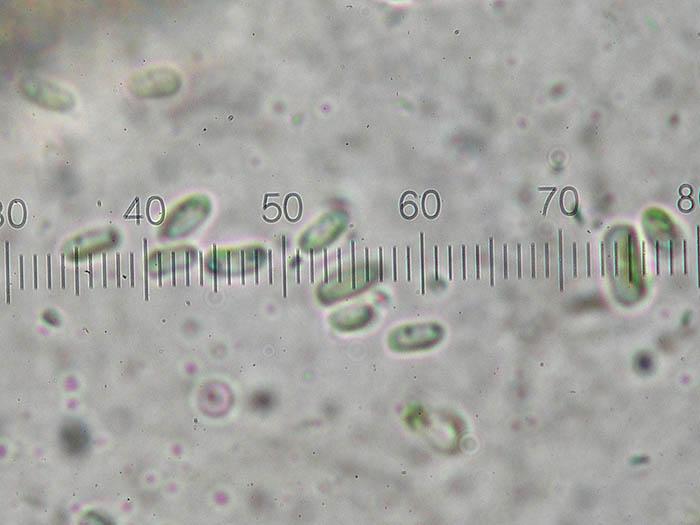
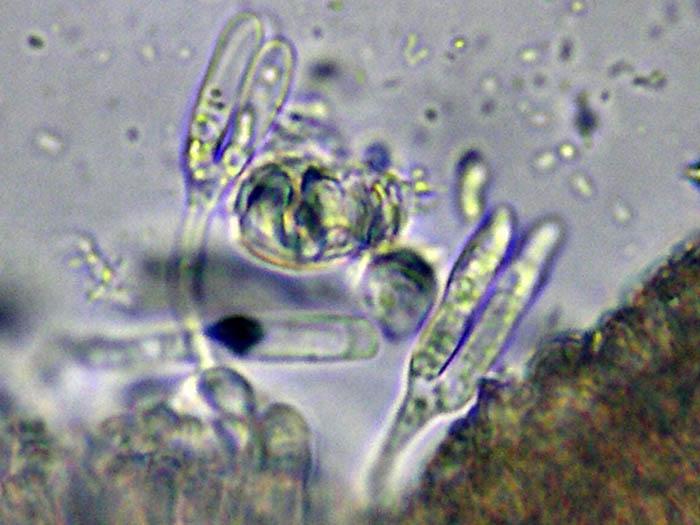
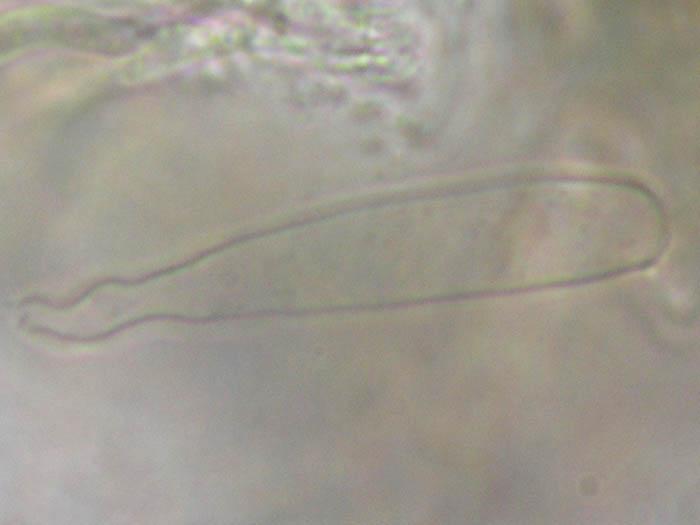
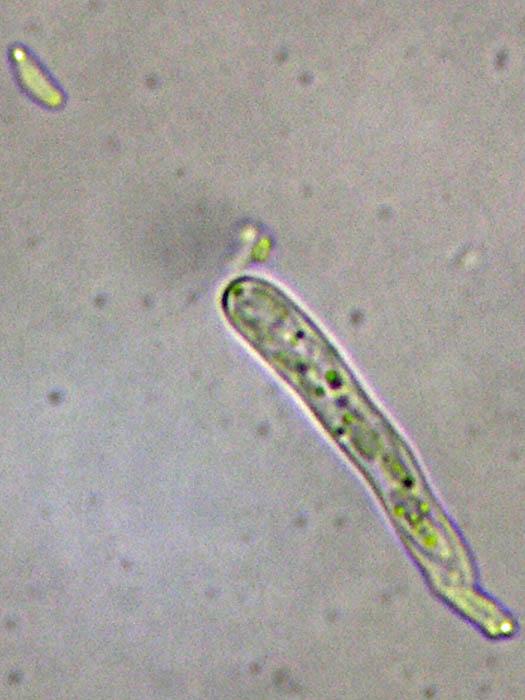
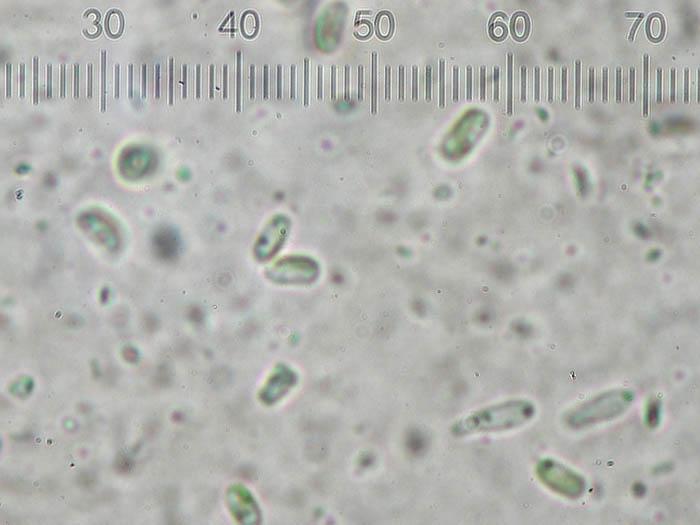
 Os presento una Orbilia.Ascomas de hasta 1 mm. En corteza externa de restos muertos, de Quercus ballota. Ascas 34-42 x 4-5 micras. Esporas 4-6(7) x 2-3 micras, con 2 vacuolas en los extremos. Parafisis septadas hasta 4.5 micras.
Orbilia coccinella ?
Hi all. I present a Orbilia.
Ascomata of up to 1 mm. In the outer crust of dead remnants of Quercus ballota. Asci 34-42 x 4-5 microns. Spores 4-6 (7) x 2-3 microns, with 2 vacuoles at the ends. Septate paraphyses up to 4.5 microns.
Orbilia coccinella. Orbilia digitalina??
Jean-Paul Priou,
10-11-2011 09:13

Re : Orbilia de Quercus
Javier, your Spores seem strange, too green, may be algae ? also ascus too wide for eucalypti= coccinella
JPP
JPP
Hans-Otto Baral,
10-11-2011 18:14

Re : Orbilia de Quercus
Hi Javier & Jean-Paul
Jean-Paul is right, and you have indeed the correct spores inside the asci. I see a spore body at one end. Could you please send me this image nr. 2 in high resolution? Perhaps also with a scale?
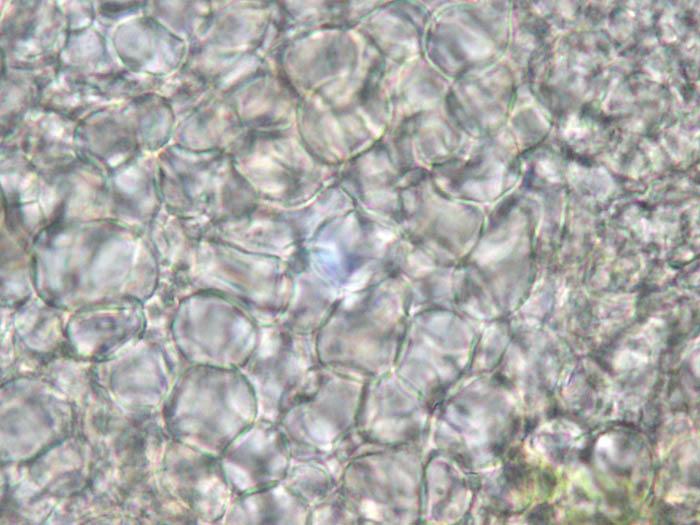
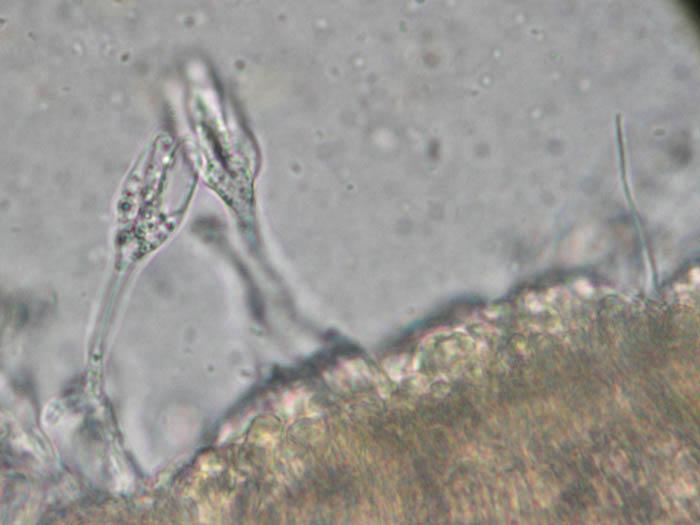
The Dicranidion is interesting, but we do not know a species with such crenulate margin in combination with Dicranidion.
Could you please look at the margin whether there are glassy processes or what these teeth are?
Zotto
Jean-Paul is right, and you have indeed the correct spores inside the asci. I see a spore body at one end. Could you please send me this image nr. 2 in high resolution? Perhaps also with a scale?
The Dicranidion is interesting, but we do not know a species with such crenulate margin in combination with Dicranidion.
Could you please look at the margin whether there are glassy processes or what these teeth are?
Zotto
Javier Ormad,
10-11-2011 22:17
Re : Orbilia de Quercus
The images are not good, but the spores are.
Send more pictures. If you want more resolution, shipping to the private...............
Send more pictures. If you want more resolution, shipping to the private...............
Hans-Otto Baral,
10-11-2011 22:26
Re : Orbilia de Quercus
That's fine. I am still unsure, and yes, please send me the ascus photo Nr. 2 and also the macro in min. double resolution.
My idea is a but that it could be Orbilia microsoma. Important is also that the asci are 8-spored, because there is an O. pleiomicrosoma with 16 spores.
These microsomas have short glassy processes at the margin.
Zotto
My idea is a but that it could be Orbilia microsoma. Important is also that the asci are 8-spored, because there is an O. pleiomicrosoma with 16 spores.
These microsomas have short glassy processes at the margin.
Zotto