
05-04-2026 22:46
 Lothar Krieglsteiner
on wood of Ceratonia, Algarve, 3.4.2026.The color
05-04-2026 20:40
 Robin Isaksson
Hi!Found i Japan on bark of Abies sp. Spores 35-4
31-03-2026 21:18
 Miguel Ángel Ribes
Good evening. oes anyone have the original descrip
31-03-2026 20:57
Stefan BlaserHello everybody, I hope somebody can help me with
26-03-2026 15:31
 Åke Widgren
Hello,I found this one in October last year, on r
31-03-2026 16:20
 Mlcoch Patrik
Hello, Please about help with determination. On
31-03-2026 08:19
 Bernard CLESSE
Bonjour à toutes et tous,Pourriez-vous m'aider à
Ascocoryne lilacina?
Juuso Äikäs,
25-10-2024 01:18
Hello,
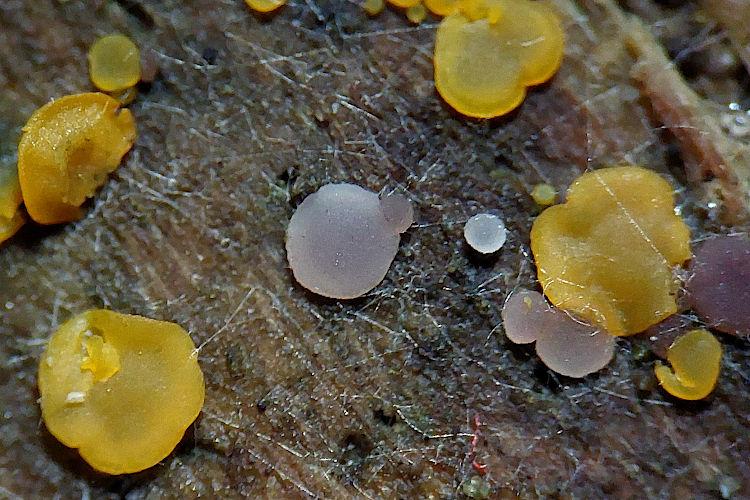
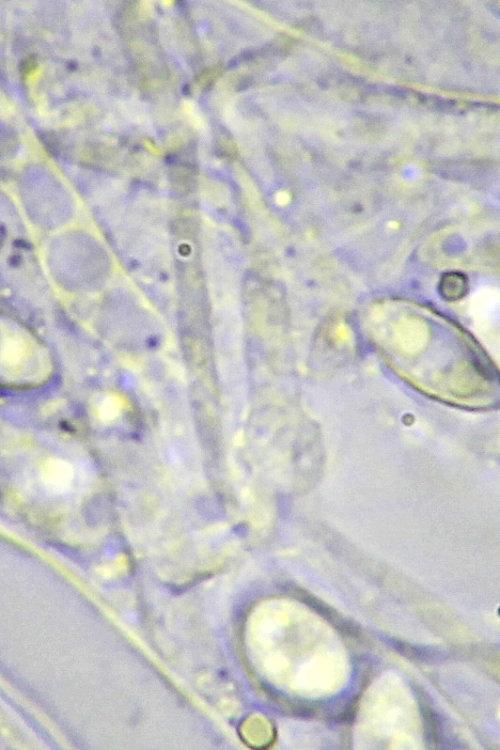
on October 16th I collected Orbilia xanthostigma from deciduous wood, and a bit later I noticed some small purple discos growing among them.
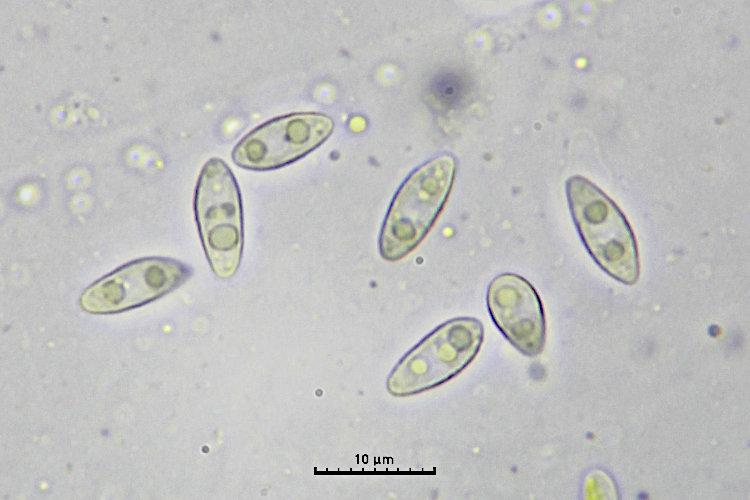
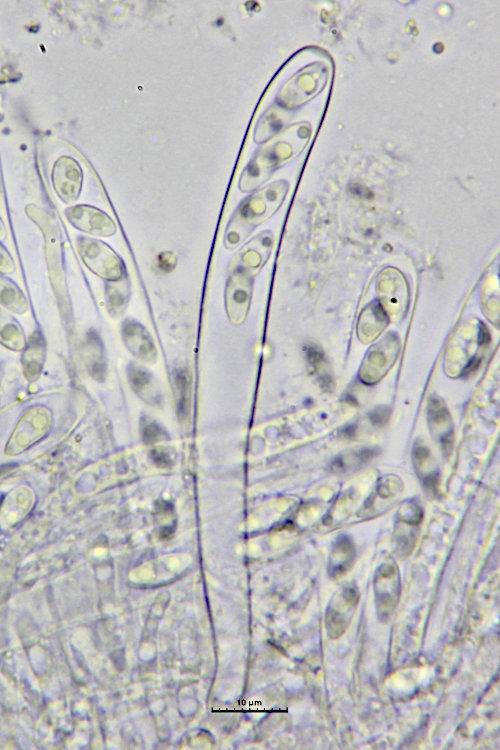
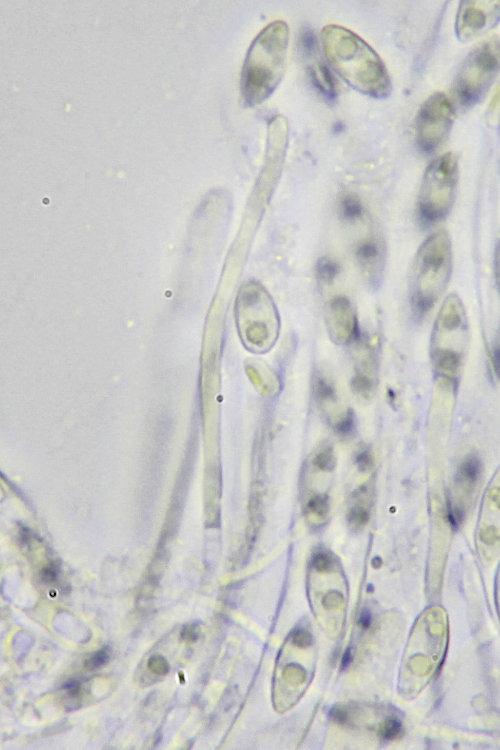
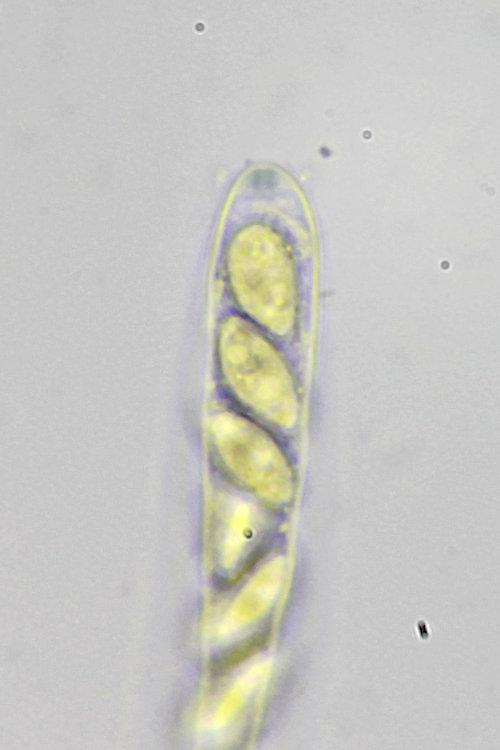
Asci 8-spored, with croziers, IKI+(b). Paraphyses narrowly cylindrical, with a long VB. I didn't see any crystals or gelatinous hyphae in the preparation.
Spores:
(7.3) 8.3 - 10 (10.3) × (3.4) 3.6 - 4 (4.2) µm
Q = (1.8) 2.2 - 2.69 (2.7) ; N = 20
Me = 9.1 × 3.8 µm ; Qe = 2.4
Q = (1.8) 2.2 - 2.69 (2.7) ; N = 20
Me = 9.1 × 3.8 µm ; Qe = 2.4
Asci:
(89.3) 89.34 - 95.67 (95.7) × (7.8) 7.82 - 9.1 µm
Q = 9.8 - 12.2 ; N = 3
Me = 91.9 × 8.3 µm ; Qe = 11.2
Q = 9.8 - 12.2 ; N = 3
Me = 91.9 × 8.3 µm ; Qe = 11.2
Could this pass as Ascocoryne lilacina? Or is some Ombrophila species possible here?
Hans-Otto Baral,
25-10-2024 21:26

Re : Ascocoryne lilacina?
Yes, I see a close match. Earlier this was wrongly in Ombrophila.
Juuso Äikäs,
25-10-2024 21:35
Re : Ascocoryne lilacina?
Thank you. I searched for findings, and apparently for this species occurence with Orbilia xanthostigma is not an uncommon thing.