
05-04-2026 22:46
 Lothar Krieglsteiner
on wood of Ceratonia, Algarve, 3.4.2026.The color
05-04-2026 20:40
 Robin Isaksson
Hi!Found i Japan on bark of Abies sp. Spores 35-4
31-03-2026 21:18
 Miguel Ángel Ribes
Good evening. oes anyone have the original descrip
31-03-2026 20:57
Stefan BlaserHello everybody, I hope somebody can help me with
26-03-2026 15:31
 Åke Widgren
Hello,I found this one in October last year, on r
31-03-2026 16:20
 Mlcoch Patrik
Hello, Please about help with determination. On
31-03-2026 08:19
 Bernard CLESSE
Bonjour à toutes et tous,Pourriez-vous m'aider à
 • Macro and habitat suggest Lachnum.
• Looking at Baral's key it seems to be subgroup 5 (no crystals, without medium to abundant strongly refractive VBs, with croziers).
• The spores have low OCI and the size seems distinctive, but the paraphyses are quite wide and not protruding much.
• It seems similar to L. subvirgineum but the paraphyses are on the narrow side.
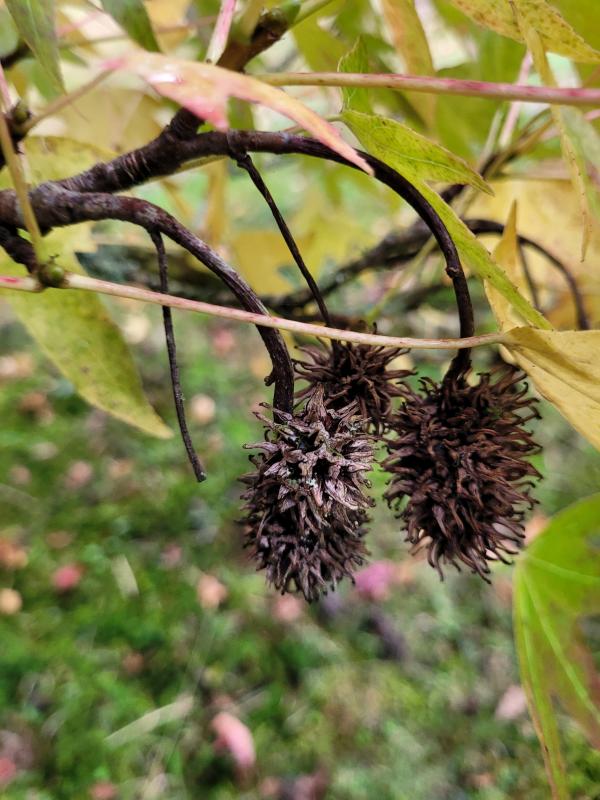
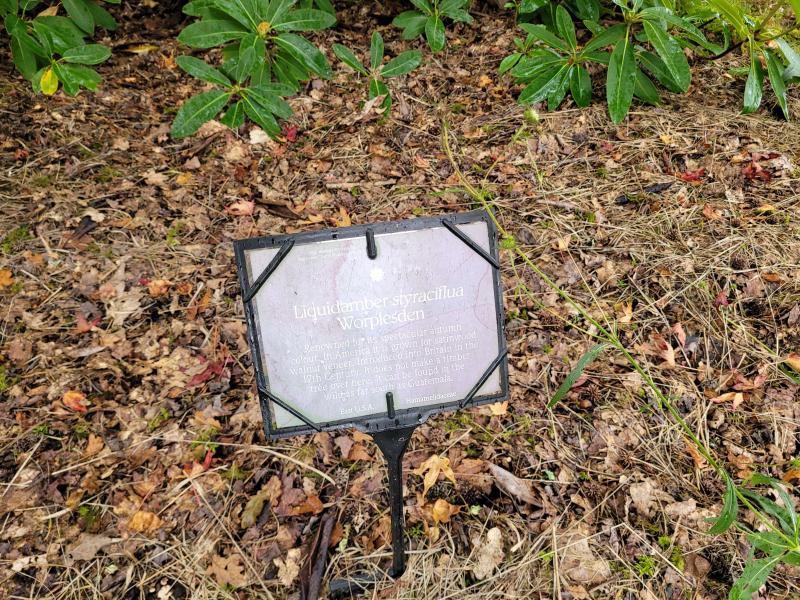
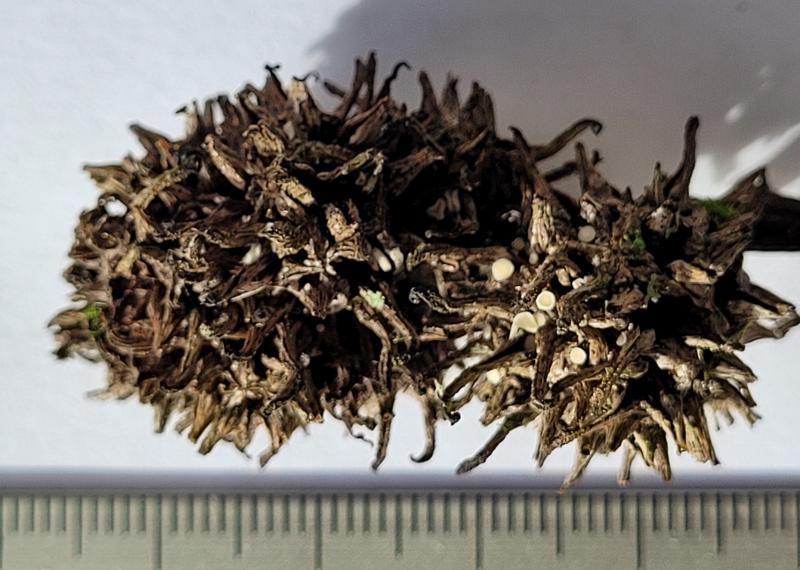
Habitat: On two dead composite fruit balls of Liquidambar (Altingiaceae, non-native), labelled L. styraciflua 'Worplesdon', on the woody central part of the ball, less exposed areas, still attached to a spur on the tree, ~1 m from the floor, presumably often drying out, small tree, between a lawn and a (slightly) more natural wooded area, private garden, High Weald, south England, mid-October, after rain.
Associates: A green leprose lichen, small black spherical fruit bodies, some small bryophytes, hyphae-like conidiophores with brown spores on the surface, more abundant after some time in a damp box.
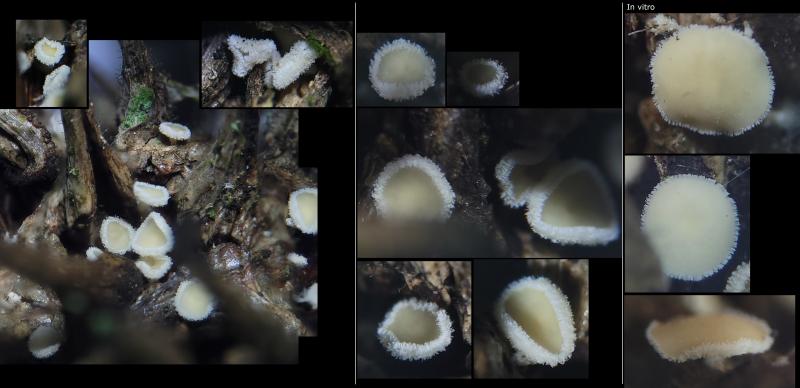
Apothecia: Many in a loose group across the two fruit balls, gregarious and some 2-3 caespitose, diameter < ~2 mm, whitish with disc more yellowish, with short and narrow stipe, length apparently dependent on environment, receptacle apparently closing when drier.
Low magnification: Initially globose-urceolate, hairs developing early, then cupulate and finally discoid when hydrated, with abundant short whitish hairs on receptacle and stipe, apparently agglutinated in clumps, giving hairs irregular thickness, disc pale yellowish-cream, more ochraceous with age, opaque, pruinose appearance (paraphyses), concave then plano-convex, overmature sometimes convex, margin remaining slightly closed with hairs enclosing disc until mature and fully hydrated then flattened, often undulating.
Asci: Narrow cylindrical-clavate, croziers, rings bb, form seems typical for Lachnum, apex rounded-conical and 2-2.5-seriate when turgid, subtruncate to slightly mammiform and 1-2-seriate when flaccid, after discharge with relatively large collar-like opening.
Spores: Narrow cylindrical, lower spores appear longer, apparently often several very small LBs (difficult to resolve), usually near the ends, OCI 0-1?, homopolar or slightly clavate (more elongated at the basal end), slightly asymmetrical in profile view.
Free spores in water (seem to be living): (6.0) 6.8-9.8 (10.6) × (1.6) 1.8-2.3 µm, Q = (3.1) 3.6 - 4.9 (5.5), N = 30, mean = 8.3 × 2.0 µm, Q mean = 4.2.
Paraphyses: Distinctly laceolate, protruding ~5-15 um above the mature asci, ~(3.5) 4-5 um wide, filled with low refractive yellowish/chlorinaceous contents.
Hairs: Covering receptacle and stipe, with small amorphous warts, densely covered, at the margin length ~50-75 um, ~2-3 septa, apices cylindrical to clavate-capitate, close to disc more acute, possibly with low refractive hyaline content as coalescing in IKI and a small number of VBs then visible, occasionally large hyaline clumps of exudate? at the apices of marginal hairs, easily disturbed and no crystals seen.
Ectal: Text. prismatica-globosa, hyaline, separated by horizontal hyphae, some pale red-purple exudate observed after trauma, stipe more prismatica?
Medullary: Text. porrecta.
Subhymenium: Chlorinaceous like paraphyses, some medium-size globose inflated cells.
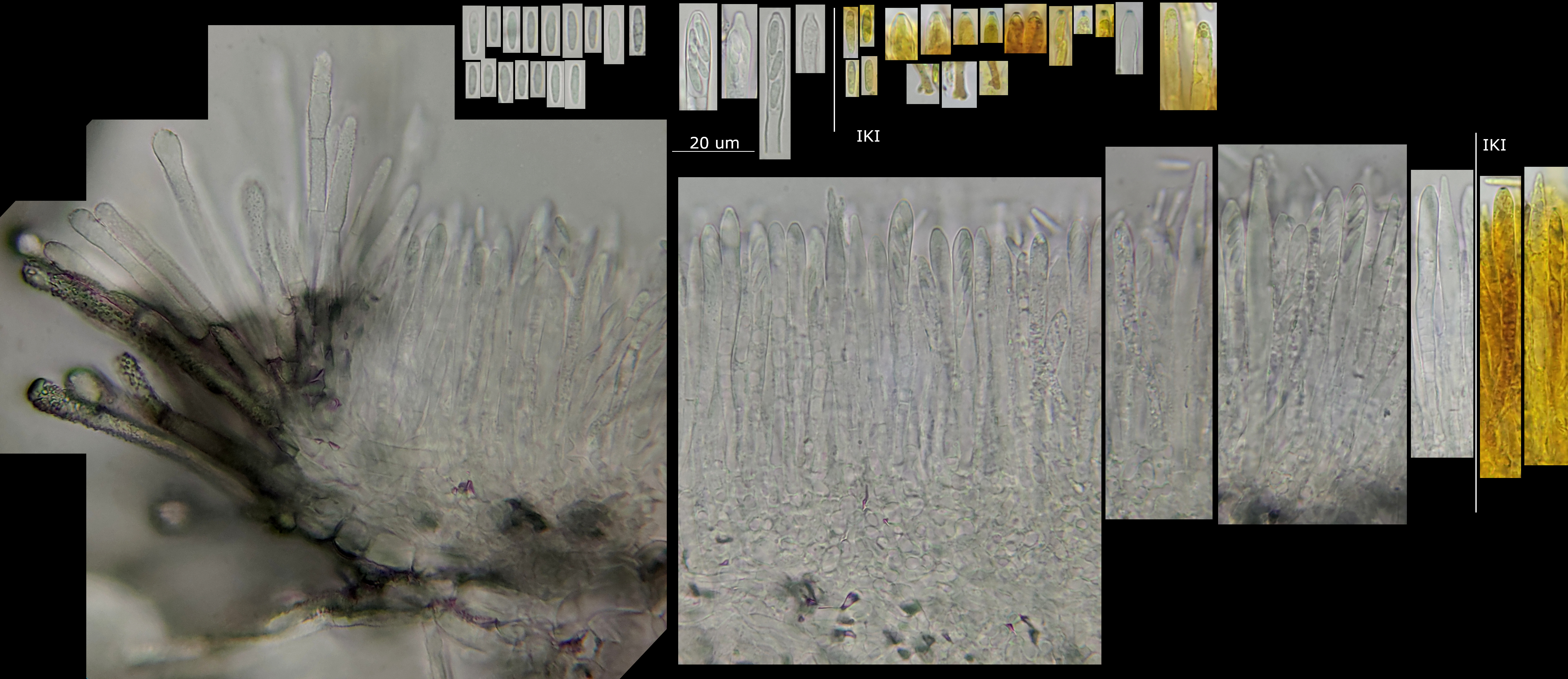 Hymenium-0022.jpeg
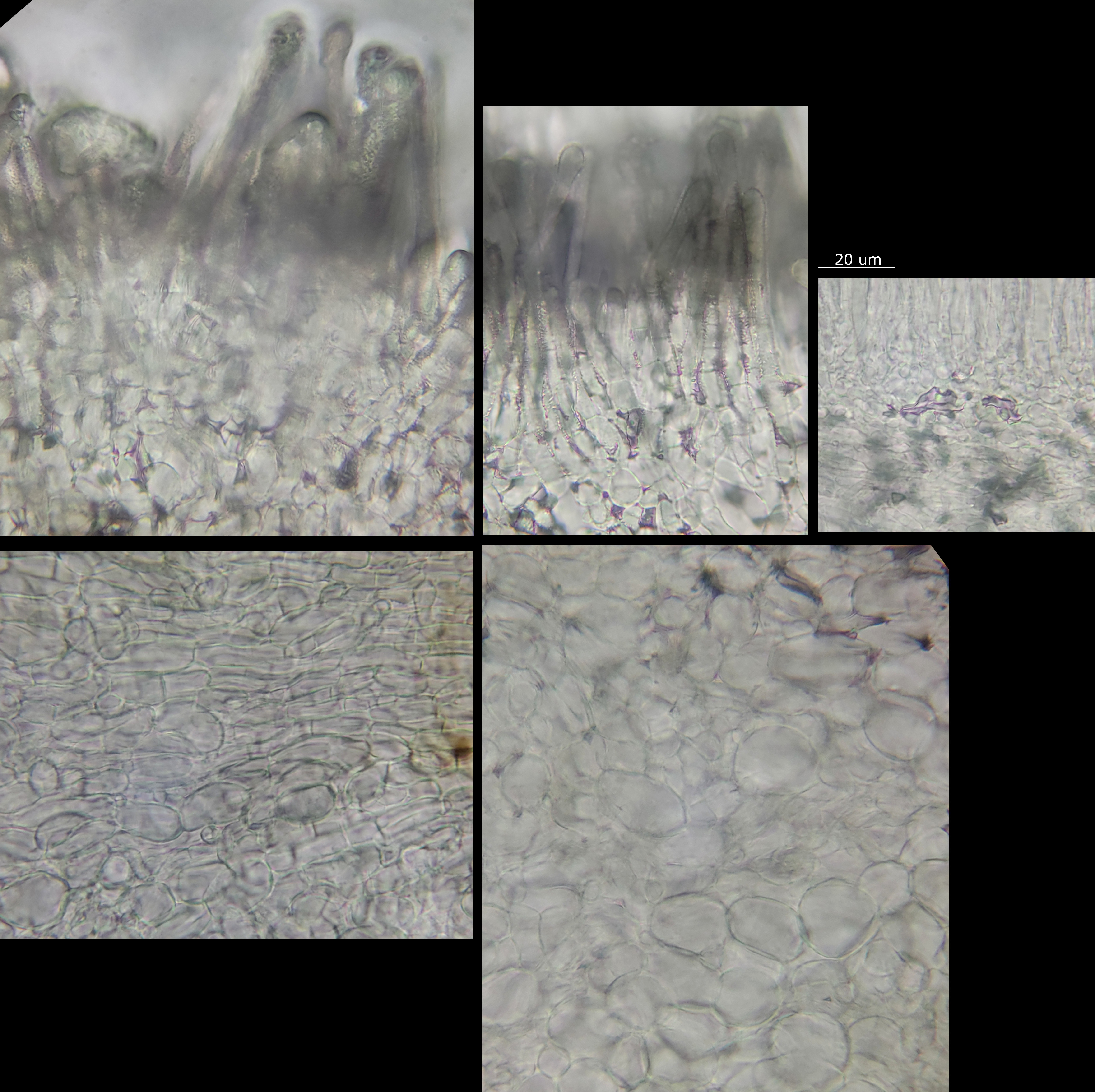 Excipulum-0015.jpeg
I appreciate the comment about VBs, on review they are not refractive and look more like large LBs.