12-06-2026 14:50
 François Freléchoux
Bonjour, Voici la brève description d'une Mollis
10-06-2026 21:16
François Freléchoux
Bonsoir,Le dernier du jour, en attendant votre avi
11-06-2026 19:01
 William Slosse
Hello all,In an attempt to make a culture of a sus
11-06-2026 19:03
 Nicolas VAN VOOREN
Chers membres d'Ascofrance,Le site sera placé en

09-06-2026 18:32
Camille MertensSur morceau de roseau immergé 0,5 - 0,7 mm de dia
10-06-2026 12:54
Steve ClementsBonjour encore, Pouvez-vous m'aider, s'il vous pl
10-06-2026 21:07
François Freléchoux
Toutes les tiges de gentianes jaunes de l'an passÃ
10-06-2026 13:41
François Freléchoux
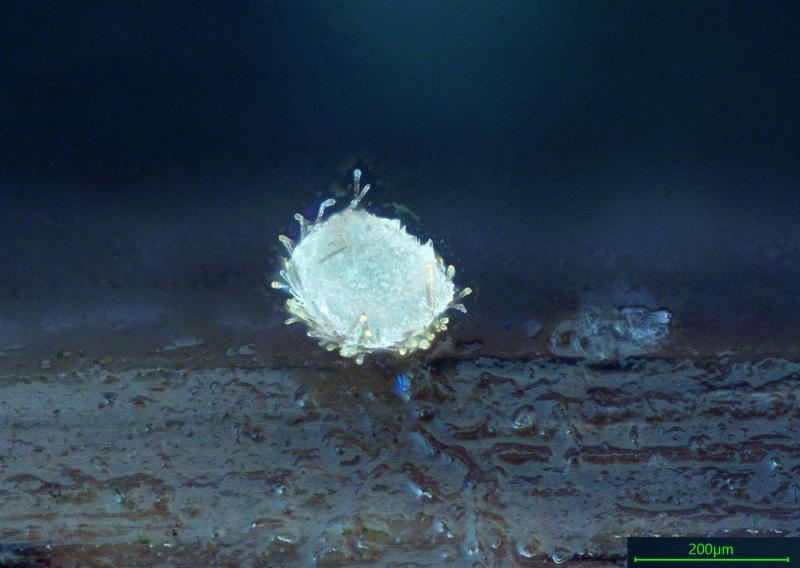
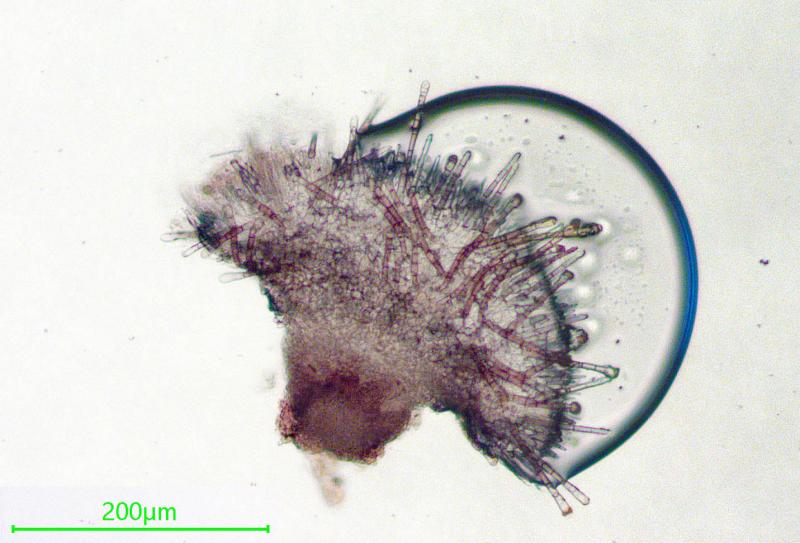
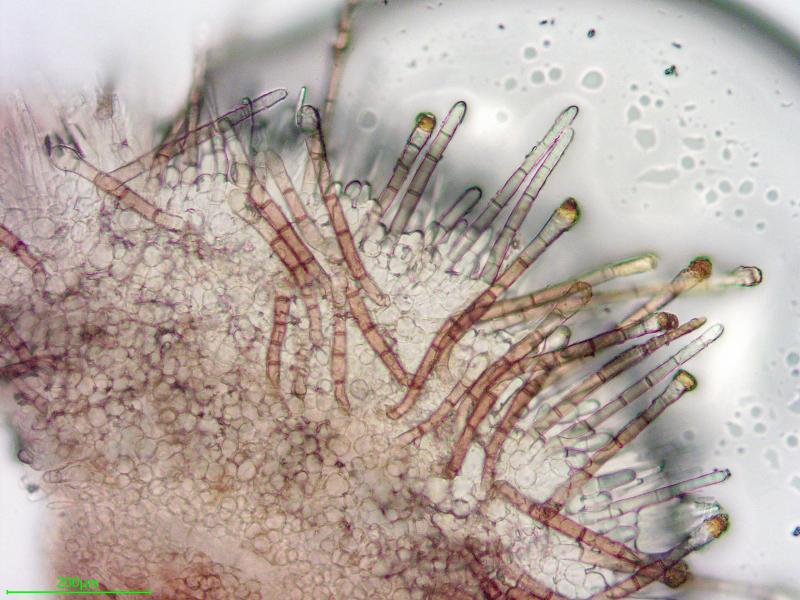
Bonjour à nouveau, Voici une trouvaille d'hier.
The apo is short stipitate with scattered marginal hairs 54-76 × 6,0-8,2 µm, walls on avg. 0,7 µm thick, ±capitate. Asci probably without croziers, 39-45 × 3.0-3.7 µm, IKI bb, 8-spored. Ascospores (6.5) 6.7-8.9 (10.4) × (1.5) 1.6-1.97 (2.0) µm, oil 0. Paraphyses lanceolate, 62-70 × 3.4-3.5 µm.
In the litteratre I have found two (potentially synonymous) taxa on Carex. Karsten's Trichopezizella nidulus var. hystricula was also on C. acuta collected not far away. Hains (1974) gives the spore size as (9-)10-14(-15) X 2-3 µm and hairs to 130 µm.
Trichopezizella badiella, likwise Karsten's, was collected on Bolboschoenus maritimus. Both original collections were immature but the name has, nevertheless, been used later for a species with spores 8-10x2 µm and hairs to 130x6 µm, also on Carex.
My fungus has somewhat smaller spores and shorter hairs. I am a bit confused - what should I call this fungus, T. cf. badiella perhaps? Any experience of this complex, someone?