

09-06-2026 18:32
Camille MertensSur morceau de roseau immergé 0,5 - 0,7 mm de dia
10-06-2026 12:54
Steve ClementsBonjour encore, Pouvez-vous m'aider, s'il vous pl
10-06-2026 21:16
 François Freléchoux
Bonsoir,Le dernier du jour, en attendant votre avi
10-06-2026 21:07
François Freléchoux
Toutes les tiges de gentianes jaunes de l'an passÃ
10-06-2026 13:41
François Freléchoux
Bonjour à nouveau, Voici une trouvaille d'hier.
10-06-2026 11:53
Steve ClementsBonjour, This disco is abundant on dead stems of
10-06-2026 10:45
François Freléchoux
Bonjour à nouveau, Encore une détermination qui
08-06-2026 10:16
 Spooren Marco
I don`t have a clou about this fungus,it is not in
10-06-2026 09:24
François Freléchoux
Bonjour, J'imagine que cette détermination ne do
Hymenoscyphus ->H. vacini
Margot en Geert Vullings,
19-09-2023 10:46
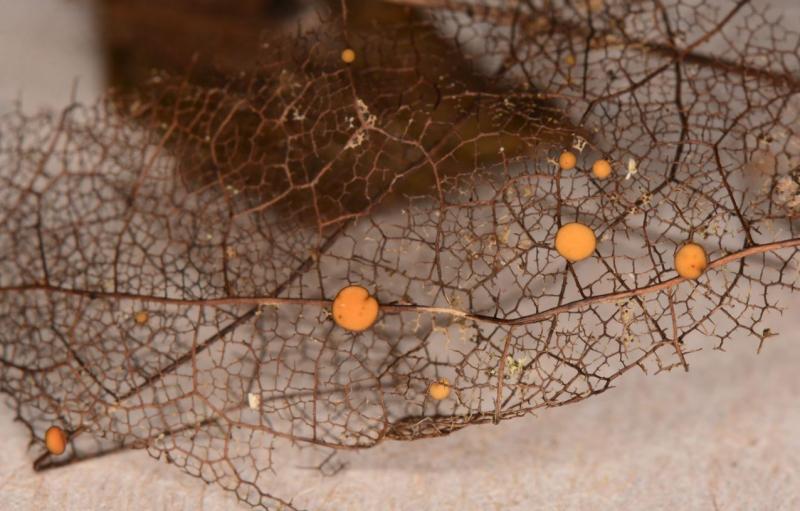
With Ellis&Ellis and Fungi of Temperate Europe we ended up at Hymenoscyphus, because of the large spores.
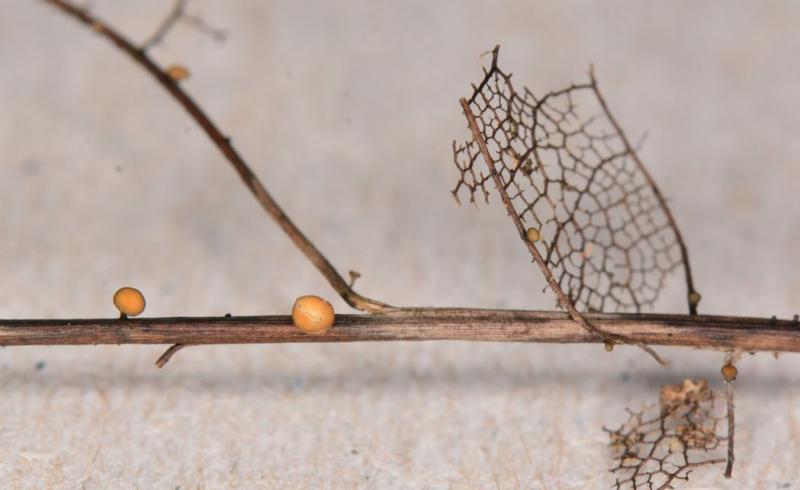
Fruit bodies: 0.5-2mm diameter, dark yellow
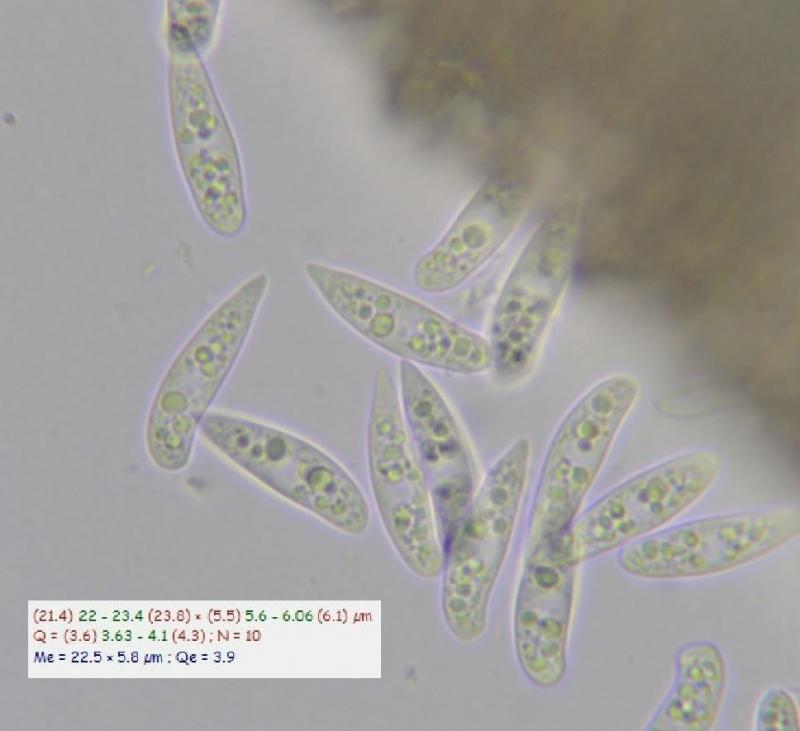
Spores size: 22-23.4 x 5.6-6.06 µ (measured in water)
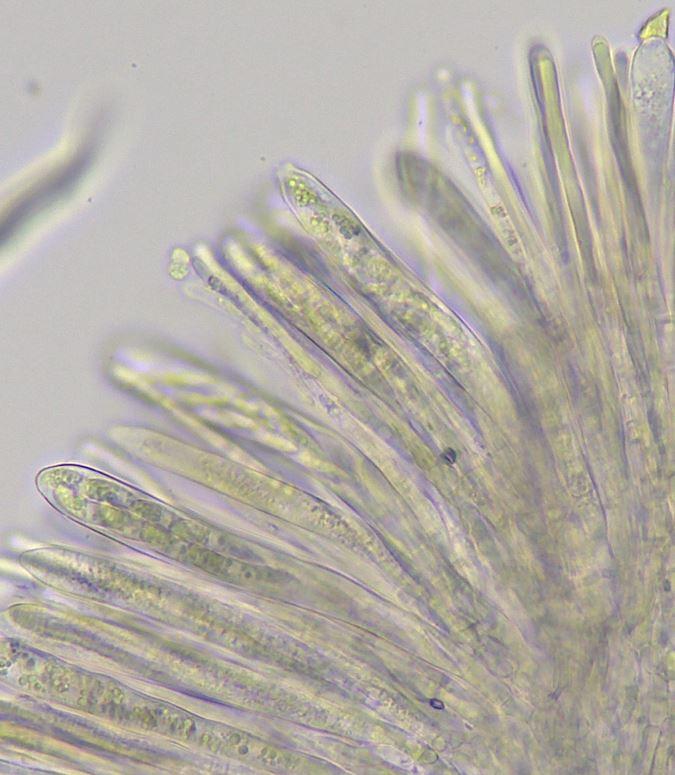
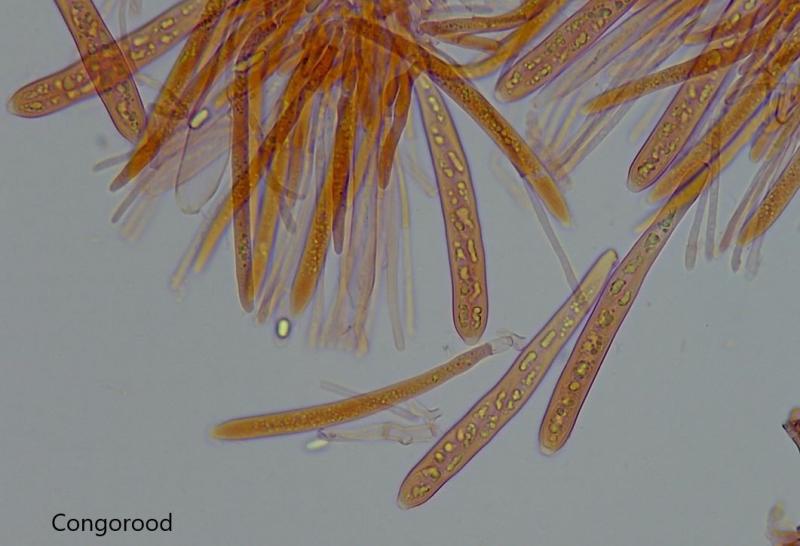
Ascus size: 92.7-113.5 x 9.64-11.8 µ (measured in water)
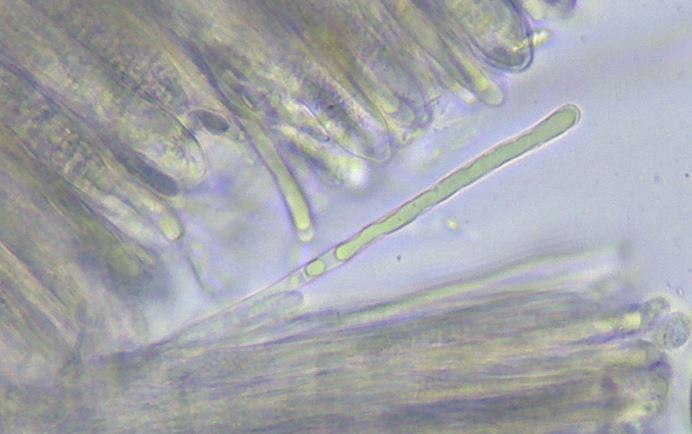
Paraphyses: VB's
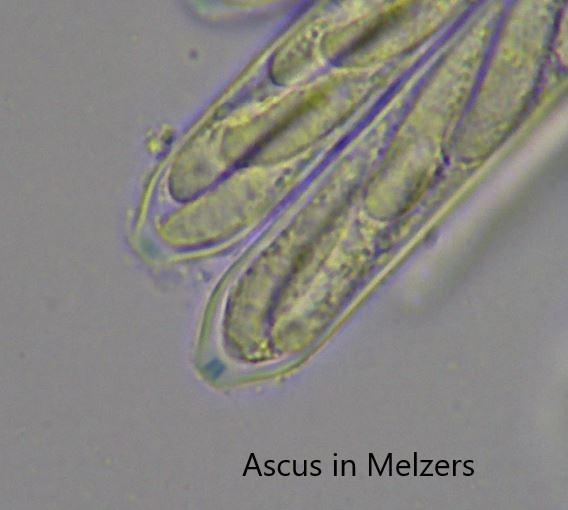
Ascus: we haven't found any croziers, but we still find that very difficult.
We can't figure it out with this key: https://web.micolosa.net/wp-content/uploads/claves-hymenoscyphus.pdf
Which Hymenoscyphus could this be?
Thank you in advance,
Margot
Hans-Otto Baral,
19-09-2023 15:17

Re : Hymenoscyphus
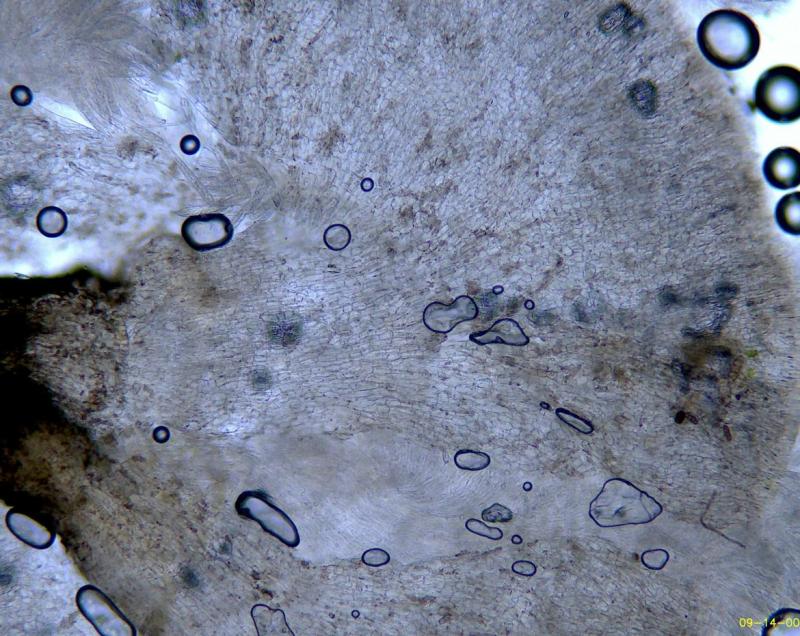
This must be H. vacini on Acer. I never had it on another tree. Typical the skeletonized leaf and the fine dark network on the receptacle and dark stipe. The reticulum is not celar on your pics, though. And I do not know the species dark yellow or yellow-orange as I see on my screen.
I have published on this species in my paper about H. fraxineus/albidus.
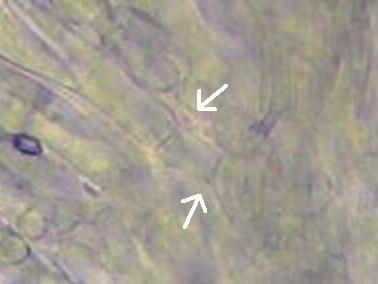
The absence of croziers I cann see:
Margot en Geert Vullings,
19-09-2023 19:41
Re : Hymenoscyphus
Thank you very much Zotto, that could possibly be a new species for the Netherlands.
Acer leaf is very possible, there are also Acer trees.
Acer leaf is very possible, there are also Acer trees.
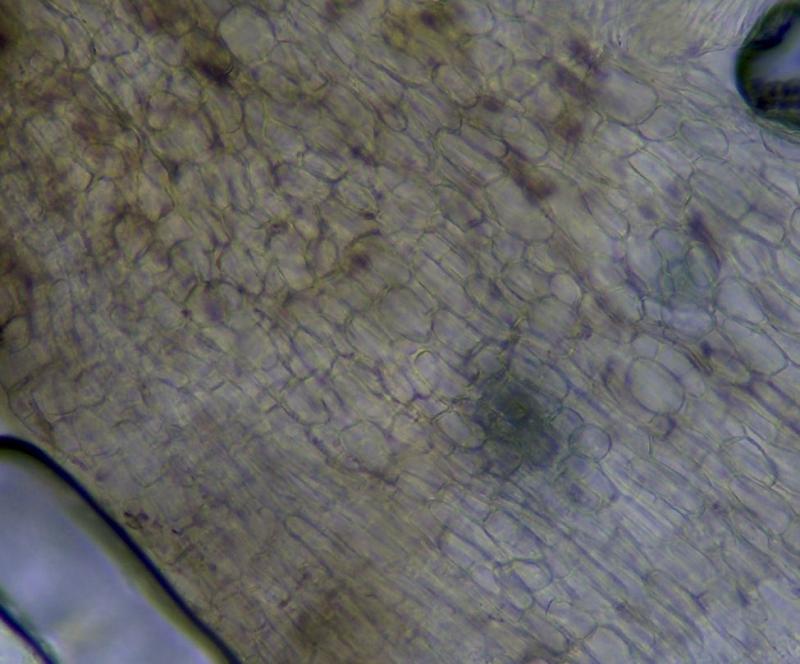
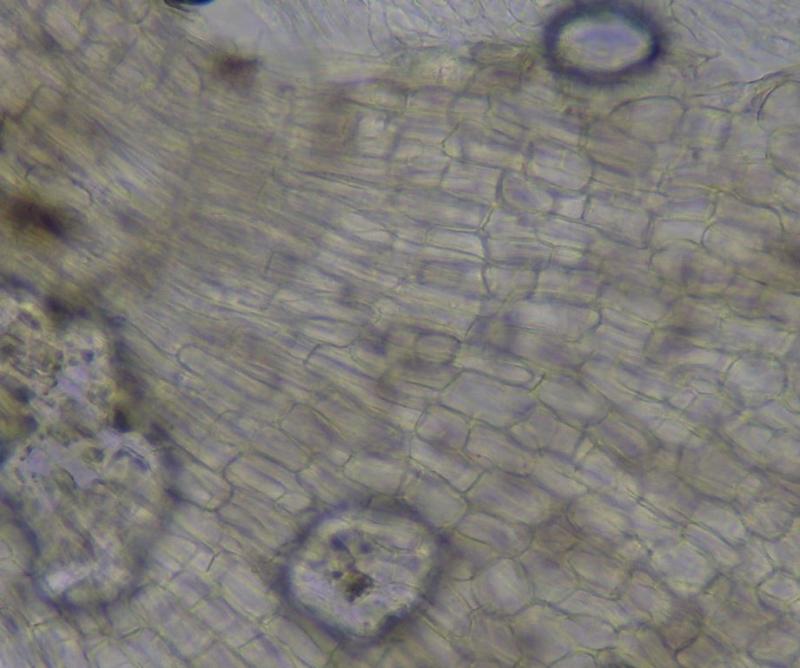
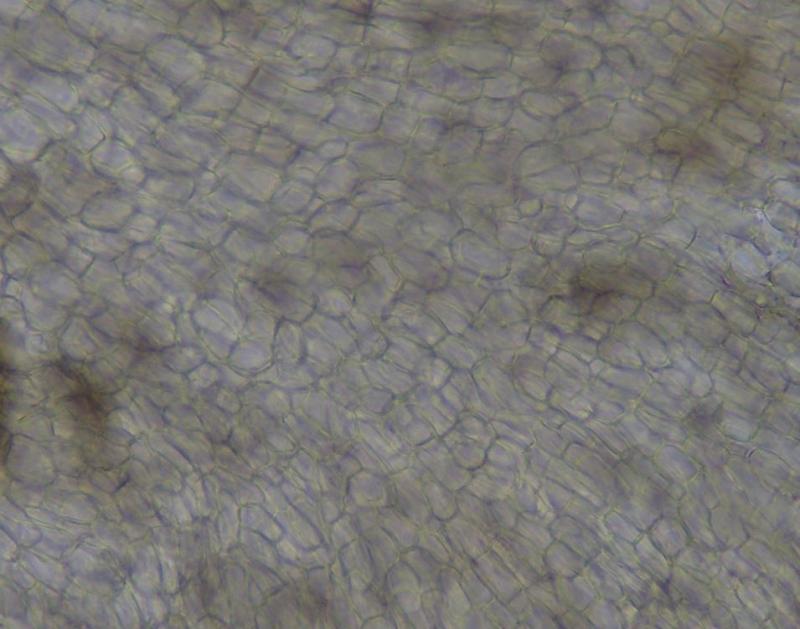
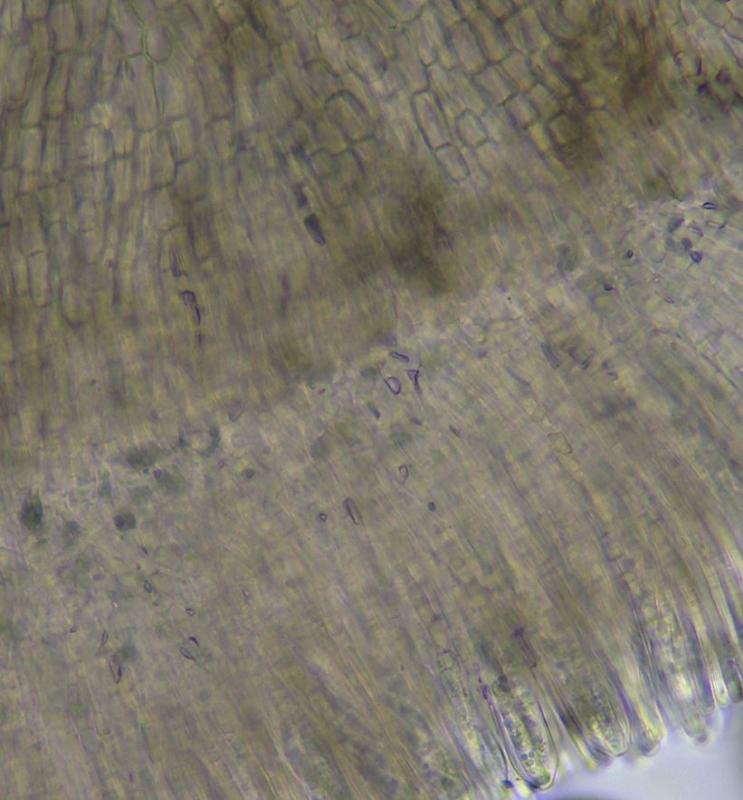
I added pictures of the reticulum, is that what you mean?
Margot
Hans-Otto Baral,
19-09-2023 20:42
Re : Hymenoscyphus
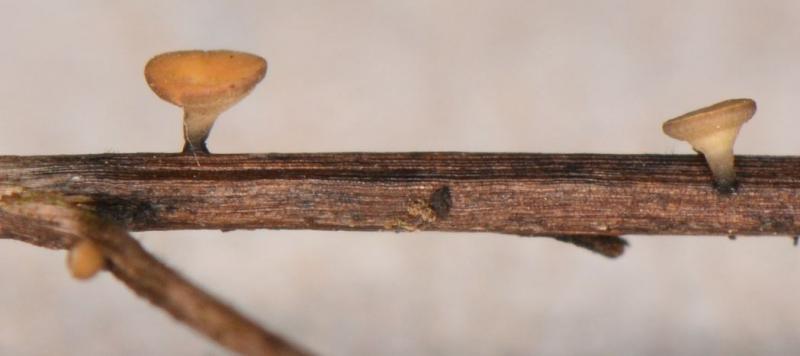
It could be, I think it is not always distinct under the micro but could be seen in macrophotos of the underside. But I really think it is not constant. More clear is the blackish stipe, like the H. albidus group.
I compared leaves of Acer pseudoplatanus with H. vacini in my folder, and actually the branching of the main veins of the leaf is alternate, contrary to the branching of the twigs of Acer.
Margot en Geert Vullings,
19-09-2023 21:38
Re : Hymenoscyphus
I have added a photo of the underside and a not so sharp photo of the leaf veins.
That part of the forest contains from Acer mainly Acer Pseudoplatanus, there was an inventory there last year.
Margot

Hans-Otto Baral,
20-09-2023 09:20
Re : Hymenoscyphus
At least the black stipe base and the dark marginal rim are typical.
Margot en Geert Vullings,
20-09-2023 10:21
Re : Hymenoscyphus
Thank you very much Zotto.
We saw that there is already one sighting in the Netherlands with the name Lanzia vacini.
Margot
Hans-Otto Baral,
20-09-2023 10:36
Re : Hymenoscyphus
Yes, that was the old school who considered all blackening of the substrate as indication for a relationship with Sclerotiniaceae. H. albidus was therefore transferred by Korf to Lambertella.