09-06-2026 18:32
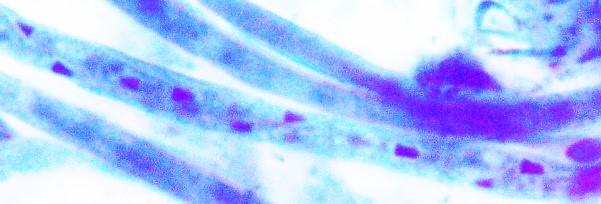
Camille MertensSur morceau de roseau immergé 0,5 - 0,7 mm de dia
10-06-2026 12:54
Steve ClementsBonjour encore, Pouvez-vous m'aider, s'il vous pl
10-06-2026 21:16
 François Freléchoux
Bonsoir,Le dernier du jour, en attendant votre avi
10-06-2026 21:07
François Freléchoux
Toutes les tiges de gentianes jaunes de l'an passÃ
10-06-2026 13:41
François Freléchoux
Bonjour à nouveau, Voici une trouvaille d'hier.
10-06-2026 11:53
Steve ClementsBonjour, This disco is abundant on dead stems of
10-06-2026 10:45
François Freléchoux
Bonjour à nouveau, Encore une détermination qui
08-06-2026 10:16
 Spooren Marco
I don`t have a clou about this fungus,it is not in
10-06-2026 09:24
François Freléchoux
Bonjour, J'imagine que cette détermination ne do
Hypomyces spec. bright orange
Andreas Gminder,
27-08-2023 23:05
 Dear colleages,
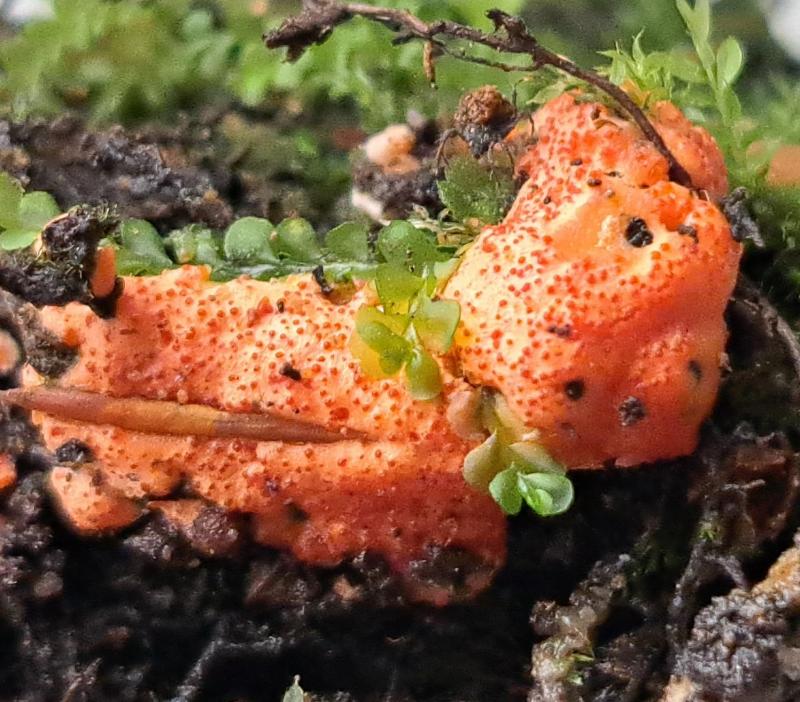
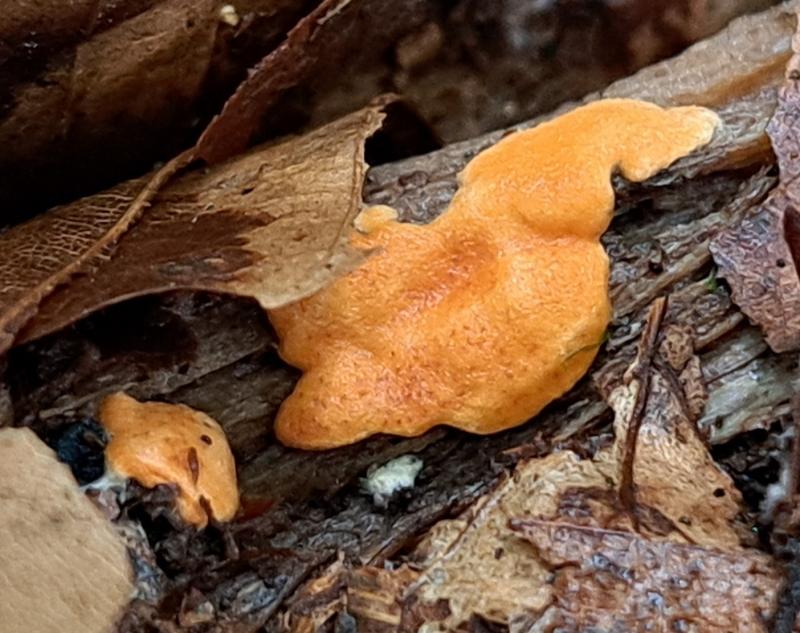
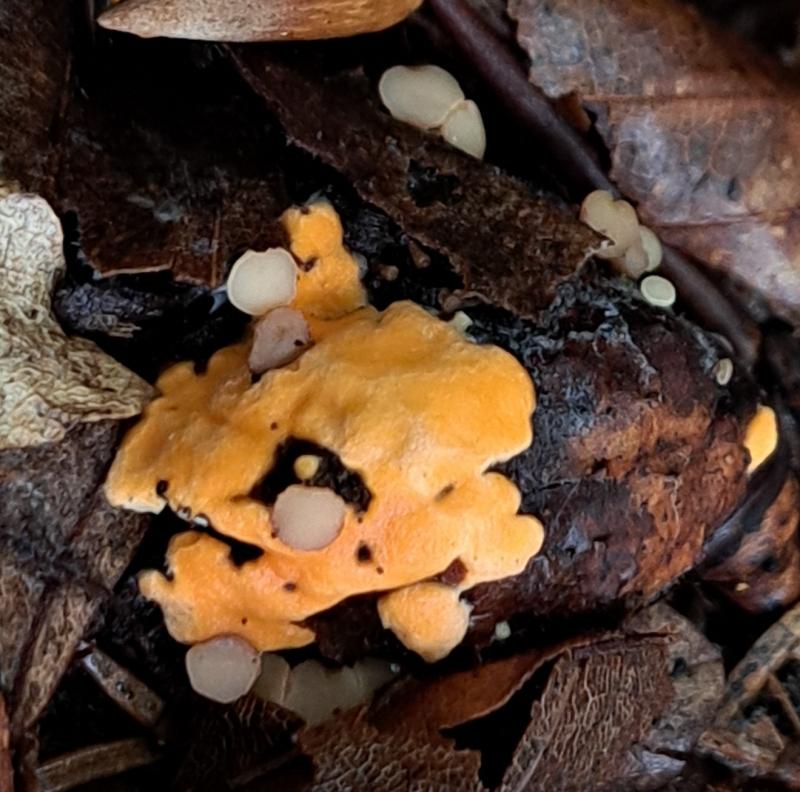
today I found a strinkingly bright orange Hypomyces species in a beech forest near a rivulet in many spots and always seemingly without contact to fungi. I understand that Hypomyces species are myco-parasites, but I have not been able to detect a possible host, though several of the stromata were still unripe and should be on a still visible host ....
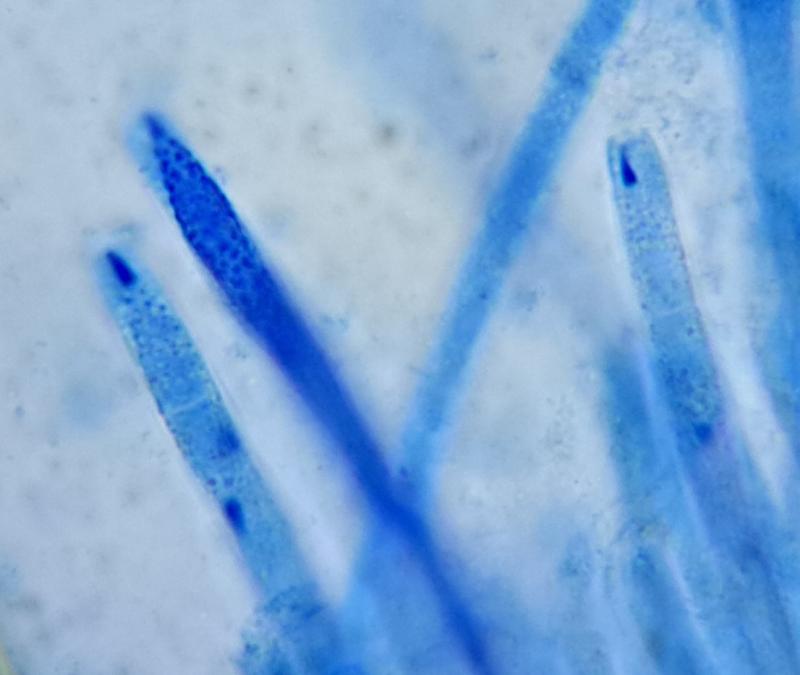
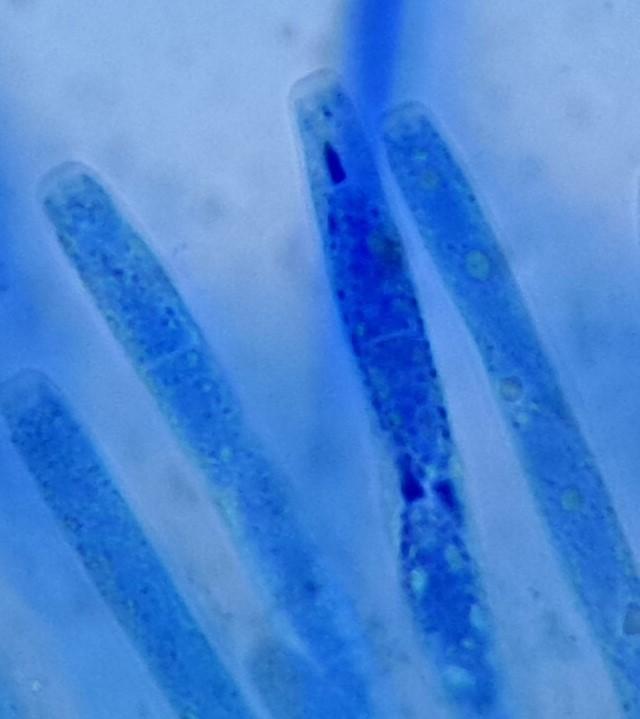
Spores are distictly warty in cotton blue, appr. 23 x 6 µm and the appendices are cyanophilous and are additionally 3-4 µm on each side.
Can someone give me a hint?
thank you and all the best,Andreas
Ueli Graf,
27-08-2023 23:44

Re : Hypomyces spec. bright orange
Hallo Andreas
könnte es nicht Hypomyces rosellus sein.
Habe den auch schon gehabt auf Blätter.
Gruss
Ueli
Jacques Fournier,
28-08-2023 09:21

Re : Hypomyces spec. bright orange
Hi Andreas,
H. armeniacus (= ochraceus), in shades of orange, is known to develop mostly on Russulales and to often completely destroy its host before spreading on surrounding litter, even at base of living trunks. Your spores are a bit too small to fit this species but they may be immature. See Rogerson & Samuels 1994, Mycologia, 86: 839-866.
Good luck!
Jacques
H. armeniacus (= ochraceus), in shades of orange, is known to develop mostly on Russulales and to often completely destroy its host before spreading on surrounding litter, even at base of living trunks. Your spores are a bit too small to fit this species but they may be immature. See Rogerson & Samuels 1994, Mycologia, 86: 839-866.
Good luck!
Jacques
Viktorie Halasu,
28-08-2023 13:02

Re : Hypomyces spec. bright orange
Hello Andreas,
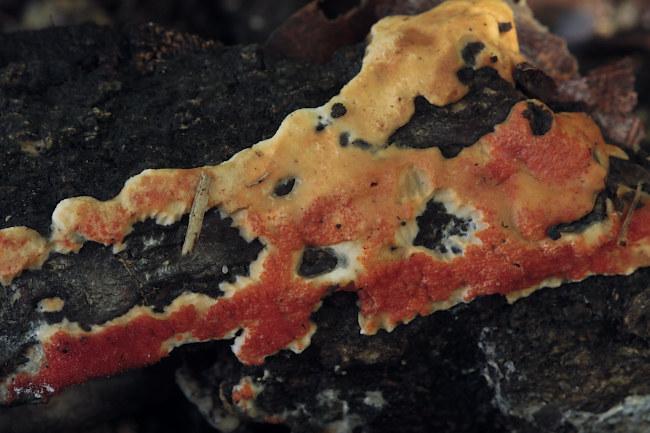
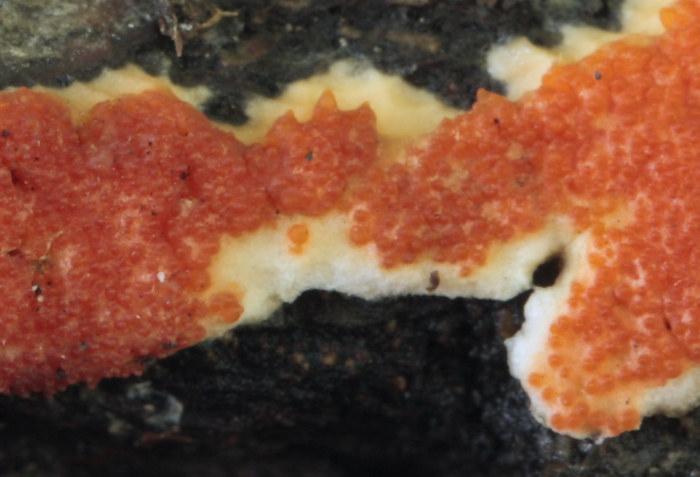
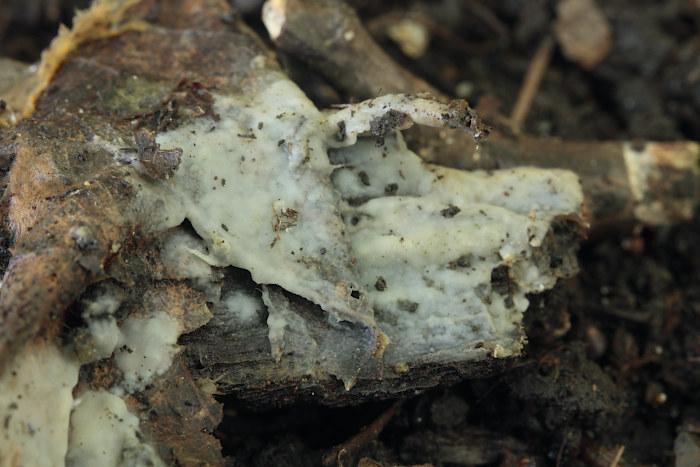
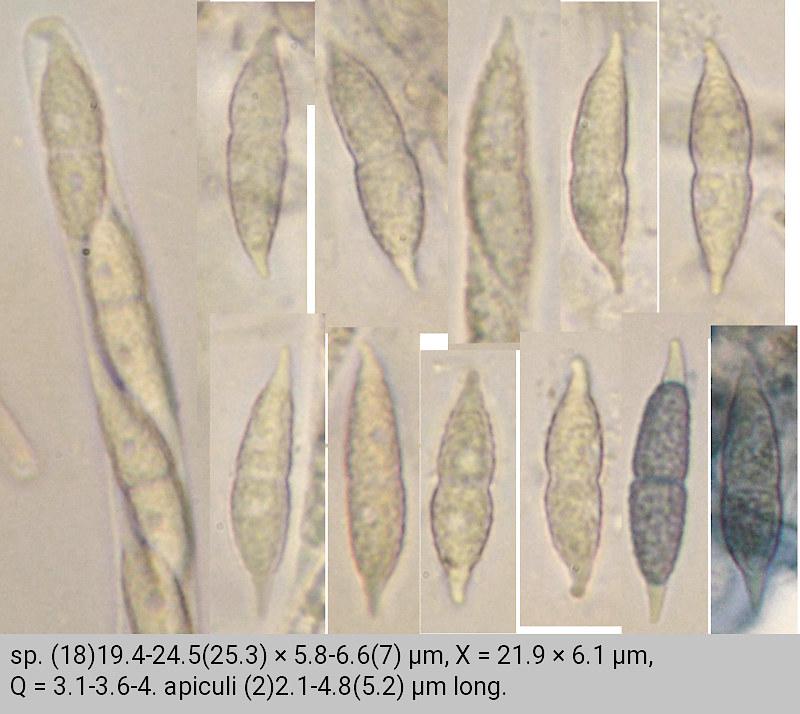
wasn't there some corticioid fungus nearby? I had this Hypomyces, tentatively ID'd as H. corticiicola, growing on a piece of bark partly buried in soil, with Sebacina cf. incrustans growing on the lower side of the bark. Spore size looks similar.
Viktorie
wasn't there some corticioid fungus nearby? I had this Hypomyces, tentatively ID'd as H. corticiicola, growing on a piece of bark partly buried in soil, with Sebacina cf. incrustans growing on the lower side of the bark. Spore size looks similar.
Viktorie
Patrice TANCHAUD,
28-08-2023 13:12
Re : Hypomyces spec. bright orange
Bonjour Viktorie et tous,
for H. corticiicola, is the KOH reaction purple like for H. aurantius ? Have you tested it ?
Thanks.
Thanks.
Pour H. corticiicola, est-ce que la réaction au KOH est pourpre comme pour H. aurantius ? L' as-tu testé ?
Merci.
Merci.
Patrice
Viktorie Halasu,
28-08-2023 14:38
Re : Hypomyces spec. bright orange
I've seen perithecium wall discoloring in KOH to yellow to orange-yellow. I the protologue it is described as either turning bright yellow or not reacting at all. I didn't test LA and don't have the specimen anymore.
Lothar Krieglsteiner,
03-09-2023 11:33

Hypomyces armeniacus - I would agree to Jacques
Hello together,
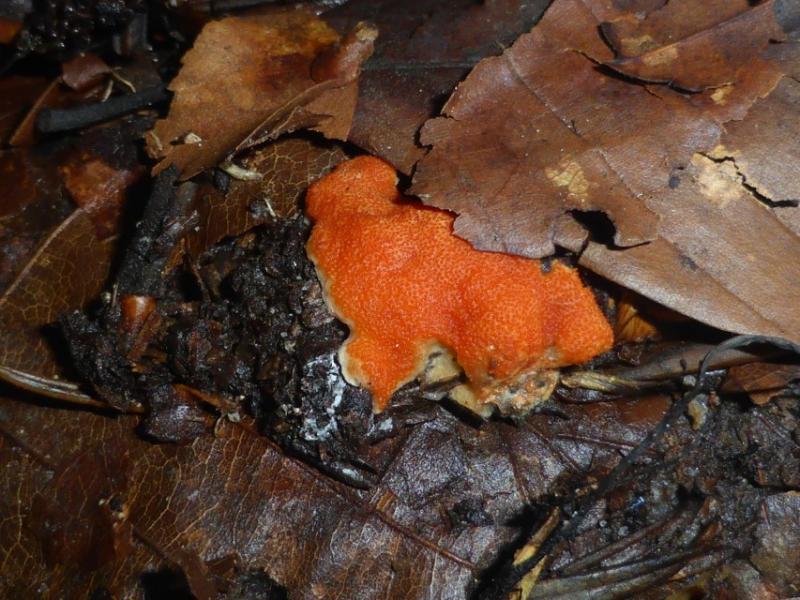
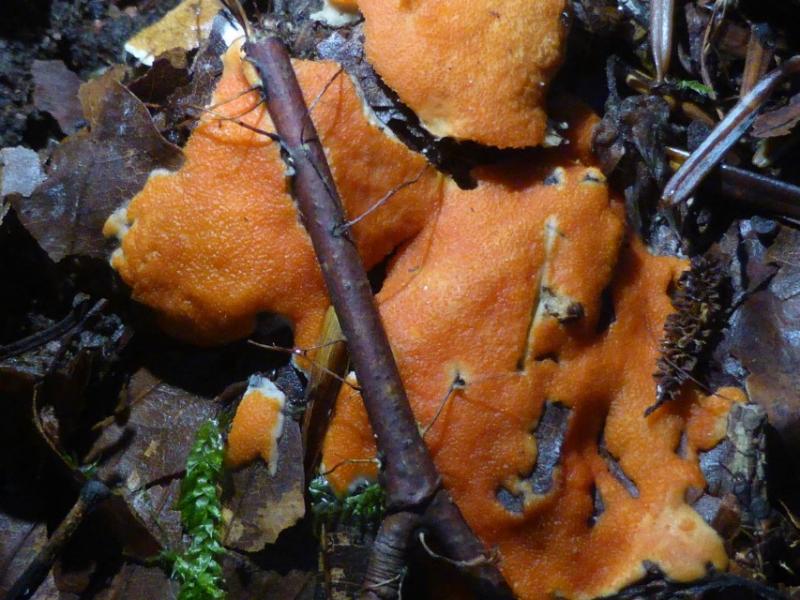
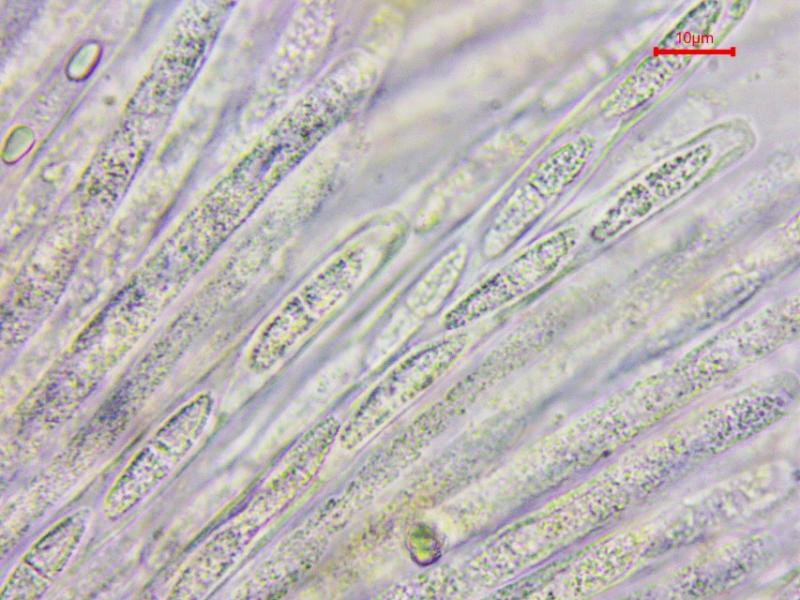
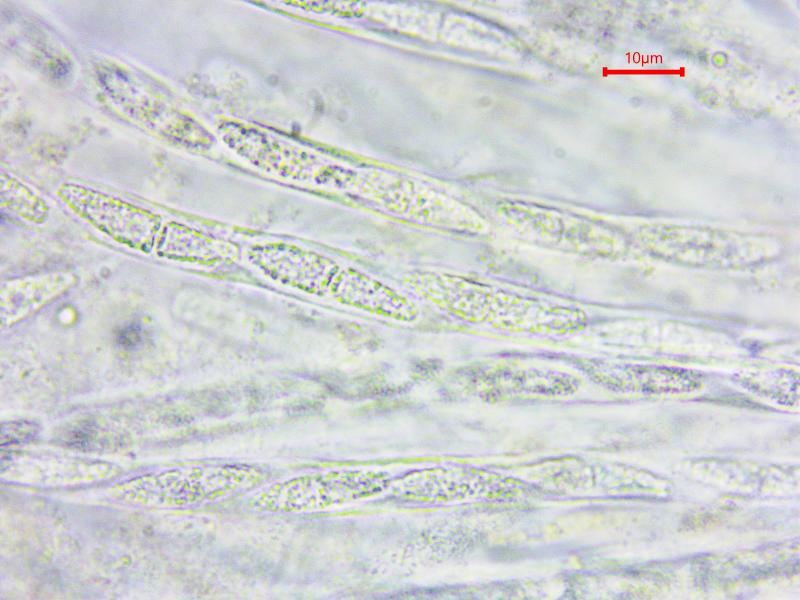
as it is sometimes coincidence, yesterday I found this Hypomyces on the ground in a wood I quite often visit. I never found this before, and it looks to me as it should be the same than Andreas fungus. My specimen is quite premature, only some asci contain ripe spores, and I found not a single spore outside the ascus.
The macroscopic appearance to me was like thrown-away peels of tangerine, and I had to look with the lens (in the dark forest) to see the perithecia and to regard it as fungus.
About the ecology: the forest round the specimen (not directly where it grew, unfortunately, but few meters away) was full of decaying and decayed remains of Russula specimens, what is also proved by the very common growth of Asterophora parasitica. I did not notice a corticioid fungus and the habitat did not look as if this would be very likely. As I also find the pictures googled for H. armeniacus fitting well I consider my specimen to be this species.
KOH did not lead to a notable discoloring of the perithecia(l wall) neither macroscopic (stayed the same bright orange) nor microscopical.
Yours, Lothar
as it is sometimes coincidence, yesterday I found this Hypomyces on the ground in a wood I quite often visit. I never found this before, and it looks to me as it should be the same than Andreas fungus. My specimen is quite premature, only some asci contain ripe spores, and I found not a single spore outside the ascus.
The macroscopic appearance to me was like thrown-away peels of tangerine, and I had to look with the lens (in the dark forest) to see the perithecia and to regard it as fungus.
About the ecology: the forest round the specimen (not directly where it grew, unfortunately, but few meters away) was full of decaying and decayed remains of Russula specimens, what is also proved by the very common growth of Asterophora parasitica. I did not notice a corticioid fungus and the habitat did not look as if this would be very likely. As I also find the pictures googled for H. armeniacus fitting well I consider my specimen to be this species.
KOH did not lead to a notable discoloring of the perithecia(l wall) neither macroscopic (stayed the same bright orange) nor microscopical.
Yours, Lothar