

10-06-2026 12:54
Steve ClementsBonjour encore, Pouvez-vous m'aider, s'il vous pl
09-06-2026 18:32
Camille MertensSur morceau de roseau immergé 0,5 - 0,7 mm de dia
10-06-2026 21:16
 François Freléchoux
Bonsoir,Le dernier du jour, en attendant votre avi
10-06-2026 21:07
François Freléchoux
Toutes les tiges de gentianes jaunes de l'an passÃ
10-06-2026 13:41
François Freléchoux
Bonjour à nouveau, Voici une trouvaille d'hier.
10-06-2026 11:53
Steve ClementsBonjour, This disco is abundant on dead stems of
10-06-2026 10:45
François Freléchoux
Bonjour à nouveau, Encore une détermination qui
08-06-2026 10:16
 Spooren Marco
I don`t have a clou about this fungus,it is not in
10-06-2026 09:24
François Freléchoux
Bonjour, J'imagine que cette détermination ne do
 Buenas tardes
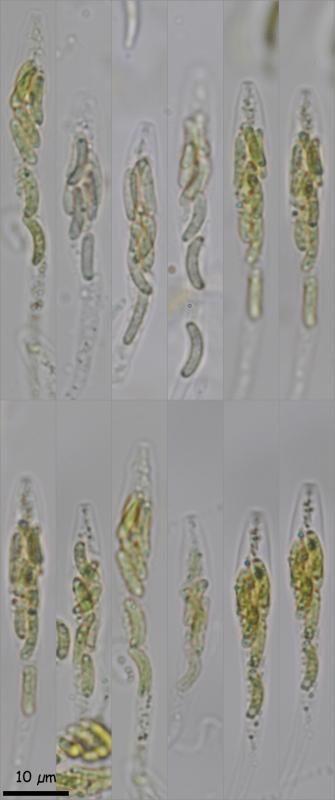
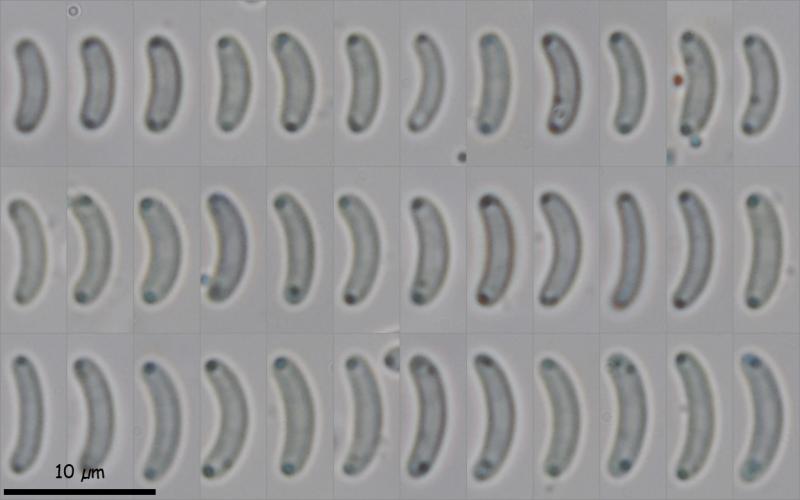
El día 7/6/2023 encontré en Tenerife este Pyrenomycete bastante carbonáceo, muy pequeño, de 200-300 micras de diámetro, sobre madera de brezo (Erica arborea) o faya (Myrica faya). Las ascas tienen un pie larguísimo, son IKI- y tienen 8 esporas cilíndrico alantoides con una gútula oscura en cada extremo. No he visto paráfisis, y en su lugar hay una masa de hifas con terminaciones muy refringentes, sobre todo en IKI.
Medidas de las ascas:
(80,6) 95,3 - 136,2 (163,4) × (4,3) 5 - 6 (6,3) µm
N = 18; Me = 115,2 × 5,4 µm ; Qe = 21,7
Medidas de las esporas (Medidas de punta a punta, no siguiendo la curvatura):
(5,6) 6,2 - 8,4 (8,8) × (1,3) 1,5 - 2 (2,2) µm
Q = (2,9) 3,4 - 5,1 (5,7) ; N = 45
Me = 7,3 × 1,8 µm ; Qe = 4,2
En Canarias están citadas Eutypella canariensis, E. euphorbiae y E. leprosa. De las 2 primeras prácticamente no hay documentación, y la tercera no se parece.
Gracias por vuestra ayuda.
Miguel Á. Ribes
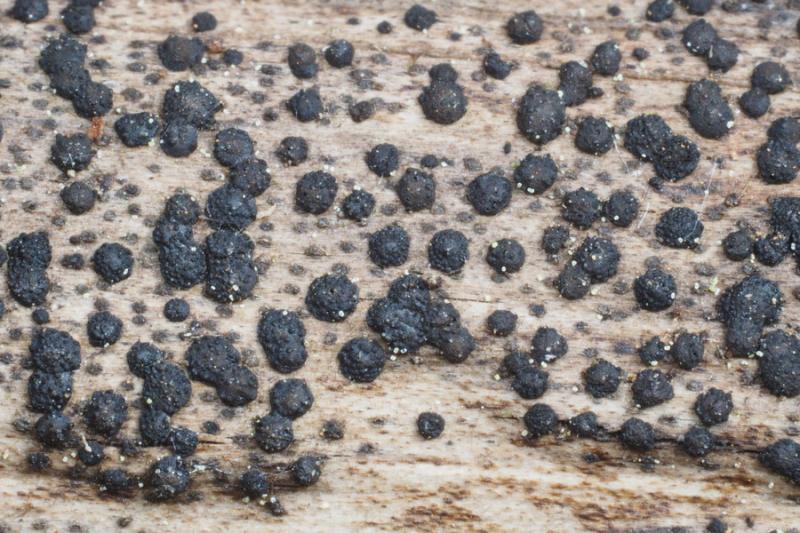
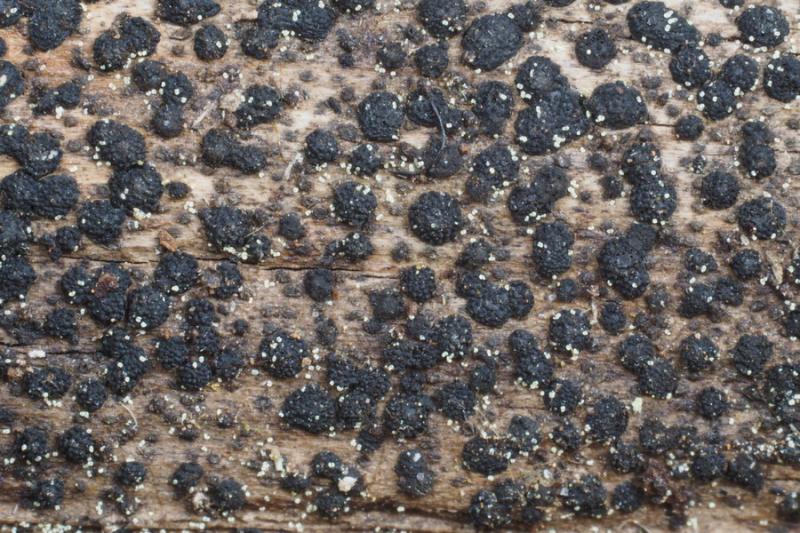
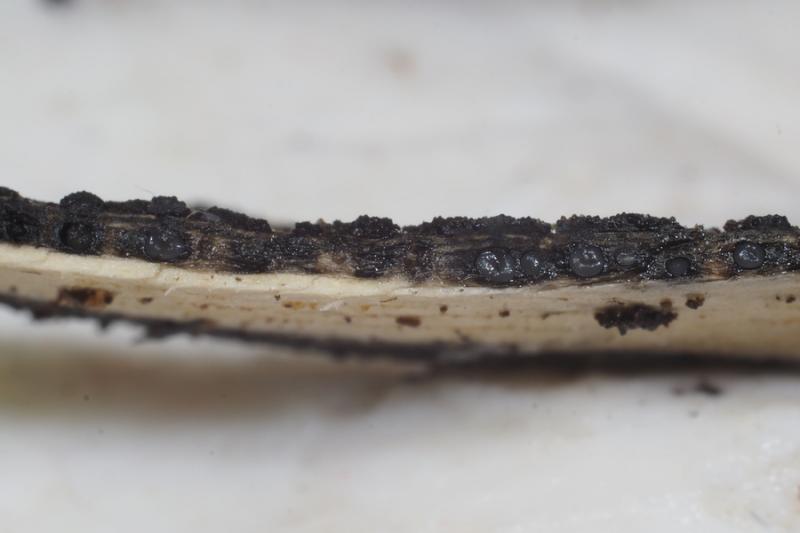
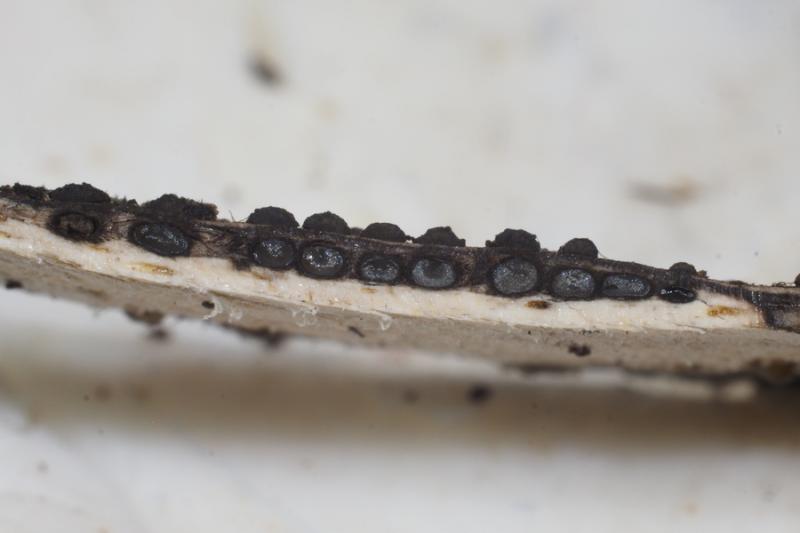
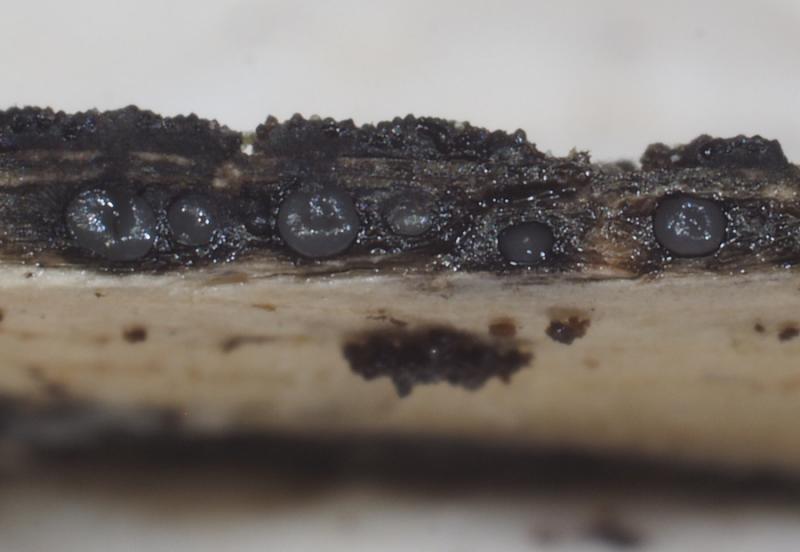
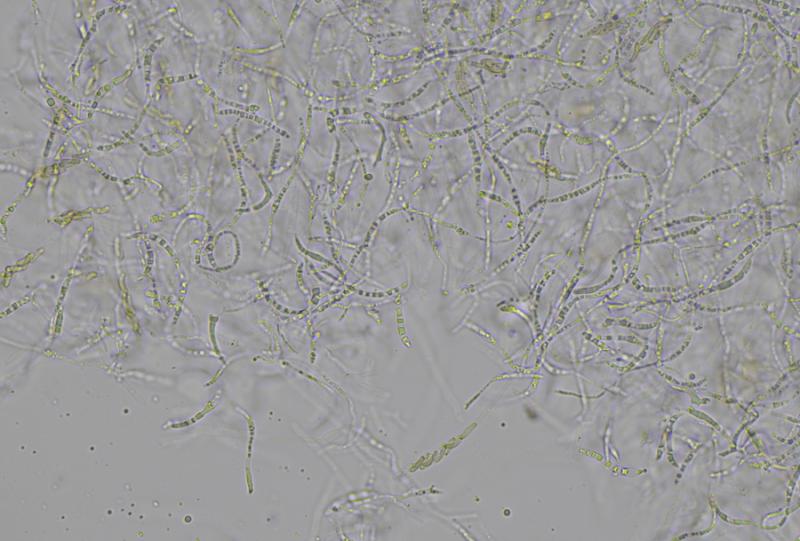
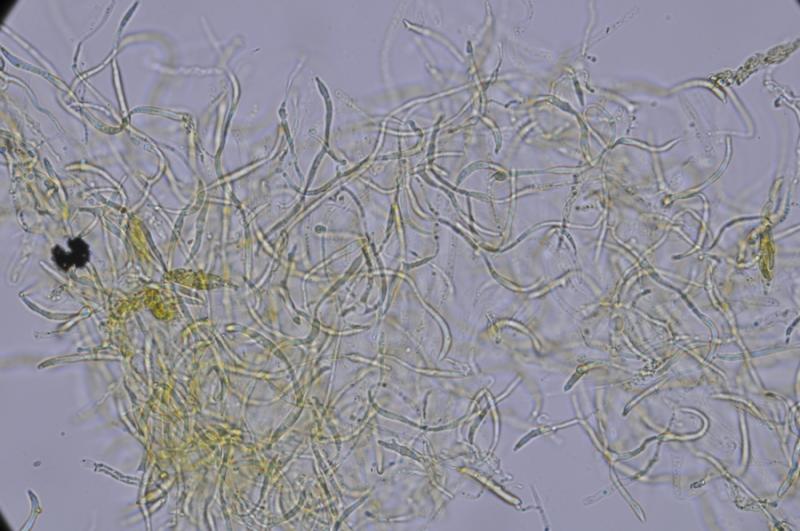
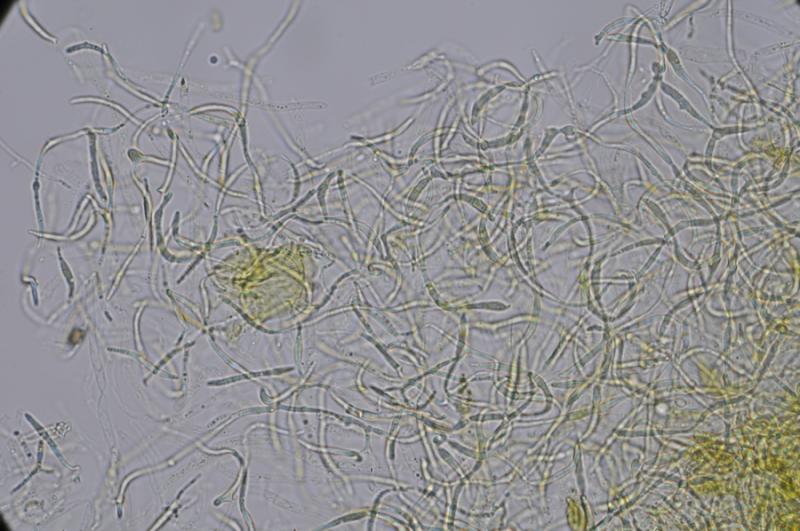
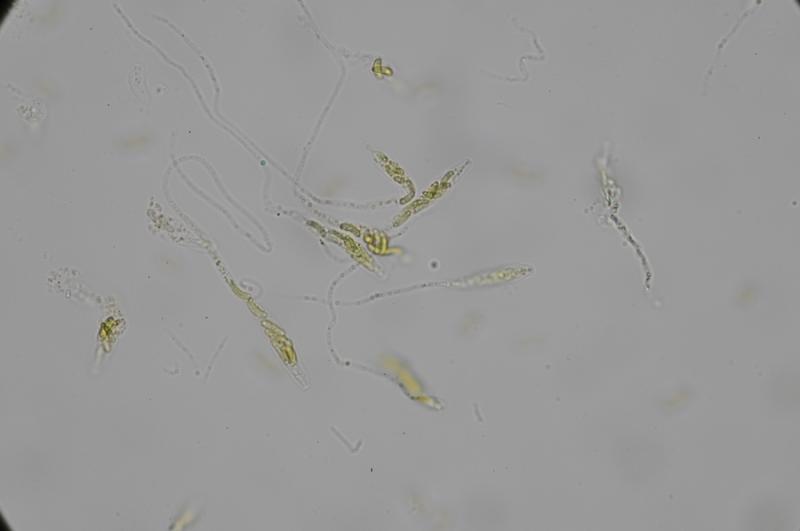
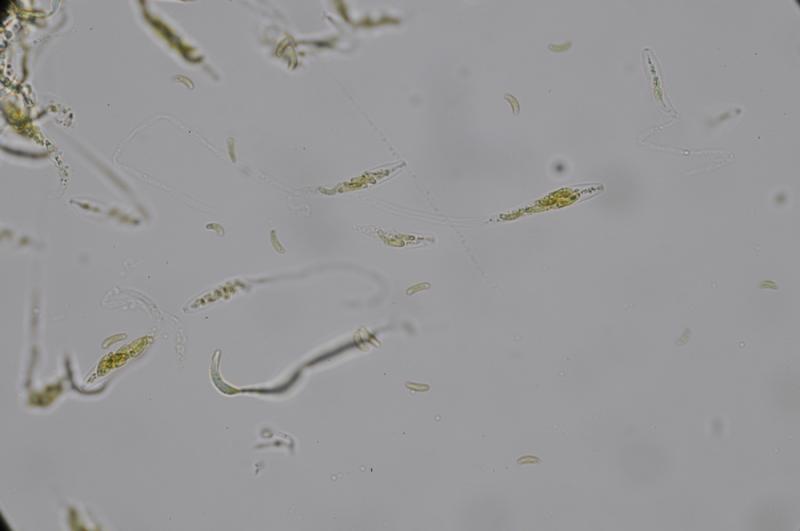

In Diatrypaceae, the morphology of the stroma is essential to the genus placement.
Regularly spaced single perithecia suggest Eutypa rather than Eutypella in which several perithecia are collectively erumpent though a common disc, with more or less prominent ostioles.
I don't see ostioles on your photos and it's only a guess that the small protuberances are not ostioles but perhaps superficial parasites, or maybe pycnidia. The hemispherical superficial part should be elucidated by sections in close-up to assess whether it is an ostiolar structure or what else.
Photos 6-7-8 recall a possible libertella-like asexual morph, I wonder if it comes from the perithecial contents or from the superficial pycnidia.
Your collection is really worth a thorough study.
Good luck!
Jacques
Interesting, two mushrooms in one.
Indeed, in the cuts that I have made I have not seen ostioles. I will try to make cuts and photos with more magnification of the superficial bumps that cover the perithecia. I will also try to take photos of the structure of the perithecia, although they were quite carbonaceous. All the micro photos that I have sent correspond to the interior of the perithecia that are seen at the bottom of the macro photos with cuts that I have sent, that is, the asci that I show and the possible libertella-like asexual morph of photos 6 -8 are of the same origin, from the interior of the perithecia, with complete certainty.
When I have more information I will send it again.
Thanks for your help Jacques. A hug.
In this message I send more photos of the Eutypa (and the Berlesiella on top), to see if it can be identified with this, and in the next message I send data on the Berlesiella.
Perithecia: 480 x 330 microns (height x width)
Miguel Á. Ribes
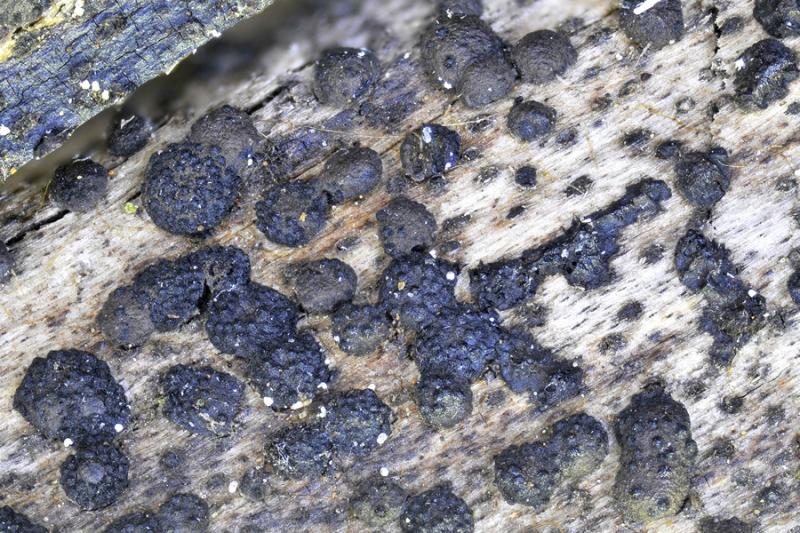
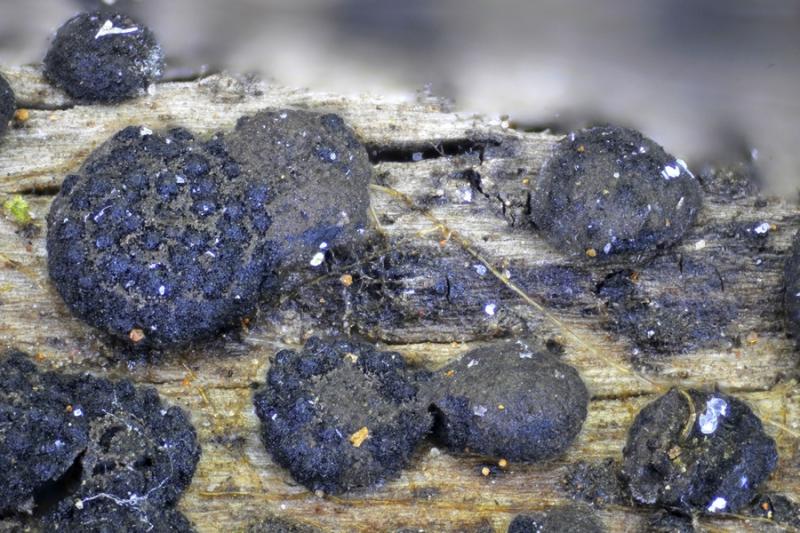
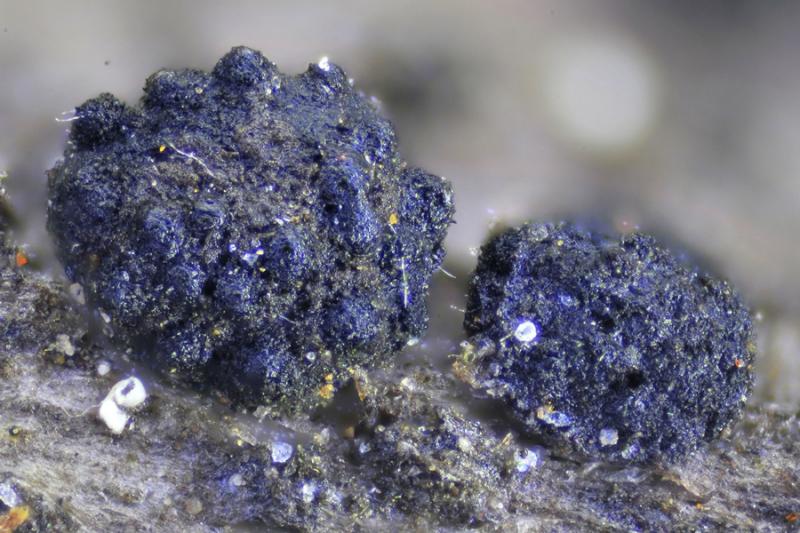
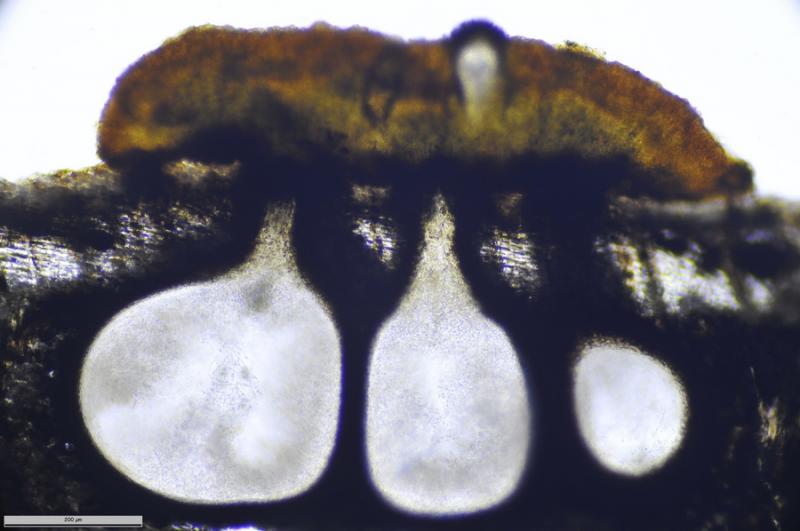

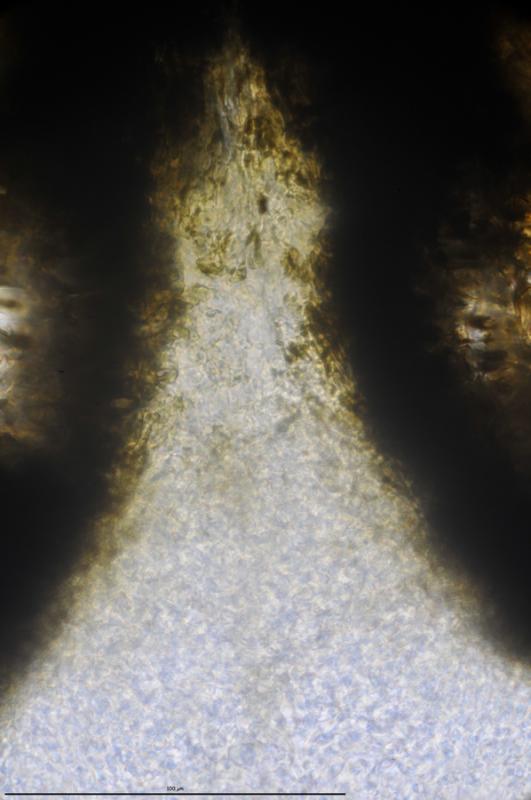
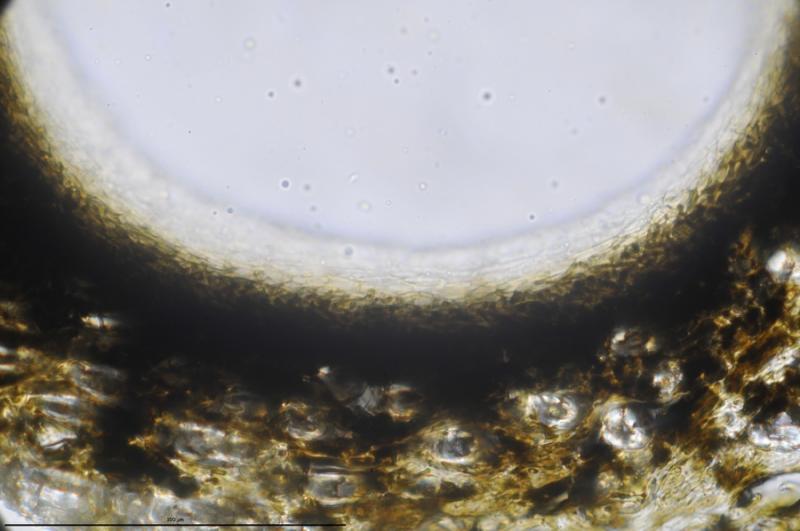
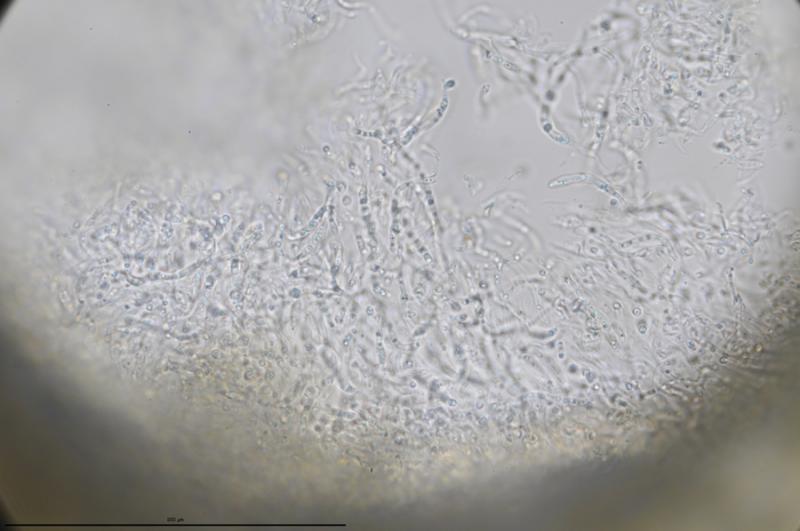
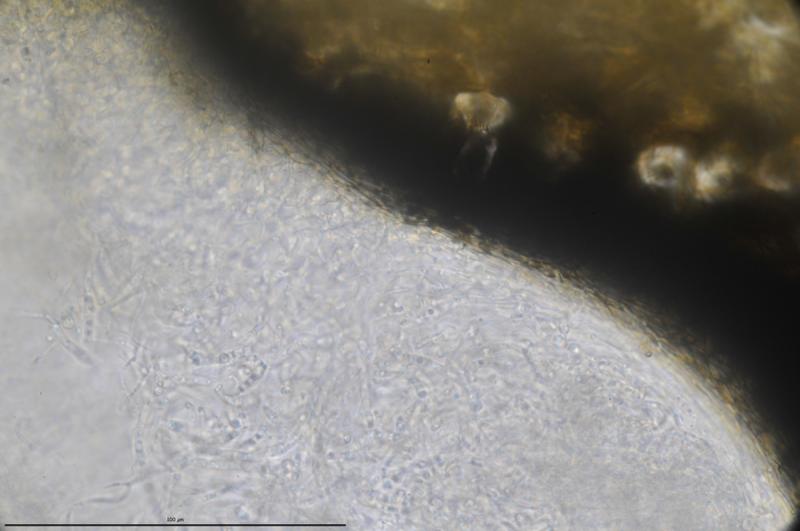
Perithecia: 121 x 86 microns (height x width)
Spores: multiseptate (4-6), colored, 17.1 x 6.1 microns
Hairs: dark, thick-walled, very short, 10.5 x 4.1 microns.
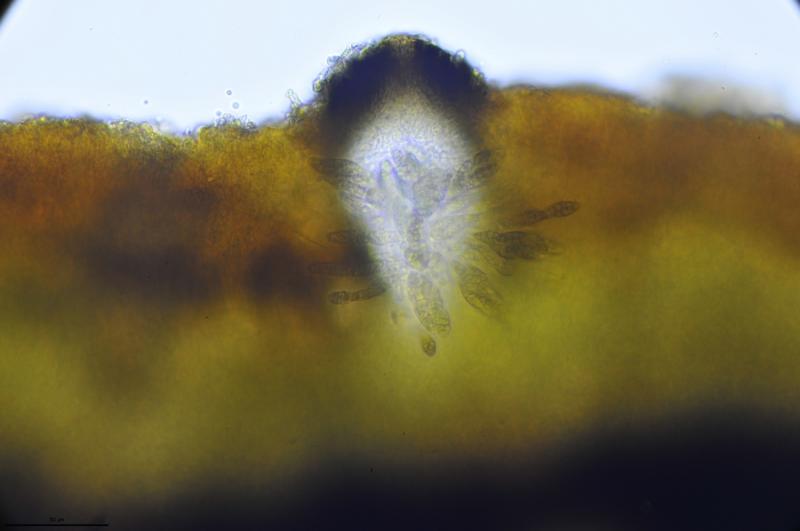
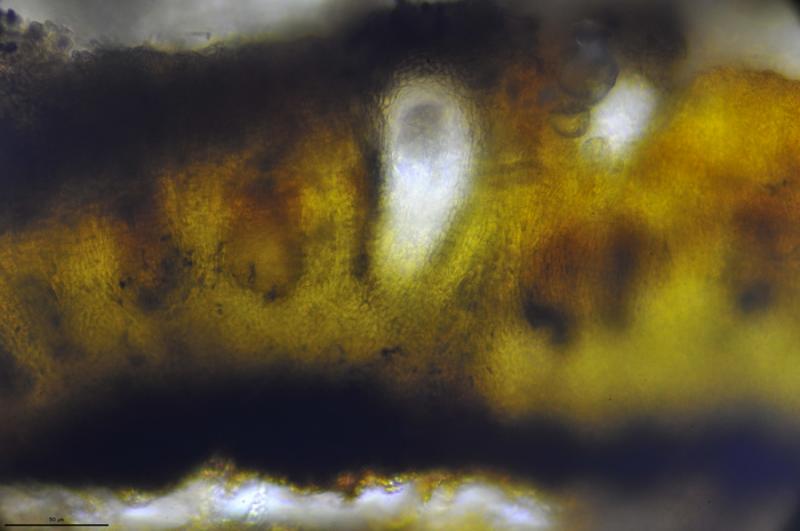
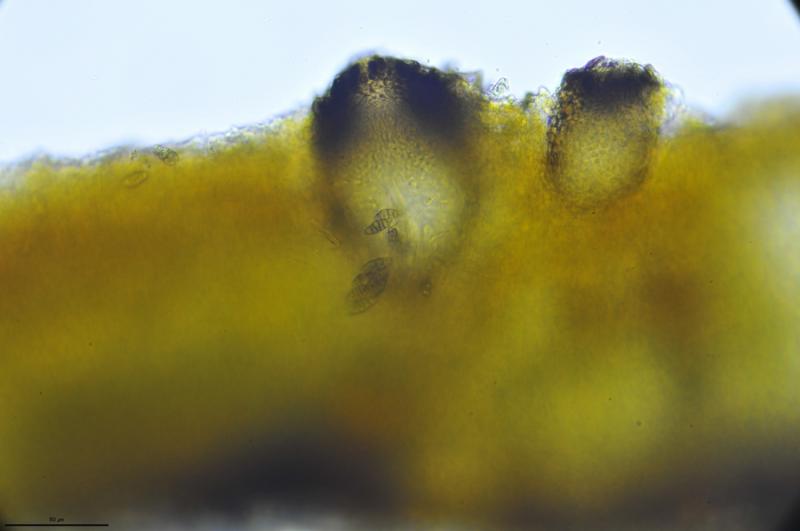
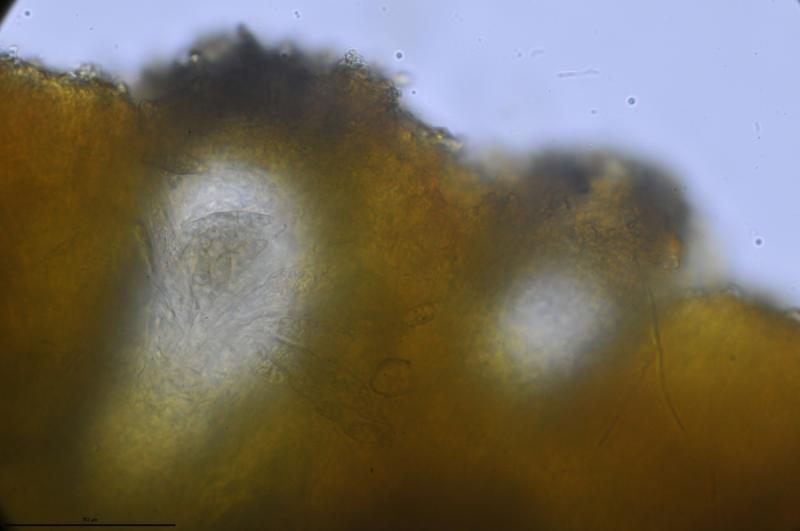

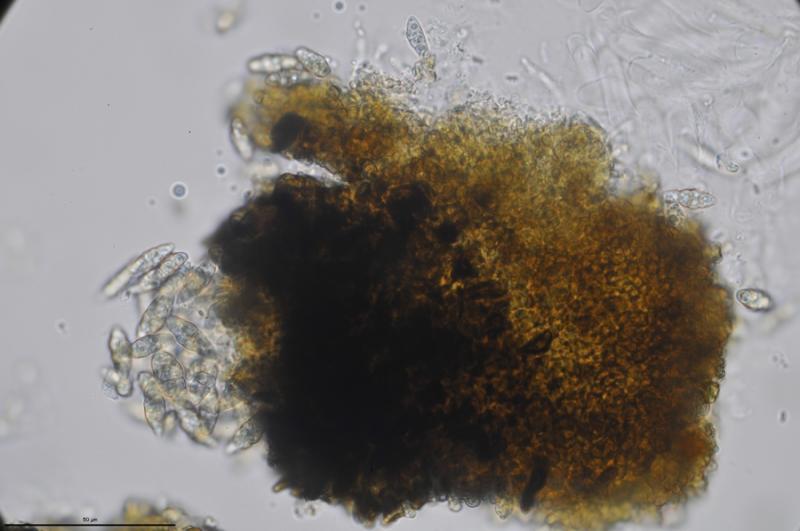
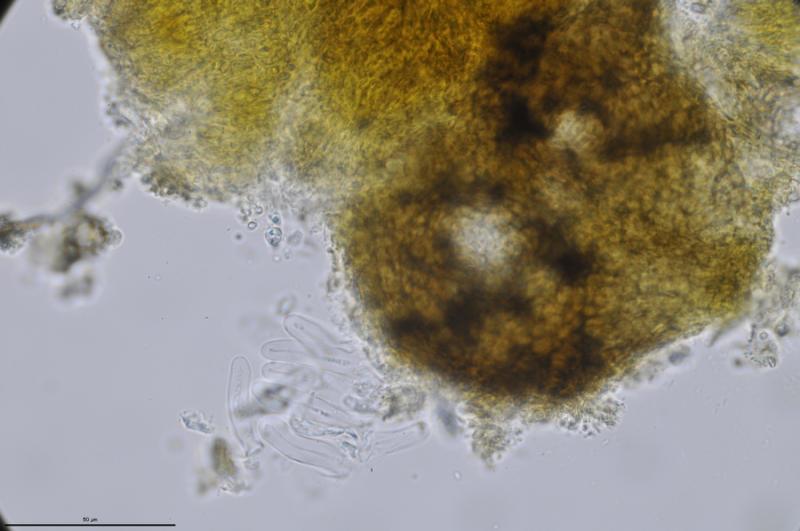
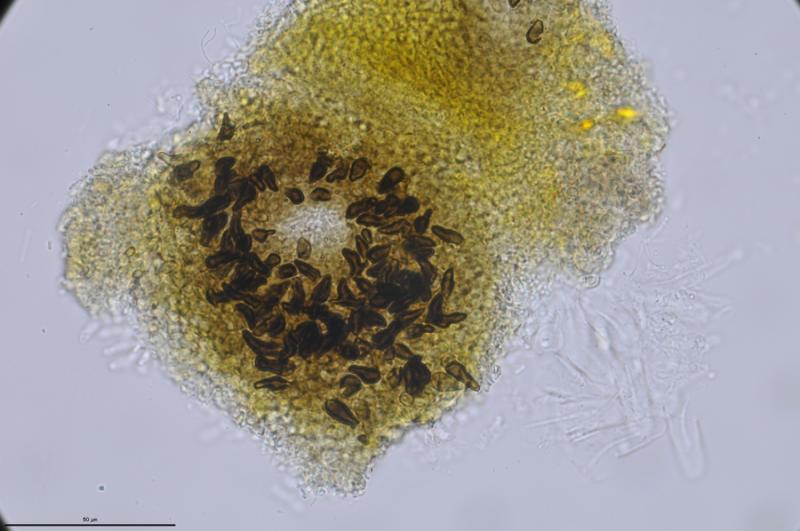
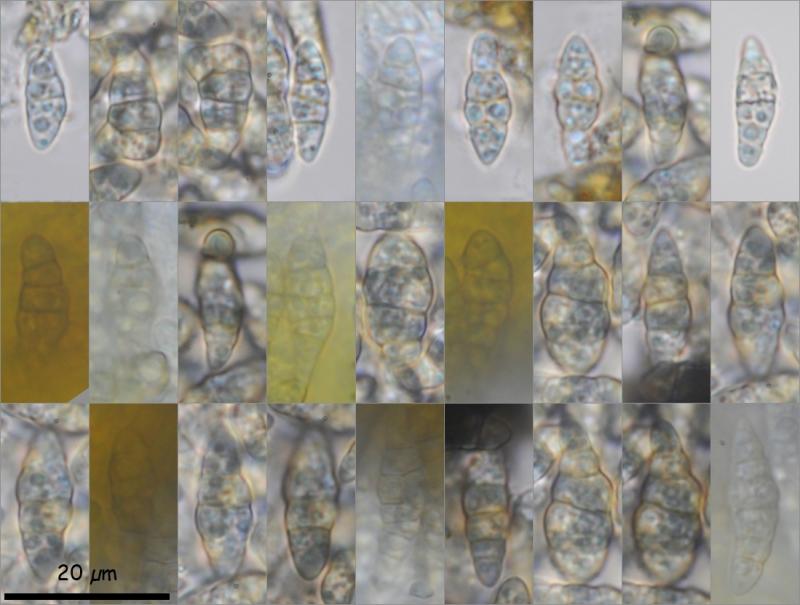
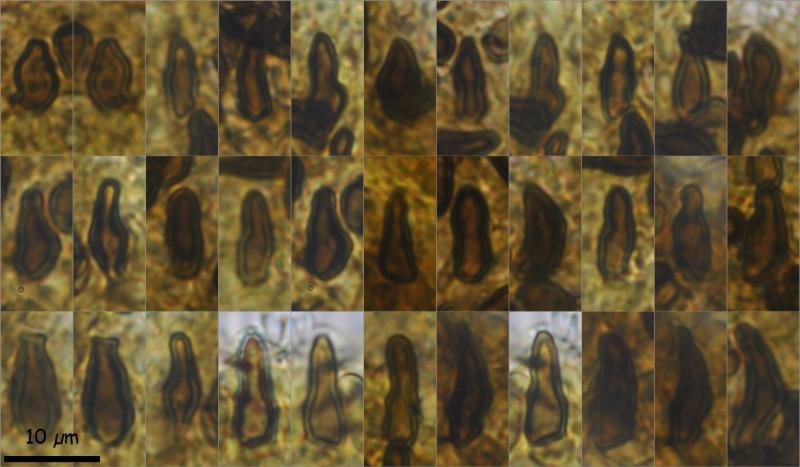

Parece Capronia nigerrima, antes Berlesiella, un parásito común sobre estromas de Eutypa.
Un abrazo.
Con la clave de Gernot Friebes (2012) llego a esa especie. Ya he visto tus láminas.
Muchas gracias. Un abrazo.