10-06-2026 13:41
 François Freléchoux
Bonjour à nouveau, Voici une trouvaille d'hier.
10-06-2026 11:53
Steve ClementsBonjour, This disco is abundant on dead stems of
10-06-2026 12:54
Steve ClementsBonjour encore, Pouvez-vous m'aider, s'il vous pl
10-06-2026 10:45
François Freléchoux
Bonjour à nouveau, Encore une détermination qui
08-06-2026 10:16
 Spooren Marco
I don`t have a clou about this fungus,it is not in
10-06-2026 09:24
François Freléchoux
Bonjour, J'imagine que cette détermination ne do
09-06-2026 18:32
Camille MertensSur morceau de roseau immergé 0,5 - 0,7 mm de dia
08-06-2026 17:00
François BartholomeeusenGood day everyone, On June 5 2026, I collected de
07-06-2026 15:10
 William Slosse
Hello everyone,On 05-06-26, I found following asco
Xylaria from the Algarve
Lothar Krieglsteiner,
06-03-2023 19:42
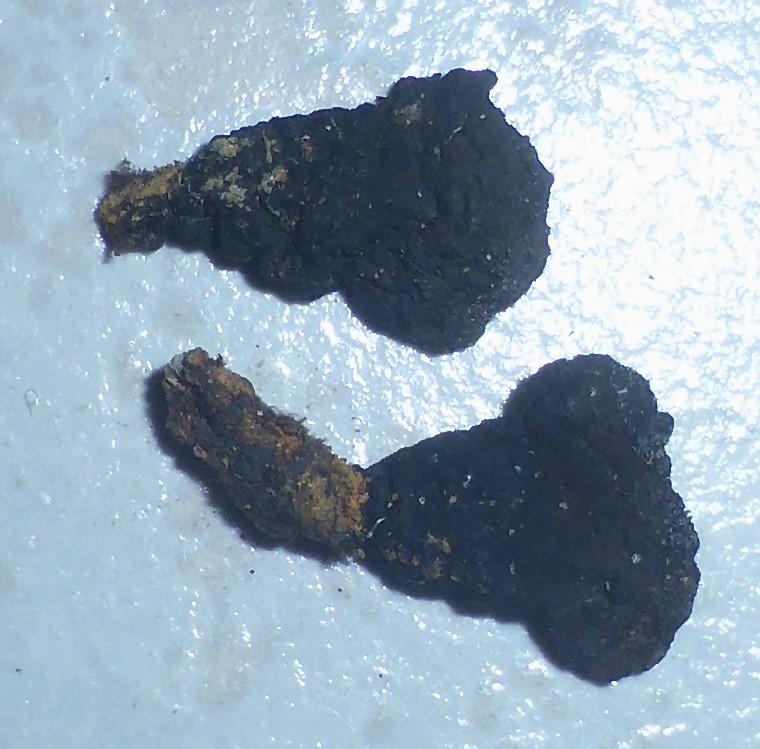
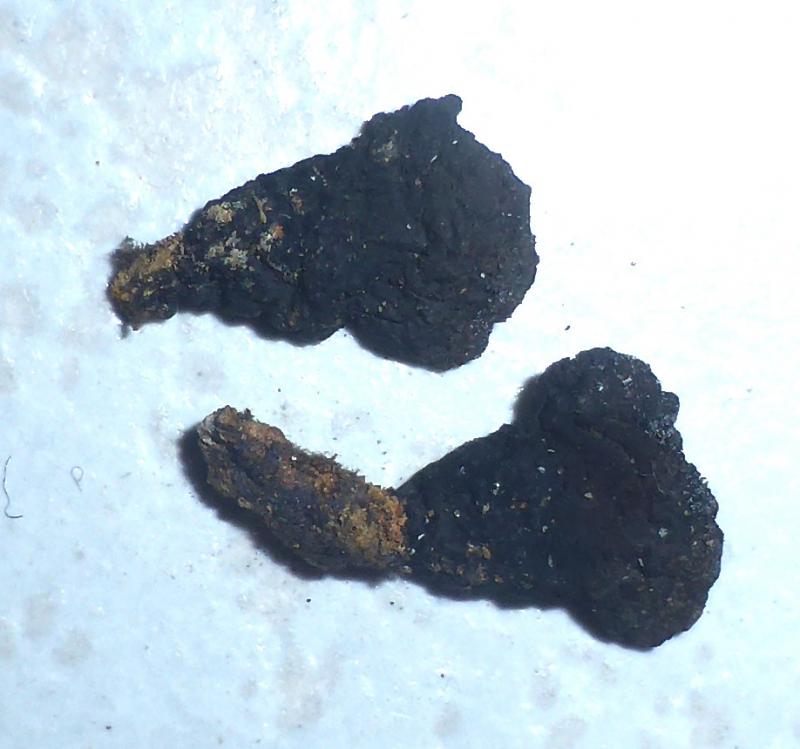
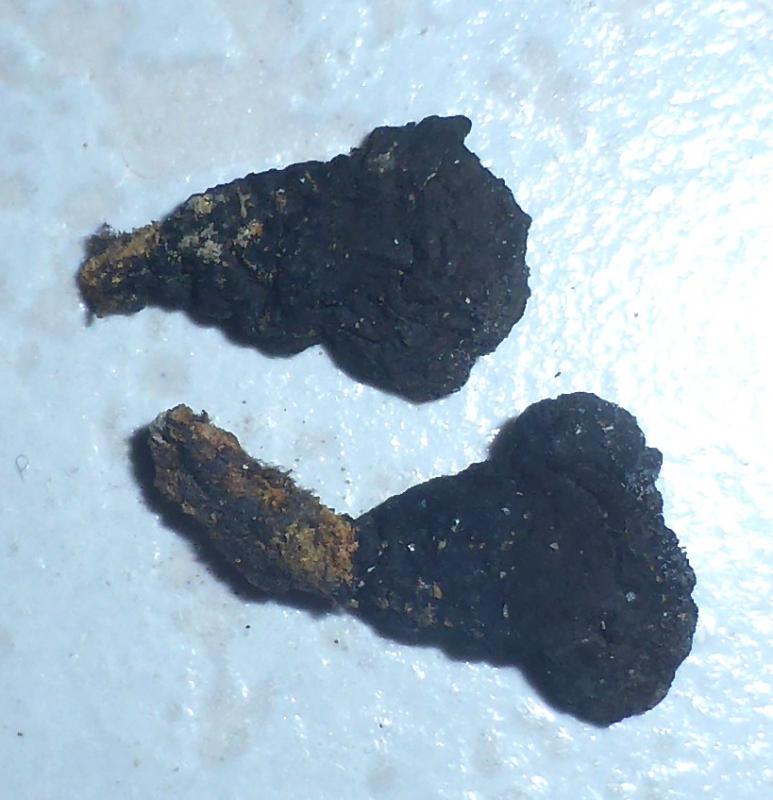
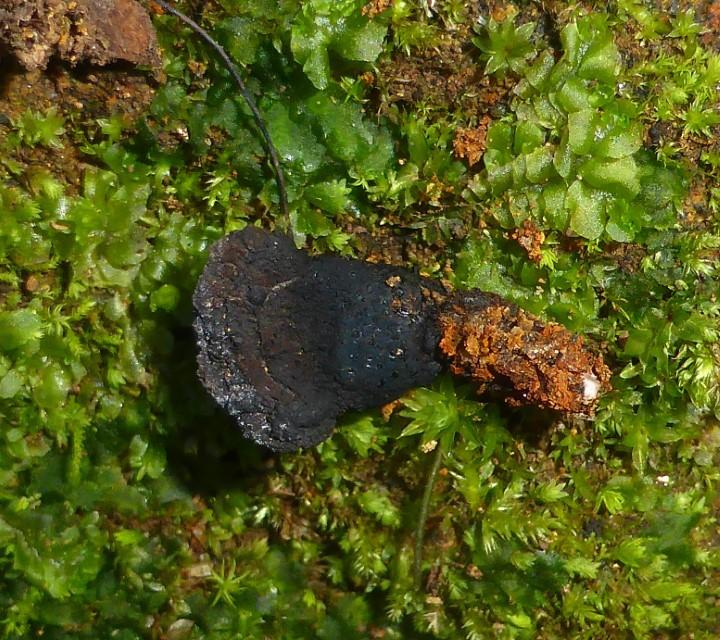
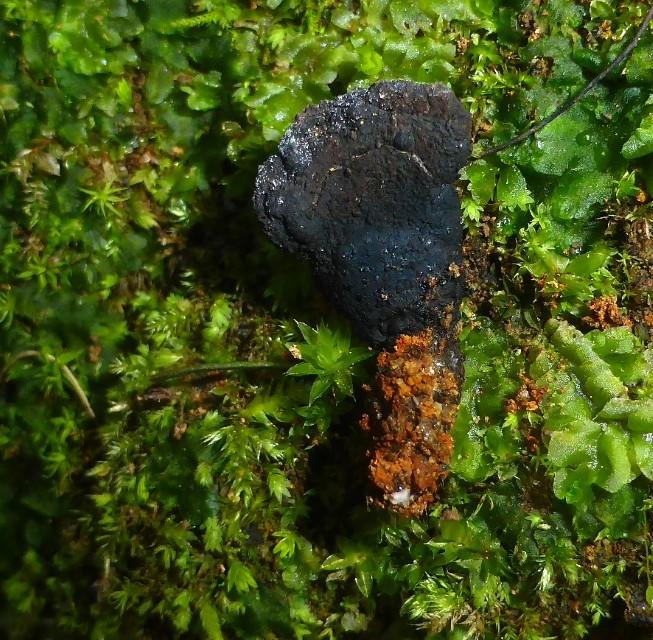
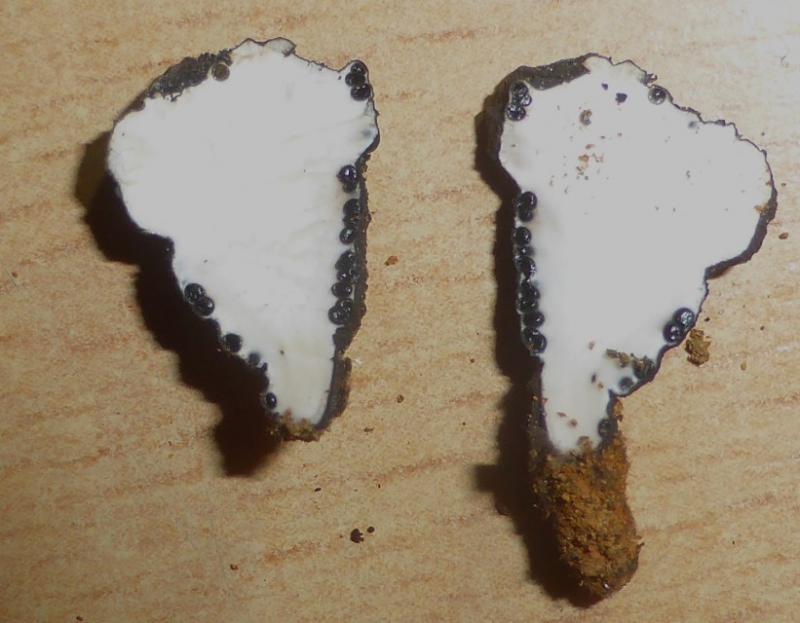
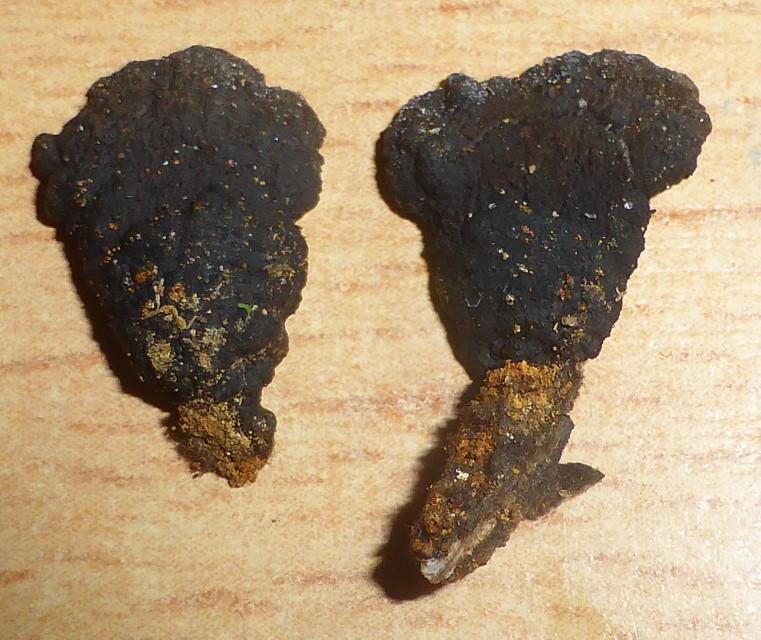
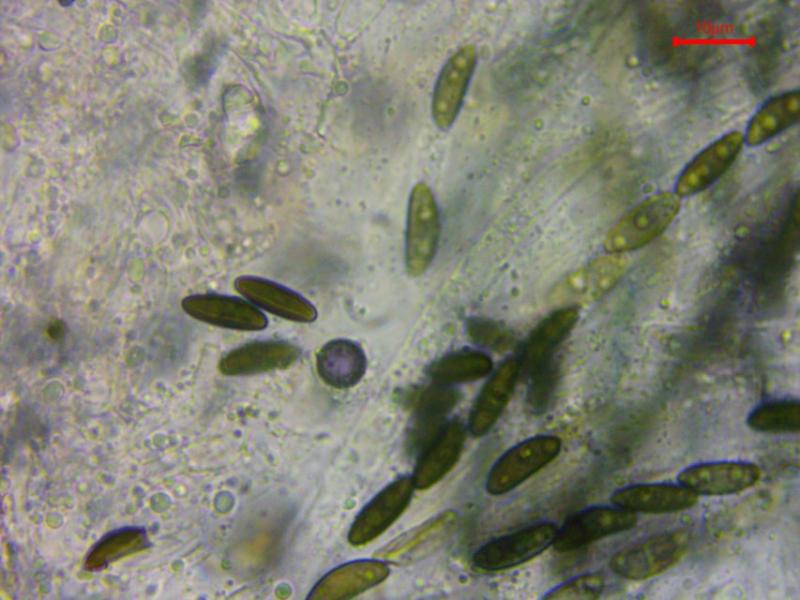
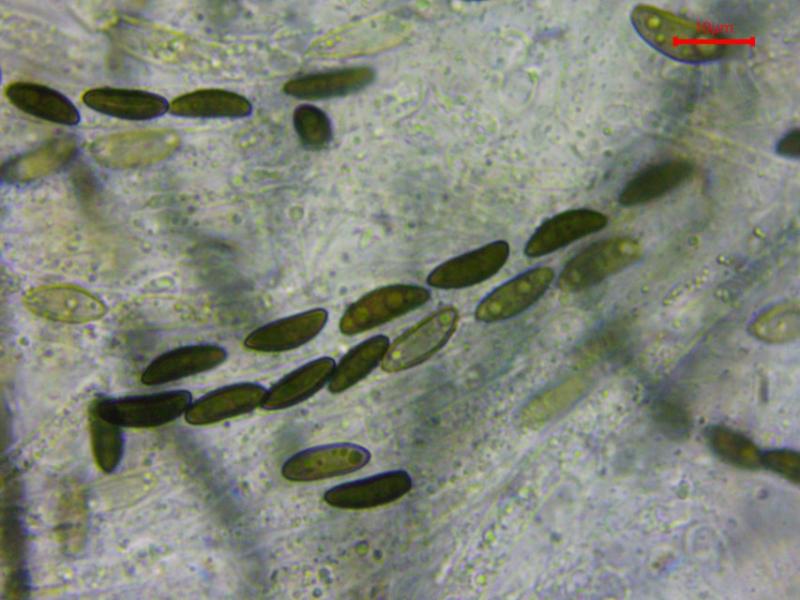
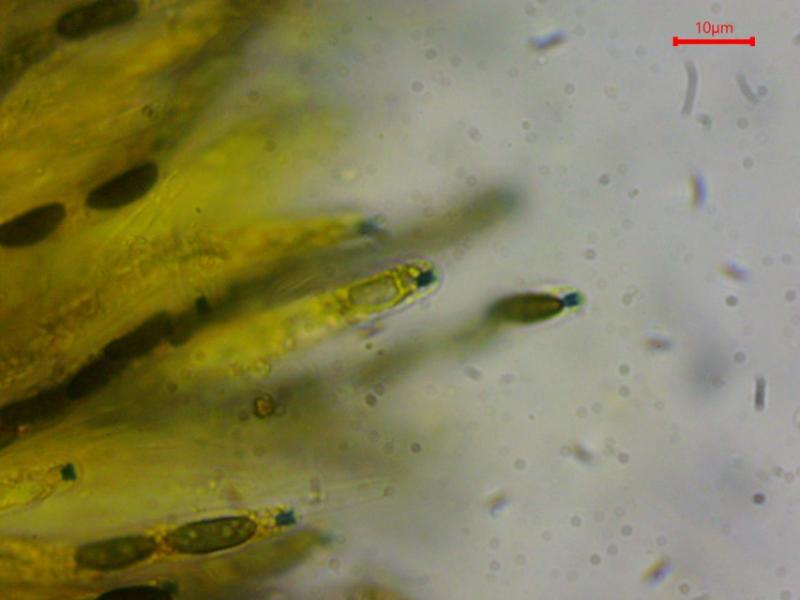
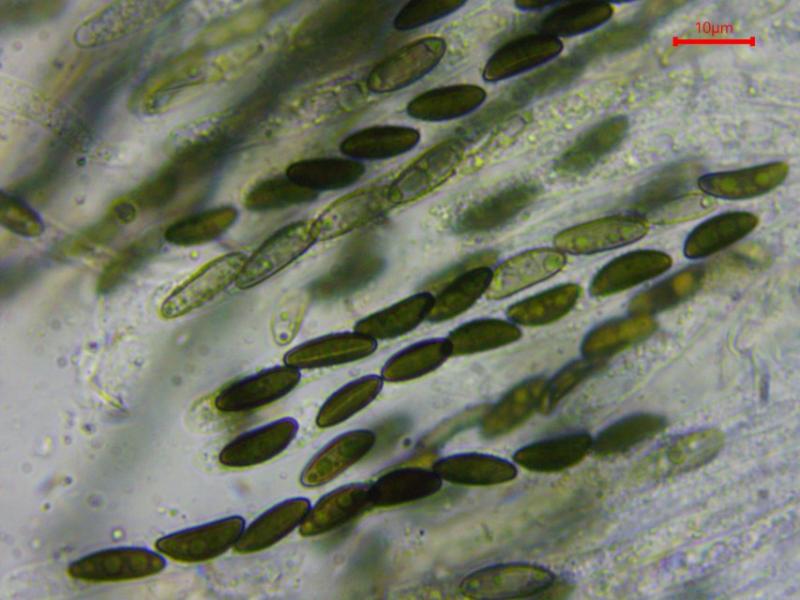
 I found only this one perhaps premature, but full ripe stroma. It is small, only about 1,3/0,8 cm in the dried specimen.
24.02.2023, Portugal, Algarve, near Monchique
seemingly on the ground, but possibly connected with wood (most likely Quercus suber), in the margin of a small animal hole in a small canyon to a rivulet), in Quercus suber-forest (with Arbutus u.a.)
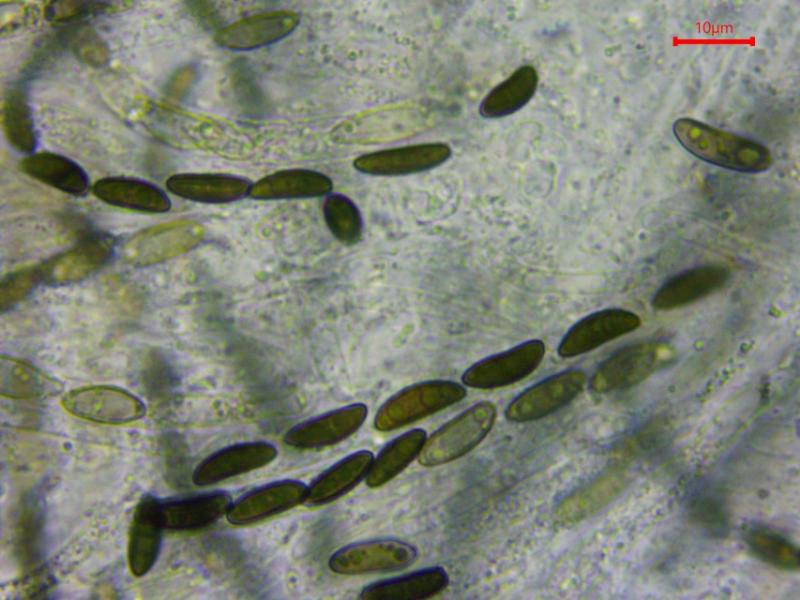
With the key of Jacques Fournier I end at Xylaria longipes, with a fitting spore size. But: there is no Acer in wide surrounding, and the specimen looks very different from everything I by now saw as X. longipes. The germ slit of the spores is straight in my specimen (siee last foto).
Who can help further?
Yours, Lothar
P.S. We found also X. violaceorosea on Castanea, and X. cf. putaminum on Olea stones (form with small spores fitting X. oxyacanthae) - and a lot of X. sicula
Enrique Rubio,
06-03-2023 20:18

Re : Xylaria from the Algarve
Surprising, Lothar!. Like so much else from the south of the Iberian Peninsula. I can't offer you any solutions, I hope maybe Jacques can come up with something. But it definitely doesn't look like Xylaria longipes, whose spores have a clear sigmoid germ-slit.
Lothar Krieglsteiner,
06-03-2023 20:26
Re : Xylaria from the Algarve
Hello Enrique,
thank you for your quick response! I also think this must be something quite special ...
thank you for your quick response! I also think this must be something quite special ...
Jacques Fournier,
07-03-2023 19:13

Re : Xylaria from the Algarve
Hi Lothar,
nice find indeed. Possibly an undescribed species if such stromata are typical, I mean not aberrant.
The rooting stipe and ecology likewise suggest a distinct species.
Something I could not see on your photos by lack of resolution are the details of the surface: smooth, longitudinally furrowed, corky-cracked or whatever?
Surface and ostioles characteristics are often much informative in this genus.
Cheers,
Jacques
nice find indeed. Possibly an undescribed species if such stromata are typical, I mean not aberrant.
The rooting stipe and ecology likewise suggest a distinct species.
Something I could not see on your photos by lack of resolution are the details of the surface: smooth, longitudinally furrowed, corky-cracked or whatever?
Surface and ostioles characteristics are often much informative in this genus.
Cheers,
Jacques
Lothar Krieglsteiner,
09-03-2023 10:06
Re : Xylaria from the Algarve
Hi Jacques,
thank you very much for your opinion. Yes, I know that a new species with only one perhaps atypical stroma is not realistic. So, I have to look again, hopefully next winter ...
I was a bit unsure about the texture of the surface. I did not see clear polygonal plates, but as the specimen reminds a lot of e.g. X. polymorpha macroscopically and less of X. hypoxylon etc. I thought to look at this key-part. If I do not, I end at X. karsticola or X. vasconica. Both do not seem to fit either (at first glance).
The fotos I give today are from the exsiccatum. I cannot show it better I fear.
What I forgot to write but is quite obvious anyway: the stroma is quite thin in one dimension, about the form of an ax.
Yours, Lothar
thank you very much for your opinion. Yes, I know that a new species with only one perhaps atypical stroma is not realistic. So, I have to look again, hopefully next winter ...
I was a bit unsure about the texture of the surface. I did not see clear polygonal plates, but as the specimen reminds a lot of e.g. X. polymorpha macroscopically and less of X. hypoxylon etc. I thought to look at this key-part. If I do not, I end at X. karsticola or X. vasconica. Both do not seem to fit either (at first glance).
The fotos I give today are from the exsiccatum. I cannot show it better I fear.
What I forgot to write but is quite obvious anyway: the stroma is quite thin in one dimension, about the form of an ax.
Yours, Lothar