10-06-2026 13:41
 François Freléchoux
Bonjour à nouveau, Voici une trouvaille d'hier.
10-06-2026 11:53
Steve ClementsBonjour, This disco is abundant on dead stems of
10-06-2026 12:54
Steve ClementsBonjour encore, Pouvez-vous m'aider, s'il vous pl
10-06-2026 10:45
François Freléchoux
Bonjour à nouveau, Encore une détermination qui
08-06-2026 10:16
 Spooren Marco
I don`t have a clou about this fungus,it is not in
10-06-2026 09:24
François Freléchoux
Bonjour, J'imagine que cette détermination ne do
09-06-2026 18:32
Camille MertensSur morceau de roseau immergé 0,5 - 0,7 mm de dia
08-06-2026 17:00
François BartholomeeusenGood day everyone, On June 5 2026, I collected de
07-06-2026 15:10
 William Slosse
Hello everyone,On 05-06-26, I found following asco
Small pinkish ascomycete
Joaquin Martin,
11-10-2022 19:32
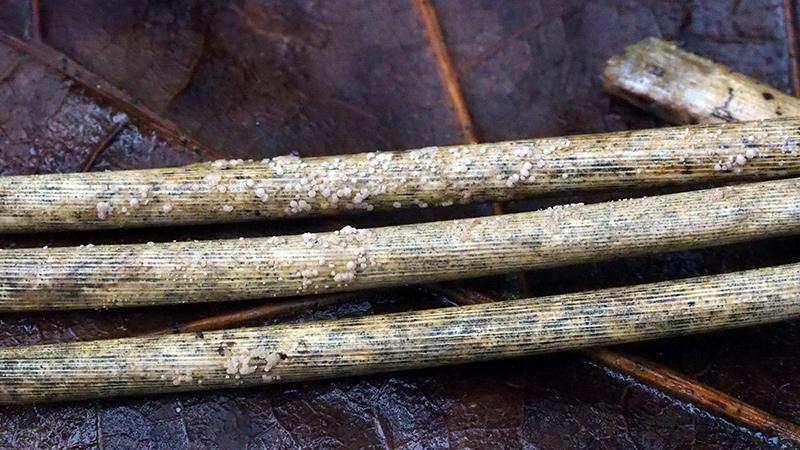
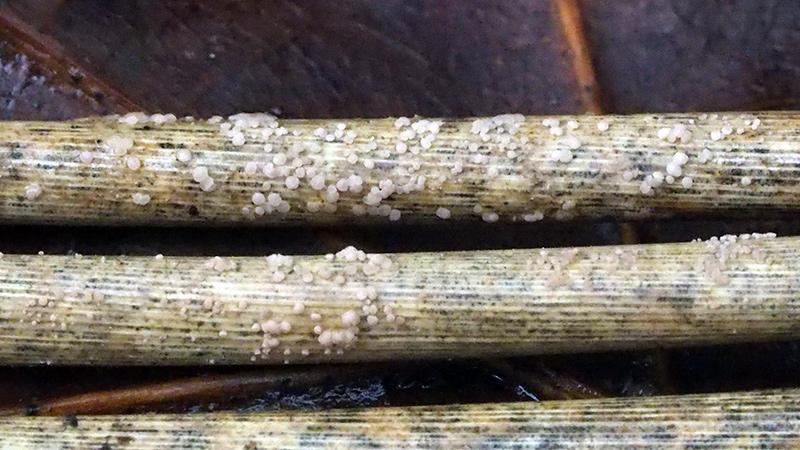
I found this small ascomycete on juncus, it has a pinkish tone very soft.
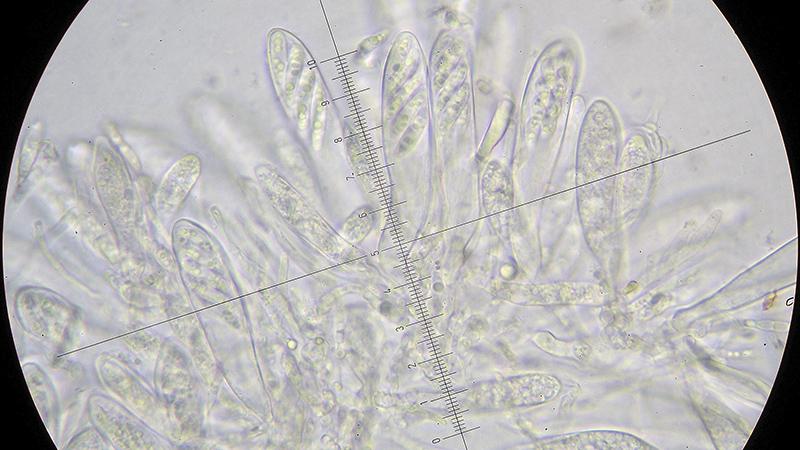
The rest of features show in the pics.
Thanks for yours responses.
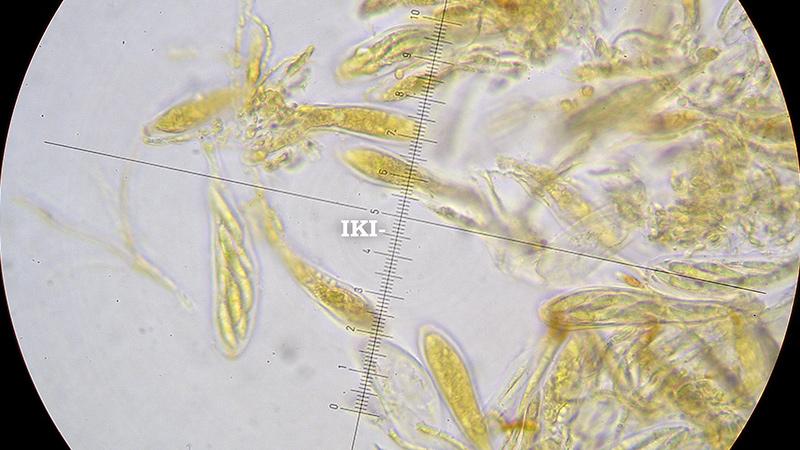
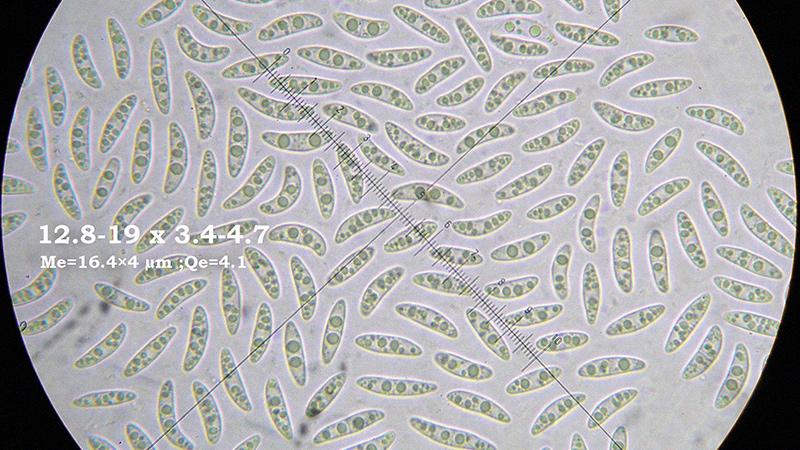
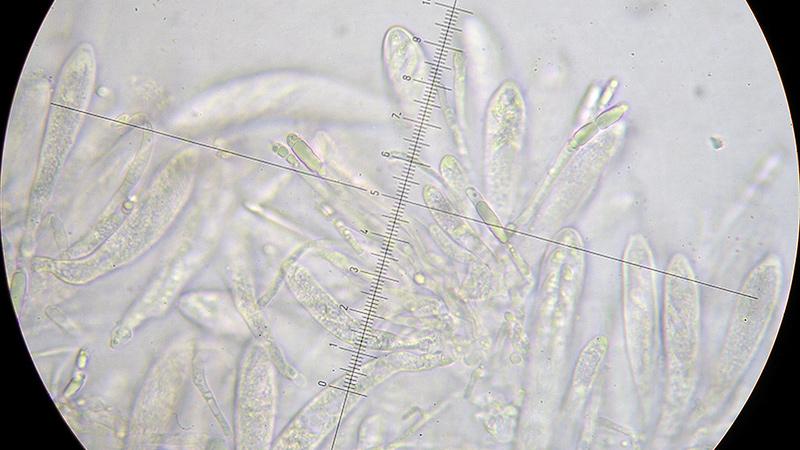
Michel Hairaud,
11-10-2022 21:51

Re : Small pinkish ascomycete
Hi Joaquim,
The paraphyses content (Homogenous vacuolary bodies) and septate spores match a Calycina species Also the apparently ascus apex red iodine reaction. Some Calycina species easily turn red when bruised but here it seems that not all apos get this pinkish colour and I wonder whether it could be generated by bacteria ?
AmitiésMichel
The paraphyses content (Homogenous vacuolary bodies) and septate spores match a Calycina species Also the apparently ascus apex red iodine reaction. Some Calycina species easily turn red when bruised but here it seems that not all apos get this pinkish colour and I wonder whether it could be generated by bacteria ?
AmitiésMichel
Hans-Otto Baral,
12-10-2022 09:59

Re : Small pinkish ascomycete
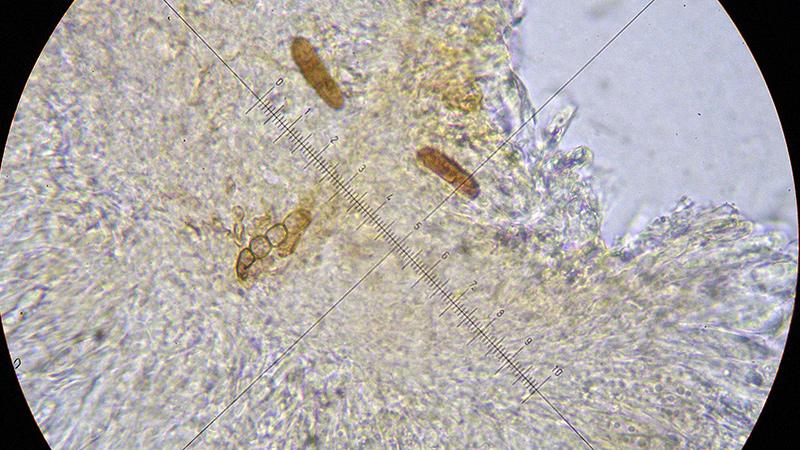
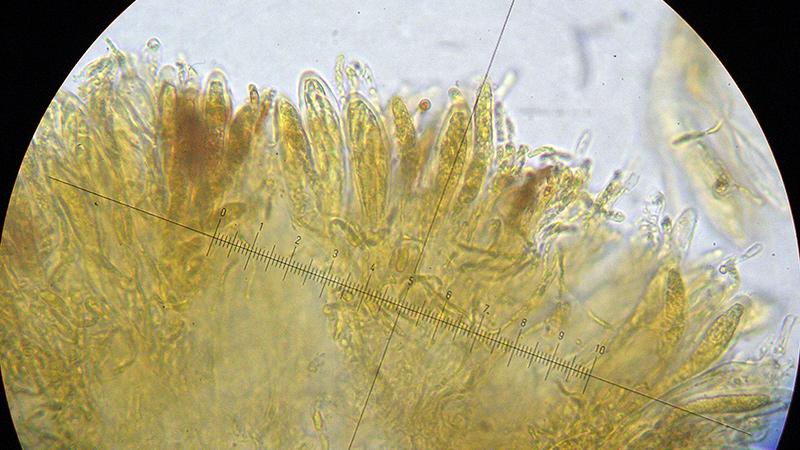
Some things should e clarified: Are the ascus apical rings hemiamyloid or absent? How is the excipulum? Are the spores already septate inside the living asci? When there are two large drops close together in the middle, then the spores are septate (the septum is faintly visible). How is the ectal excipulum?
The spores are rather large and characteristic, but so far I have no idea but appreciate Michel's opinion.
Joaquin Martin,
12-10-2022 11:23
Re : Small pinkish ascomycete
Hi
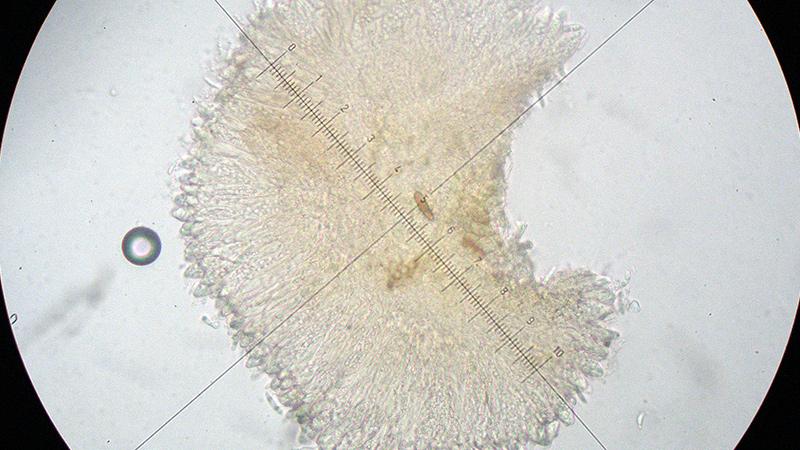
I think Michael is right, it could be a Calycina and also that it is parasitized, maybe this is the reason why I see the excipulum very dirty and it is not appreciated in the pictures.
I see septate spores inside the asca but not the ones with two drops.
I do not see any apical reaction either.
I hope this clarifies the matter.
Thank you.
I think Michael is right, it could be a Calycina and also that it is parasitized, maybe this is the reason why I see the excipulum very dirty and it is not appreciated in the pictures.
I see septate spores inside the asca but not the ones with two drops.
I do not see any apical reaction either.
I hope this clarifies the matter.
Thank you.
Hans-Otto Baral,
12-10-2022 12:10
Re : Small pinkish ascomycete
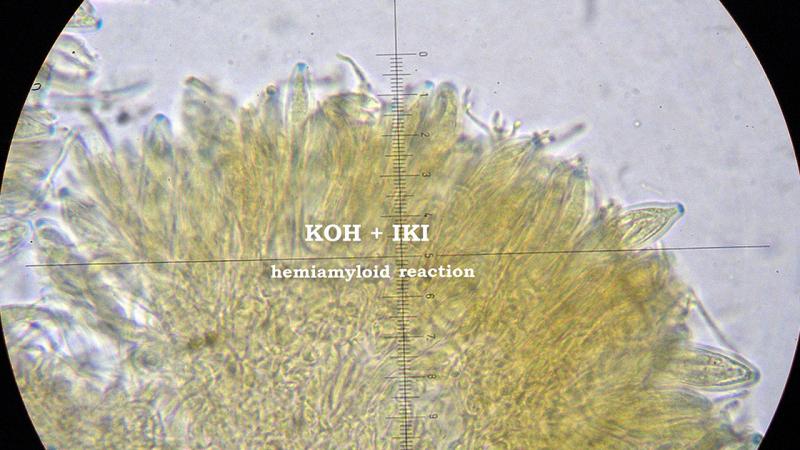
For the iodine reaction oil immersion would be necessary. It is also possible to add KOH, remvoe it with water and test IKI. Then a blue reaction should be better visible than the faint red reaction, if it is really hemiamyloid.
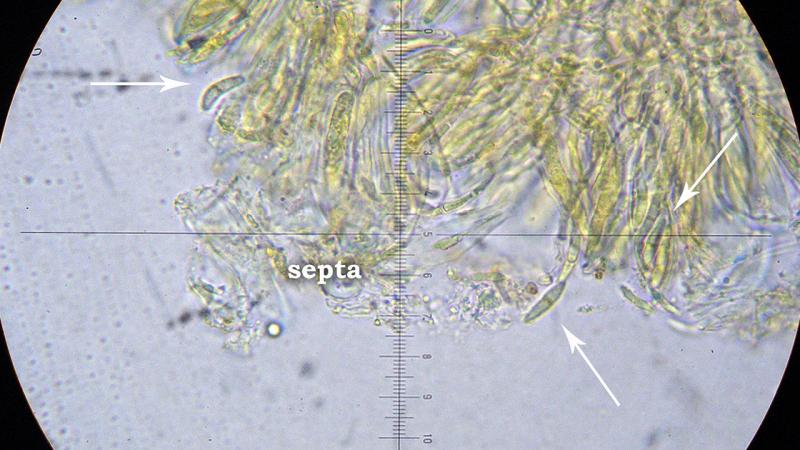
Also for the spore septa oil immersion is required.
The excipulum appears to be small celled. No parasite, this is normal that other fungi grow at the base.
Joaquin Martin,
12-10-2022 15:18
Re : Small pinkish ascomycete
Hi
Yes, clearly a hemiamyloid reaction.
Also, taking advantage of the preparation, the septate spores can be seen.
Best regards
Yes, clearly a hemiamyloid reaction.
Also, taking advantage of the preparation, the septate spores can be seen.
Best regards
Hans-Otto Baral,
12-10-2022 21:21
Re : Small pinkish ascomycete
A possibility is that this is Calycellina separabilis. I have placed that fungus in Calycellina because of the distinct stain of the spore gel in CRB, but I am unaware of a sequence of the species.
The substrate is far from typical. Actually, it is always on Rubus (mainly idaeus). Hmmm.