
10-06-2026 13:41
 François Freléchoux
Bonjour à nouveau, Voici une trouvaille d'hier.
09-06-2026 18:32
Camille MertensSur morceau de roseau immergé 0,5 - 0,7 mm de dia
10-06-2026 11:53
Steve ClementsBonjour, This disco is abundant on dead stems of
10-06-2026 12:54
Steve ClementsBonjour encore, Pouvez-vous m'aider, s'il vous pl
10-06-2026 10:45
François Freléchoux
Bonjour à nouveau, Encore une détermination qui
08-06-2026 10:16
 Spooren Marco
I don`t have a clou about this fungus,it is not in
10-06-2026 09:24
François Freléchoux
Bonjour, J'imagine que cette détermination ne do
08-06-2026 17:00
François BartholomeeusenGood day everyone, On June 5 2026, I collected de
07-06-2026 15:10
 William Slosse
Hello everyone,On 05-06-26, I found following asco
Patellaria crassispora
Zuzana Sochorová (Egertová),
05-09-2022 14:30
 Hi,
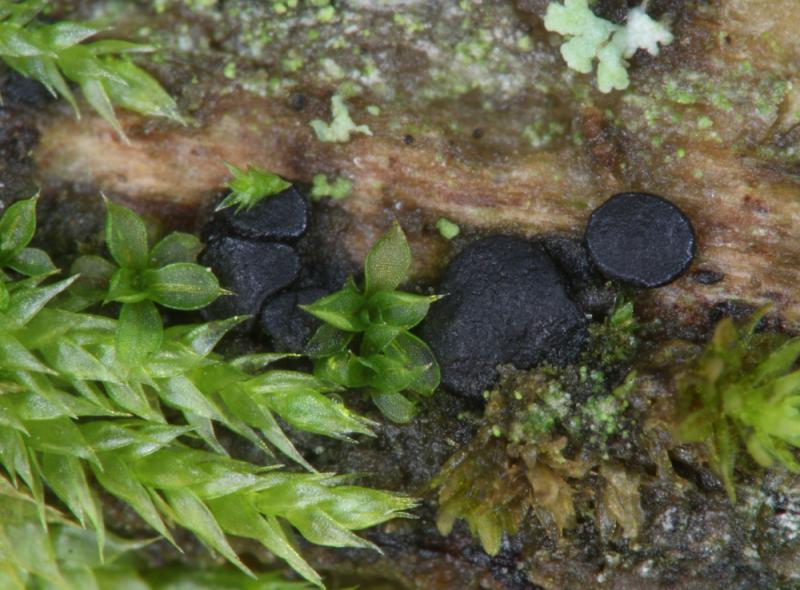
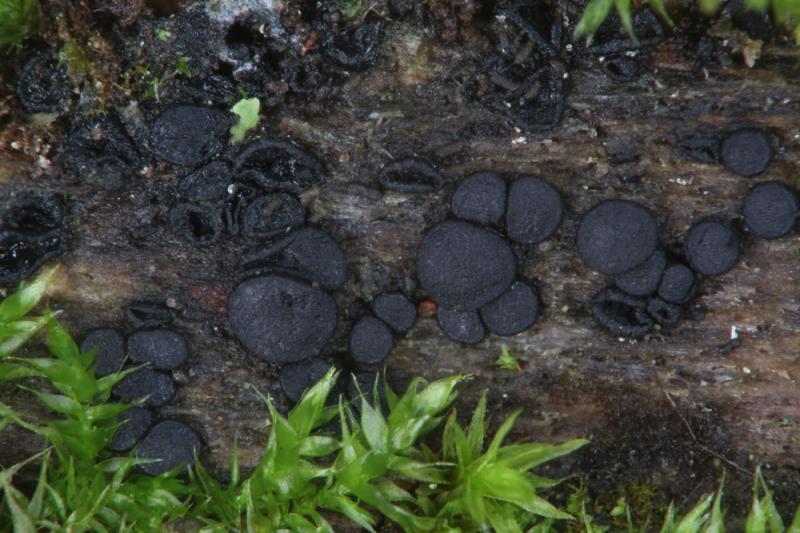
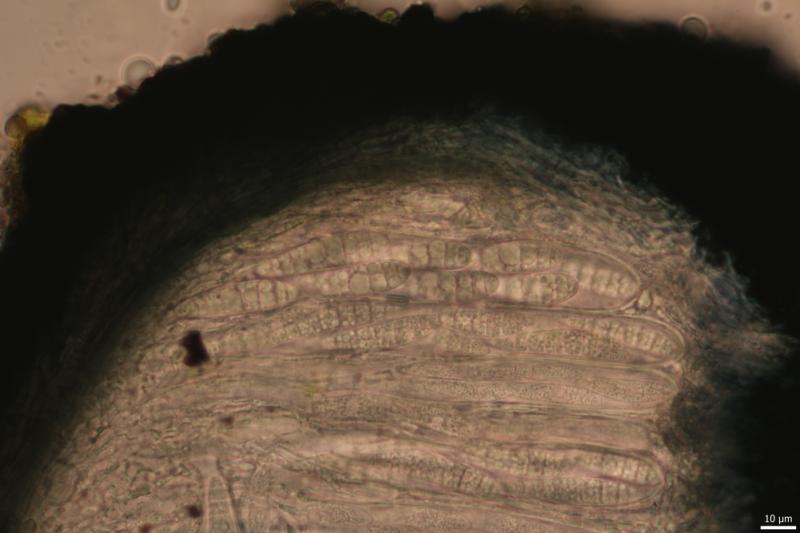
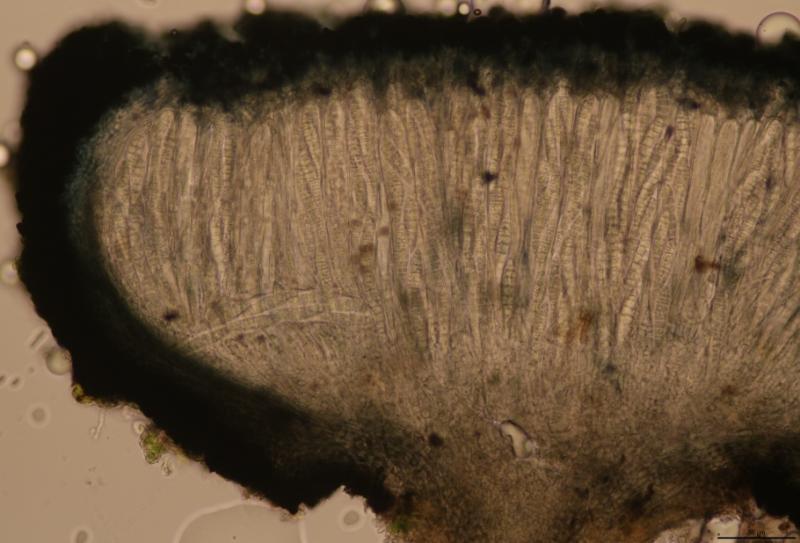
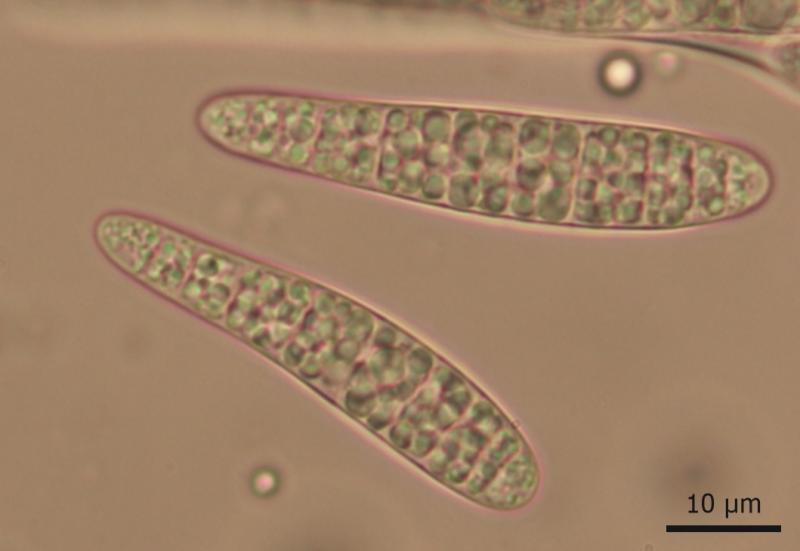
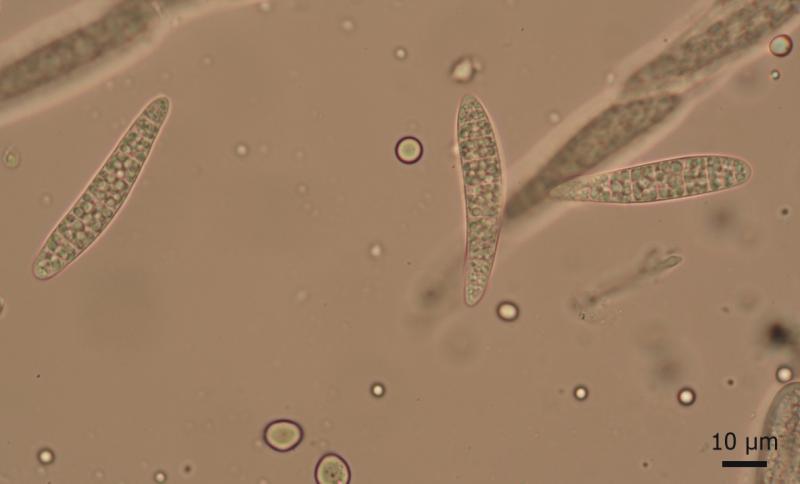
Hi, this is Patellaria crassispora, right? The exudate seems to be bluish, ascospores are multiguttulate and measure (43) 44.7 - 50.9 (51) × 8.7- 9.5 µm
Q = 4.8-5.8, Me = 47.7 × 9.1 µm; Qe = 5.2
On wood of Salix, Moravia.
Thank you, Zuzana
Zuzana Sochorová (Egertová),
05-09-2022 14:32
Re : Patellaria crassispora
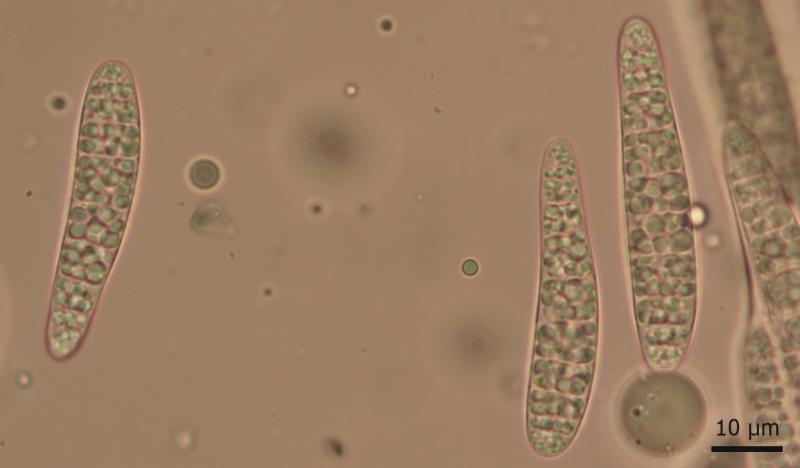
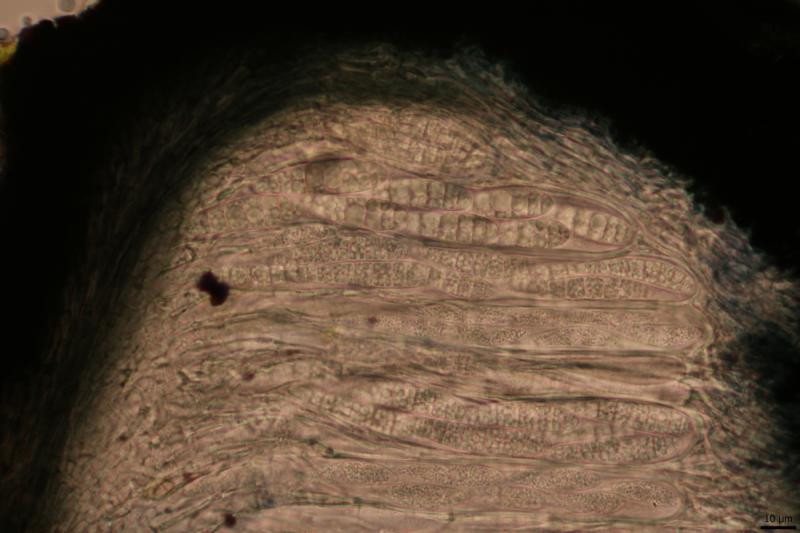
More photos (in tap water and in Lugol)
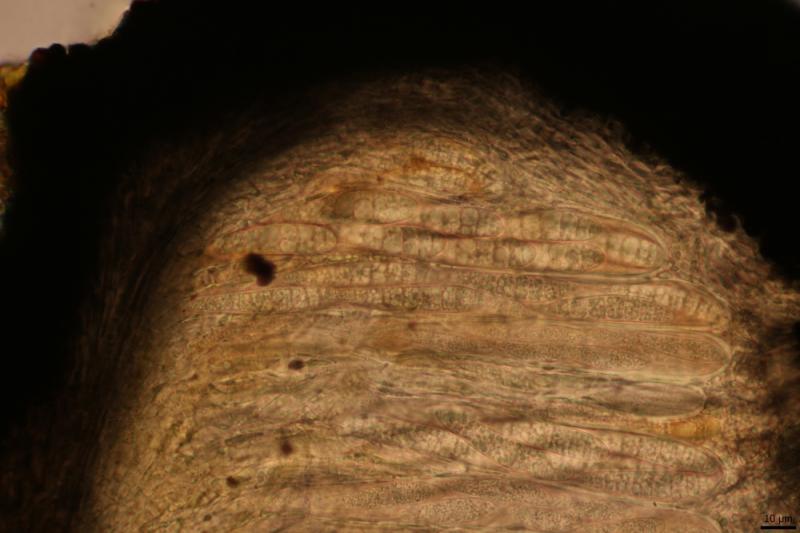
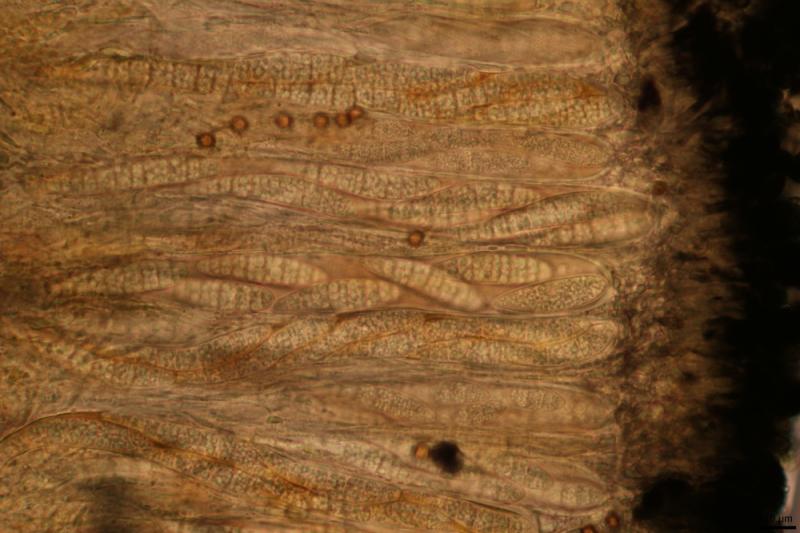
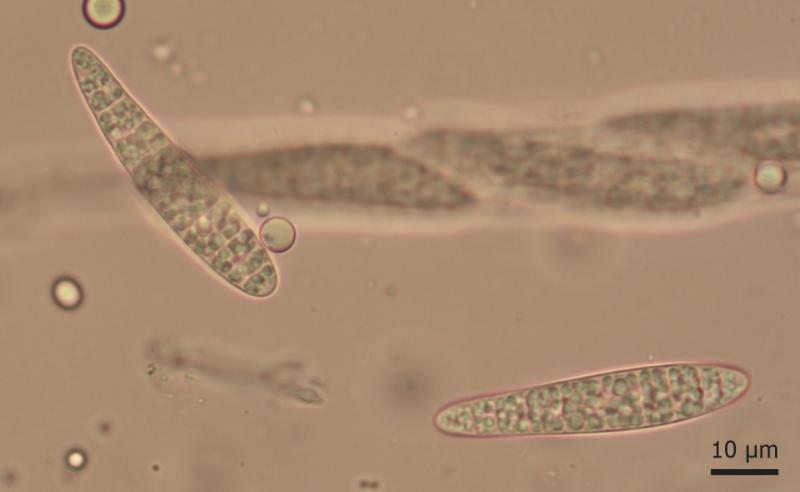
Hans-Otto Baral,
05-09-2022 18:45

Re : Patellaria crassispora
Yes, there is no other possibility, especially as the spores are multiguttulate.
I would appreciate the substrate and other collection data of this.
Zotto
Guy Marson,
05-09-2022 21:34
Re : Patellaria crassispora
Dear Zuzana,
IMHO it would be very good if (all) Patellaria species would be sequenced. What is lacking in morphological traits, genetics brings to light.
Best regards,
Guy
IMHO it would be very good if (all) Patellaria species would be sequenced. What is lacking in morphological traits, genetics brings to light.
Best regards,
Guy
Hans-Otto Baral,
05-09-2022 22:29
Re : Patellaria crassispora
Hello Guy
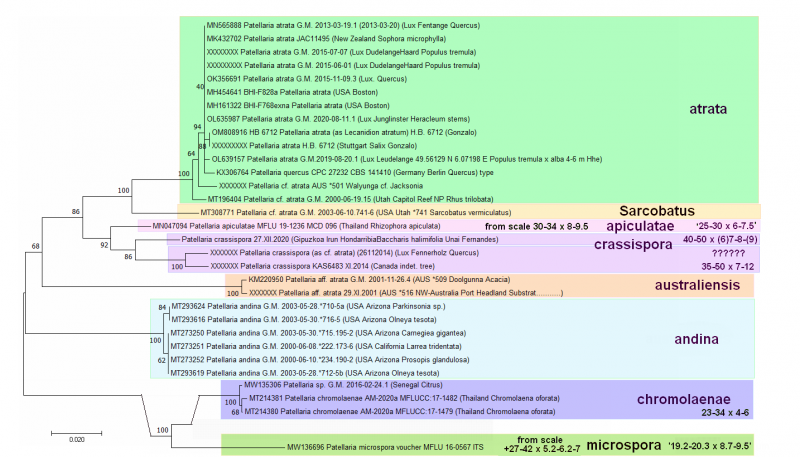
P. crassispora nom. prov. is sequenced, you know, as is P. atrata and some other species. We know their sequences but we do not know the morphology in some of these sequences. This makes it difficult, as does the lack of DNA in well-documented samples.
Maybe you meant collection instead of species. Of course, the best would be to document and sequence every collection but our lifetime does not allow this.
By the way, in my crassispora folder you can see the protologue of Lecanidion australe and Dennis' redescription of it. I could imagine that this is the same species, but we do not know the spore content and it is from Argentina.
I think at some time it will be possible to isolate DNA from the type and clarify the matter. For the time being I think it could be a solution to adopt the name also for European samples. Regrettably it is unknown if the type had the bluish pigment.
Zotto
Guy Marson,
06-09-2022 10:13
Re : Patellaria crassispora
Hello Zotto,
I meant species of the genus Patellaria Fr. 1822, those listed in the index fungorum. Even if only a third of the 1377 species currently enumerated remain in the Patellariaceae family, it would be desirable to have genetic information on all of those species. And, of course, you're right, if one were to sequence the ITS section of every (recent) collection, that would be wonderful (...).
Guy
I meant species of the genus Patellaria Fr. 1822, those listed in the index fungorum. Even if only a third of the 1377 species currently enumerated remain in the Patellariaceae family, it would be desirable to have genetic information on all of those species. And, of course, you're right, if one were to sequence the ITS section of every (recent) collection, that would be wonderful (...).
Guy
Hans-Otto Baral,
06-09-2022 16:52
Re : Patellaria crassispora
You are right, there is a huge amount of taxa placed in Patellaria. But Patellaria is something like Peziza, lik there you can exclude a huge amount of species from the genus, e.g. simply by a small spore size.
If you find a way to sequence such old type material, you are welcome. I think you must first make a docu from such a type to find out where it could belong. Then you must apply selective primers specific to the group in concern. Then it could work.
And I repeat myself, it would be very good if EVERY recent collection of which a DNA was obtained, would be accompanied by a documentation. Only this makes sense.
Attached the newest NJ-tree on ITS.
Zuzana Sochorová (Egertová),
06-09-2022 19:25
Re : Patellaria crassispora
Dear Guy,
I have a possibility to sequence, but the main problem with it is the budget.
Patellaria is one of ca 85 species I have collected during the last visit of a locality where I am doing a mycological research for the Nature Conservation Agency. For such purposes, identification "Patellaria crassispora" (or even "Patellaria cf. atrata") would be sufficient.
There are so many interesting genera and species which would profit from sequencing, but unfortunately it´s still a rather expensive method...
Best regards, Zuzana
I have a possibility to sequence, but the main problem with it is the budget.
Patellaria is one of ca 85 species I have collected during the last visit of a locality where I am doing a mycological research for the Nature Conservation Agency. For such purposes, identification "Patellaria crassispora" (or even "Patellaria cf. atrata") would be sufficient.
There are so many interesting genera and species which would profit from sequencing, but unfortunately it´s still a rather expensive method...
Best regards, Zuzana
Guy Marson,
06-09-2022 20:42
Re : Patellaria crassispora
Dear Zuzana,
Oh yeah, I know! Sequencing with Sanger sequencers has gotten expensive. E.g.: for our ABI 3730 xl we use the BigDye Terminator v3.1 (Cat.#4337455) which costs 1696 Euro for 100 reactions. This is one 96-well plate when pipetting with a Distripette (4% pipetting loss included).
If you send me a little quantity of freshly collected and dried material of the Patellaria crassispora, I'm happy to sequence it (two to 3 apothecia, maximum 5 years old).
Best wishes,
Guy
Oh yeah, I know! Sequencing with Sanger sequencers has gotten expensive. E.g.: for our ABI 3730 xl we use the BigDye Terminator v3.1 (Cat.#4337455) which costs 1696 Euro for 100 reactions. This is one 96-well plate when pipetting with a Distripette (4% pipetting loss included).
If you send me a little quantity of freshly collected and dried material of the Patellaria crassispora, I'm happy to sequence it (two to 3 apothecia, maximum 5 years old).
Best wishes,
Guy
Zuzana Sochorová (Egertová),
07-09-2022 19:30
Re : Patellaria crassispora
Guy, I sent a mail to you. Z.