
09-06-2026 18:32
Camille MertensSur morceau de roseau immergé 0,5 - 0,7 mm de dia
10-06-2026 21:16
 François Freléchoux
Bonsoir,Le dernier du jour, en attendant votre avi
10-06-2026 21:07
François Freléchoux
Toutes les tiges de gentianes jaunes de l'an passÃ
10-06-2026 13:41
François Freléchoux
Bonjour à nouveau, Voici une trouvaille d'hier.
10-06-2026 11:53
Steve ClementsBonjour, This disco is abundant on dead stems of
10-06-2026 12:54
Steve ClementsBonjour encore, Pouvez-vous m'aider, s'il vous pl
10-06-2026 10:45
François Freléchoux
Bonjour à nouveau, Encore une détermination qui
08-06-2026 10:16
 Spooren Marco
I don`t have a clou about this fungus,it is not in
10-06-2026 09:24
François Freléchoux
Bonjour, J'imagine que cette détermination ne do
08-06-2026 17:00
François BartholomeeusenGood day everyone, On June 5 2026, I collected de
unknown pyrenomycet 2
Gernot Friebes,
29-03-2009 15:18
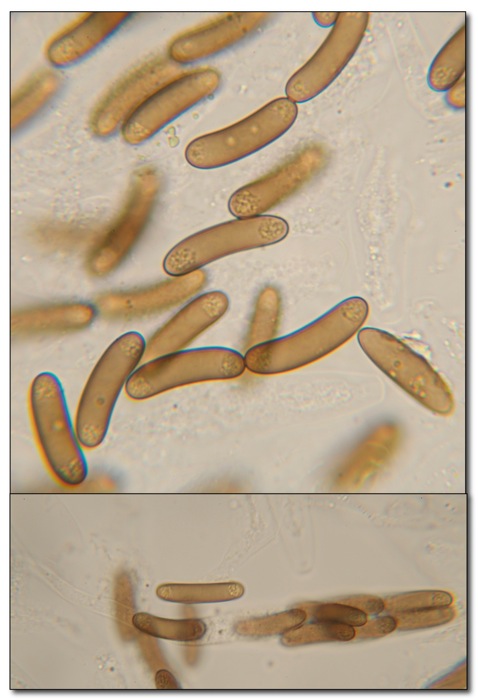
here is my second pyrenomycet I found yesterday. It grew on a thin twig of a deciduous tree. Spores: 21-23 x 5,5-6,5 µm.
Best wishes,
Gernot Friebes

Gernot Friebes,
29-03-2009 15:19
Re:unknown pyrenomycet 2
perithecia
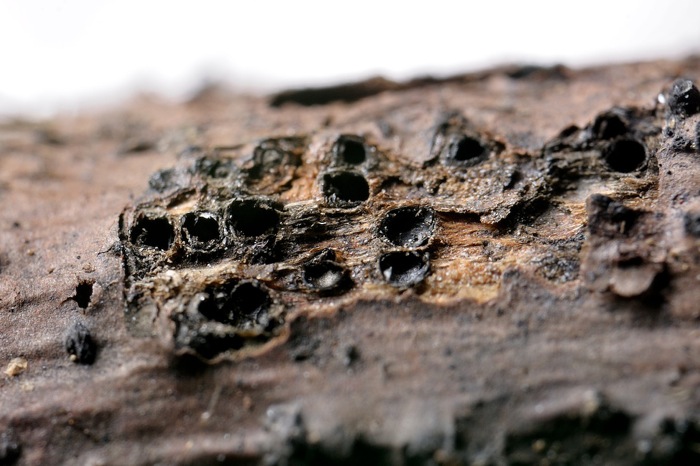
Gernot Friebes,
29-03-2009 15:24
Re:unknown pyrenomycet 2
spores

Jacques Fournier,
29-03-2009 15:35

Re:unknown pyrenomycet 2
Hi again,
the large allantoid spores could fit Eutypella dissepta (Diatrypaceae) but you need further data to support it.
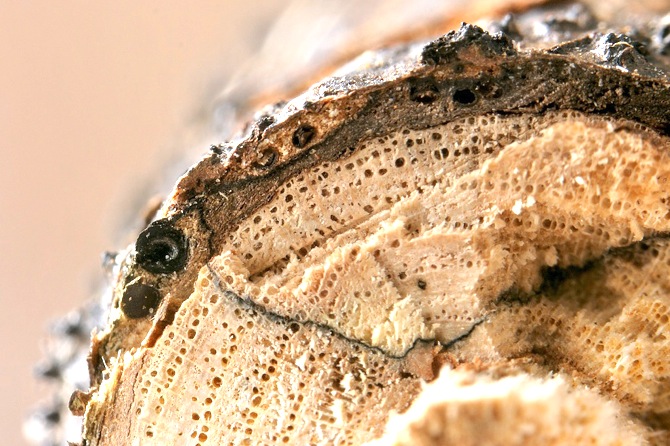
Please make a vertical section to see how perithecia are arranged, and two slides: one in water or Congo red to see if asci are spindle-shaped and long stipitate, another in Melzer's reagent after pretreatment in 3% KOH to check the presence and reaction of apical ring.
More soon!
Jacques
the large allantoid spores could fit Eutypella dissepta (Diatrypaceae) but you need further data to support it.
Please make a vertical section to see how perithecia are arranged, and two slides: one in water or Congo red to see if asci are spindle-shaped and long stipitate, another in Melzer's reagent after pretreatment in 3% KOH to check the presence and reaction of apical ring.
More soon!
Jacques
Gernot Friebes,
29-03-2009 18:09
Re:unknown pyrenomycet 2
Hello Jacques,
thank you for your good tip. The asci are indeed long stipitate and don't have any reactions in Melzer's reagent.
At first a picture of the perithecia.
Best wishes,
Gernot
thank you for your good tip. The asci are indeed long stipitate and don't have any reactions in Melzer's reagent.
At first a picture of the perithecia.
Best wishes,
Gernot
Gernot Friebes,
29-03-2009 18:09
Re:unknown pyrenomycet 2
spores and asci
Jacques Fournier,
29-03-2009 18:22
Re:unknown pyrenomycet 2
in Eutypella dissepta the apical ring often does not react clearly with iodine. The configuration of the perithecia within the stroma fits E. dissepta. Moreover, the structure of the wood in cross section is much like that of Ulmus, the usual host of this fungus.
I think you can keep this name
Jacques
I think you can keep this name
Jacques