
10-06-2026 21:16
 François Freléchoux
Bonsoir,Le dernier du jour, en attendant votre avi
11-06-2026 19:03
 Nicolas VAN VOOREN
Chers membres d'Ascofrance,Le site sera placé en
11-06-2026 19:01
 William Slosse
Hello all,In an attempt to make a culture of a sus

09-06-2026 18:32
Camille MertensSur morceau de roseau immergé 0,5 - 0,7 mm de dia
10-06-2026 12:54
Steve ClementsBonjour encore, Pouvez-vous m'aider, s'il vous pl
10-06-2026 21:07
François Freléchoux
Toutes les tiges de gentianes jaunes de l'an passÃ
10-06-2026 13:41
François Freléchoux
Bonjour à nouveau, Voici une trouvaille d'hier.
10-06-2026 11:53
Steve ClementsBonjour, This disco is abundant on dead stems of
Bryophylous fungus on Dicranella
Jannes Boers,
02-02-2022 20:36
Hi all,
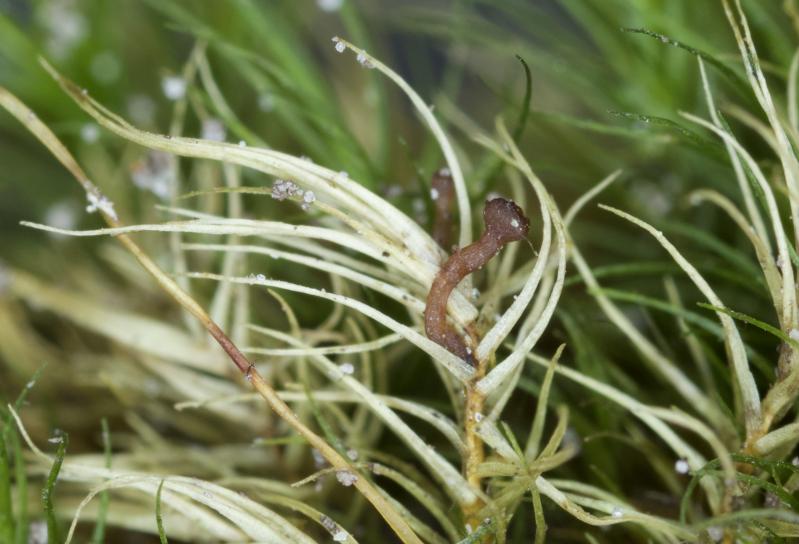
Today I accidentally collected this species while taking some weakened Dicranella heteromalla. Therefore I only had the opportunity to study one ascocarp for now. Does someone perhaps know what this can be or where I have to look for a solution based on what I have so far?
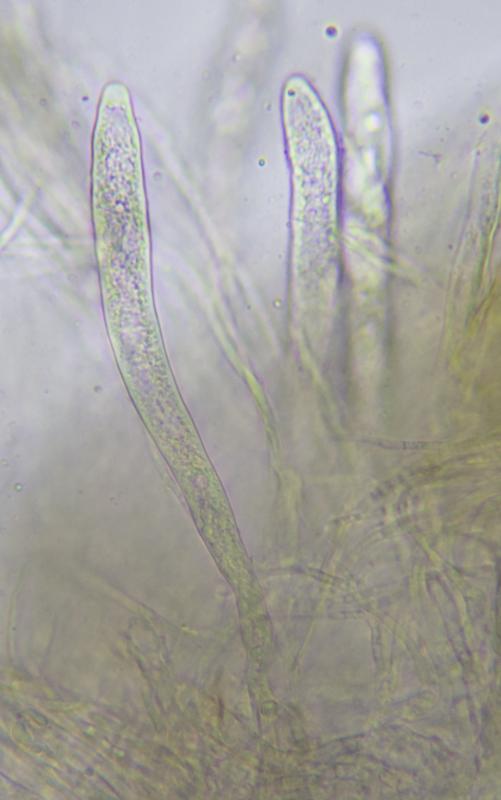
Paraphyses seemed to be long filiform, slightly curved, 2 - 2,5 um wide, branched, aseptate.
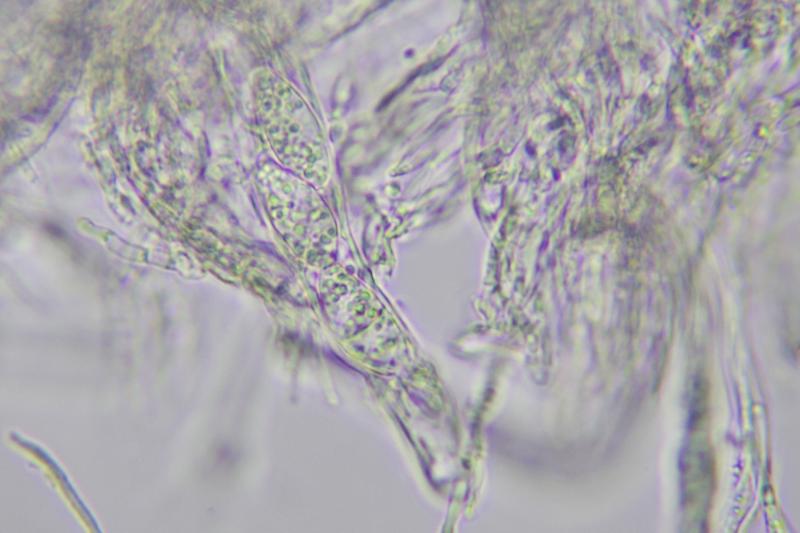
Asci cylindrical to somewhat clavate, 8-spored 120 x 10 - 12 um, most of them immature unfortunately, spores uniseriately arranged.
Ascospores smooth, hyaline, ellipsoid, 20 - 22 x 9 - 10 um, and becoming 1-septated (?).
I know it is quite poor for now and hopefully I manage to collect some more of it in the near future.
Best wishes,
Jannes
Jean-Paul Priou,
02-02-2022 20:54

Re : Bryophylous fungus on Dicranella
Certainly Helotium fulva Boud. that will become Rutstroemia fulva.
Hans-Otto Baral,
02-02-2022 22:25

Re : Bryophylous fungus on Dicranella
What a big coincidence! A minute after I closed my manuscript about this species for today, I see this posting.
There is a publshed paper about it: De Meulder H. (1992). Helotium fulvum Boud., een bryofytische parasiet. – AMK Mededelingen 92.3: 79–82.
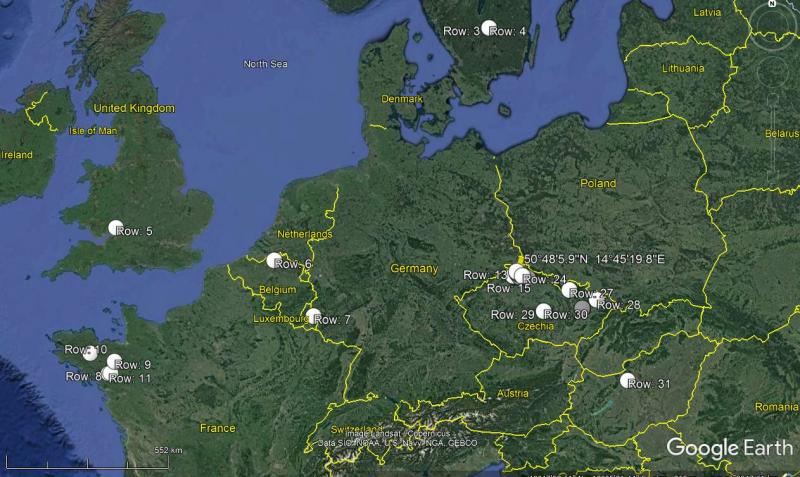
Since the species was not often collected, I would be glad to include your sample in my distribution map below.
How is the geology at the site, acidic? Is it soil or rock?
Zotto
Jannes Boers,
06-02-2022 22:38
Re : Bryophylous fungus on Dicranella
Thanks for your responses both and for the paper Zotto!
I collected this species on Dicranella, which grew on a vertical sandy wall, created by a tree that fell over. Another result because of this was stagnation of rain water at the bottom. This causes locally also higher humidity than other parts of the forest. Soil is sandy and acidic.
Jannes
Hans-Otto Baral,
07-02-2022 08:23
Re : Bryophylous fungus on Dicranella
Thank you very much, Jannes, this acidic environment matches other reports of the species.
Now, if you don't mind, could you tell me the coordinates or alternatively the approximate place on a map? Your abbreviation is J.J. Boers? 2x Jannes?
Zotto
Jannes Boers,
07-02-2022 12:14
Re : Bryophylous fungus on Dicranella
Hi Zotto,
No my name is just 1x Jannes. Thanks for mentioning that, just edited it! :)
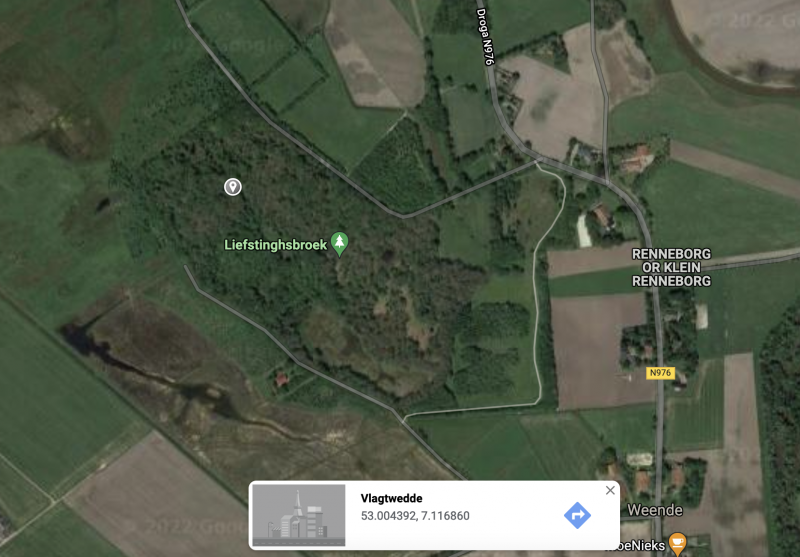
I've added a simple printscreen from Google maps, with coordinates below. Is this sufficient for you to work with?
Best wishes,
Jannes
Hans-Otto Baral,
07-02-2022 12:58
Re : Bryophylous fungus on Dicranella
Very good, thanks! This is Gelderland, or? No, I looked on a map, it is Groningen. The stipe of this apothecium is very long, do you have an idea of its length? So far 1.8 mm is the maximum.
Jannes Boers,
10-02-2022 20:51
Re : Bryophylous fungus on Dicranella
Hi Zotto, Unfortunately I have no measurements of the stipe.. Will keep that in mind for the next time.
Hans-Otto Baral,
10-02-2022 21:22
Re : Bryophylous fungus on Dicranella
o.k., I have just tried to compare your photo with other collections and arrive to the conclusion that the stipe is about 1.5 x 0.2 mm, which is almost maximum length that I recognized (1.8) and the and medium width (0.15-0.3 mm).