
12-06-2026 14:50
 François Freléchoux
Bonjour, Voici la brève description d'une Mollis
10-06-2026 21:16
François Freléchoux
Bonsoir,Le dernier du jour, en attendant votre avi
11-06-2026 19:01
 William Slosse
Hello all,In an attempt to make a culture of a sus
11-06-2026 19:03
 Nicolas VAN VOOREN
Chers membres d'Ascofrance,Le site sera placé en

09-06-2026 18:32
Camille MertensSur morceau de roseau immergé 0,5 - 0,7 mm de dia
10-06-2026 12:54
Steve ClementsBonjour encore, Pouvez-vous m'aider, s'il vous pl
10-06-2026 21:07
François Freléchoux
Toutes les tiges de gentianes jaunes de l'an passÃ
10-06-2026 13:41
François Freléchoux
Bonjour à nouveau, Voici une trouvaille d'hier.
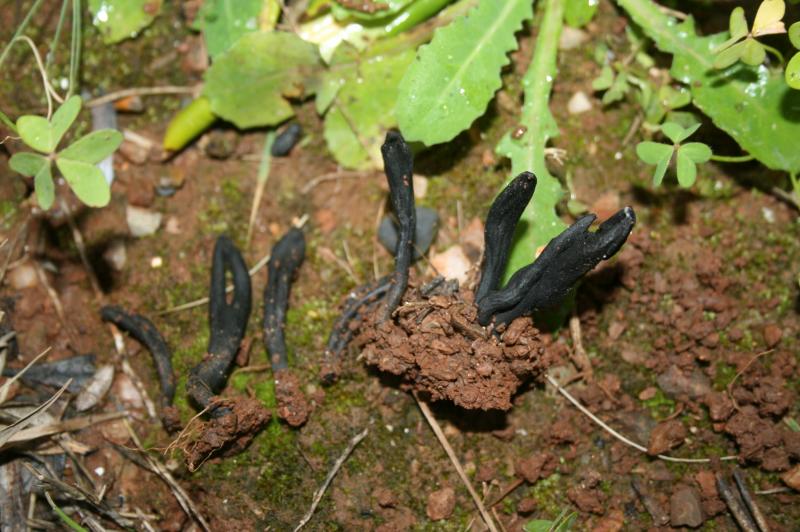
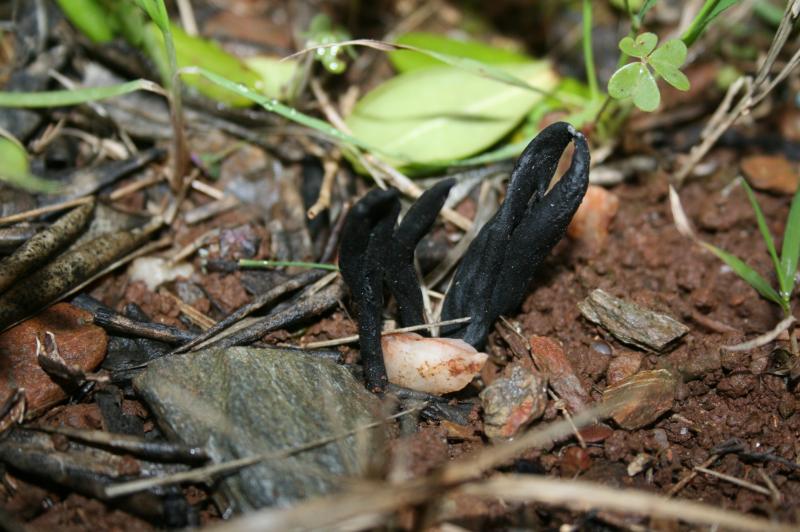
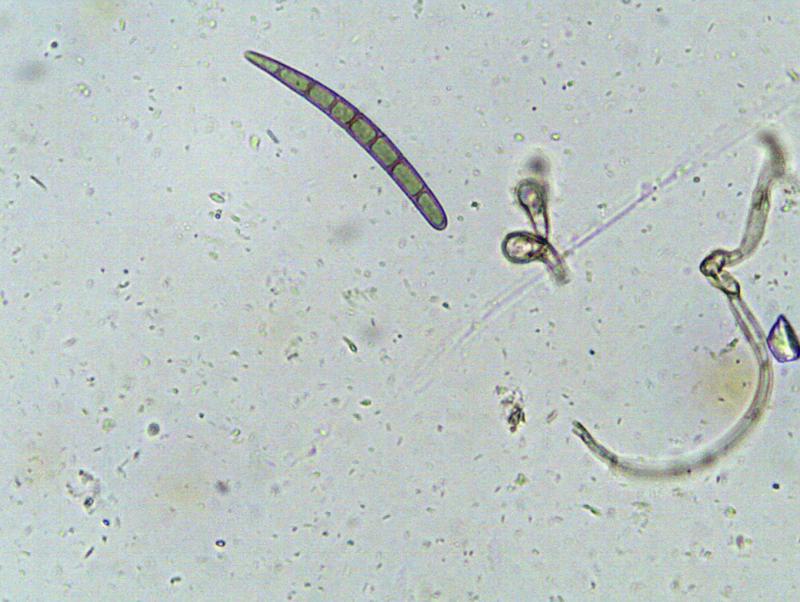
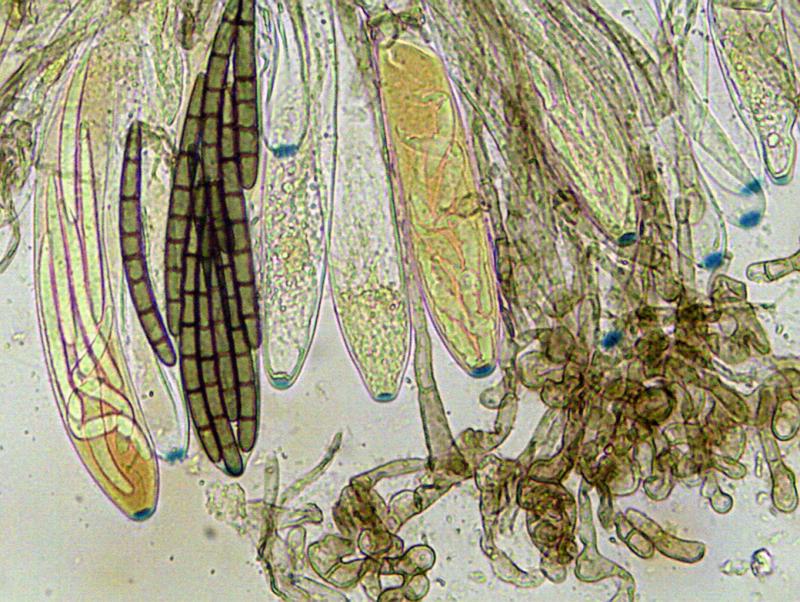
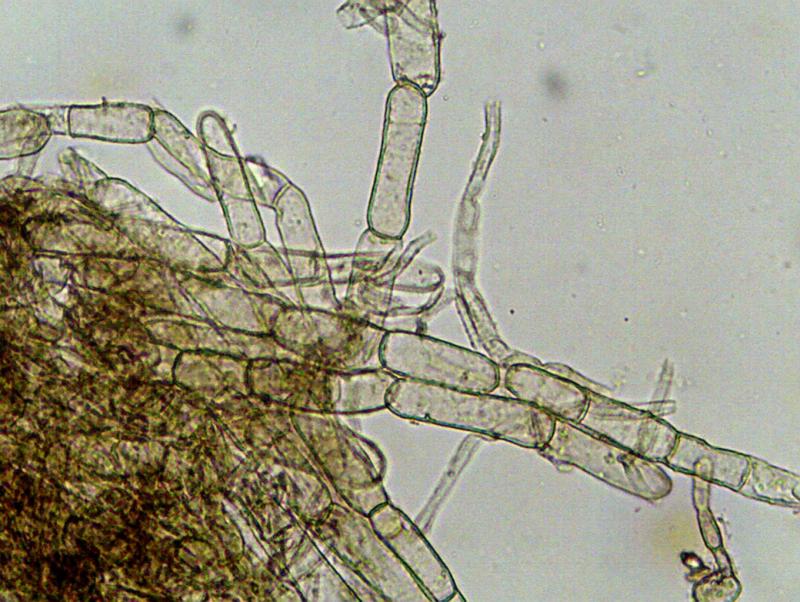
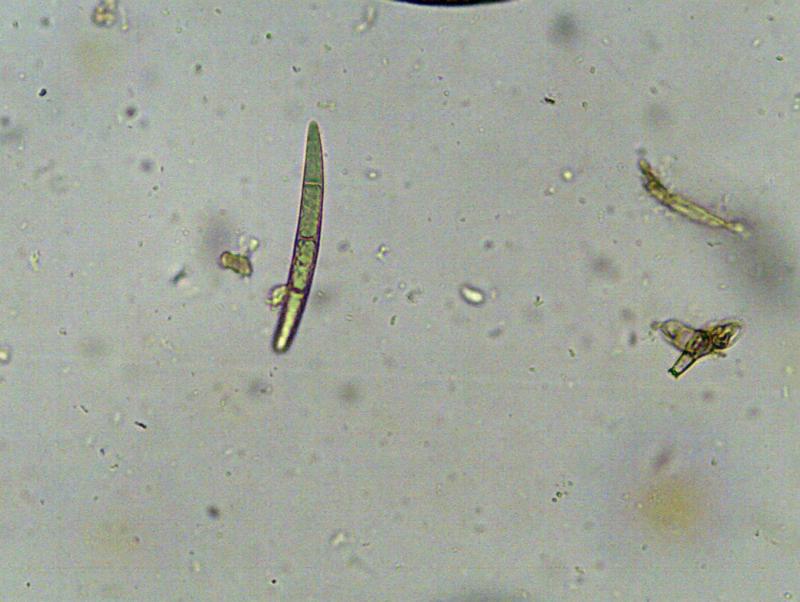
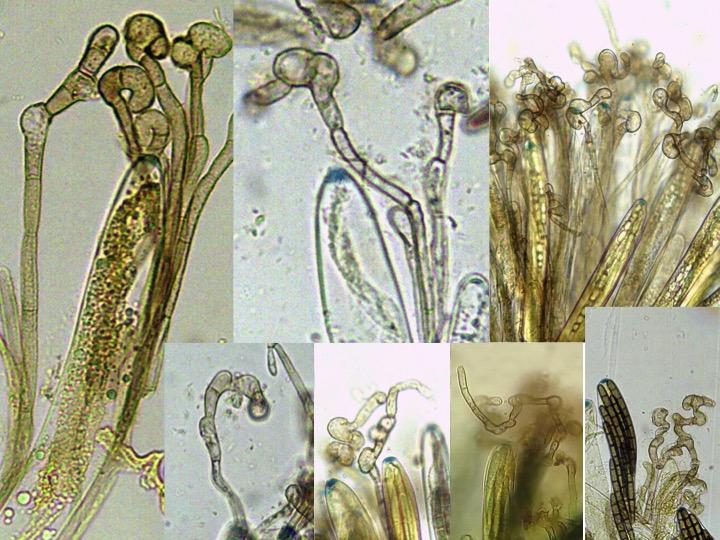
Happy New Year to everyone. I need advice on this Geoglossum, that matches G. cookeanum "barlae" except for spore size which is smaller.: (56.87-74.34) X (4.18-5.34) microns. I hope that my photos will help for the interpretation of the specimen. Thank you.
Souhila.

Hi Souhila,
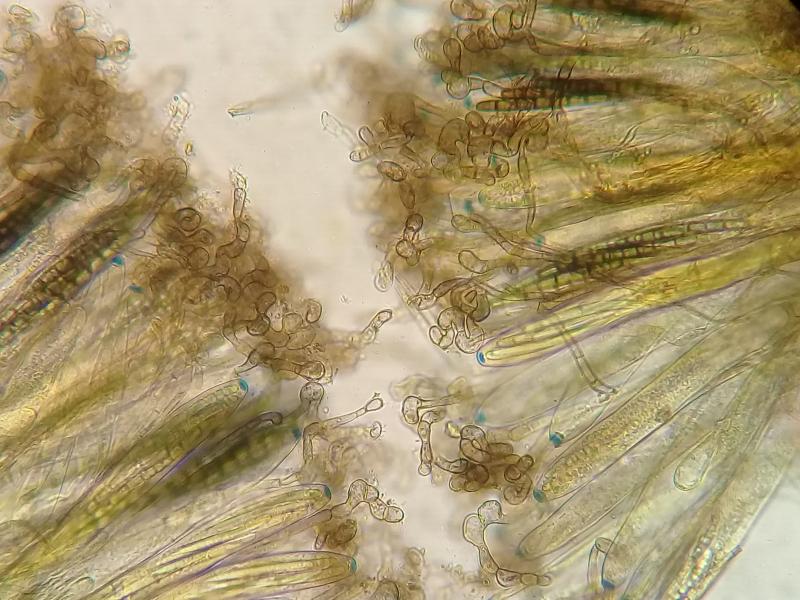
I'm not familiar with Geoglossum barlae but the paraphyses look an excellent fit and differ quite considerably from G. cookeanum. Also the ascomata in G. cookeanum are much broader. As far as I can ascertain G. barlae is a rare species, very rare in Britain, and it may be that the spore dimensions are imperfectly known as yet?
Best wishes,
Charles.
Thank you for your feedback. Indeed, Geoglossum barlae is not well known, because of its rarity. My specimens, fit totally the description of Boudier, except spores soze. I compared data from other descriptions too. I'm thinking of doing new measurements next week (spores may have been not totally mature?).
Best
Souhila

In my opinion it's Geoglossum barlae.
The paraphyses are twisted, distorted and intertwined in different directions, consisting of cells of unequal shape and size, with or without constrictions at the septa; few clearly pearl necklace chains (moniliform chains) present.
According to Benkert (1996) G. barlae is a special form of G. cookeanum.
Luc Lenaerts
Thank you Luc Lenaerts. Yes, G. barlae is considered as a form of G. cookeanum by Benkert (1996). He explains that the spectacular for of paraphyses in G. barlae are due to unfavorable enironmental conditions. Arauzo & Iglesia (2014) in their phylogenetic study of the family shows that G. barlae is far from G. cookeanum, but still its not clear because they said: "To check whether there are differences at the genetic level, attempts have been made to sequence specimens with this last type of paraphysis but without success, the existence of intermediate transitional forms seems to indicate that they are not. Ecologically it seems to prefer sandy soils, being frequent in dunes or coastal areas, but it can be located in habitats with other types of soil and in the interior. There are numerous citations in Spain and Portugal but there are no data on their presence in Macaronesia.".
I dont know if further investigations have been made on the subject. I'll appreciate any related literature to dig deeper into the species.
Thank you.

Thanks
Mal

 Benkert-Zur-Variabilitat-der-Paraphysen-in-der-Gattung-Geoglossum-1996-0001.pdf
The opinion on Barlae obviously is a bit mixed. As far as I can see the concept varies between the swollen and contorted paraphyses of Nannfeldt 42, Arauzo, and Benkert 96 and the unswollen but circinate form of Benkert76 and Hustad. I based the naming of my find as G barlae on this second opinion but now it looks as though that might be incorrect.
This photo shows the various paraphyses of specimens called G barlae (the last one my own).
Am I missing something?
Thanks
Mal
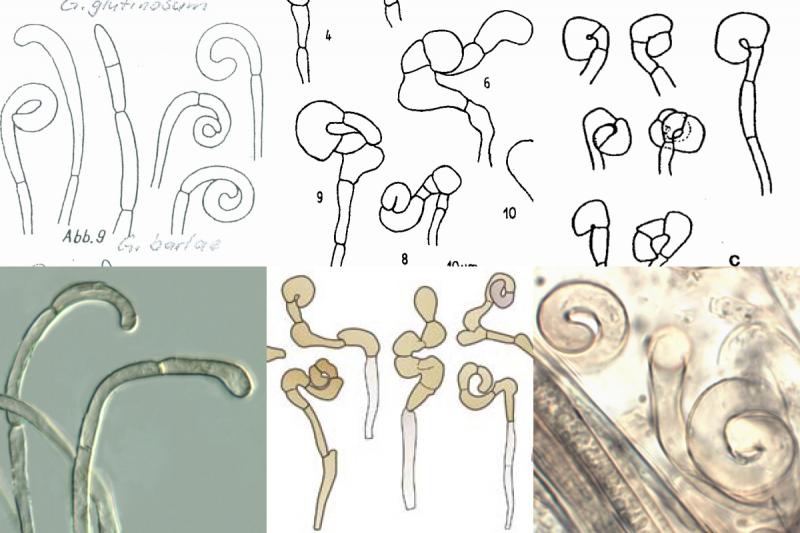
Abb. 9 by Benkert (1976) of G. barlae on the left side is wrong. He changed his opinion of G. barlae in 1996.
In my opinion Abb. 9 and the other one bottom left and bottom right is Geoglossum umbratile.
Luc Lenaerts
Mal