
12-06-2026 14:50
 François Freléchoux
Bonjour, Voici la brève description d'une Mollis
10-06-2026 21:16
François Freléchoux
Bonsoir,Le dernier du jour, en attendant votre avi
11-06-2026 19:01
 William Slosse
Hello all,In an attempt to make a culture of a sus
11-06-2026 19:03
 Nicolas VAN VOOREN
Chers membres d'Ascofrance,Le site sera placé en

09-06-2026 18:32
Camille MertensSur morceau de roseau immergé 0,5 - 0,7 mm de dia
10-06-2026 12:54
Steve ClementsBonjour encore, Pouvez-vous m'aider, s'il vous pl
10-06-2026 21:07
François Freléchoux
Toutes les tiges de gentianes jaunes de l'an passÃ
10-06-2026 13:41
François Freléchoux
Bonjour à nouveau, Voici une trouvaille d'hier.
Hyalorbilia
Garcia Susana,
24-11-2020 08:53
Hola,
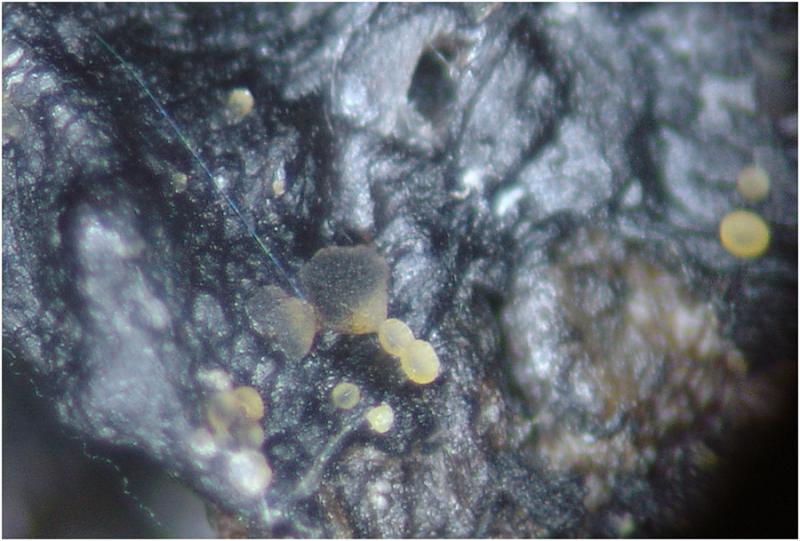
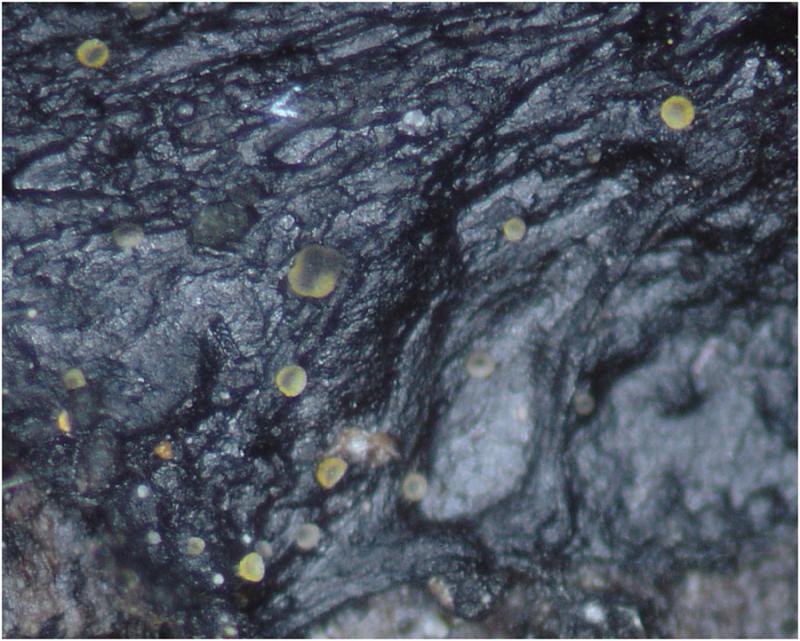
Recolectada en una rama de planifolio indeterminado que fué arrastrada por la corriente del agua y que quedó a la orilla de la regata, junto a más restos vegetales.
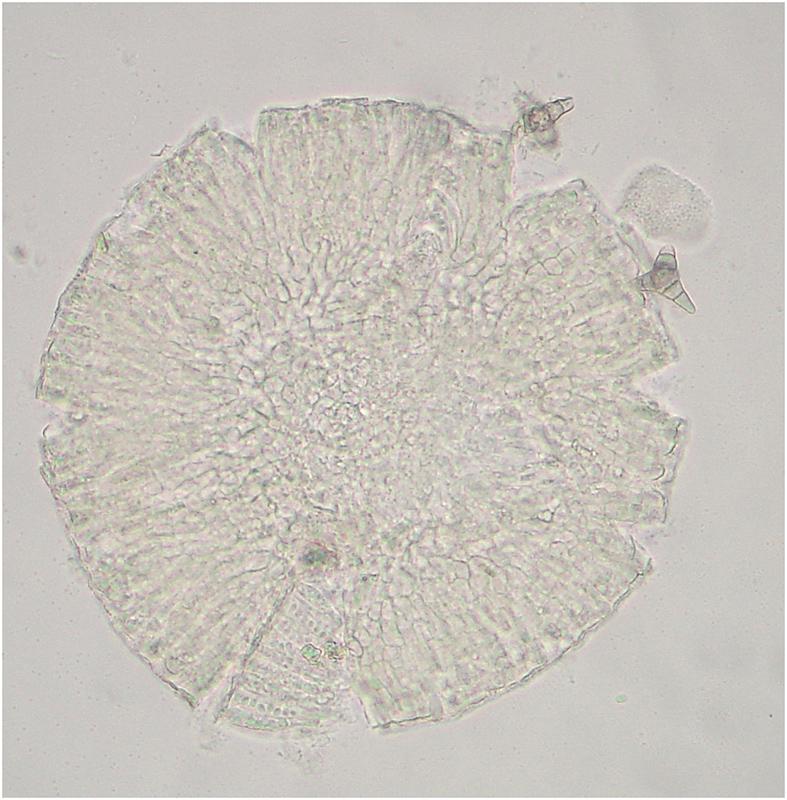
El tamaño oscila entre las 100-200um de diámetro. De color amarillo, traslucido en los apotecios más grandes. Ligeramente estipitado.
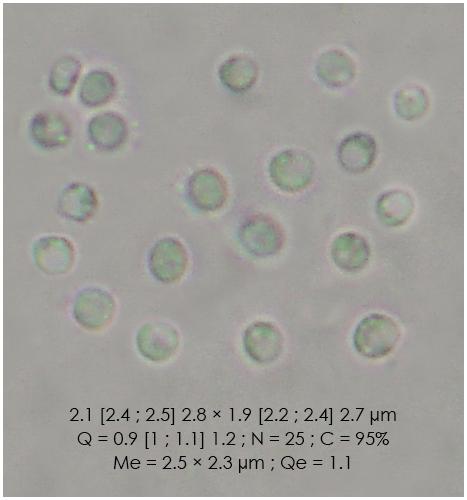
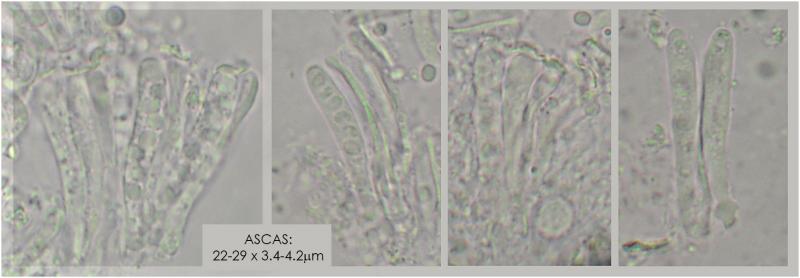
He revisado la documentación y se me plantea la duda entre H. multiguttulata y H. brevistipitata. Los tamaños tanto de esporas como ascas me encajan más con brevistipata, pero la distribución de la especie con multiguttulata.
¿Qué opinais?
Un saludo
Susana
Hans-Otto Baral,
24-11-2020 10:08

Re : Hyalorbilia
Hi Susana
this is very difficult to tell. If you are sure your spores were alive (I am bot fully sure in your free spores photo), we can exclude H. erythrostigma. When comparing measurements of dead elements this species would still match.
Spore size in H. multiguttulata is the same as in erythrostigma, and H. brevistipitata has more ellipsoid-subglobose spores.
Javier Balda sent me very recently a sample in wood of indet. angiosperm from Navarra which might be the same. I asked him to send it for sequencing. Measurements: *2.2-2.5 x 1.5-1.7 µm or 2.24 (1.90-2.75) x 1.82 (1.42-2.40), asci *20-24 x 3.5-3.7 µm.
Look in my "brevistipitata cf. Spain" folder where I put also yours for the time being.
Zotto
Garcia Susana,
24-11-2020 12:23
Re : Hyalorbilia
Gracias Zotto,
Saludos
Susana
Hans-Otto Baral,
16-12-2020 12:56
Re : Hyalorbilia
I now think this is H. erythrostigma on a pyrenomycete, with the dead spores showing the large empty region that occupied the spore body when they were alive.
Javier's sample now turned out to be a new species related to H. erythrostigma and H. orbiliicola.
Zotto
Garcia Susana,
16-12-2020 22:27
Re : Hyalorbilia
Gracias,
Tomo nota y corrijo.
Saludos
Susana
Guy Marson,
18-12-2020 15:38
Re : Hyalorbilia
Dear Susana,
This again, is a very interesting species, especially because of the geographical distance it should be sequenced. (As Zotto says: "for the next generation"). To sequence this species. I would need a few apos that were dried immediately after collection, but are still on the substrate. BTW: Our sequencer will not be operational again until mid-January 2021. If you agree, please send it to:
Guy Marson
45 b, rue de Bettembourg
L-5810 Hesperange
Luxembourg
Best regards,
Guy
This again, is a very interesting species, especially because of the geographical distance it should be sequenced. (As Zotto says: "for the next generation"). To sequence this species. I would need a few apos that were dried immediately after collection, but are still on the substrate. BTW: Our sequencer will not be operational again until mid-January 2021. If you agree, please send it to:
Guy Marson
45 b, rue de Bettembourg
L-5810 Hesperange
Luxembourg
Best regards,
Guy
Hans-Otto Baral,
18-12-2020 16:23
Re : Hyalorbilia
I do not expect another result than H. erythrostigma, but who knows.
In any case, the substrate is an old stromatic pyreno, what could that have been? And is the wood anatomy too difficut to classify?
Garcia Susana,
18-12-2020 23:52
Re : Hyalorbilia
Hola Guy,
Guarde algunos apotecios.
No se si estarán en las condiciones optimas para poder secuenciar, pero yo te los enviaré.
El secado ha sido a temperatura ambiente, sin ningún tipo de "precaución" y todavía permanecen sobre el pyrenomycete, aunque no está el trozo de madera si no pequeños trocitos.
Saludos
Susana
Guy Marson,
19-12-2020 12:29
Re : Hyalorbilia
Hola Susana,
The drying of small mushrooms at "only" room temperature is completely ok. And if there is still some support (wood or host fungus or soil) left around small ascocarps (<2mm), single apothecia are easier to isolate than if they are placed individually from the substrate in electrostatically chargeable plastic containers such as reaction vessels, Eppendorfs or Petri dishes.
In order to be able to sequence very small apothecia with Sanger sequencers, only one fungus has to be given into the PCR, especially if the host is also a fungus, the desired fungus has to be isolated very cleanly. The way you describe it is all possible and ok. IMO a sequencing attempt should work.
Thanks for your feedback and Merry X-mas.
Cheers,
Guy
The drying of small mushrooms at "only" room temperature is completely ok. And if there is still some support (wood or host fungus or soil) left around small ascocarps (<2mm), single apothecia are easier to isolate than if they are placed individually from the substrate in electrostatically chargeable plastic containers such as reaction vessels, Eppendorfs or Petri dishes.
In order to be able to sequence very small apothecia with Sanger sequencers, only one fungus has to be given into the PCR, especially if the host is also a fungus, the desired fungus has to be isolated very cleanly. The way you describe it is all possible and ok. IMO a sequencing attempt should work.
Thanks for your feedback and Merry X-mas.
Cheers,
Guy