
22-04-2026 20:17
 Marian Jagers
Is anyone familiar with the Hyphomycetes genus Pse
22-04-2026 20:54
 Enrique Rubio
Hi to everybody.This Pyrenopeziza grew in moist le
22-04-2026 01:06
 Richard VALERI
Bonjour à tous.Je vous présente cette Nectria s.
21-04-2026 13:36
Gernot FriebesHi,I am out of ideas for this one. I collected Sal
21-04-2026 13:19
Gernot FriebesHi,this Lophodermium on Typha has ascospores measu
21-04-2026 13:05
Gernot FriebesHi,this hyphomycete feels familiar but I was not a
20-04-2026 22:00
 Malcolm Greaves
These pale yellow, hairy ascos were growing on cul
 Hello,
this Orbilia was growing on a laying branch (Populus??) in lowland deciduous forest (Fraxinus, Padus, Populus), it looked more red than on the photo, size about 1 mm.
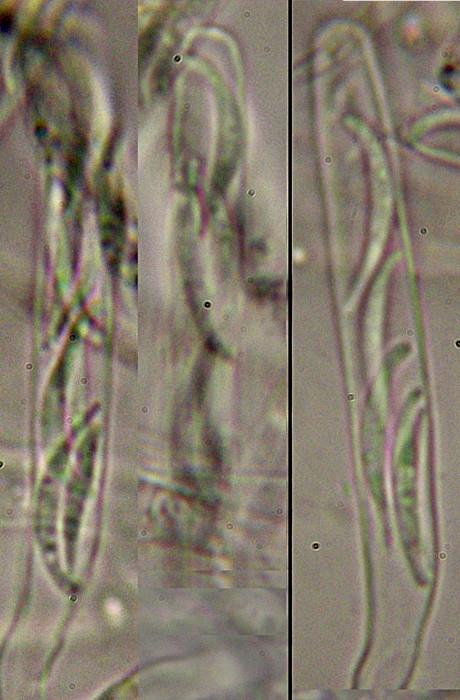
Paraphyses capitate, covered with an exudate. Asci 8spored, part of spores turned opposite way. Exudate on surface cells of the margin.
Sp. curved (sigmoid?), elongated SB and 1-2 small LBs, * (10,4) 11-13,1 (13,9) × (0,9) 1,1-1,4 (1,5) um, avg = 12 × 1,2 um, Q = 8,2-8,9-10.
Could it be something from the Aurantiorubrae section? I'm not sure what's the difference between aurantiorubra and jugulospora.
Thank you very much in advance.
Viktorie
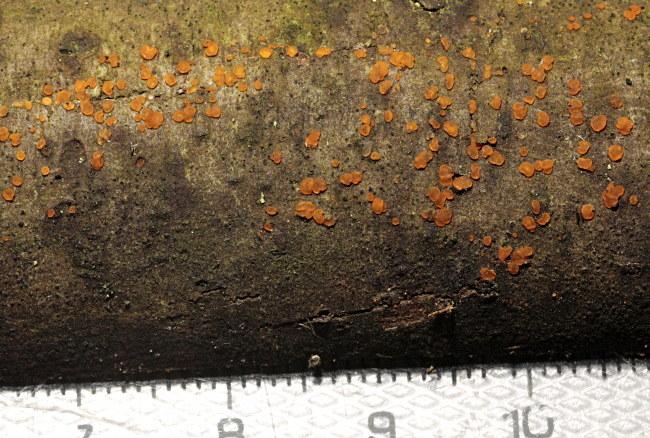
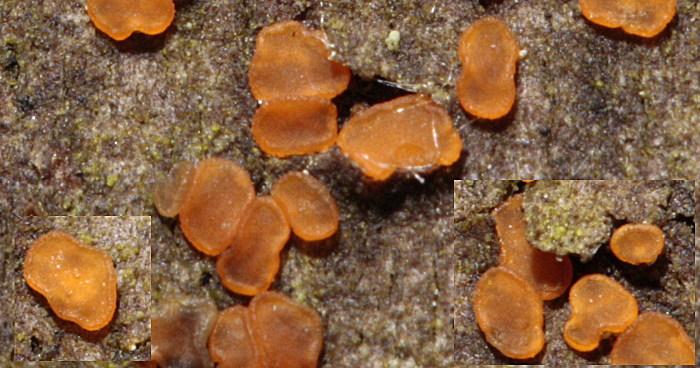
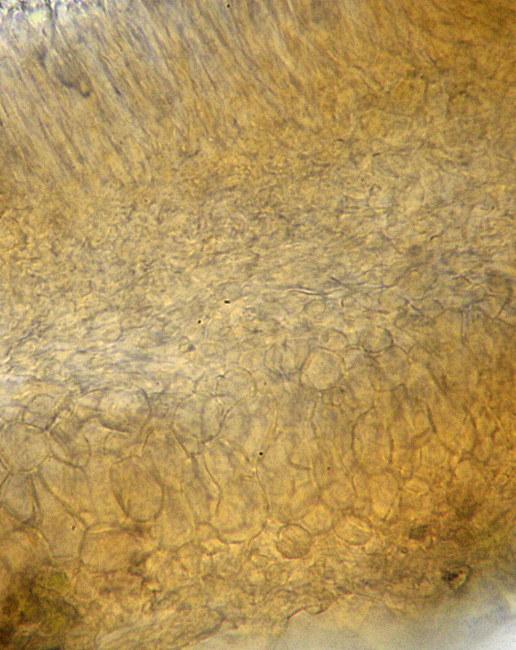
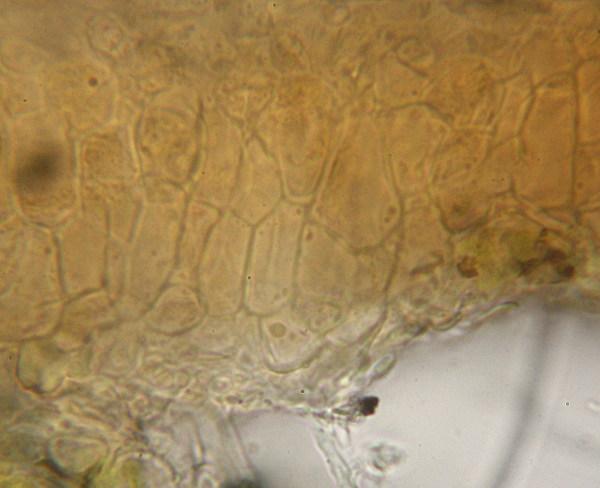
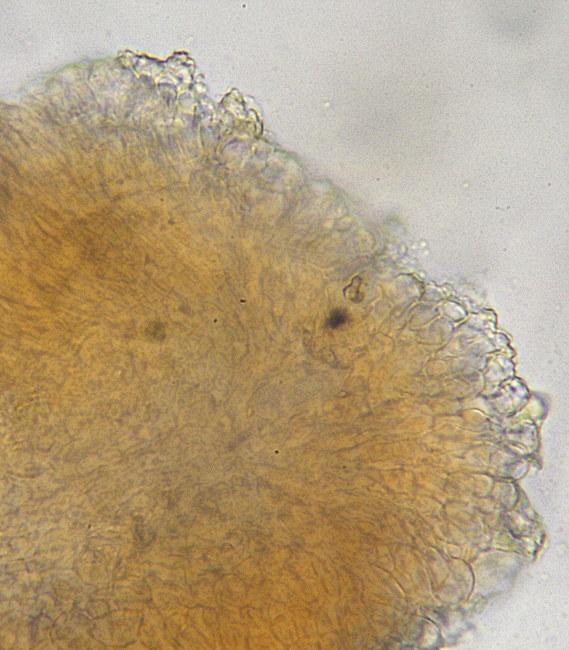
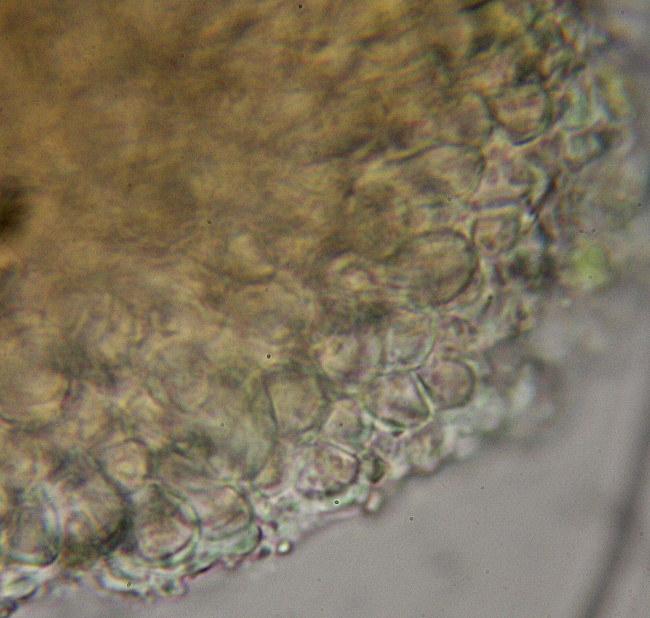
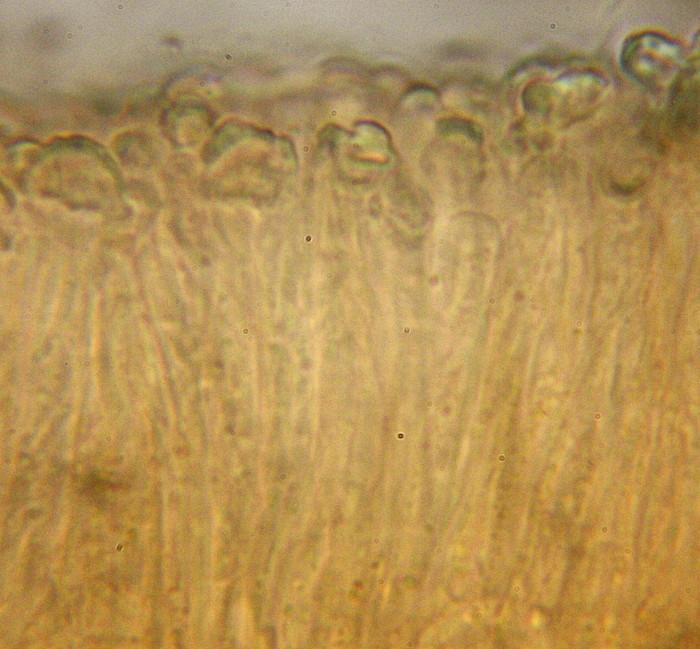
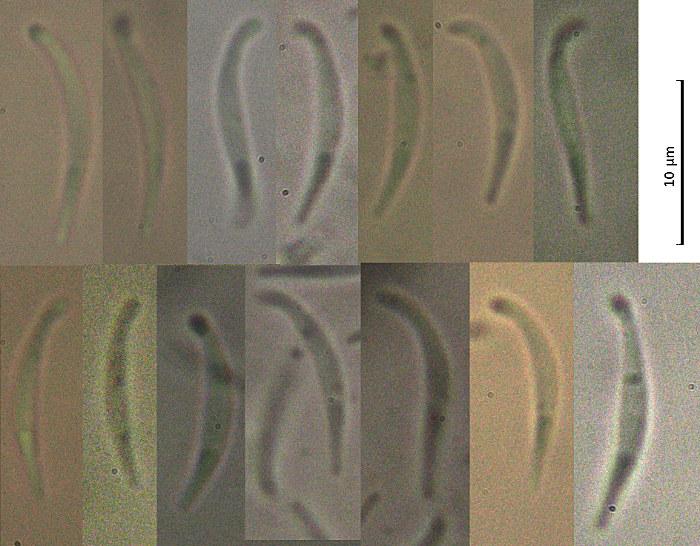

indeed this is O. aurantiorubra. O. jugulospora is very close, and it is mainly genetical and geographical that this species was separated. Here is the key:
4. Spores strongly helicoid (basally hooked), *(9.5–)10.5–12(–13) × 1–1.4 µm; SBs mainly 0.4–0.6 µm wide; conidia *2.5–3.5 µm wide, 3(–4)-septate; angiosperm bark, temperate to subtropical ± humid northeastern Africa and eastern Asia ...... O. jugulospora
4. Spores medium helicoid, *9–12.5 up to 12–15(–17) × 1.1–1.6 µm wide; SBs mainly 0.7–1 µm wide; conidia mainly *4–5 µm wide, 4–6-septate; bark (rarely wood) of mainly Salix, Ulmus and Fabaceae, ± temperate (rarely subtropical) humid Europe, Macaronesia, western Asia, North America ........ O. aurantiorubra
The spores are partly inverted as in most Orbilia species, but it is better to figure them with the SB upwards. In fact when I sampled this species the first time in 1974 and 1977 I also depicted the spores inversely.
The substrate was usually Salix and Ulmus, also Fabaceae, once Fraxinus and never Populus (but which would make sense considering it is a Salicaceae). Would you be able to look at the wood anatomy?
I know only one record from Czechia and one from Slovakia so far.
Zotto
thank you very much. Unfortunately I have just a piece of bark from that branch, but I still remember where exactly it was so I'll try to relocate it when I go there the next time. It seemed more silver (like poplar) than yellow like ash, but of course better to check the wood.
I took the spore orientation from the uppermost spore in asci which seemed with SB down.
Olomouc-Cernovir, ca. 220 m a.s.l., ca. 3-4 cm thick branch laying on the ground, 49°37,203' 17°16,277', leg. 10. III. 2019, herb. number will be V.H. 1044 after drying. It was immature in march and then I forgot that it's still in the fridge and microscoped it just yesterday. Good thing that Orbilias are such survivors.
VIktorie
Update: substrate is Ulmus branch.
You can try a photo of the inner surface of the bark, but it is not easy to identify the genus with that.