

22-04-2026 20:17
 Marian Jagers
Is anyone familiar with the Hyphomycetes genus Pse
22-04-2026 20:54
 Enrique Rubio
Hi to everybody.This Pyrenopeziza grew in moist le
22-04-2026 01:06
 Richard VALERI
Bonjour à tous.Je vous présente cette Nectria s.
21-04-2026 13:36
Gernot FriebesHi,I am out of ideas for this one. I collected Sal
21-04-2026 13:19
Gernot FriebesHi,this Lophodermium on Typha has ascospores measu
21-04-2026 13:05
Gernot FriebesHi,this hyphomycete feels familiar but I was not a
I found this pyrenomycete, which I assume is a Paratrichophaea sp.. Here is its feature.
Specimen examined?China, Jilin province, on the campus of Jilin agricultural university
Substrate: Rotten wood
Apothecia: 0.25-0.625mm diam, gregarious, sessile, white when fresh, yellowish when dry(it maybe be affected by hairs),hairs yellowish-brown?82.93-241.14 x 8.35-16.3mm, The base of the one part is swollen,another is none.
Asci:the whole ascus has not been observed, so I need to make more tablets to observed it.
Ascospore: Long oval?Transparent(the ascospores are dyed by cotton blue in fig.), 16.27-17.61(20.464) x 9.57-10.62mm
Thanks
Gao
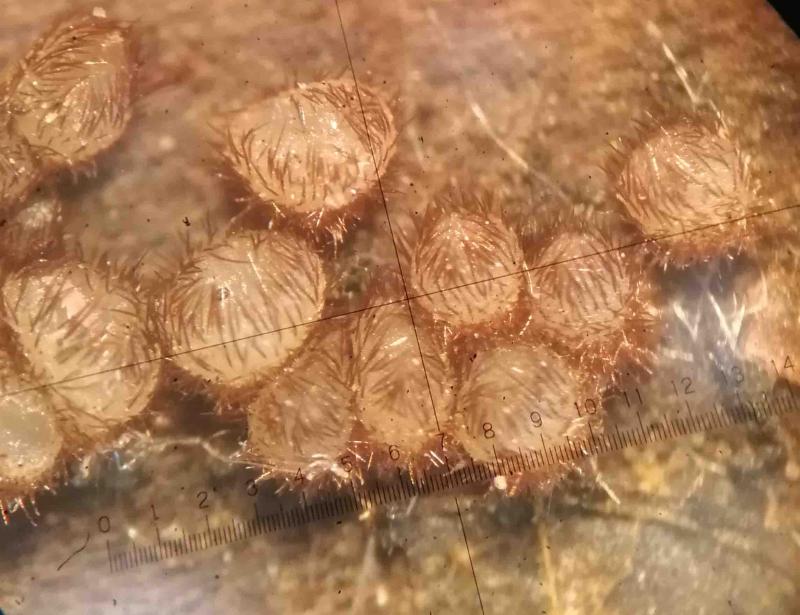
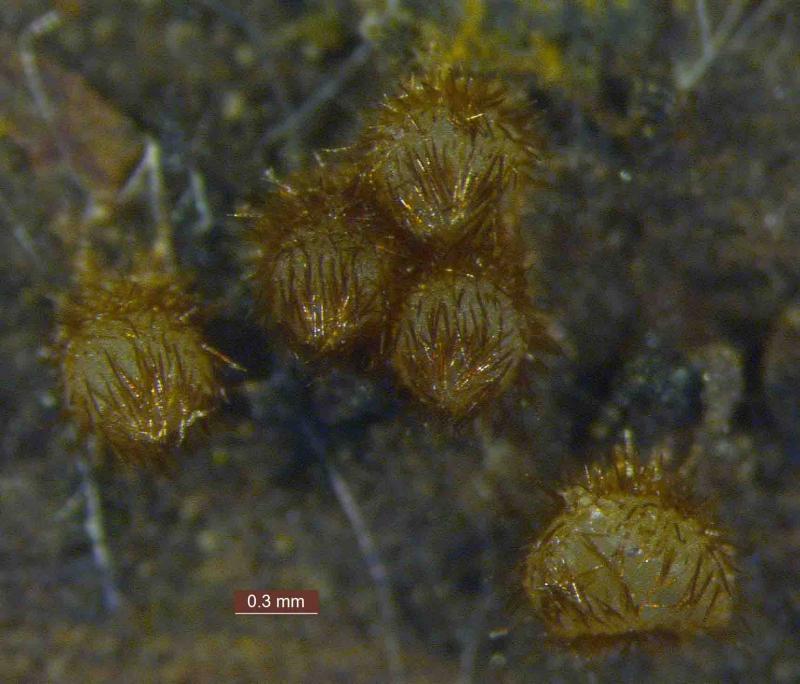
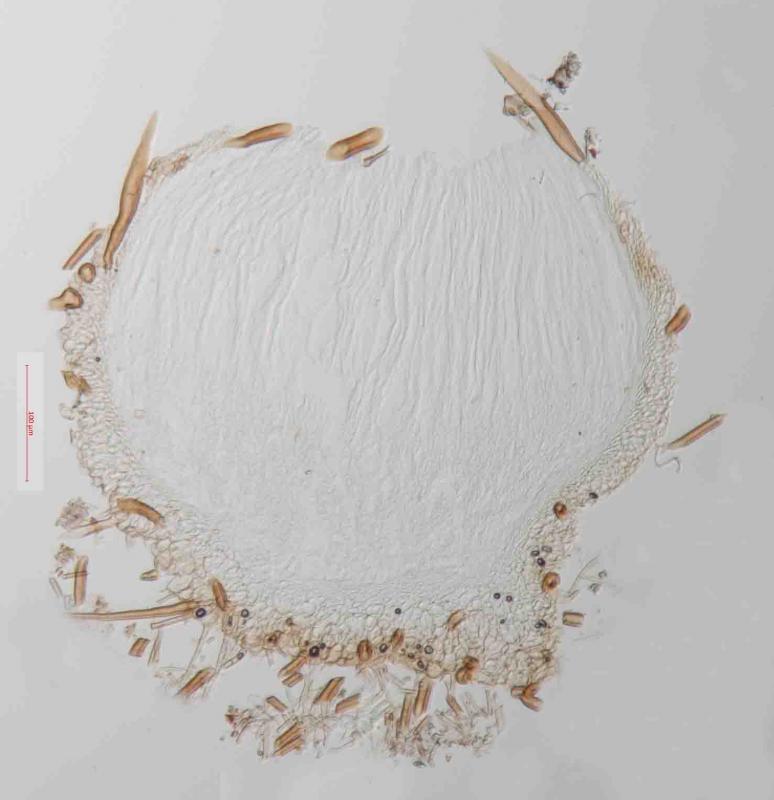
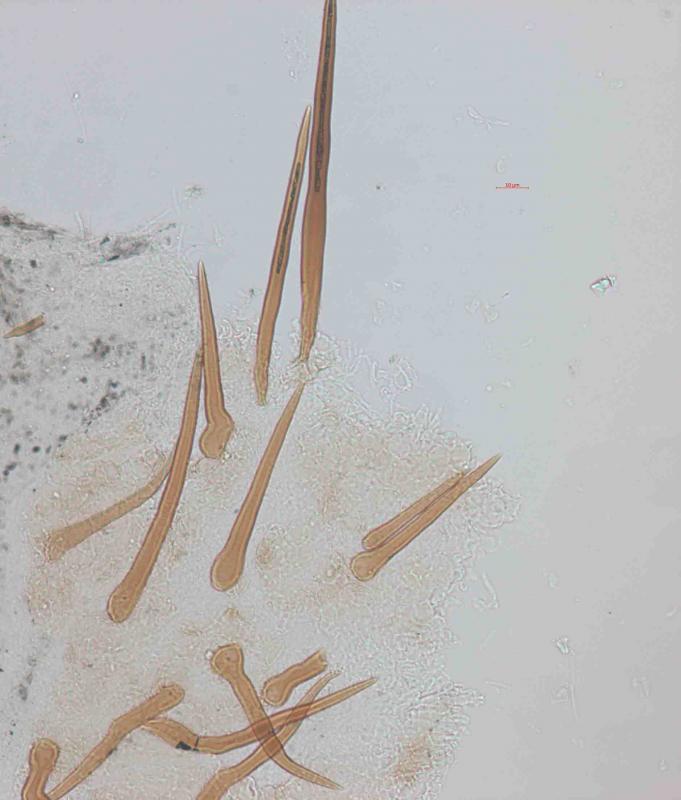
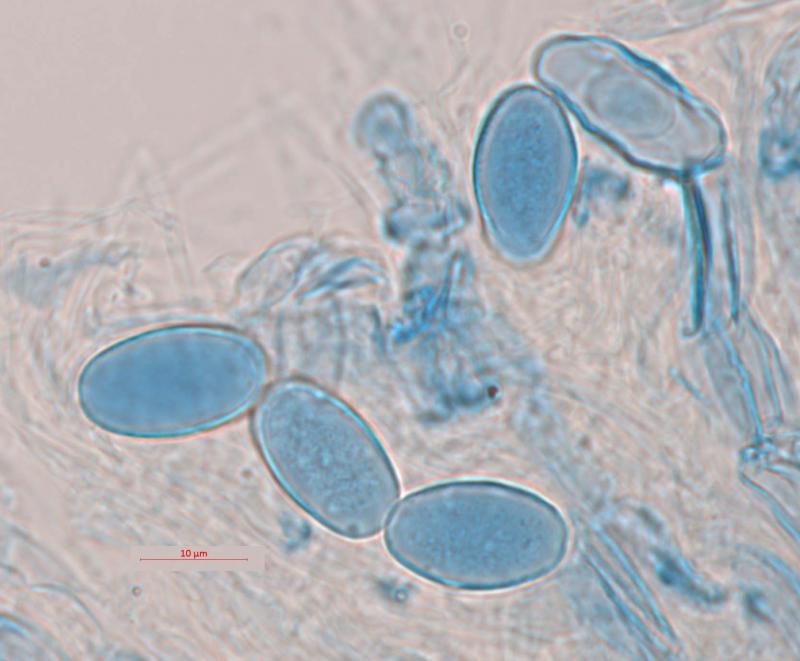
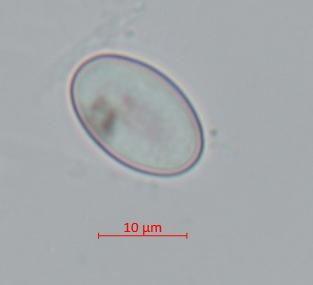
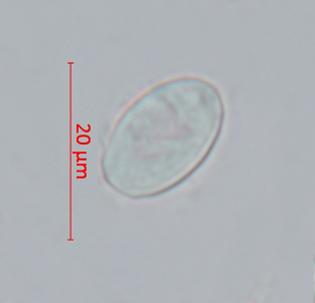

Can you present the ascospores in water? Thanks.
It's possible that this collection isn't fully mature, but the hairs certainly fit in the genus Paratrichophaea.
My guess would be P. boudieri.
Benkert (2010) divided P. boudieri s.l. into two groups depending on spore size, your collection would fit in Group 1 = (16.5)17-21 x (8)9.5-12.5 µm.
Best,
Ron
Thanks.
I agree with Ron, P. boudieri agg.
Thank you for your reply.
I read the literature and I also consider it is Paratrichophaea boudieri (Grelet) Bronckers.Due to Apothecia which I observed isn't fully mature after that I do the Phylogenetic research.
According to the literature about the phylogenetic of Pyronemataceae:
1. LIU Chao-Yang, ZHUANG Wen-Ying.Phylogeny of some genera in the Pyronemataceae (Pezizales, Ascomycetes),2006(04):546-558.
It introduce the phylogenetic by using the barder barcode SSU and LSU.
2. Perry B A, Hansen K, Pfister D H. A phylogenetic overview of the family Pyronemataceae (Ascomycota, Pezizales)[J]. Mycological Research, 2007, 111(5): 549-571.
It use the barcode LSU.
3. Hansen K, Perry B A, Dranginis A W, et al. A phylogeny of the highly diverse cup-fungus family Pyronemataceae (Pezizomycetes, Ascomycota) clarifies relationships and evolution of selected life history traits[J]. Molecular Phylogenetics and Evolution, 2013, 67(2): 311-335.
Article first use of multiple gene fragments which include LSU, rpb1,rpb2 and EF-1? to analyse for Pyronemataceae.
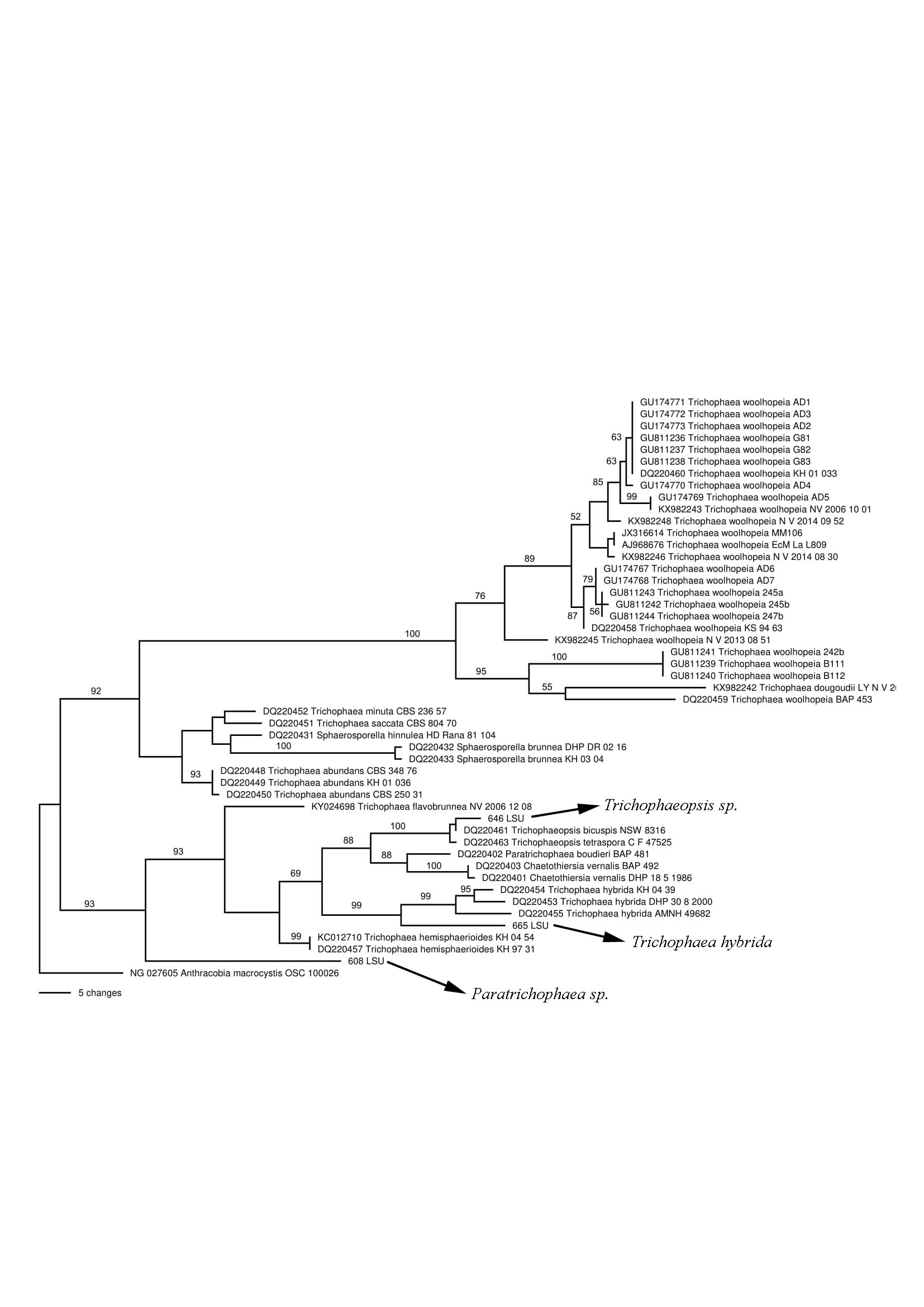
In spite of doing the phylogency research but I only use the LSU, and I have provided the Phylogenetic tree. Can you help me analyse it.
(Phylogenetic relationships of Trichophaea, Trichophaeopsis and Paratrichophaea based on Likelihood analysis of LSU.)
Best,
Gao
 Trichophaea-LSU-2.jpg-0002.jpg
I am not very familiar with phylogeny, so you better ask Nicolas who can help you better concerning this matter I asume. His knowledge is more up to date, mine is more 'old school'.
Kind regards,
Ron
The main problems with many sequences registered in GenBank are they are not really documented and often not correctly determined. I don't know if it is the case here but this could change your hypotheses...
As I understand your tree you integrated three LSU sequences of Trichophaea and allies collections. As I interpretate your result:
1) Coll. 665: It falls in a clade related to T. hybrida/gregaria complex. You have to check if some characters of your fungus deviate from the typical T. gregaria. It is a hard challenge to get a good taxonomy of this complex.
2) Coll. 608 (Paratrichophaea sp.): Is it the collection presented in this post? The isolated position and the long branch suggest a new species, but other collections of "Paratrichophaea" are required to evaluate if the genus is correct or if it deserves its own genus.
3) Coll. 646 (Trichophaeopsis sp.): Hard to be affirmative without data of this collection. Phylogenetically you can say this is the same fungus named T. bicuspis (if the determination is correct) or this is a new species... It depends on the number of differences in BP (base pairs) between your collection and NSW 8316.
In any cases, a multigene phylogeny is required to better understand the affinities of these taxa at the rank of genus. The only thing we know (since 2007) is that the genus Trichophaea is paraphyletic!
Hope it will help you.
I am sorry I don't reply on time.
Thank you for your analyses. And I already reply you in mail box
Best,
Gao