
24-04-2026 03:16
 David Chapados
Found while looking at something else from wood in
22-04-2026 20:54
 Enrique Rubio
Hi to everybody.This Pyrenopeziza grew in moist le
22-04-2026 01:06
 Richard VALERI
Bonjour à tous.Je vous présente cette Nectria s.
22-04-2026 20:17
 Marian Jagers
Is anyone familiar with the Hyphomycetes genus Pse

21-04-2026 13:36
Gernot FriebesHi,I am out of ideas for this one. I collected Sal
21-04-2026 13:19
Gernot FriebesHi,this Lophodermium on Typha has ascospores measu
Lophiostoma sp on Acer query
Watt John,
07-11-2018 16:15
Growing on decorticate Acer is what otherwise seems to match a Lophiostoma sp though the many peritheciea are situated on a continuous black subiculum, which does not seem typical.
I see there are a number of Lophiostoma sps.: this one has transverse and longitudinal septae ( up to 5)
but the ascospores are rather smaller than L. compressum at 17.3 x 6.6 mc. I was unable to distinguish features of the ostiole on this rather dry collection.
John Watt
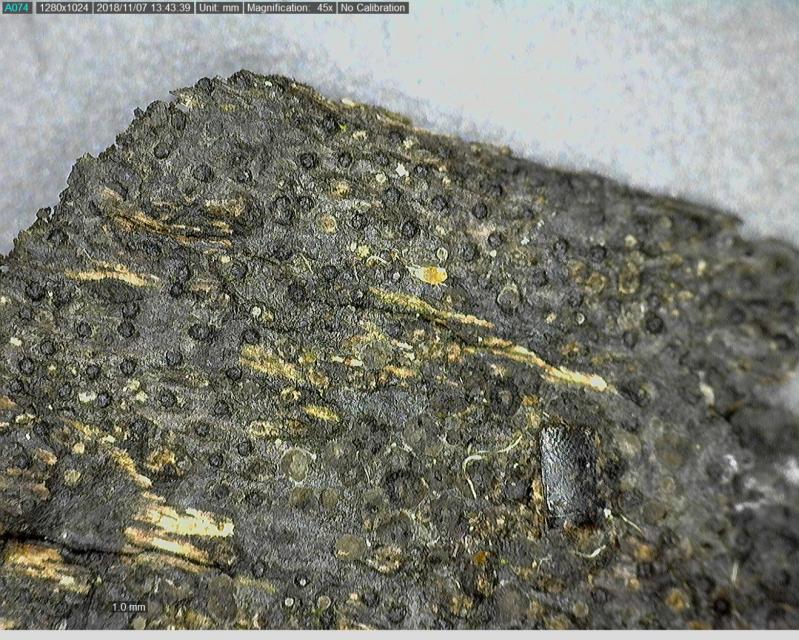
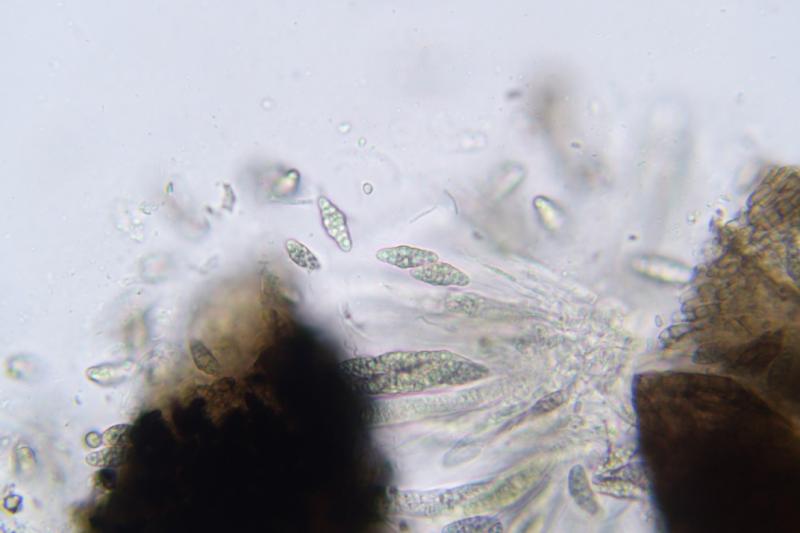
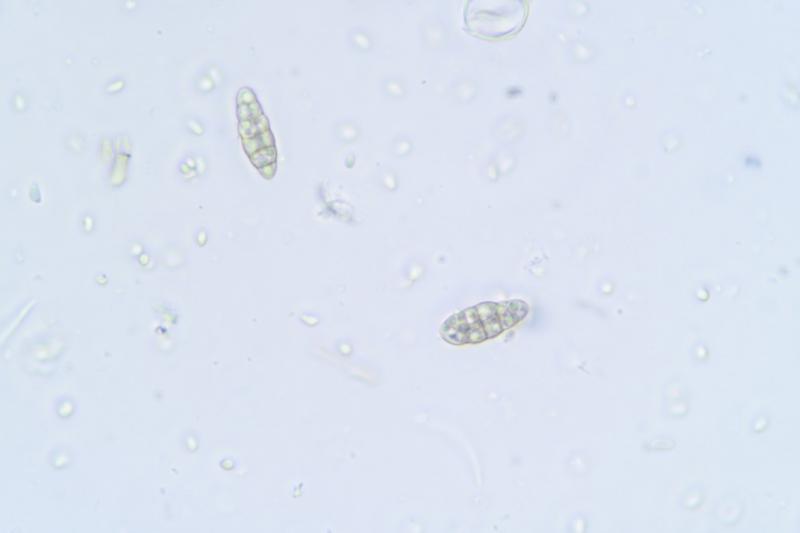
Alain GARDIENNET,
07-11-2018 16:41

Re : Lophiostoma sp on Acer query
Hi,
Please check if it's really one Lophiostoma species. I don't think. Ascomata should be immersed, with a lateral compressed neck. You can compare with pictures of Ascofrance database.
I guess that your ascomata are superficial growing on an old pyrenomycete. Microscopy reminds the genus Capronia.
Alain
Watt John,
07-11-2018 21:16
Re : Lophiostoma sp on Acer query
Thanks you, especially for pointing out the underlying pyrenomycete; that makes sense now.
I shall check out Capronia sps, which are also new to me; spores look very similar. Learning curve slowly going up.
Stange to say, whilst looking at my next collection, I could unexpectedly see such spores , but this time 7 septate and rather more pointed at each end, in the squash and then found 0.25 mm perithecia on bark and also on white subiculum which otherwise doesn't reveal any features. May remain a mystery.
Kind regards,
John Watt
Ormskirk, Lancashire