
24-04-2026 03:16
 David Chapados
Found while looking at something else from wood in
22-04-2026 20:54
 Enrique Rubio
Hi to everybody.This Pyrenopeziza grew in moist le
22-04-2026 01:06
 Richard VALERI
Bonjour à tous.Je vous présente cette Nectria s.
22-04-2026 20:17
 Marian Jagers
Is anyone familiar with the Hyphomycetes genus Pse

21-04-2026 13:36
Gernot FriebesHi,I am out of ideas for this one. I collected Sal
21-04-2026 13:19
Gernot FriebesHi,this Lophodermium on Typha has ascospores measu
Immersed long-necked pyrenomycete - Ceratostomella (?)
Ethan Crenson,
06-11-2018 08:59
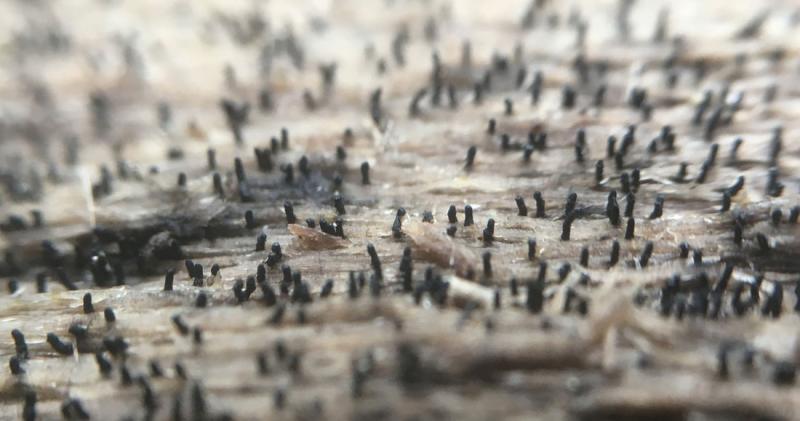
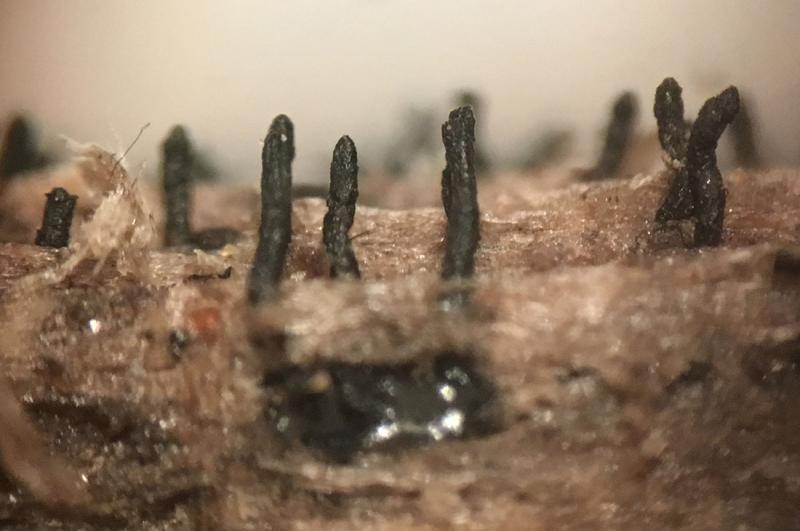
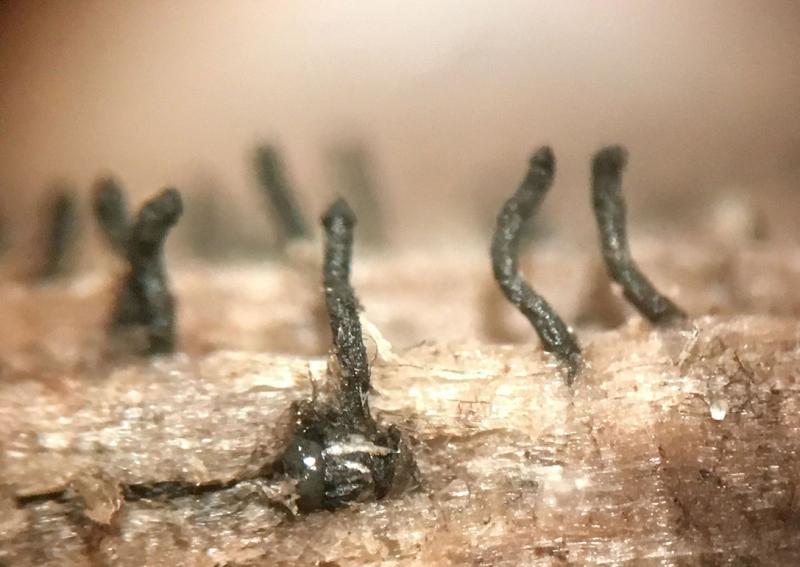
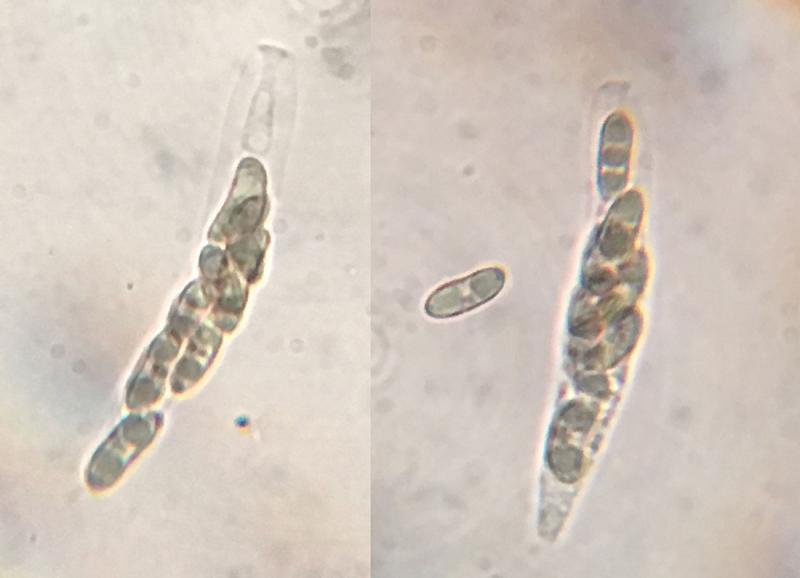
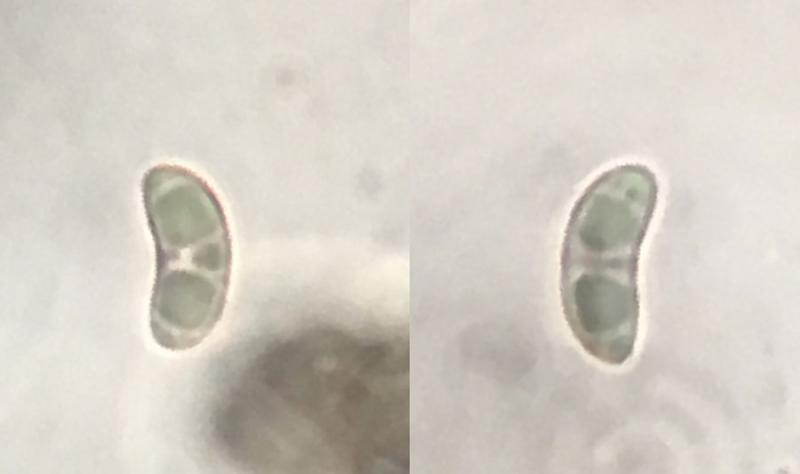
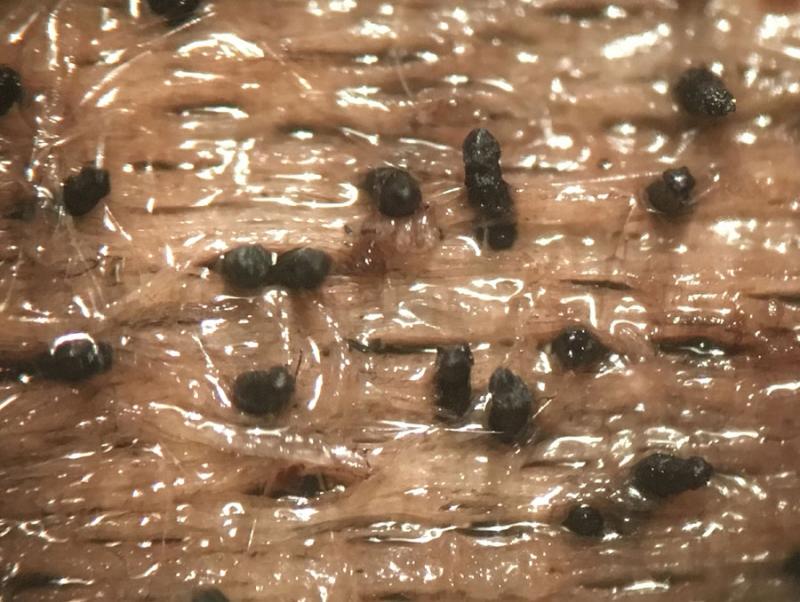
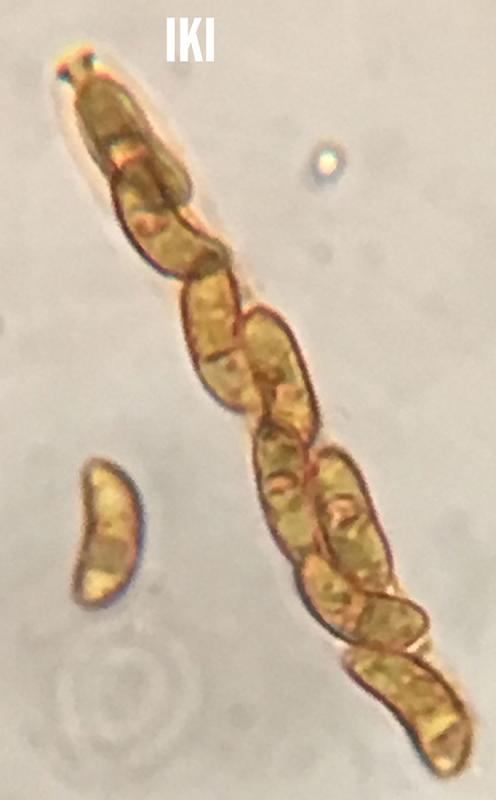
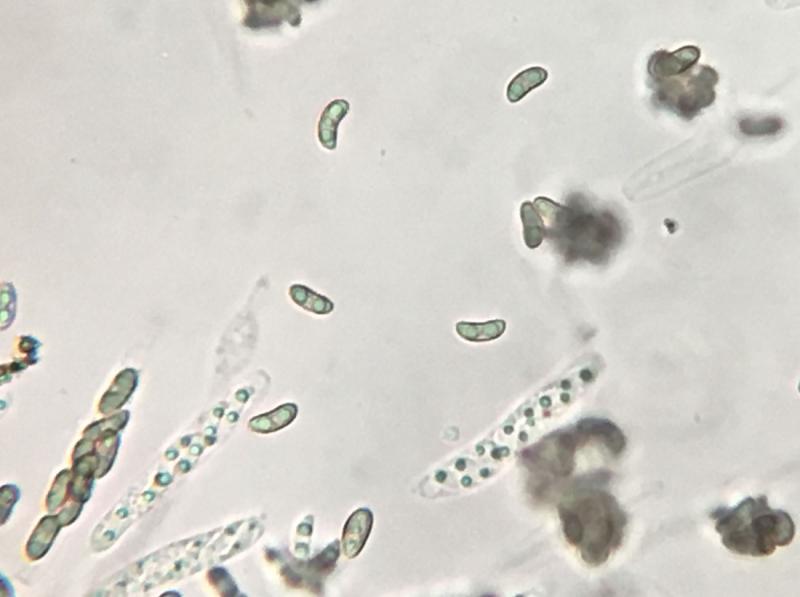
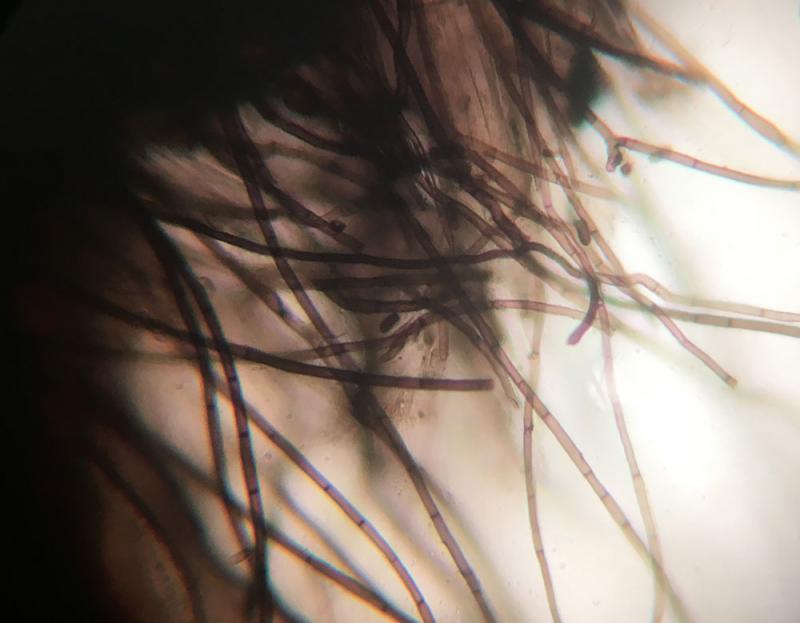
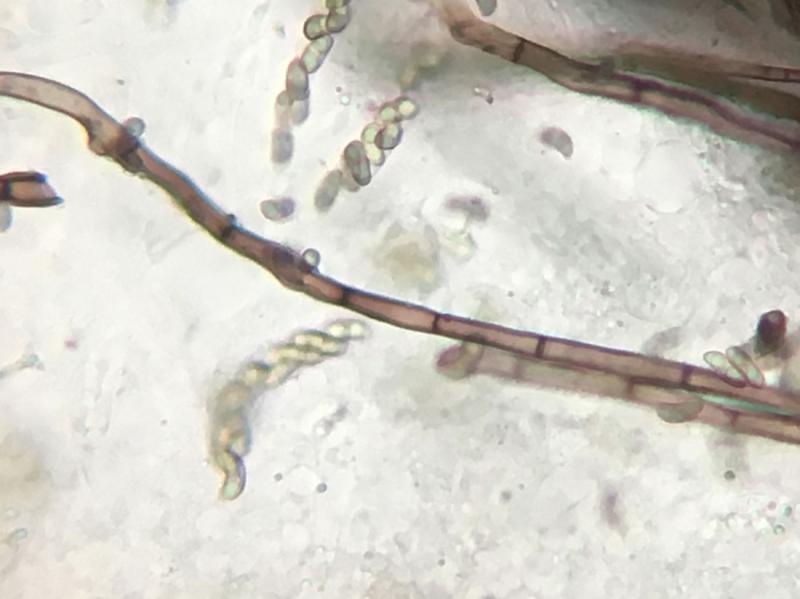
In New York City, on wet well-rotted wood. A long-necked black pyrenomycete, with perithecia fully immersed in the wood. Exposed portions of the beaks are shorter than 1mm. Somewhat sulcate. Asci very short stipitate, spore portion 33-43 (-46) by 6-7 (-10)µm. 37-50 (-60)µm in total length. Apical apparatus IKI- refractive ring. Spores light brown in asci when mature with 2 to 3 guttules 7-9.5 by 3-4µm. Hairs mostly unbranched, brown, septate, about 5µm wide. This seemed similar to brown spored sp. in the genus Ceratostomella (s.l.) but I am uncertain. C. rostrata seems to differ in spore size. Any help would be appreciated.
Thanks!
Eduard Osieck,
07-11-2018 11:06
Re : Immersed long-necked pyrenomycete - Ceratostomella (?)
I would suggest to check Réblová’s 2006 paper on Cerastomella and related species. For instance, species of the genus Xylomelasma have brown spores and a sulcated neck. A later paper by the same author includes a key to more long-necked species.
Good luck, Eduard
Good luck, Eduard