
22-04-2026 20:54
 Enrique Rubio
Hi to everybody.This Pyrenopeziza grew in moist le
24-04-2026 03:16
 David Chapados
Found while looking at something else from wood in
22-04-2026 01:06
 Richard VALERI
Bonjour à tous.Je vous présente cette Nectria s.
22-04-2026 20:17
 Marian Jagers
Is anyone familiar with the Hyphomycetes genus Pse

21-04-2026 13:36
Gernot FriebesHi,I am out of ideas for this one. I collected Sal
Eutypa sp. with some tall ostiolar necks
Ethan Crenson,
10-04-2018 06:20
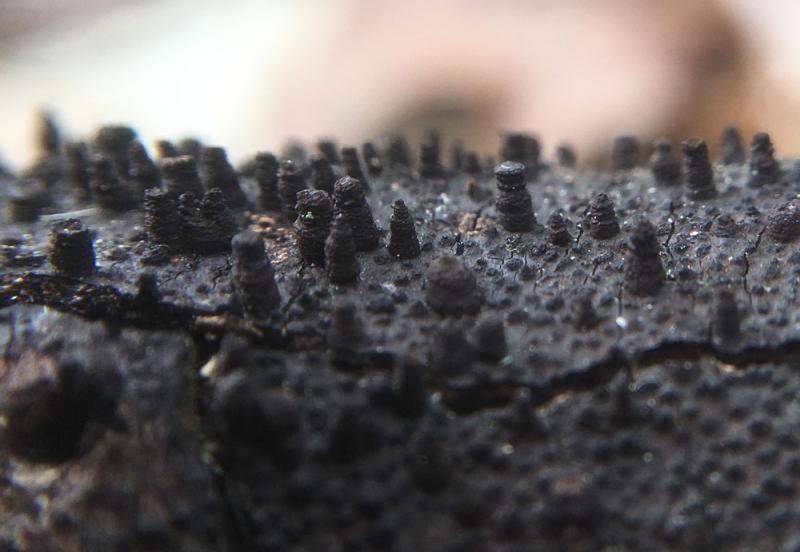
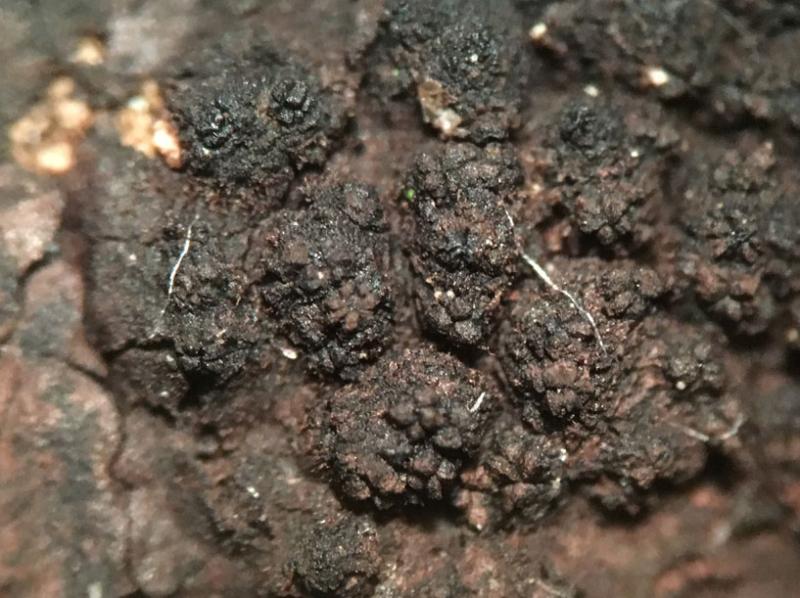
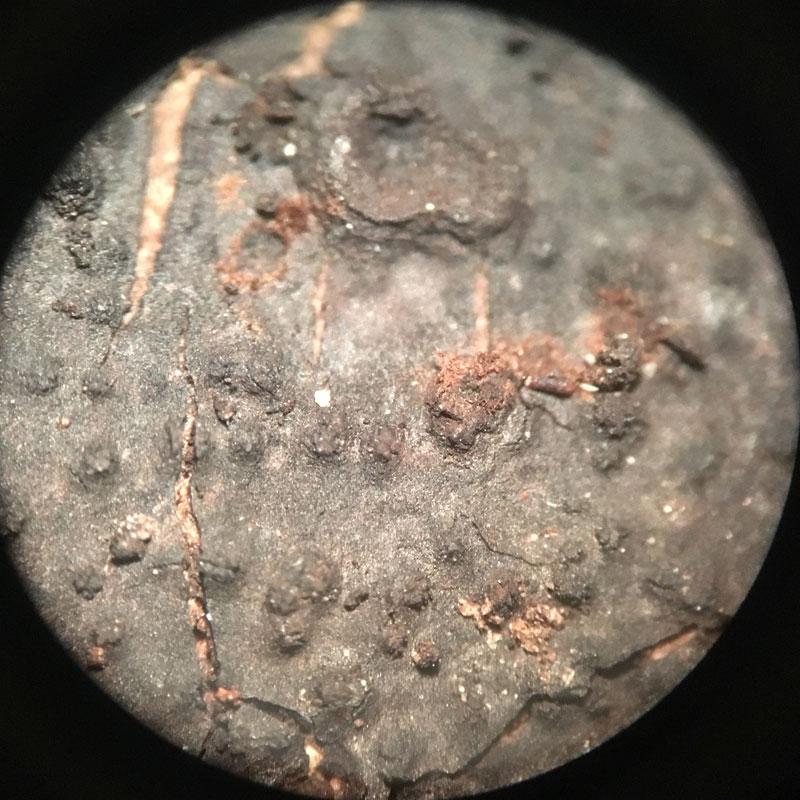
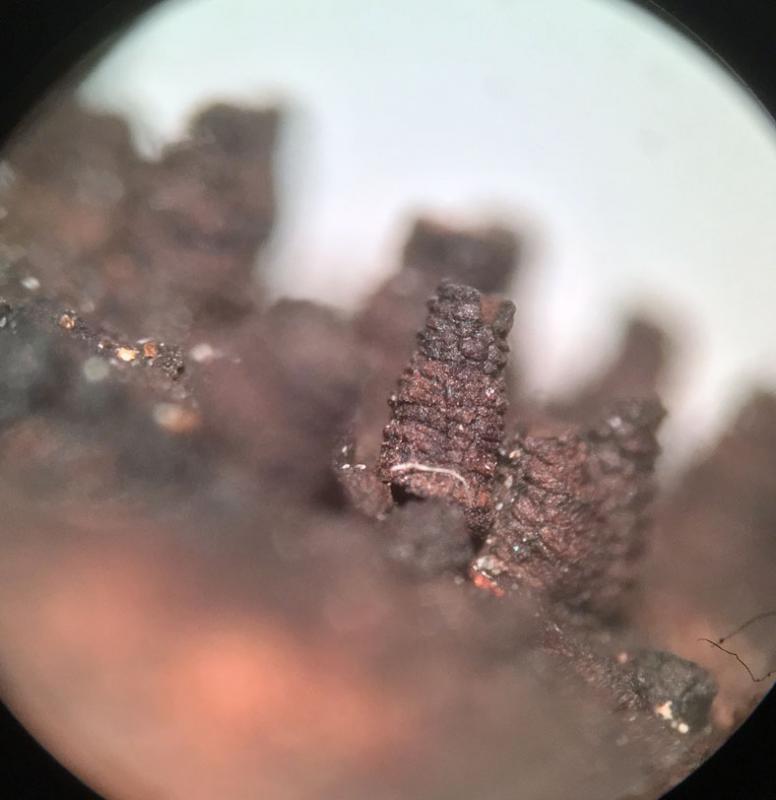
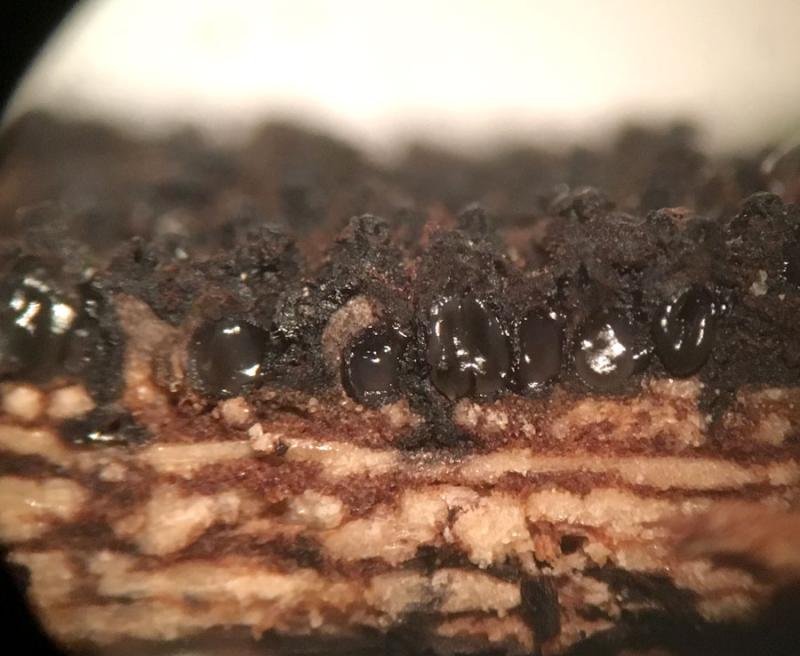
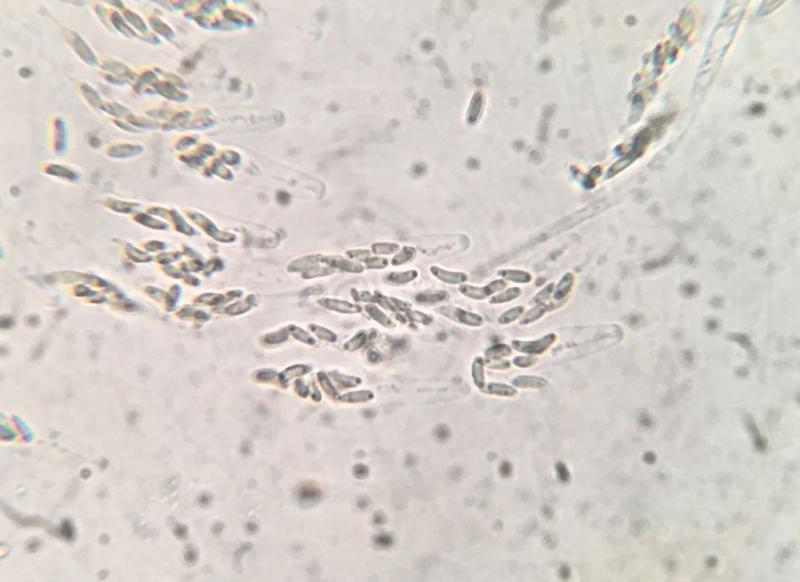
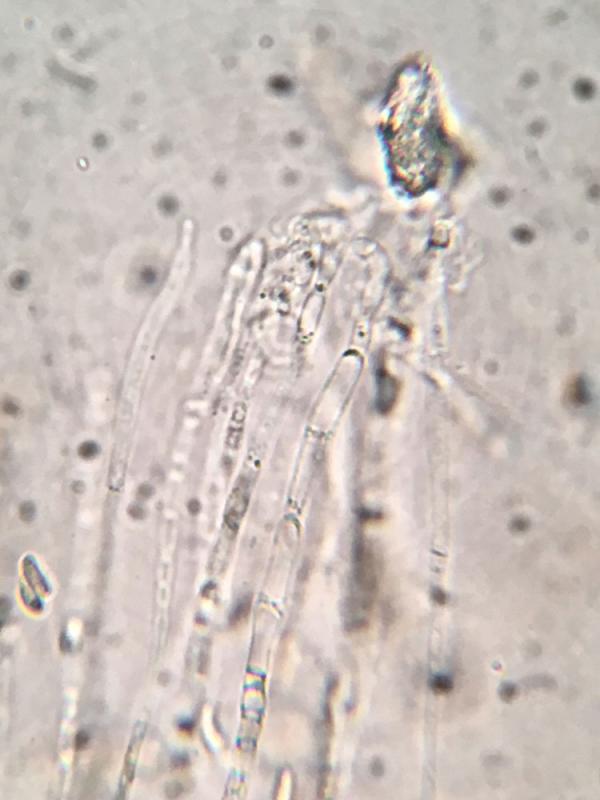
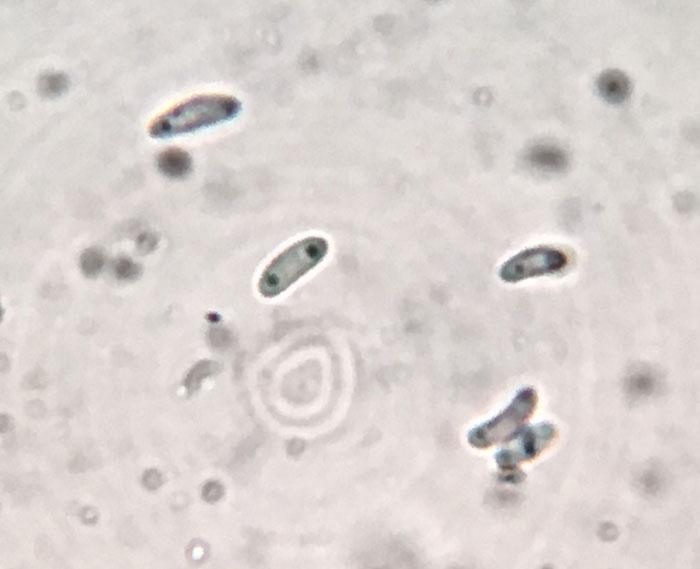
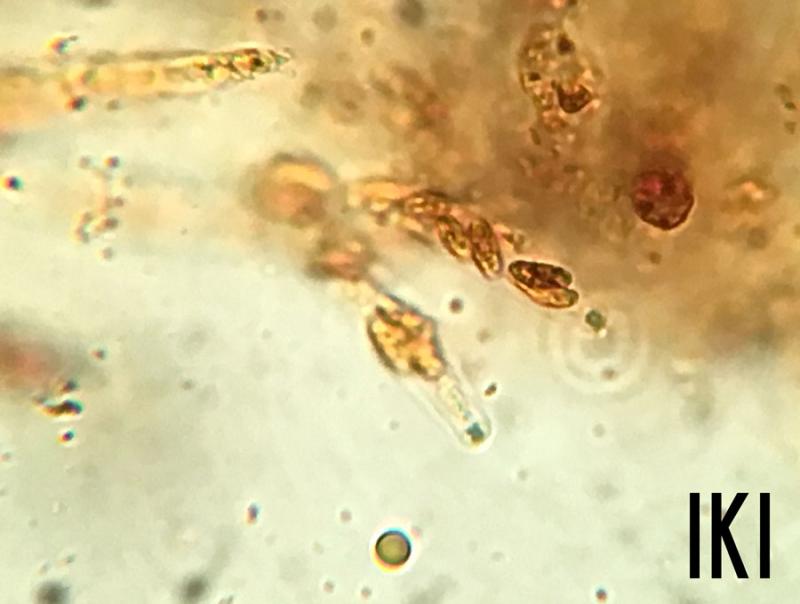
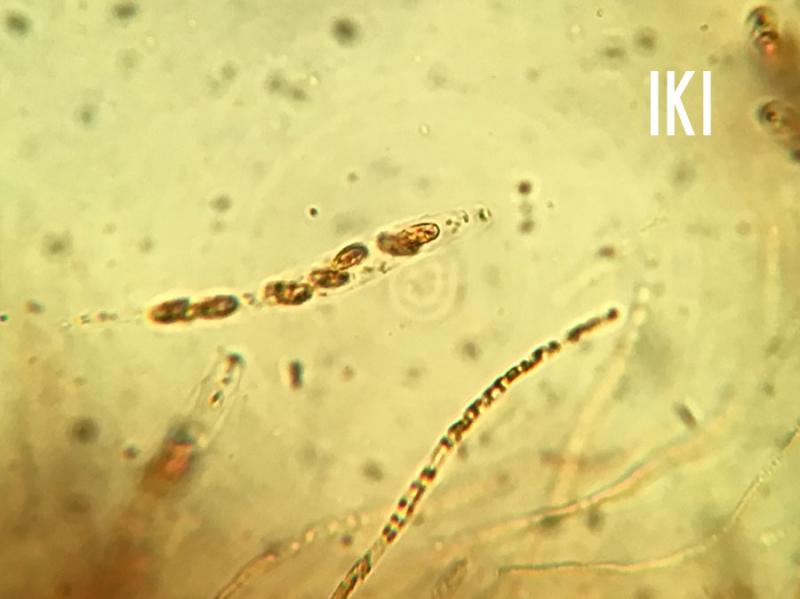
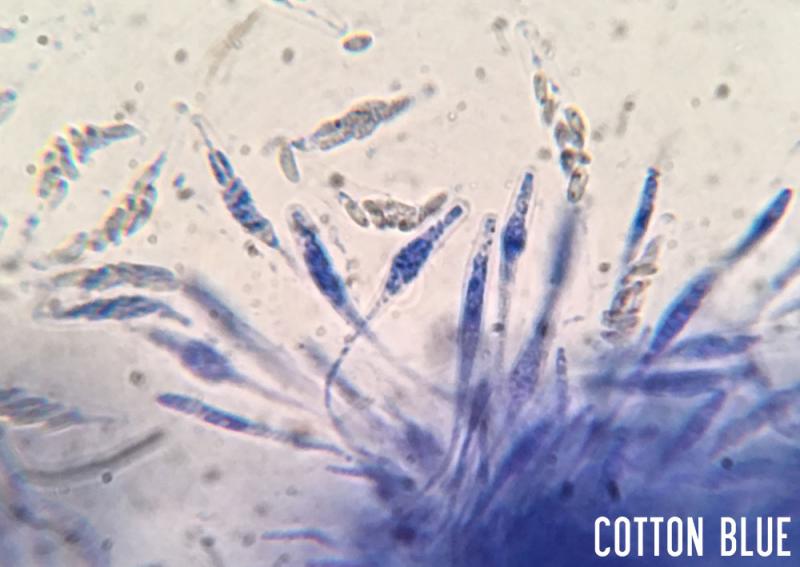
Found recently in the Bronx, NYC, seemingly common throughout the region. An effuse black pyrenomycete that looks a lot like something in the genus Eutypa. It takes over entire branches, spreading in sheets. There are parts that are nearly flat. Other parts are rough and warty with sulcate ostioles. But the remarkable feature that seems to distinguish it is the presence of many tall, protruding ostioles— some cylindrical, some conical. These are roughened and usually up to 1-2 mm tall, sometimes taller. Perithecia are 1/2 - 1 mm in diameter, arranged in a single layer. The spore bearing part of the asci 22-33 by 4-5µm, appearing IKI+. Full ascus length reaching 55µm. Spores 5-7 by 1.5-2.5 µm, hyaline to yellowish, ellipsoid-curved or suballantoid. Any help would be appreciated. Thanks!
Jacques Fournier,
10-04-2018 08:37

Re : Eutypa sp. with some tall ostiolar necks
Hi Ethan,
I agree with you this is strange, as if two strongly different types of ostiolar necks were occurring on a same stroma. The height of ostiolar necks is highly dependent on moisture conditions and thus much less informative than their width but here you may have something else.
I would like to examine a sample, is it possible?
thanks,
Jacques
I agree with you this is strange, as if two strongly different types of ostiolar necks were occurring on a same stroma. The height of ostiolar necks is highly dependent on moisture conditions and thus much less informative than their width but here you may have something else.
I would like to examine a sample, is it possible?
thanks,
Jacques
Ethan Crenson,
10-04-2018 14:42
Re : Eutypa sp. with some tall ostiolar necks
Thank you for your response as always, Jacques! I will send you a sample this afternoon.
Ethan
Ethan
Jacques Fournier,
21-04-2018 19:31
Re : Eutypa sp. with some tall ostiolar necks
Hi Ethan,
thanks for having shared with me this distinctive and weird fungus.
First the substrate is definitely Quercus, based on wood and bark anatomy.
As you said it is an Eutypa, though the dense cracking of the stroma, isolating small groups of perithecia is rather misleading by evoking a Diatrype.
Based on ostiolar morphology, ascospore dimensions and strong reaction of apical ring to iodine, it keys out to E. limaeformis (Schwein.) Cooke in Rappaz' key, a species known from North America on Fagaceae.
The sharply conical superficial structures you illustrated do not seem to be ostioles since they have no connection with underlying perithecia, as seen in vertical section. As they are restricted to parts of the stroma where perithecia are aborted, I think they result from an abnormal developmment of the stroma and should be regarded as of curiosity value only.
I did not know this fungus and I think I won't forget it!
Thanks,
Jacques
thanks for having shared with me this distinctive and weird fungus.
First the substrate is definitely Quercus, based on wood and bark anatomy.
As you said it is an Eutypa, though the dense cracking of the stroma, isolating small groups of perithecia is rather misleading by evoking a Diatrype.
Based on ostiolar morphology, ascospore dimensions and strong reaction of apical ring to iodine, it keys out to E. limaeformis (Schwein.) Cooke in Rappaz' key, a species known from North America on Fagaceae.
The sharply conical superficial structures you illustrated do not seem to be ostioles since they have no connection with underlying perithecia, as seen in vertical section. As they are restricted to parts of the stroma where perithecia are aborted, I think they result from an abnormal developmment of the stroma and should be regarded as of curiosity value only.
I did not know this fungus and I think I won't forget it!
Thanks,
Jacques
Ethan Crenson,
23-04-2018 21:26
Re : Eutypa sp. with some tall ostiolar necks
Thank you for examining my collection, Jacques! I have been comparing with the description in Rappaz (using Google translate, which is not the best, alas). I was wondering if you pretreated with 3% KOH before applying iodine to see the strong reaction of the apical ring. In my pictures it certainly looks like there is a reaction, but I'm not sure if I'd call it strong. In fact, at first I wasn't certain if the color with IKI was due to the effect you described recently in response to my post of the Torrentispora-like asco.... a greenish reaction due to the illumination of my microscope.
Again, thank you for your help!
Again, thank you for your help!
Jacques Fournier,
23-04-2018 21:42
Re : Eutypa sp. with some tall ostiolar necks
I should have said "relatively" strong, because in Diatrypaceae this reaction is most often weak and inconspicuous. I obtained this positive reaction directly with Melzer, without pretreatment in KOH, which is unusual and fairly distinctive for this species.
Nice story anyway!
Jacques
Nice story anyway!
Jacques