
22-04-2026 20:54
 Enrique Rubio
Hi to everybody.This Pyrenopeziza grew in moist le
24-04-2026 03:16
 David Chapados
Found while looking at something else from wood in
22-04-2026 01:06
 Richard VALERI
Bonjour à tous.Je vous présente cette Nectria s.
22-04-2026 20:17
 Marian Jagers
Is anyone familiar with the Hyphomycetes genus Pse

21-04-2026 13:36
Gernot FriebesHi,I am out of ideas for this one. I collected Sal
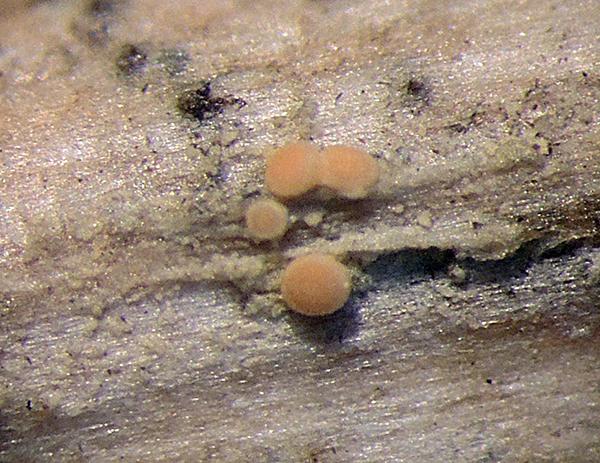
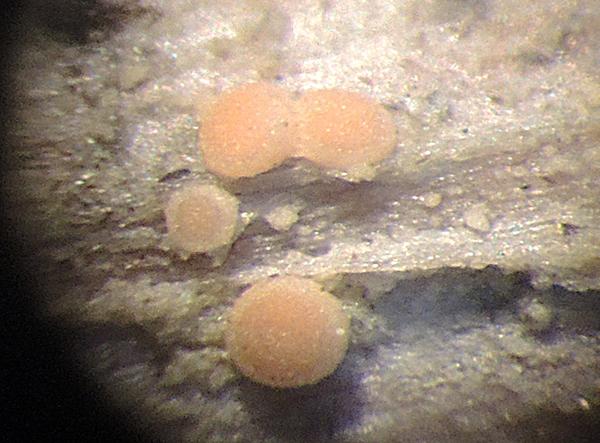
pale disc on Urtica stems - S Sweden - with spiralling spores
Thomas Læssøe,
19-03-2018 17:34
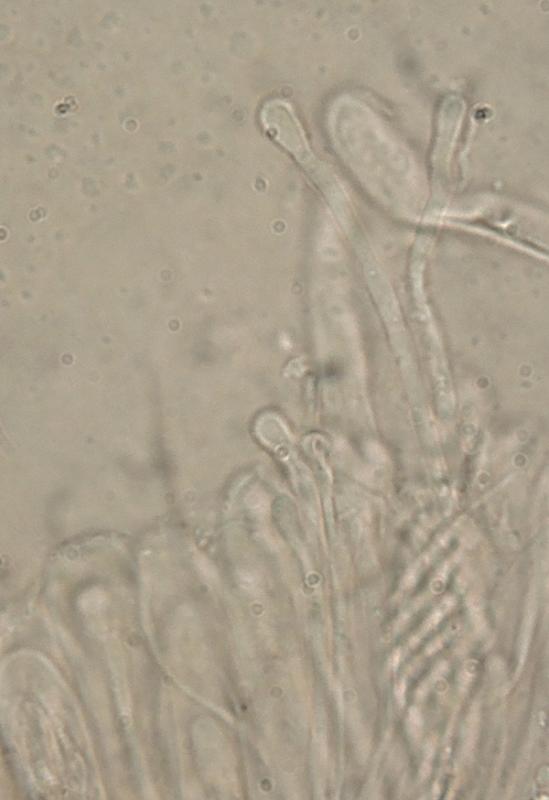
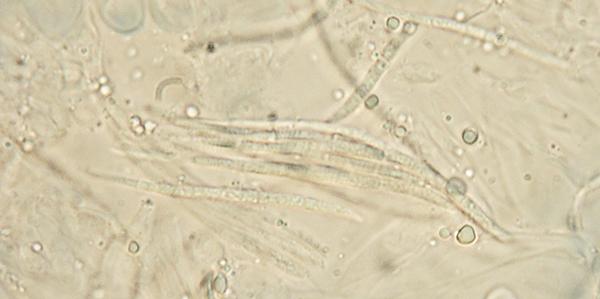
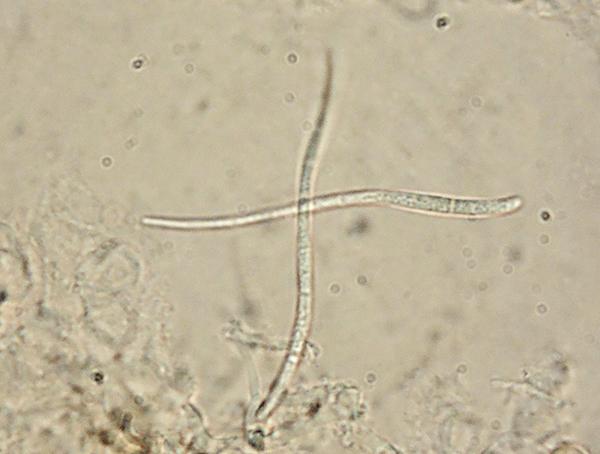
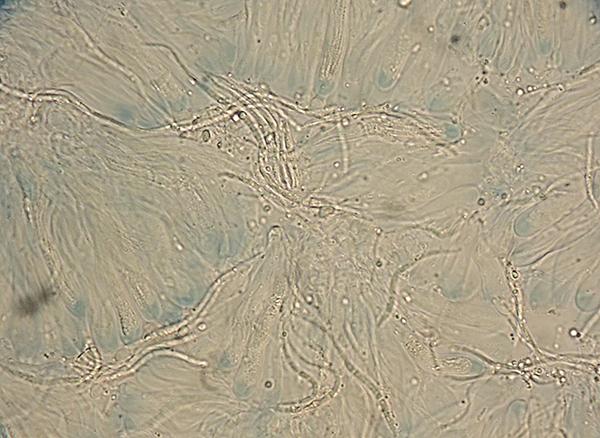
Apothecia to 0.2 mm, discoid with distinct smooth margin, at first whitish-greyish drying to apricot on hymenium with paler outside.
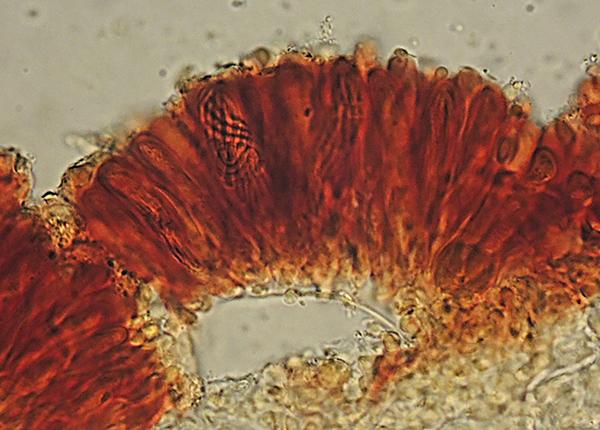
Hymenium deep orange red in IKI in weak ammonia then slowly blue at the apex and less so further down the asci.
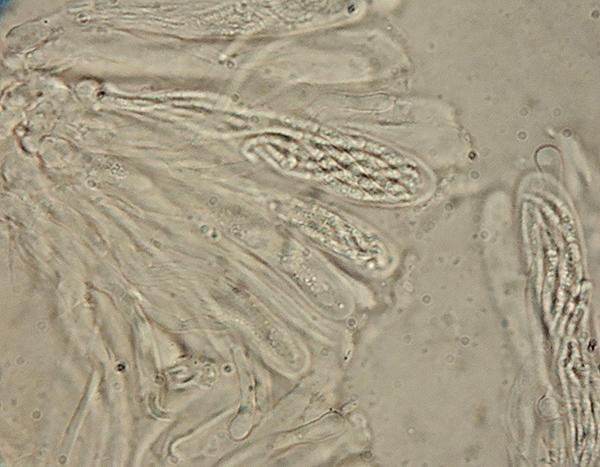
Asci with outer dextrinoid coating, 8-spored, clavate, ca. 50 x 8-9 µm.
Spores strongly spiralling within ascus in one bundle, 3-5- septate, tapering to lower end and rounded at distal end, 35-45 x 1.5 µm. Paraphyses clavate above. Not exc. asci.
Alain BRISSARD,
19-03-2018 17:55
Re : pale disc on Urtica stems - S Sweden - with spiralling spores
Perhaps Erinella discolor = Trichopeziza discolor = Lachnum discolor ??
Thomas Læssøe,
19-03-2018 21:37
Re : pale disc on Urtica stems - S Sweden - with spiralling spores
interesting suggestion but this material is without hairs, with paraphyses that are enlarged (pearshaped) at the apices, spores with fewer septa etc.
Stip Helleman,
21-03-2018 00:02

Re : pale disc on Urtica stems - S Sweden - with spiralling spores
Hi Thomas,
indeed this option seems to be quite unusual without hairs, in my opinion it has a twist of a Lichenicolous species with this apical dome and the asci strongly reacting in IKI, they mostly react blue in this case only a little blue left after a while probably because of the Ammonia mount.
No idea about the genus.
good luck,
Stip
indeed this option seems to be quite unusual without hairs, in my opinion it has a twist of a Lichenicolous species with this apical dome and the asci strongly reacting in IKI, they mostly react blue in this case only a little blue left after a while probably because of the Ammonia mount.
No idea about the genus.
good luck,
Stip