
22-04-2026 20:54
 Enrique Rubio
Hi to everybody.This Pyrenopeziza grew in moist le
24-04-2026 03:16
 David Chapados
Found while looking at something else from wood in
22-04-2026 01:06
 Richard VALERI
Bonjour à tous.Je vous présente cette Nectria s.
22-04-2026 20:17
 Marian Jagers
Is anyone familiar with the Hyphomycetes genus Pse

21-04-2026 13:36
Gernot FriebesHi,I am out of ideas for this one. I collected Sal
Puede ser Helminthosporium quercicola?
Angel Pintos,
25-02-2018 12:55
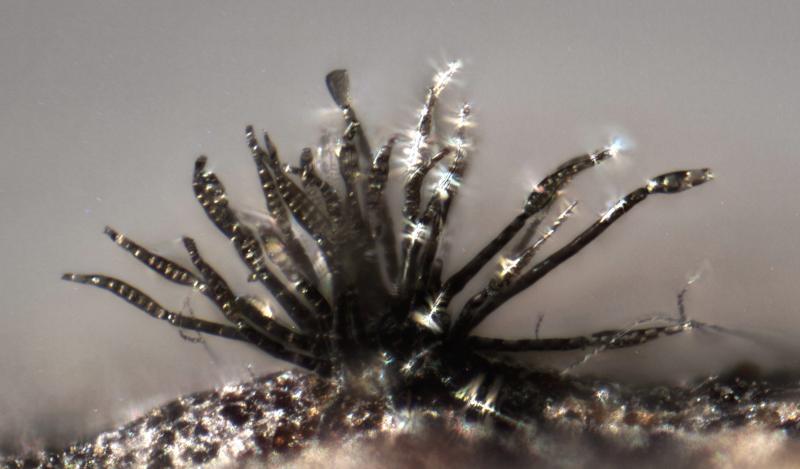
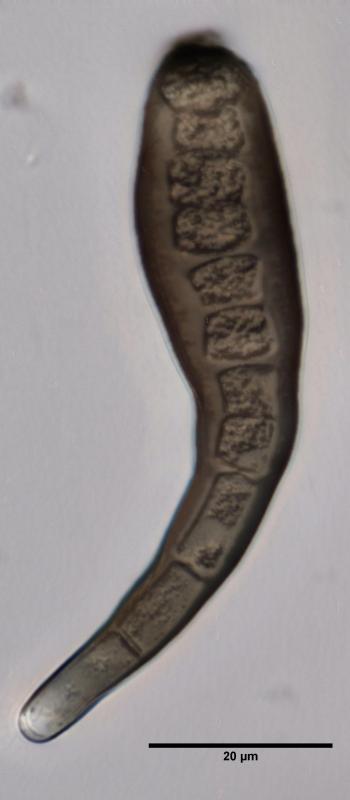
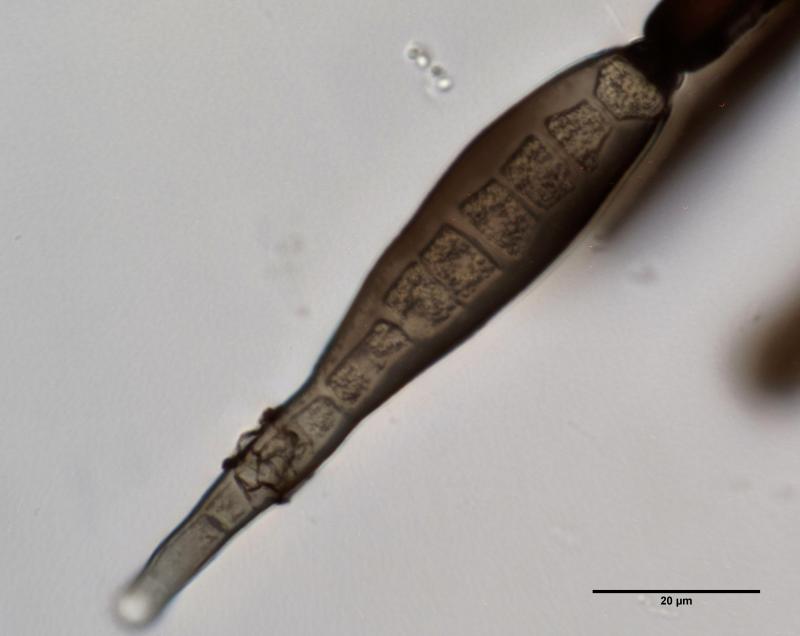
 Sobre rama muerta de Quercus, puede ser Helminthosporium quercicola?
gracias por la ayuda
Alain GARDIENNET,
25-02-2018 22:36

Re : Puede ser Helminthosporium quercicola?
Hi Angel,
Difficult to distinguish H. quercinum, H. quercicola and H. microsorum only with asexual morph.
Alain
PS Very nice picture !
Angel Pintos,
26-02-2018 10:12
Re : Puede ser Helminthosporium quercicola?
Thanks for your answer Alain.
I wrote quercicola instead of quercinum. I have some immature ascomata and by the sexual morph at the moment I can not identify it.
Thanks again.
Regards
Angel
I wrote quercicola instead of quercinum. I have some immature ascomata and by the sexual morph at the moment I can not identify it.
Thanks again.
Regards
Angel
Hermann Voglmayr,
27-02-2018 11:49

Re : Puede ser Helminthosporium quercicola?
On which Quercus species? On Quercus ilex in all cases examined we have only seen H. microsorum.
Best, Hermann
Angel Pintos,
27-02-2018 12:33
Re : Puede ser Helminthosporium quercicola?
I found it on twigs of Quercus ilex
Regards
Angel
Regards
Angel
Hermann Voglmayr,
27-02-2018 13:09
Re : Puede ser Helminthosporium quercicola?
Ya, then should be microsorum. also the fascicle of conidiophores as illustrated is quite distinctive, H. microsorum always has such punctiform conidiophore groups, often aggregated in large numbers but never effused.
Angel Pintos,
27-02-2018 13:28
Re : Puede ser Helminthosporium quercicola?
Then if you say it must be microssorum, I will try to find somo moore ascomata to see if I find mature ascospores and try to know better this fungus.
Asexual morph sporulate in culture?
Thanks Hemann
Regards from
Mallorca
Asexual morph sporulate in culture?
Thanks Hemann
Regards from
Mallorca
Hermann Voglmayr,
27-02-2018 15:56
Re : Puede ser Helminthosporium quercicola?
Hola Angel,
It did not sporulate in our cultures on MEA; however, we didn't try other media. According to our experience the asexual morph is not uncommon but sometimes difficult to see; often there are just slight elevations of the bark, and very commonly the conidiophores grow densely above the ascomata (likewise also in H. quercinum). So it is always a good idea to look beyond elevated bumps bearing fascicles of conidiophores. The ascospores are very diagnostic, by the wavy outline of the inner wall.
Saludos,
Hermann
It did not sporulate in our cultures on MEA; however, we didn't try other media. According to our experience the asexual morph is not uncommon but sometimes difficult to see; often there are just slight elevations of the bark, and very commonly the conidiophores grow densely above the ascomata (likewise also in H. quercinum). So it is always a good idea to look beyond elevated bumps bearing fascicles of conidiophores. The ascospores are very diagnostic, by the wavy outline of the inner wall.
Saludos,
Hermann
Angel Pintos,
27-02-2018 16:36
Re : Puede ser Helminthosporium quercicola?
Gracias Hermann