

22-04-2026 20:54
 Enrique Rubio
Hi to everybody.This Pyrenopeziza grew in moist le
24-04-2026 03:16
 David Chapados
Found while looking at something else from wood in
22-04-2026 01:06
 Richard VALERI
Bonjour à tous.Je vous présente cette Nectria s.
22-04-2026 20:17
 Marian Jagers
Is anyone familiar with the Hyphomycetes genus Pse

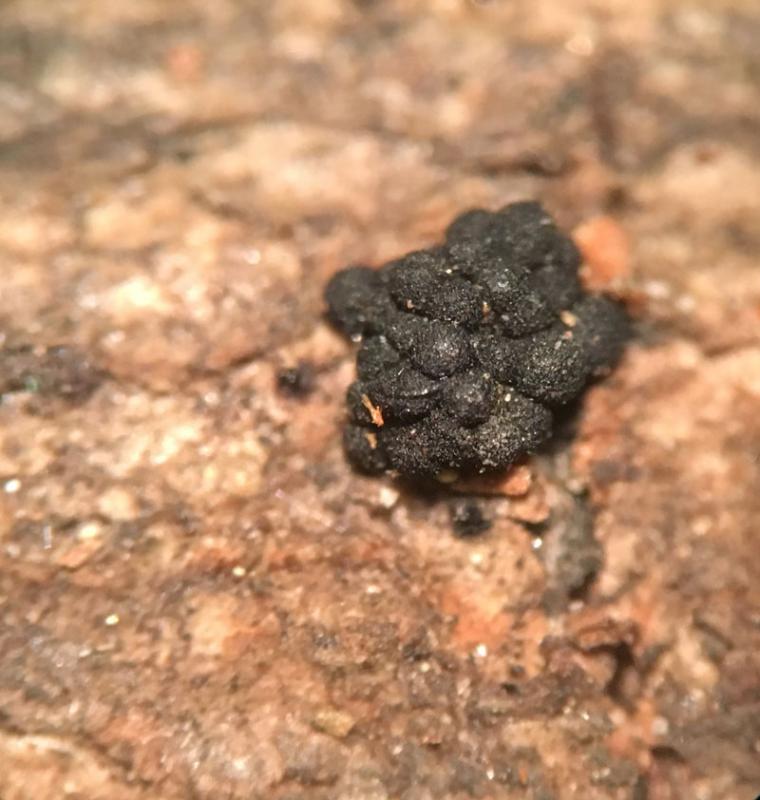
Perhaps unrelated, but worth mentioning, is the presence on the same branch of many clusters of globose black fruiting bodies erumpent from the wood (they looked somewhat like Nitschkia broomeana to me). However, these were infested with mites and did not yield any useful microscopic features.
Thank you in advance!
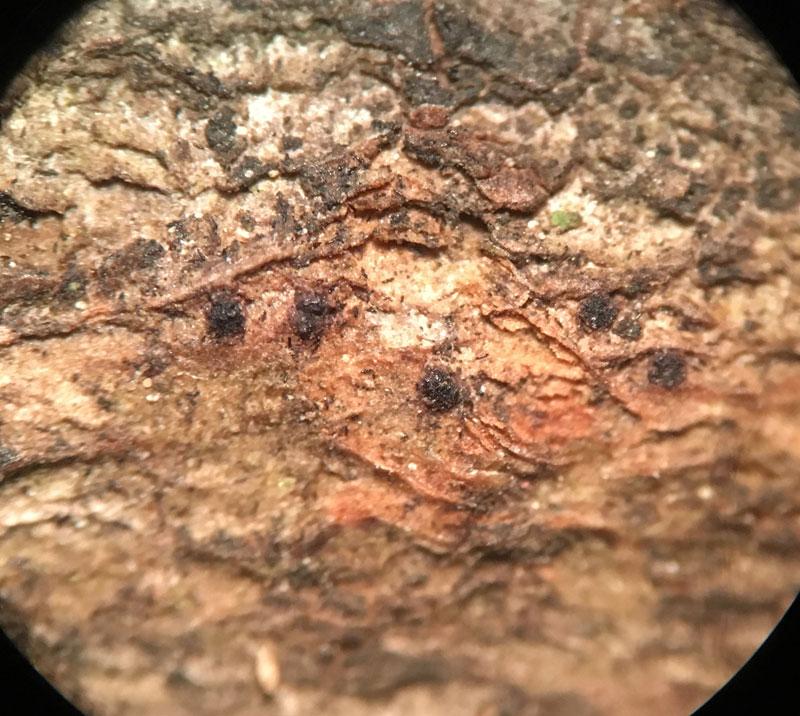
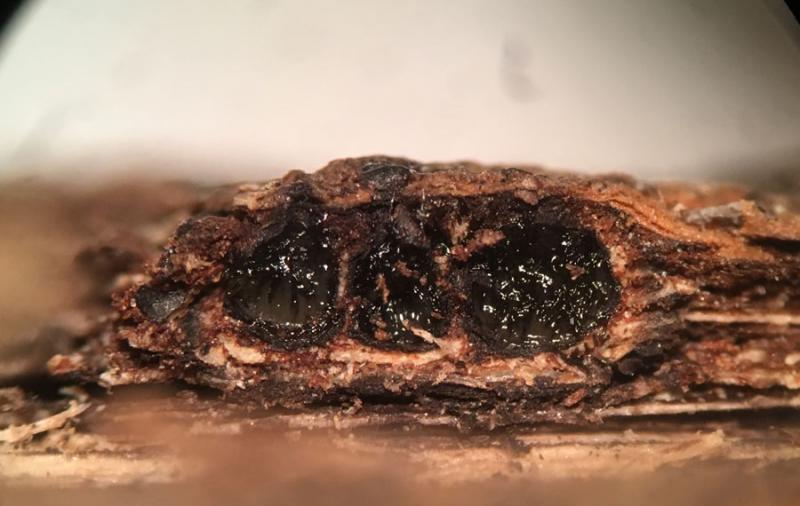
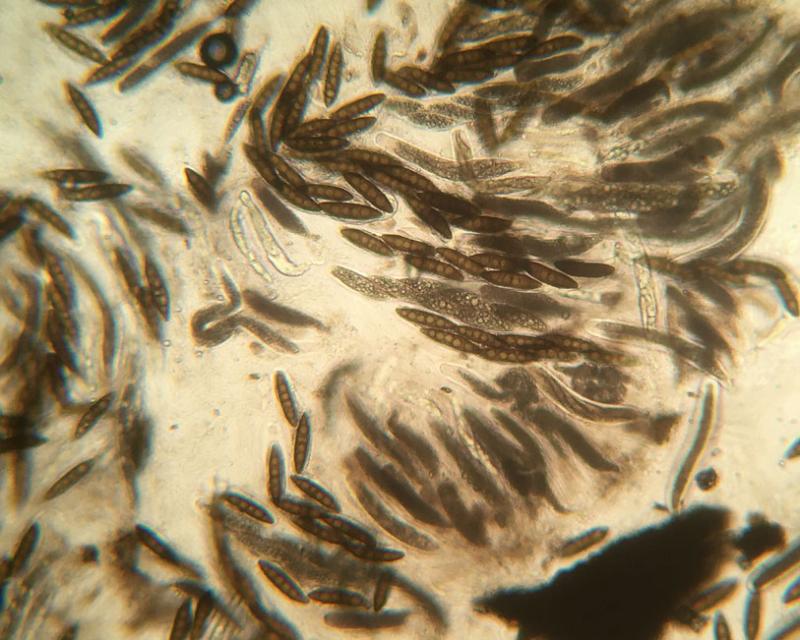
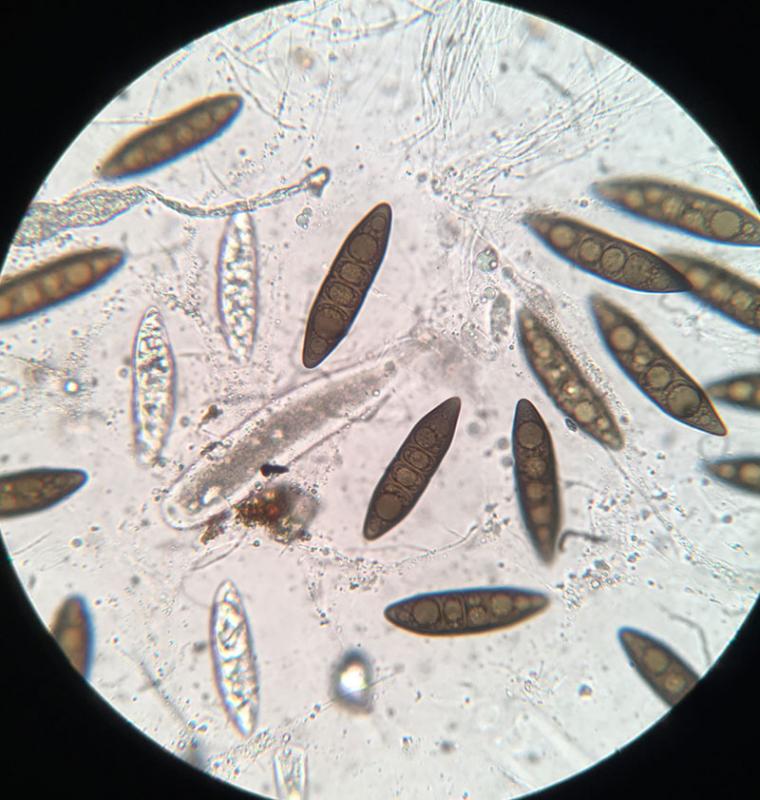
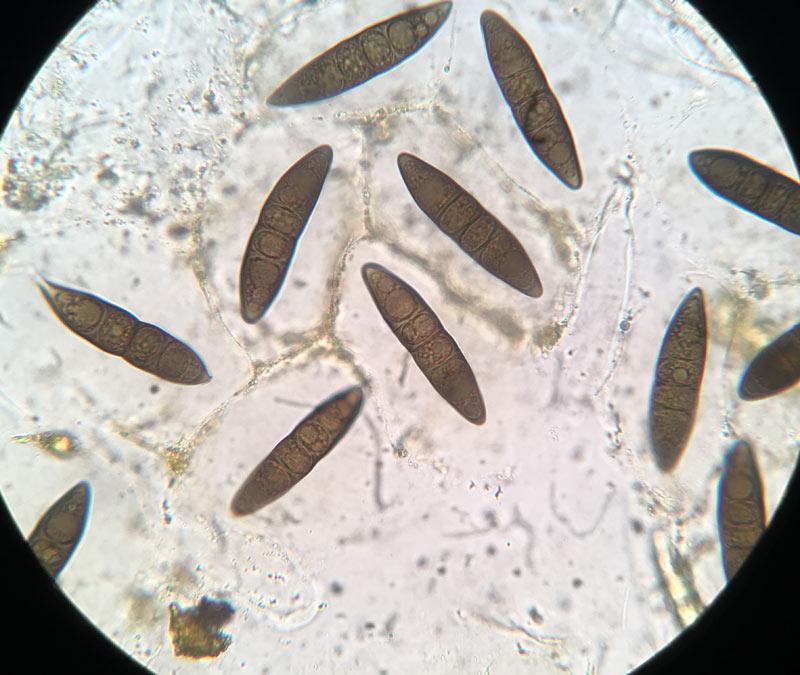
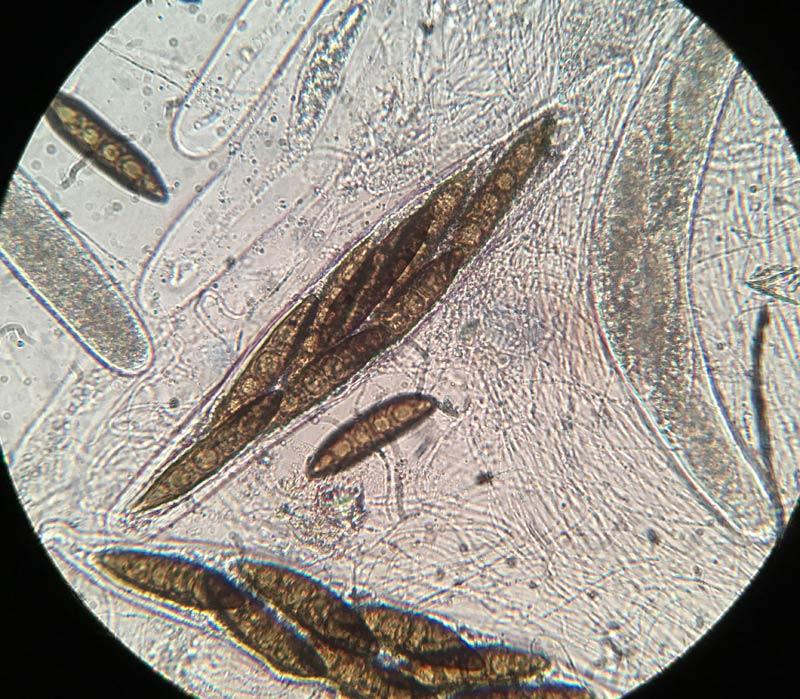
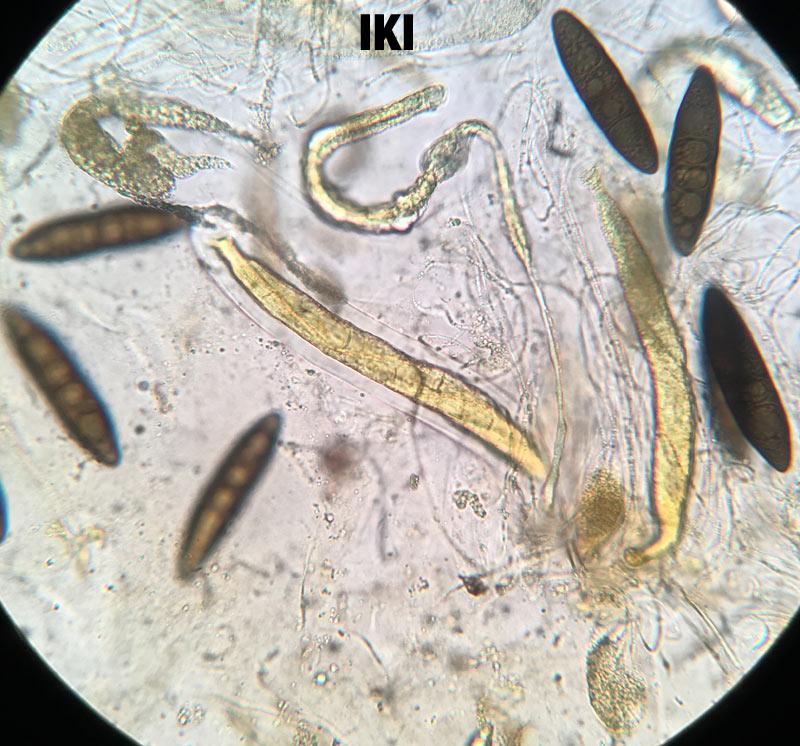

this is a Massaria. Ascomata develop in the bark, not in the wood. Knowing the host is extremely helpful, as you can see in Voglmayr and Jaklitsch's monograph in Fungal Diversity 2010.
DOI 10.1007/s13225-010-0078-5
Good luck,
Jacques
Ethan
I am sending you the pdf, you will love it!
Best,
Jacques

Dear Ethan,
this looks interesting. Do you know from which host it was collected? Massaria species are highly host specific, so correct host identification is highly important and often crucial for identification. Acer should be quite clear - Massaria from the USA was most frequently collected from Acer saccharum and A. rubrum. The latter is confirmed host of Massaria vomitoria, but your spores are much too large for that species. Or did you collect it from an introduced European maple species (Acer platanoides)? Then it could be a European species.
Your measurements indicate that your specimen belongs to the Massaria inquinans group. We have three species here in Europe, which are on different maple hosts. It is likely that North American maple species harbour additional species from the M. inquinans group, but there are no investigations yet.
I would be interested to obtain the material in vital condition (air-dried to avoid moulding during mailing) for pure culture isolation and sequencing, then we could tell more about it.
Best regards,
Hermann
Unfortunately I have no idea about the tree species. I collected the sample intending to study the other species of asco growing on the branch (the final picture in my post, I thought might be Nitschkia). Then, when that yielded no results, I noticed the Massaria. I might be able to return to the collection site in the next few weeks, and if I do I will attempt to locate the tree and id it. Meanwhile, if you provide me with your address I will prepare a sample to send you sometime this week. The collection is air drying now.
Ethan
Dear Ethan,
thx. I sent you the address via pm.
Concerning the collection site, was it a forest, or a park etc. in an urban area?
Cheers, Hermann
It was in an urban park, Forest Park, Queens New York, close to 40°42'32.5"N 73°50'17.4"W
Ethan
I had a brief internet search on the flora of this park - the European Acer platanoides (Norway maple) is reported as naturalised from the park, but also the native Acer rubrum. So it would be good to identify the host species if possible.
Your measurements (spore length and esp. width) fit well Massaria platanoidea from European Acer platanoides, which could have been introduced to North America with its host. But cultures and sequences will finally tell...
Hermann