27-04-2026 12:54
Steve ClementsBonjour. Ce petit champignon blanc résupiné et
27-04-2026 09:59
Pauline. PennaBonjour Can anyone advise me on these pycnidia fo

22-04-2026 20:54
 Enrique Rubio
Hi to everybody.This Pyrenopeziza grew in moist le
24-04-2026 03:16
 David Chapados
Found while looking at something else from wood in
22-04-2026 01:06
 Richard VALERI
Bonjour à tous.Je vous présente cette Nectria s.
22-04-2026 20:17
 Marian Jagers
Is anyone familiar with the Hyphomycetes genus Pse

21-04-2026 22:14
Margot en Geert VullingsThis cup fungus was found on April 10, 2026, on lo
Gelatinous hyaline discs (Exidia ?)
Stephen Martin Mifsud,
27-11-2017 17:09
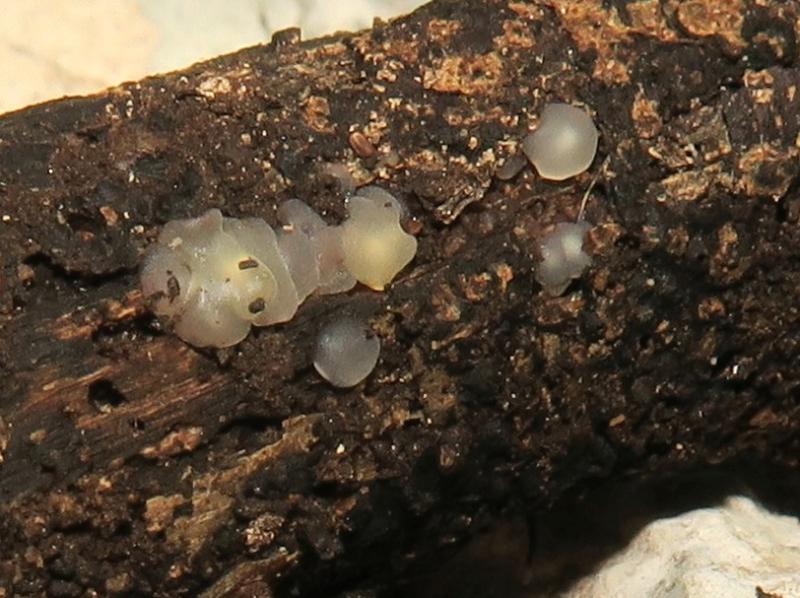
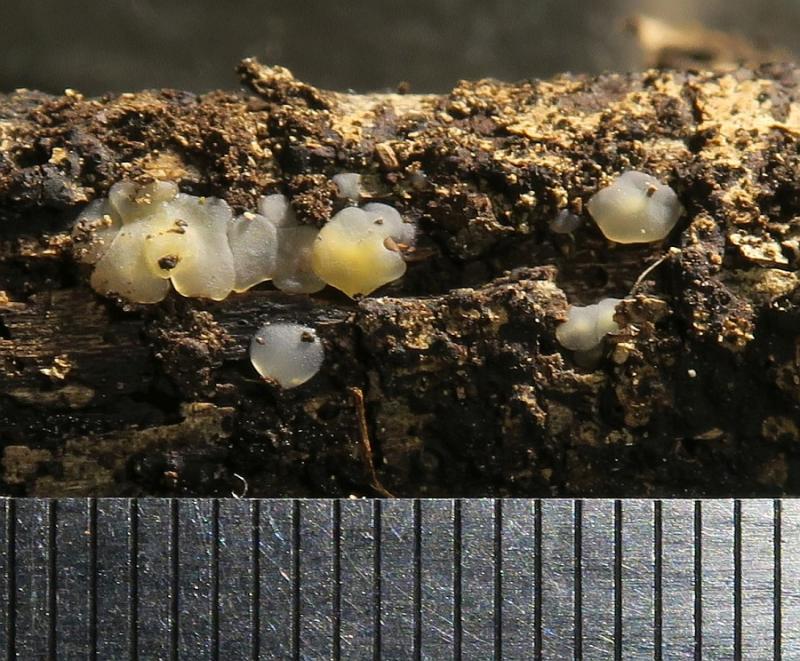
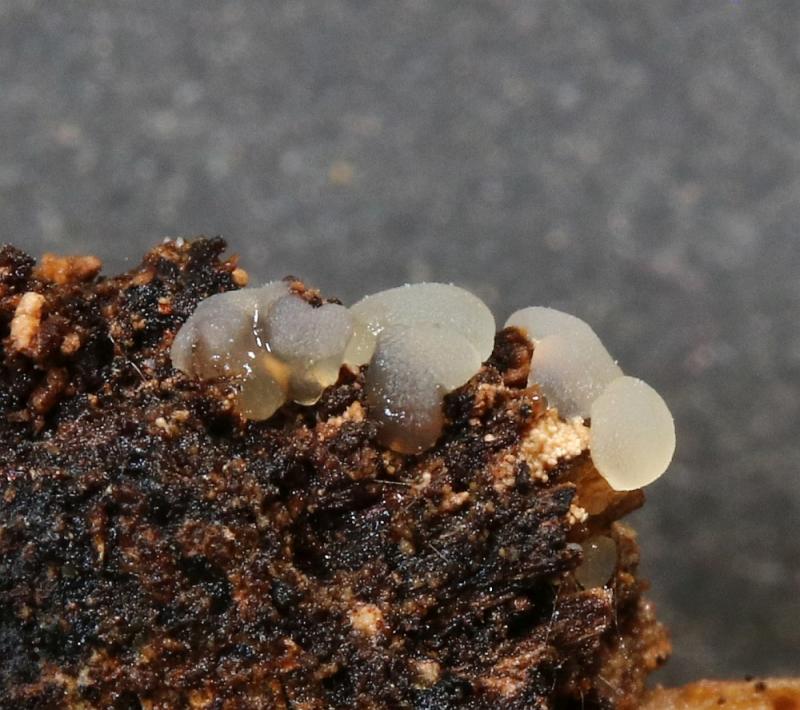
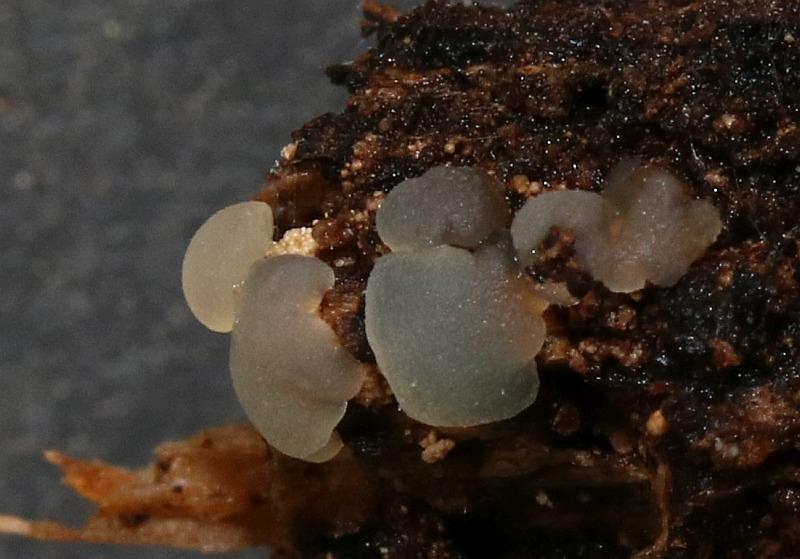
 Dear friends, I have come across what I believed to be an ascocarp but after microscopical investigations, I don't what it is composed of!!!
The bodies were jelly-like and very difficult to slice, hyaline or slightly pulverous above, astipitate, cushion-like bodies sitting on the surface of a decaying twig, sometimes coalescing to form colonies. Some individuals had a pale ochraceous granule at the centre which under the microscope seems to be abiotic and disintegrate into amorphous particles
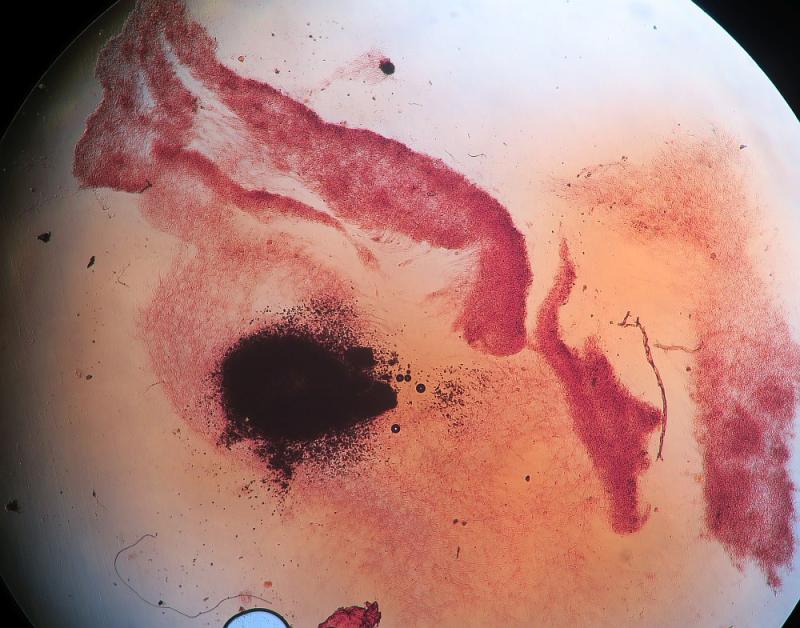
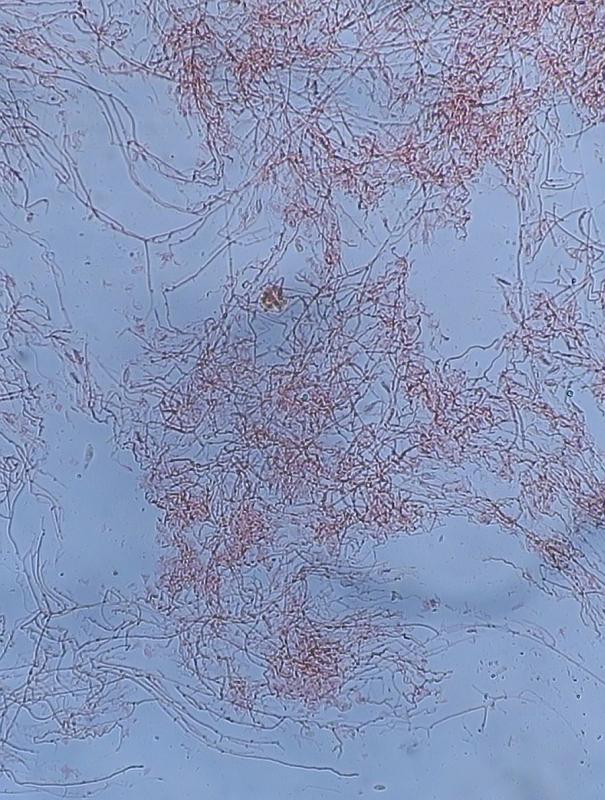
When finally I sliced a section, I could see a meshwork of numerous 'hyphae' without any special reproductive organs. No spores could be detected.
Is it an Exidia?
Sliced section shows a central amorphous body suspended in a loose gelatinous tissue composed of loose hyphae in a meshwork network (very thin - 1um ) and an outer layer made up of a different denser tissue, but without any special organs (eg asci)
Lothar Krieglsteiner,
27-11-2017 17:13

Re : Gelatinous hyaline discs (Exidia ?)
Hello Stephen,
although the micros are very small, I am quite sure that your fungus is not an ascomycete but a Heterobasidiomycete.
Best regards, Lothar
Chris Yeates,
27-11-2017 17:30

Re : Gelatinous hyaline discs (Exidia ?)
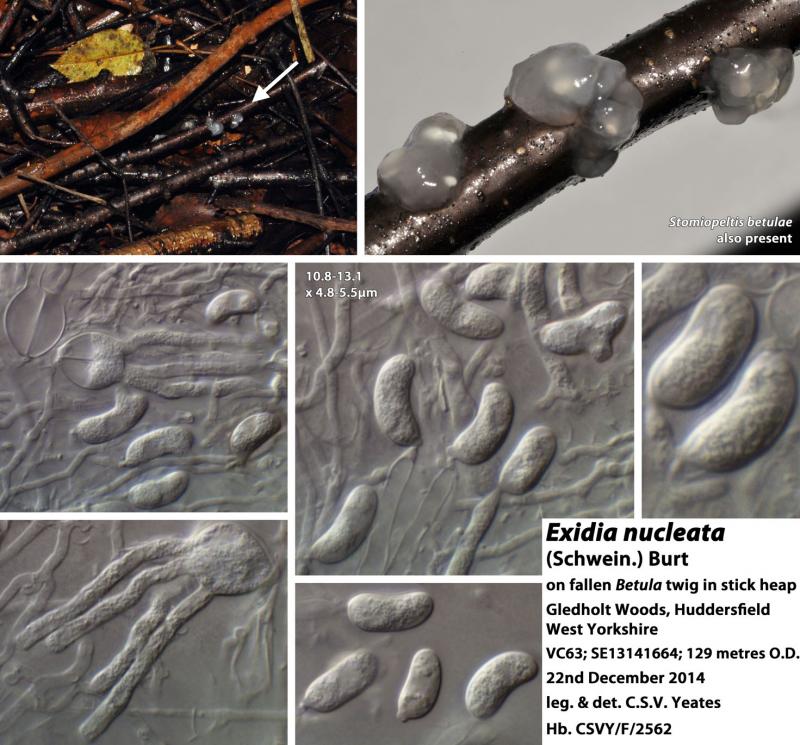
I'm sure Lothar is correct. I would suggest Exidia nucleata. Microscopy would confirm it but there appear to be white Calcium oxalate inclusions.
amitiés
Chris
amitiés
Chris
Stephen Martin Mifsud,
27-11-2017 18:17
Re : Gelatinous hyaline discs (Exidia ?)
Dear friends,
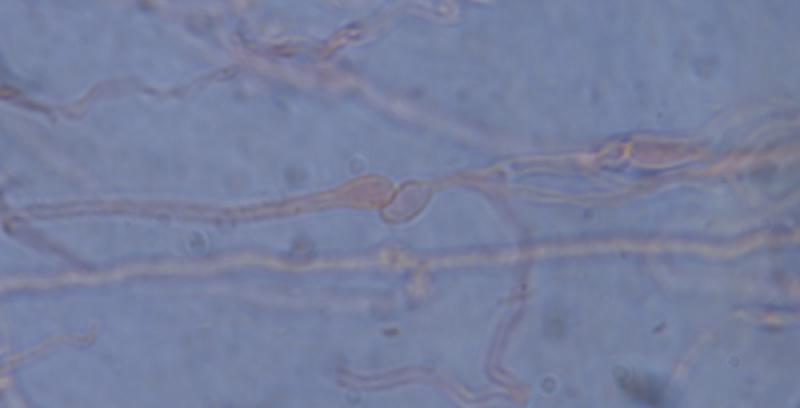
I agree perfectly - I just examined better the slide and although I could not see the spectacular basidia of this genus, there are 'basidioles' which are matching with those of Exidia sp. The central calcium oxalate deposit is typical of Exidia nucleata:
http://cemachampi.blogs.sudouest.fr/archive/2014/02/20/etude-exidia-nucleata-une-exidie-a-concretions-d-oxalate-de-1017337.html
I washed the specimen in KOH and maybe I washed away the spores from the surface. I'll prepare a slide from a raw specimen. COOL!
Stephen Martin Mifsud,
27-11-2017 18:50
Re : Gelatinous hyaline discs (Exidia ?)
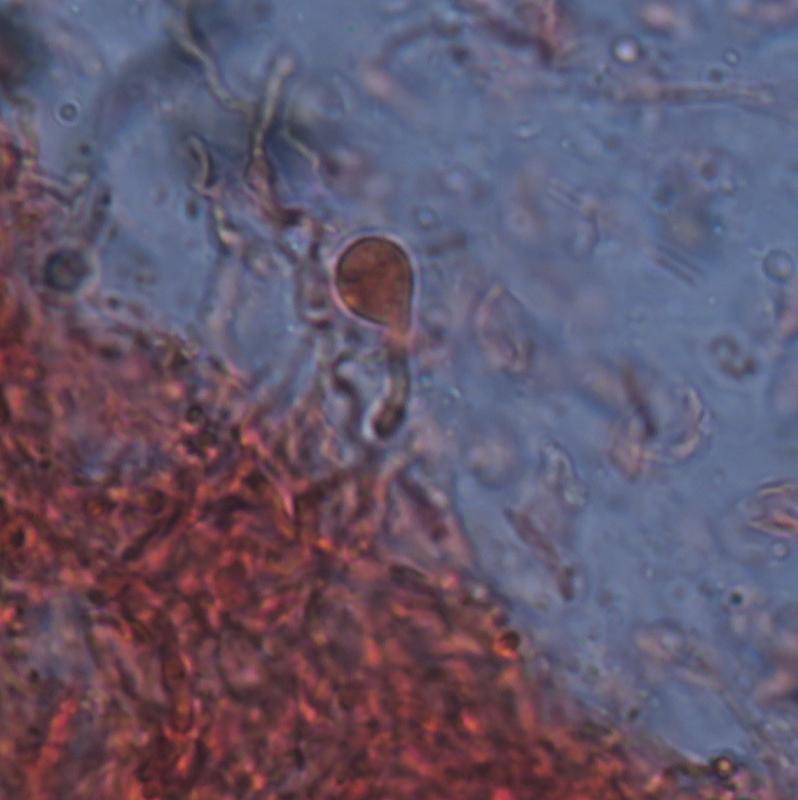
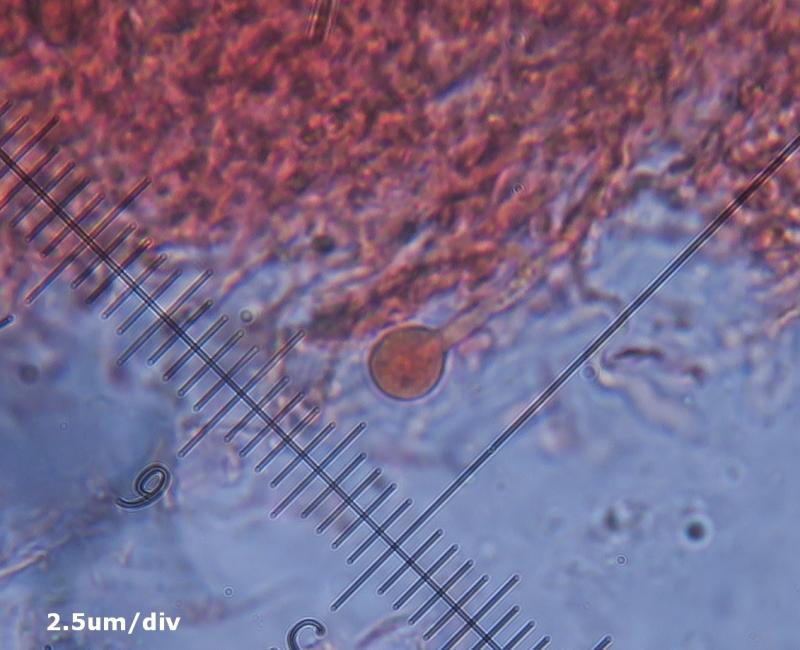
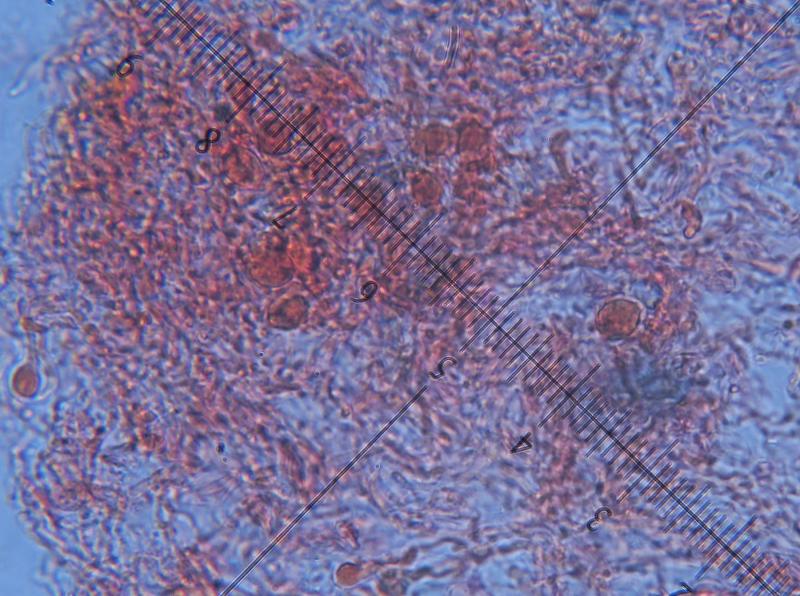
Basidia found , Exidia 100% confirmed, probably E. nucleata because of the Calcium oxalate amorphous granule at the centre of the basidiocarp.
Spores (or conidia?) also observed.
Spores (or conidia?) also observed.