25-04-2025 17:24
Stefan BlaserHi everybody, This collection was collected by JÃ
11-02-2026 22:15
 William Slosse
Today, February 11, 2026, we found the following R
11-02-2026 19:28
 Lothar Krieglsteiner
on small deciduous twig on the ground in forest wi
10-02-2026 17:42
 Bernard CLESSE
Bonjour à toutes et tous,Pourriez-vous me donner
10-02-2026 18:54
Erik Van DijkDoes anyone has an idea what fungus species this m
09-02-2026 20:10
Lothar Krieglsteiner
The first 6 tables show surely one species with 2
09-02-2026 14:46
Anna KlosGoedemiddag, Op donderdag 5 februari vonden we ti
02-02-2026 21:46
Margot en Geert VullingsOn a barkless poplar branch, we found hairy discs
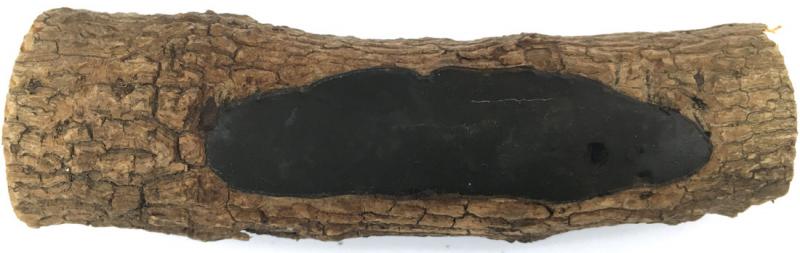
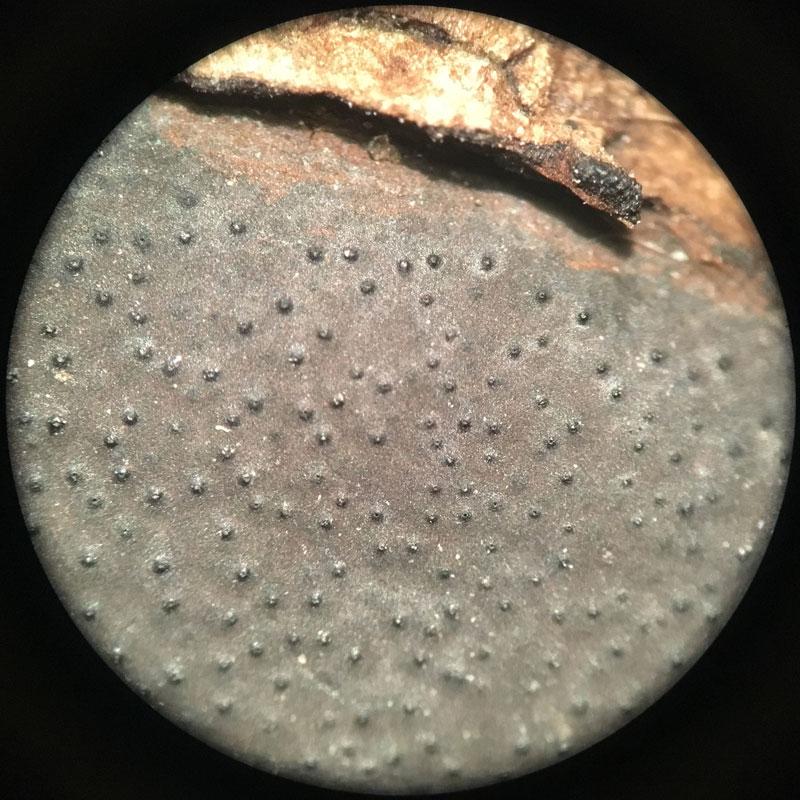
perhaps Biscogniauxia? effuse black pyrenomycete
Ethan Crenson,
23-10-2017 23:13
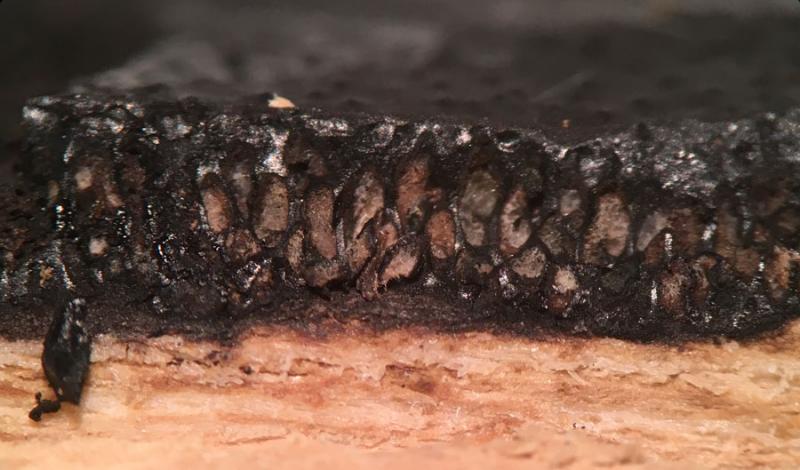
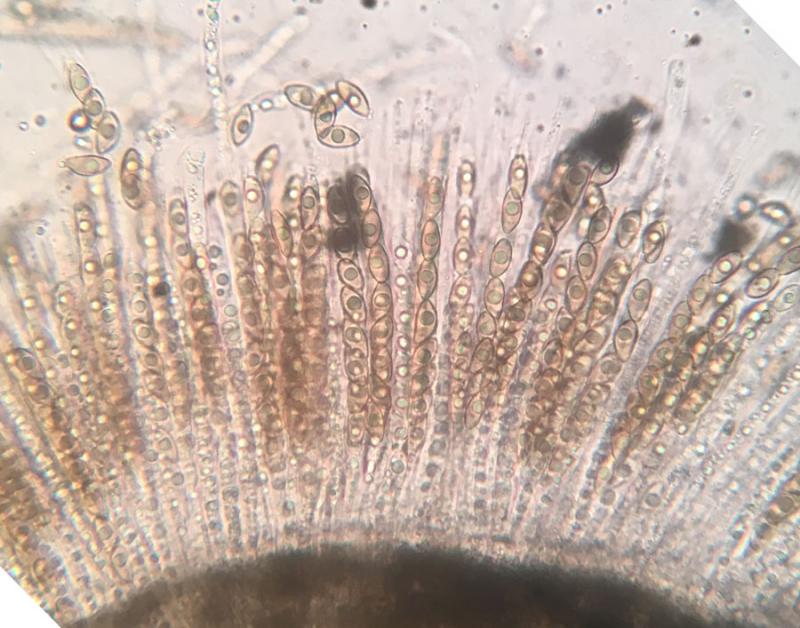
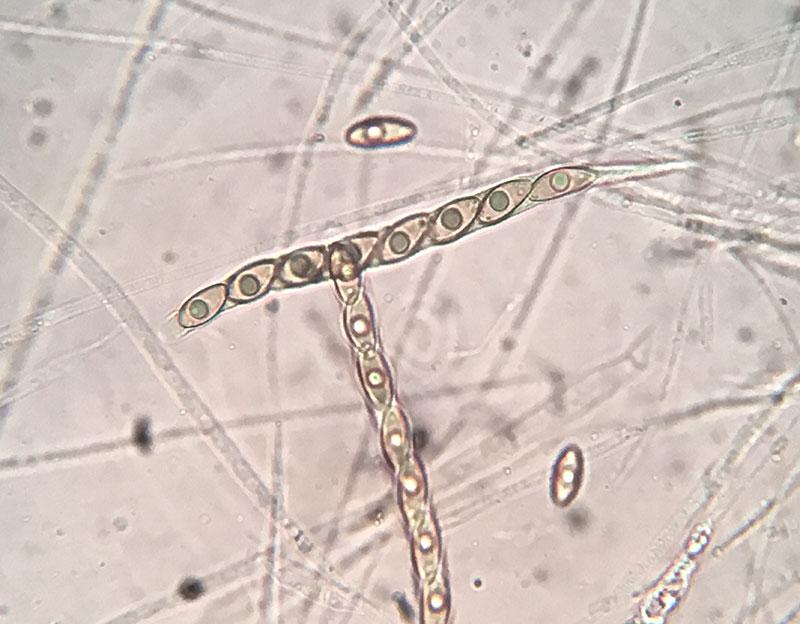
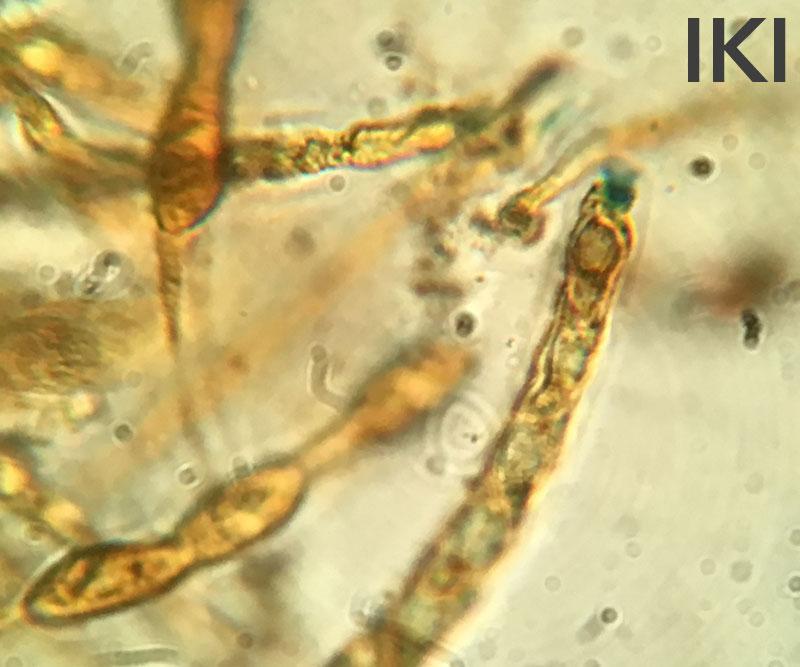
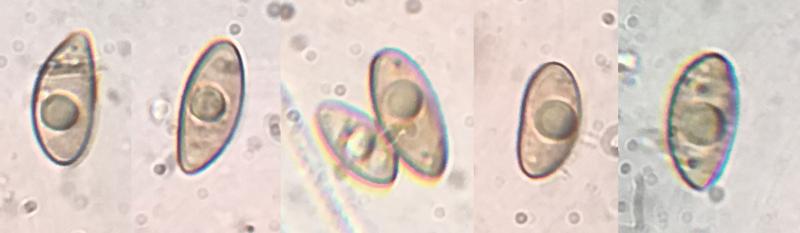
Andrew N. Miller,
23-10-2017 23:20

Re : perhaps Biscogniauxia? effuse black pyrenomycete
Whalleya microplaca.
Andy
Andy
Ethan Crenson,
23-10-2017 23:28
Re : perhaps Biscogniauxia? effuse black pyrenomycete
Thank you Andrew. I should have thought of that! I'm used to seeing that pyreno but at much smaller scale (less than 1/2" long) on Sassafras. Do you think considering these patches are so much larger it indicates that the substrate is Lindera? Besides Sassafras and Lindera, do you know of any other substrates W. microplaca grows on?
Andrew N. Miller,
23-10-2017 23:31
Re : perhaps Biscogniauxia? effuse black pyrenomycete
It is most common on sassafras. I have 6 collections, but only 1 with a host ID. I am terrible at identifying tree hosts from their wood anatomy.
Andy
Andy
Ethan Crenson,
24-10-2017 00:33
Re : perhaps Biscogniauxia? effuse black pyrenomycete
Andrew,
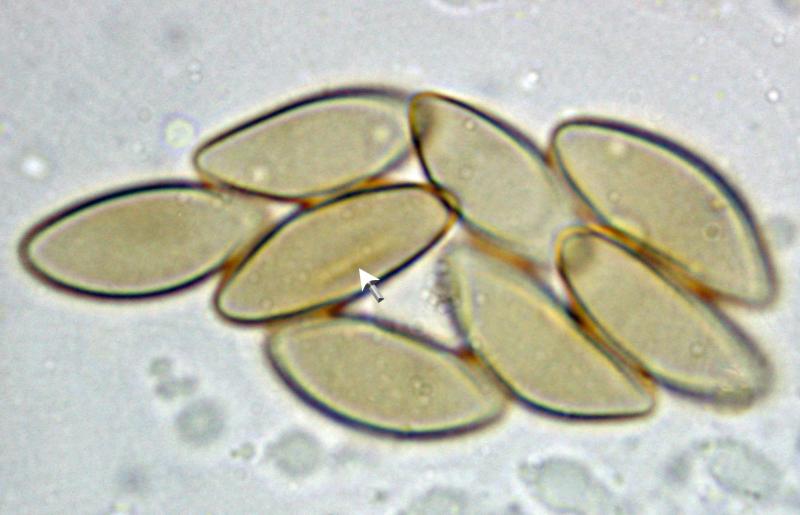
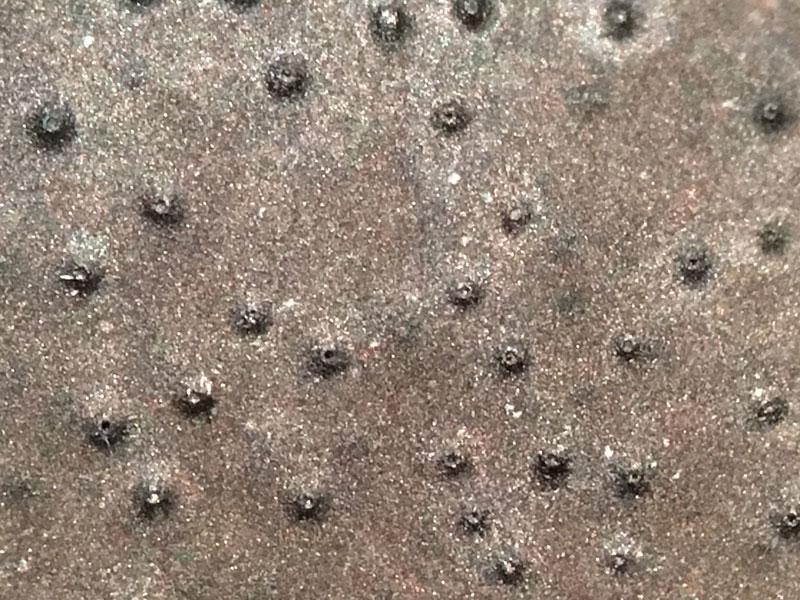
Sorry, I see a problem... I just checked your paper "Pyrenomycetes of the GSMNP IV". In it the spore size for W. microplaca is much smaller 4-6 by 2-3µm and it says the ostioles are umbilicate. Is it really possible mine could be the same? (I will double check my measurements, but I believe they are correct).
Ethan
Sorry, I see a problem... I just checked your paper "Pyrenomycetes of the GSMNP IV". In it the spore size for W. microplaca is much smaller 4-6 by 2-3µm and it says the ostioles are umbilicate. Is it really possible mine could be the same? (I will double check my measurements, but I believe they are correct).
Ethan
Andrew N. Miller,
24-10-2017 04:46
Re : perhaps Biscogniauxia? effuse black pyrenomycete
I didn't check spore size. Your first photo just looks like W. microplaca.
Andy
Andy
Jacques Fournier,
24-10-2017 08:40

Re : perhaps Biscogniauxia? effuse black pyrenomycete
Hi Ethan and Andy,
to me it is a Camillea, the closest match being C. tintor, a tropical taxon likely encompassing several cryptic species.
Could you please send me the sample, I would like to study it in detail. I guess you still have my postal address.
Thanks!
Jacques
to me it is a Camillea, the closest match being C. tintor, a tropical taxon likely encompassing several cryptic species.
Could you please send me the sample, I would like to study it in detail. I guess you still have my postal address.
Thanks!
Jacques
Ethan Crenson,
25-10-2017 04:34
Re : perhaps Biscogniauxia? effuse black pyrenomycete
Jacques,
Camillea tinctor seems like a good match (another tropical species in Brooklyn!). I cut into the wood underneath and found a thin, but distinct orange streak, which according to this web site is a diagnostic characteristic: Sous le champignons le bois se teint en orangé. I will be happy to send a small sample to you tomorrow.
Ethan
Camillea tinctor seems like a good match (another tropical species in Brooklyn!). I cut into the wood underneath and found a thin, but distinct orange streak, which according to this web site is a diagnostic characteristic: Sous le champignons le bois se teint en orangé. I will be happy to send a small sample to you tomorrow.
Ethan
Jacques Fournier,
25-10-2017 11:09
Re : perhaps Biscogniauxia? effuse black pyrenomycete
indeed the presence of an orange stain in the underlying wood is helpful!
The point is that this feature is inconsistent and added to variations in ostiolar morphology and ascospore dimensions, it makes it difficult to assess whether one or several species are involved.
Ascospores of C. tinctor have a short inconspicuous germ slit that you can make out in heated chloral-lactophenol or in Melzer. Finding it is challenging but it would be a further step of identification.
Thanks for sending a part of your sample.
Best,
Jacques
The point is that this feature is inconsistent and added to variations in ostiolar morphology and ascospore dimensions, it makes it difficult to assess whether one or several species are involved.
Ascospores of C. tinctor have a short inconspicuous germ slit that you can make out in heated chloral-lactophenol or in Melzer. Finding it is challenging but it would be a further step of identification.
Thanks for sending a part of your sample.
Best,
Jacques
Jacques Fournier,
06-11-2017 16:15
Re : perhaps Biscogniauxia? effuse black pyrenomycete
Hi Ethan,
both collections you kindly sent me are clearly C. tinctor. One is in excellent condition (1), but the wood features a faint orange stain, while the other is depauperate (2) and shows a dense orange staining. I could oberve germ slits in a few ascospores of both samlples.
This appears to be the northernmost records of this tropical to subtropical taxon. Great find!
Best,
Jacques
both collections you kindly sent me are clearly C. tinctor. One is in excellent condition (1), but the wood features a faint orange stain, while the other is depauperate (2) and shows a dense orange staining. I could oberve germ slits in a few ascospores of both samlples.
This appears to be the northernmost records of this tropical to subtropical taxon. Great find!
Best,
Jacques