
03-06-2026 19:45
 Miguel Ángel Ribes
Good afternoonI'm completely baffled by this suppo
03-06-2026 14:39
Thomas FlammerApothecia yellow, glassy-transparent, 80 - 120 ymS

16-03-2014 13:39
 Enrique Rubio
HI to all I'm looking for B. Hein's article on Wi
02-06-2026 14:33
 Nicolas VAN VOOREN
Hello.I'm searching for a PDF copy of the followin
18-10-2022 00:12
Valencia Lopez Francisco JavierHola amigos/asRecientemente encontré esta colecci
02-06-2026 17:58
Louis DENYBonjour forum, Sur feuille de Populus tremula, en
Asco inconue
Piet BORMANS,
28-06-2008 14:31
 Bonjour à tous,
Je sollicite votre aide pour la détermination d'un ascomycète que j'ai trouvé sur bois mort, très humide.
Voici mes données:
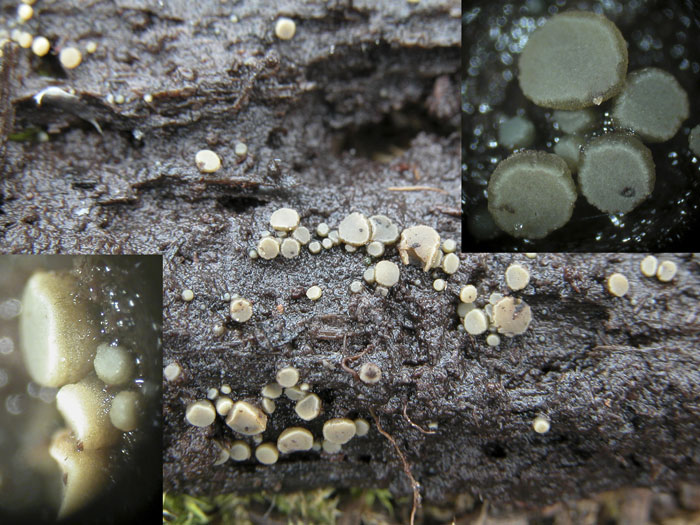
Apothécies de 0,5 - 2 mm maximum.
Micro:
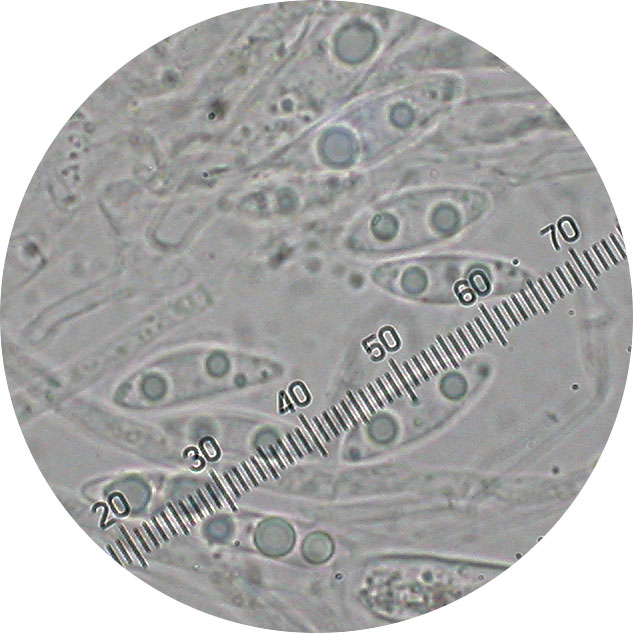
Spores: 15-18 x 4-5 µm
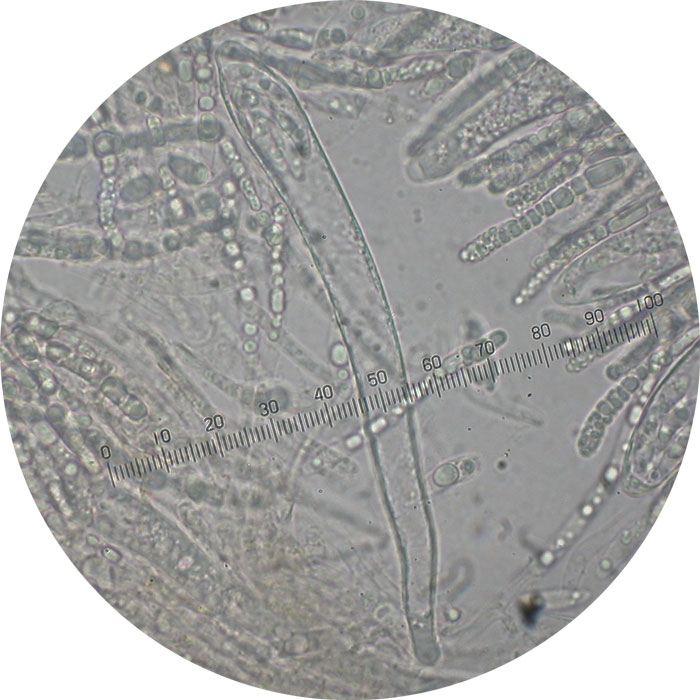
Asques: 100-125 x 10-12 µm
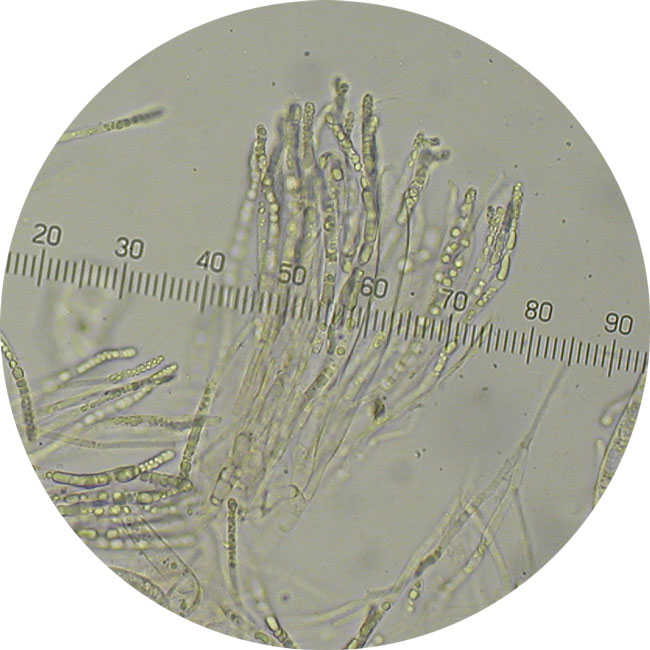
Les paraphyses sont pluri-guttulées
J'ajoute 4 photos:
- Apothécies, asques, paraphyses et spores
Merci d'avance de votre aide.
Piet Bormans
Piet BORMANS,
28-06-2008 14:33
Re:Asco inconue
Asque
Piet BORMANS,
28-06-2008 14:34
Re:Asco inconue
Spores
Piet BORMANS,
28-06-2008 14:34
Re:Asco inconue
Paraphysen
Hans-Otto Baral,
28-06-2008 17:51

Re:Asco inconue
Hi Piet
This is "Pachydisca" fulvidula or perhaps a closely related species. It is a quite difficult group. Usually the spores are longer, 18-21 or up to 26.5 µm. The asci are without croziers and I suppose that is also visible in your last image. Could you please test the Lugol reaction and make a photo of it? It would also be interesting to see the excipulum in median section (at about 400x). This should look a bit like in Mollisia.
From where comes this find? The species is typical of acis bogs.
Zotto
This is "Pachydisca" fulvidula or perhaps a closely related species. It is a quite difficult group. Usually the spores are longer, 18-21 or up to 26.5 µm. The asci are without croziers and I suppose that is also visible in your last image. Could you please test the Lugol reaction and make a photo of it? It would also be interesting to see the excipulum in median section (at about 400x). This should look a bit like in Mollisia.
From where comes this find? The species is typical of acis bogs.
Zotto
Piet BORMANS,
29-06-2008 15:53
Re:Asco inconnu
Dear Zotto.
Thanks for your response. This find was done in Belgium, municipality Houthalen-Helcheren - domain Kelchterhoef, in a dale of the Roosterbeek. It’s found together with Pachyella babingtonii. Date: 26/06/2008. Ifbl: D7.31.11
Picture asci with Lugol x 1000 (1 = 1,01 µm)
Thanks for your response. This find was done in Belgium, municipality Houthalen-Helcheren - domain Kelchterhoef, in a dale of the Roosterbeek. It’s found together with Pachyella babingtonii. Date: 26/06/2008. Ifbl: D7.31.11
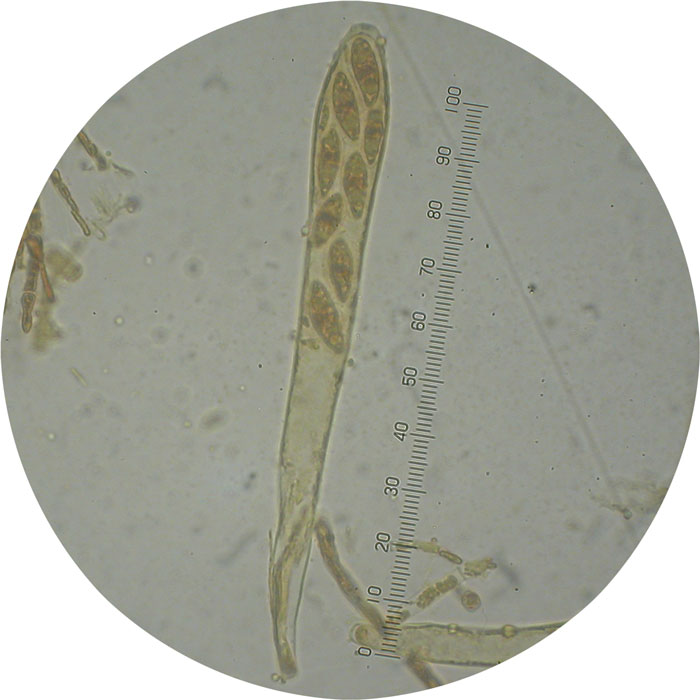
Picture asci with Lugol x 1000 (1 = 1,01 µm)
Piet BORMANS,
29-06-2008 15:58
Re:Asco inconnu
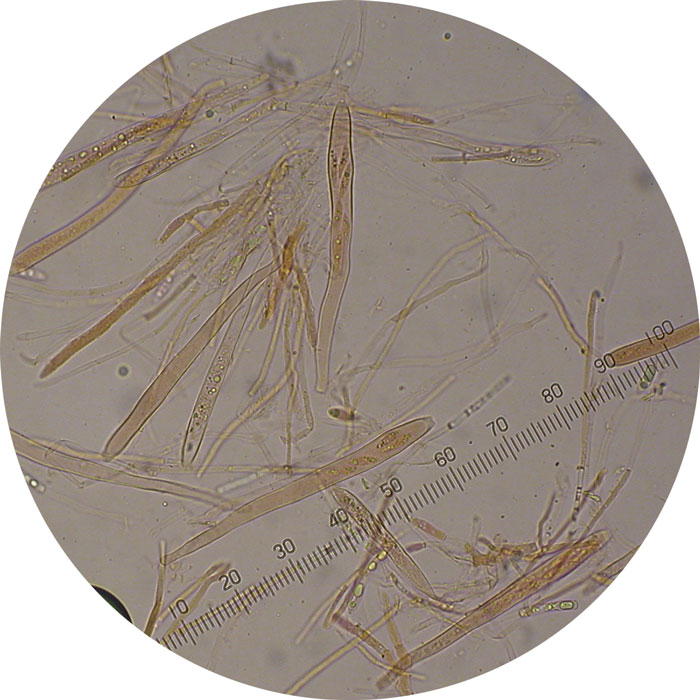
Asci 1/2 congored x 1/2 eosine x 400 (1 = 2,51 µm)
Piet BORMANS,
29-06-2008 15:59
Re:Asco inconnu
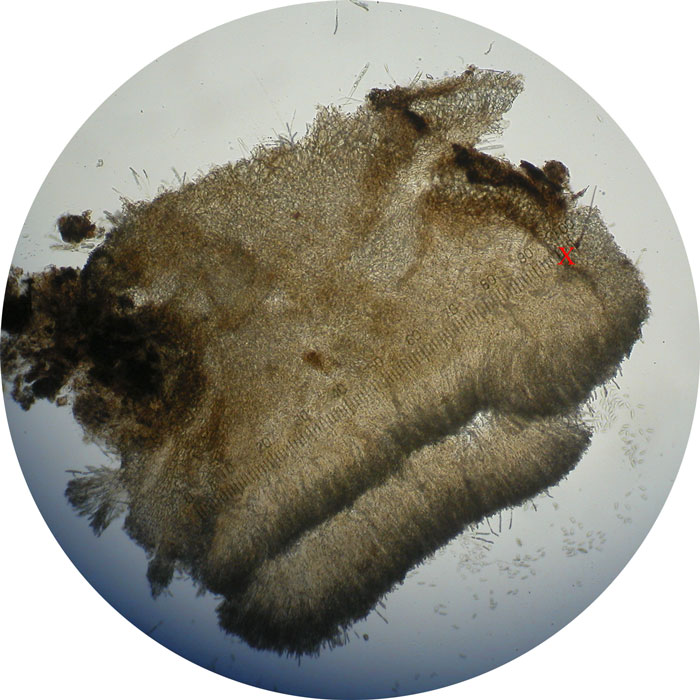
Excipulum x 100 (1 = 10,1 µm)
Piet BORMANS,
29-06-2008 16:00
Re:Asco inconnu
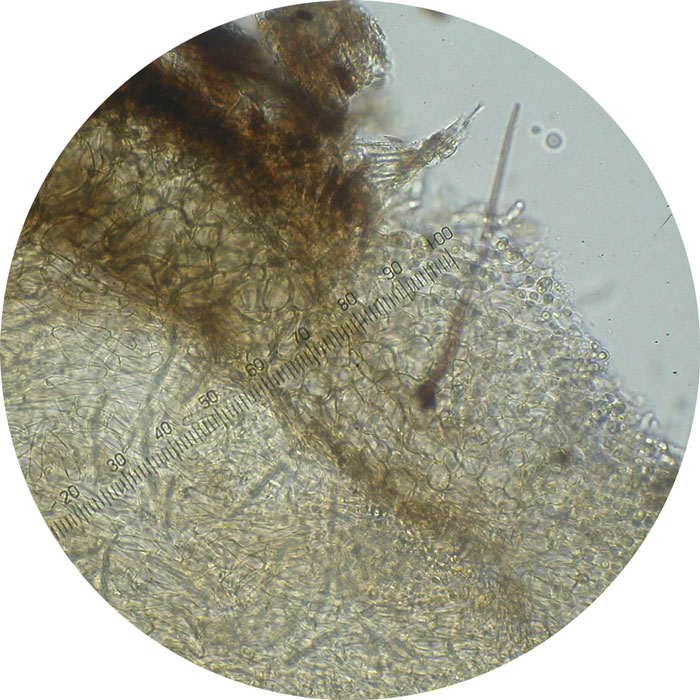
X = Exipulum x 400
Piet BORMANS,
29-06-2008 16:01
Re:Asco inconnu
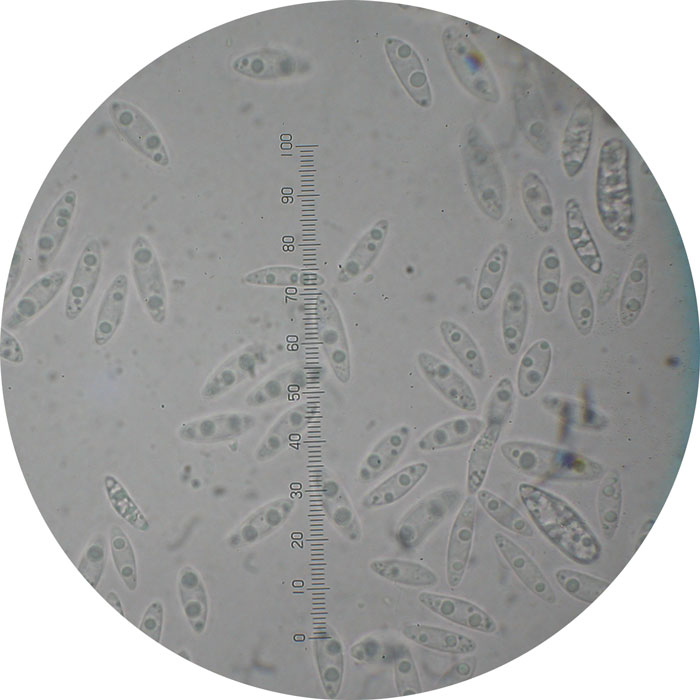
Spores x 1000
Hans-Otto Baral,
29-06-2008 18:37
Re:Asco inconue
Dear Piet
The IKI reaction of the ascus apex is a bit indistinct (should be more clearly blue). Otherwise all fits well to fulvidula, in my opinion. I have images of apos with yellow hymenium as well as greyish, and exterior from white to blackish-brown near the base. The species is related to Hymenoscyphus epiphyllus and should belong in that genus, or in Phaeohelotium if that is considered separable.
Zotto
The IKI reaction of the ascus apex is a bit indistinct (should be more clearly blue). Otherwise all fits well to fulvidula, in my opinion. I have images of apos with yellow hymenium as well as greyish, and exterior from white to blackish-brown near the base. The species is related to Hymenoscyphus epiphyllus and should belong in that genus, or in Phaeohelotium if that is considered separable.
Zotto
Piet BORMANS,
29-06-2008 21:27
Re:Asco inconue
Thank you very much Zotto