
12-06-2026 14:50
 François Freléchoux
Bonjour, Voici la brève description d'une Mollis
10-06-2026 21:16
François Freléchoux
Bonsoir,Le dernier du jour, en attendant votre avi
11-06-2026 19:01
 William Slosse
Hello all,In an attempt to make a culture of a sus
11-06-2026 19:03
 Nicolas VAN VOOREN
Chers membres d'Ascofrance,Le site sera placé en

09-06-2026 18:32
Camille MertensSur morceau de roseau immergé 0,5 - 0,7 mm de dia
10-06-2026 12:54
Steve ClementsBonjour encore, Pouvez-vous m'aider, s'il vous pl
10-06-2026 21:07
François Freléchoux
Toutes les tiges de gentianes jaunes de l'an passÃ
10-06-2026 13:41
François Freléchoux
Bonjour à nouveau, Voici une trouvaille d'hier.
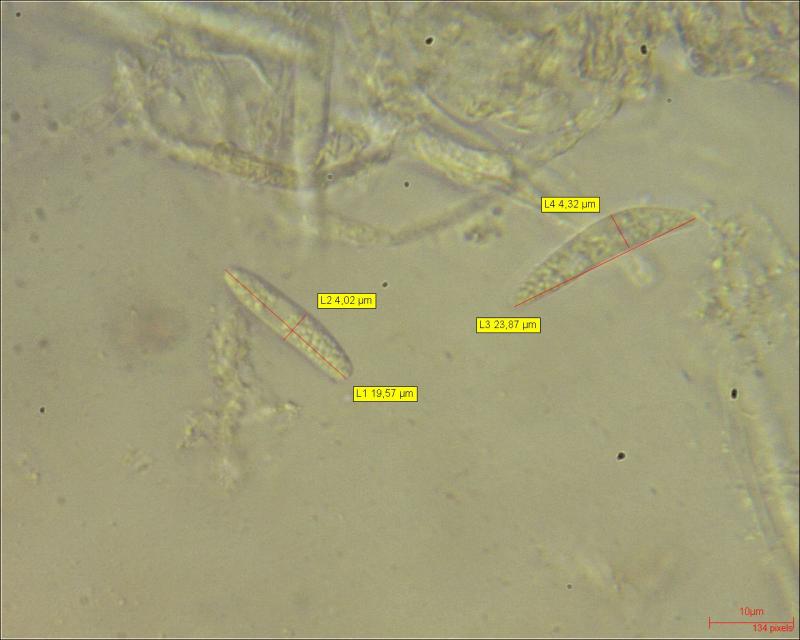
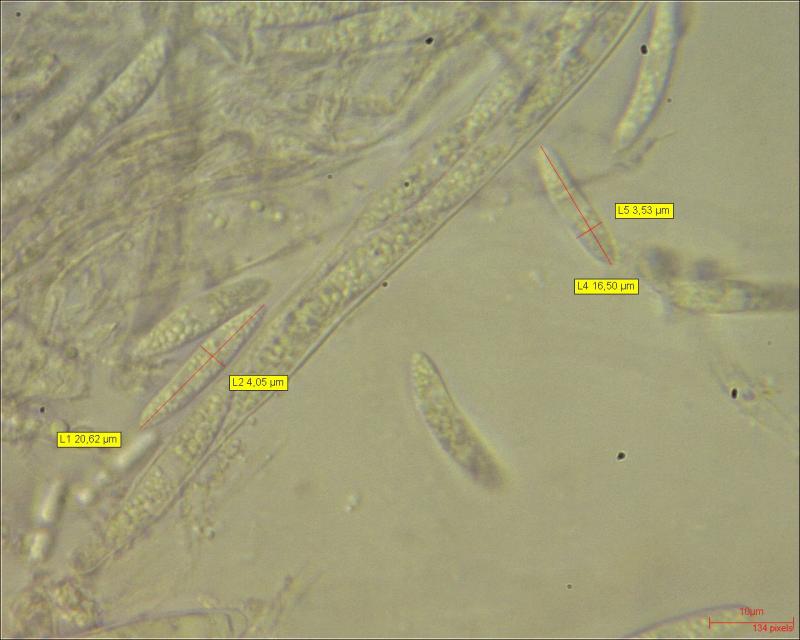
I found following species in damp litterlayer in Alnuswood growing on dead remains of Rumex sp stems.- spores: hyalien, fusiform (?), filled with many tiny drops, 20.61x4.17um
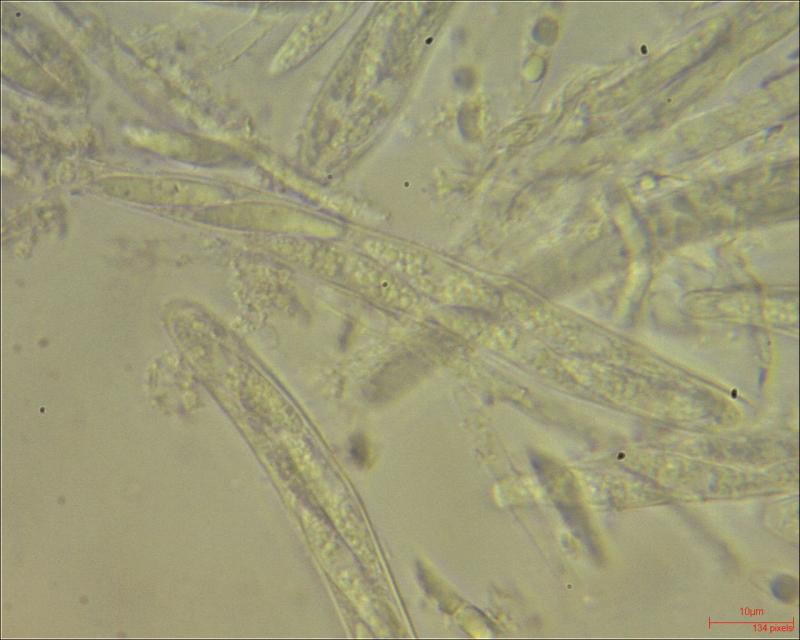
- asci: uni to biseriated, 85-83 x 8.5 um, no crosiers
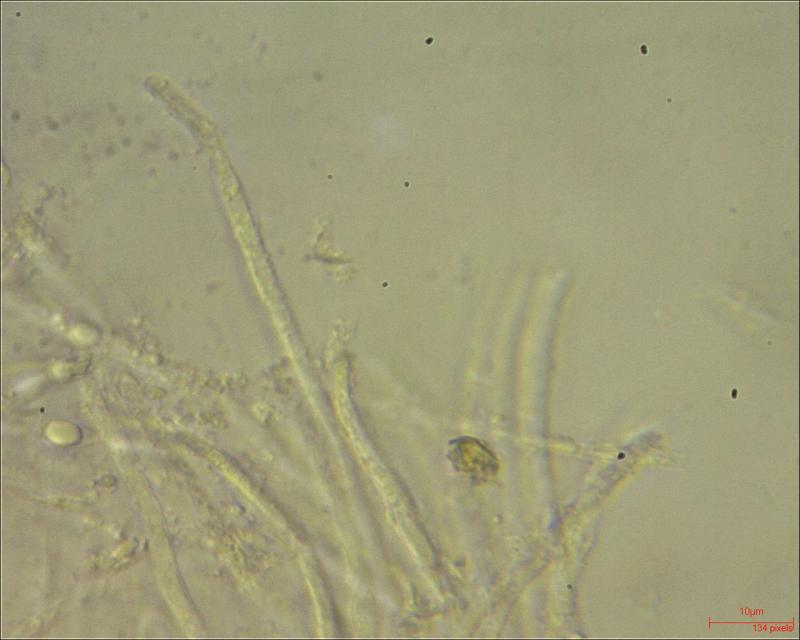
- paraphyses: slender, slightly thickened to the tip
Can anyone confirm if i'm wright?
Thx in advance,
William
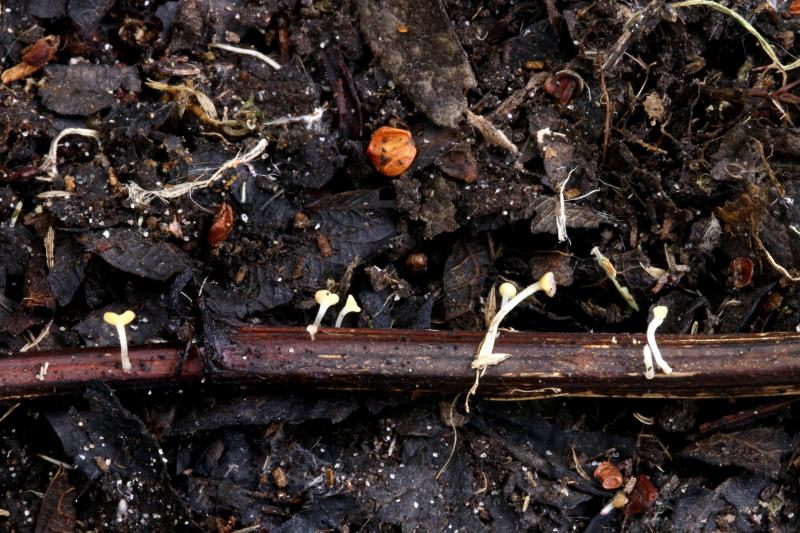
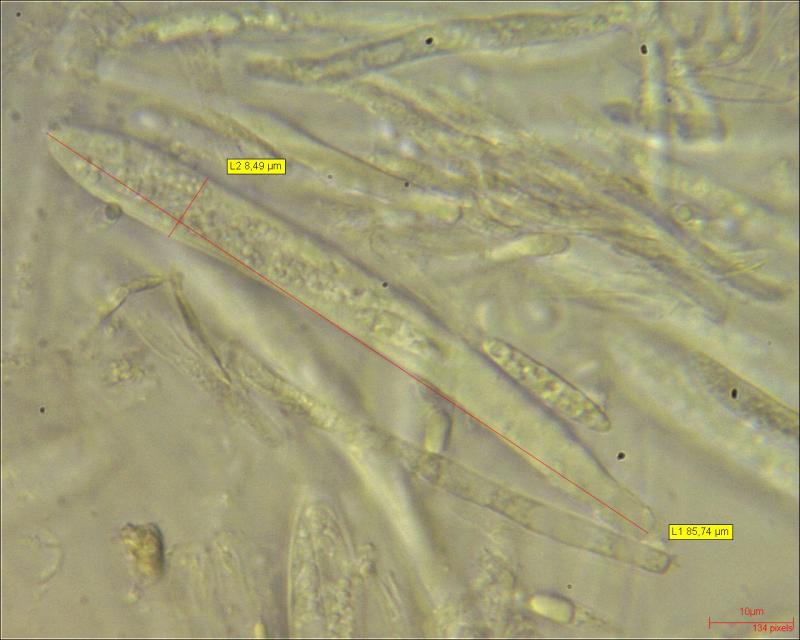
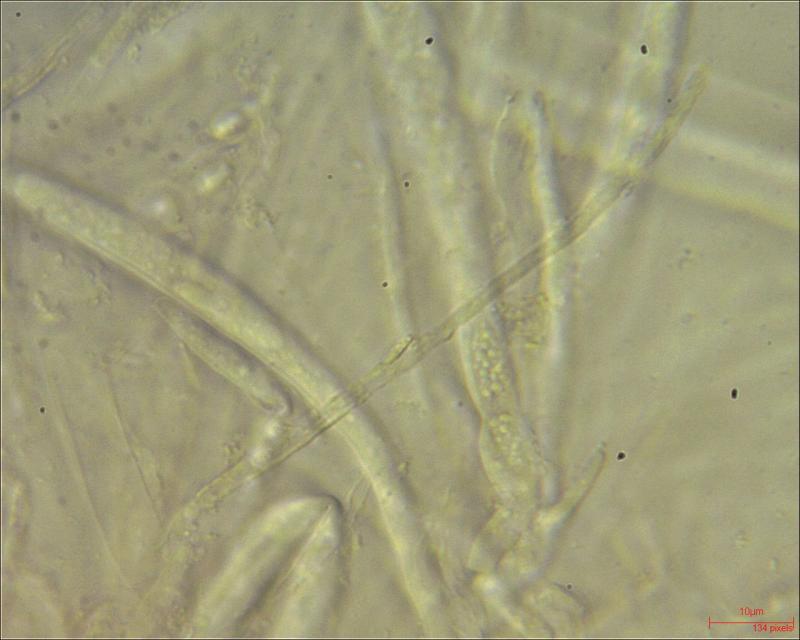
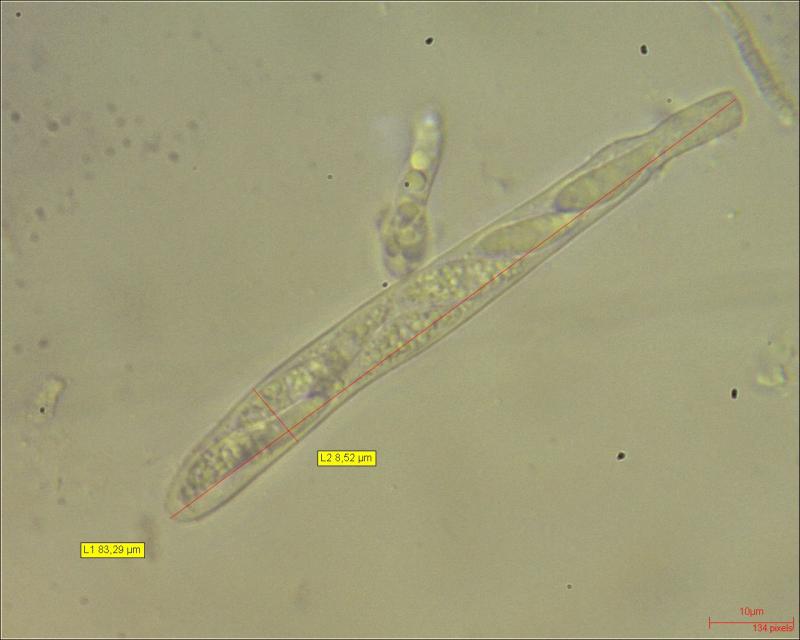

Hello William,
yes, surely a member of the H. scutula-complex.
Typically, H. scutula ss.str. has cilia at the ends of its spores, they are sometimes difficult to see. But there are similar forms without, called H. vitellinus. I am not sure if there is actual research about this, so I don`t know if vitellinus is a good species.
Best regards from Lothar

I am not very sure from the photos that the spores are scutuloid. They are mutliguttulate which is not very typical of H. scutula. So I cannot exclude H. menthae (= H. consobrinus).
The H. scutula aggregate is still unclarified, an there are only few sequences so far.
Zotto
I couldn't find any cilia therefor I doubted.
Best regards,
William
I will look further on that species and compare it with the records of menthae.
Best regards,
William

I agree with Zotto. The guttulation of the spores excludes H. scutula ss. str. as well as its form without cilia. Spores are typical H. menthae, as well as the white stipe of the apothecia. That single scutuloid spore does not belong to this species.
Moreover, in Belgium, we collect H. scutula not earler than in the second half of August.
Bernard
Please send me a link to your fungus.
Zotto