
30-03-2026 09:53
Yanick BOULANGERBonjourVoici des petites fructifications poilues s
30-03-2026 12:03
 William Slosse
Hello all,On 27/03/26, in Kraaiveld in Wingene (Be
25-03-2026 10:35
Hulda Caroline HolteHello,I collected this species growing on a dead b
27-03-2026 10:47
Åge OterhalsI have tentatively identified this Stictis to S. f
28-03-2026 07:55
 Marc Detollenaere
Hello everybody,Yesterday I found a number of whit
26-03-2026 15:31
 Åke Widgren
Hello,I found this one in October last year, on r
27-03-2026 15:23
Gernot FriebesHi,this Trichopezizella deviates from typical T. b
27-03-2026 15:08
Gernot FriebesHi,I'm looking for help with this coelomycete on C
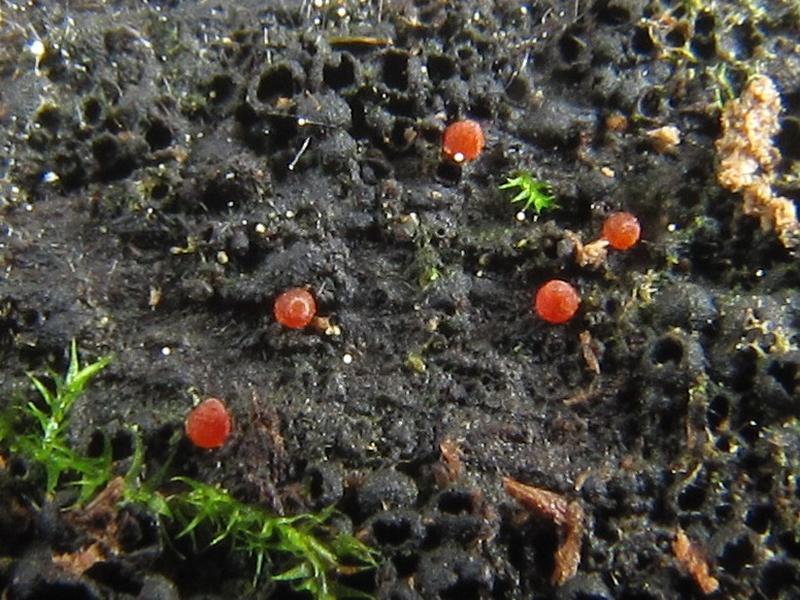
I found this probable Cosmospora on another sordariomycete, probably Lasiosphaeria spermoides. But the perithecia of the Nectriaceae species are situated in areas of large decomposition of the Lasiosphaeria. So the actual substrate could also be the wood. It is Fagus sylvatica.
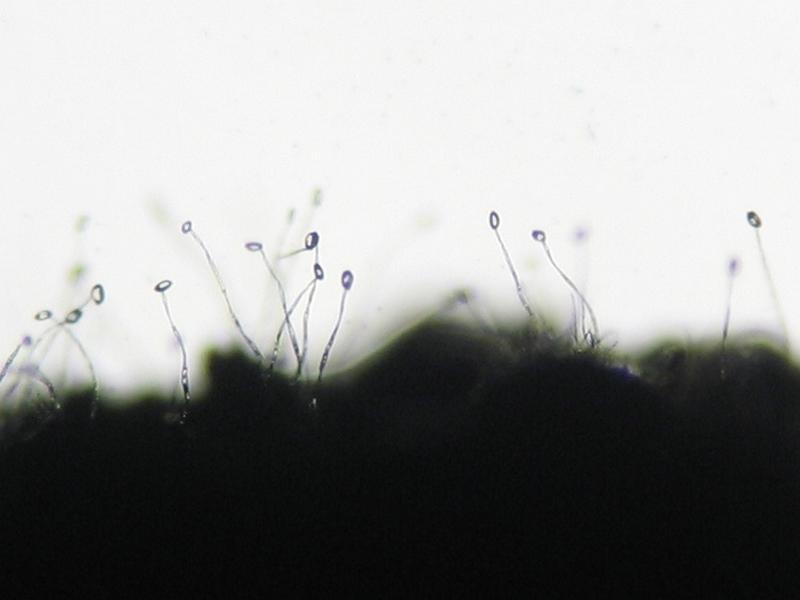
There is also a forest of an anamorph. It covers almost the entire part of the Lasiosphaeria. Possibly this is the anamorph of the Nectriaceae species.
Here are the data:
Perithecia: red, with a conspicuous papilla
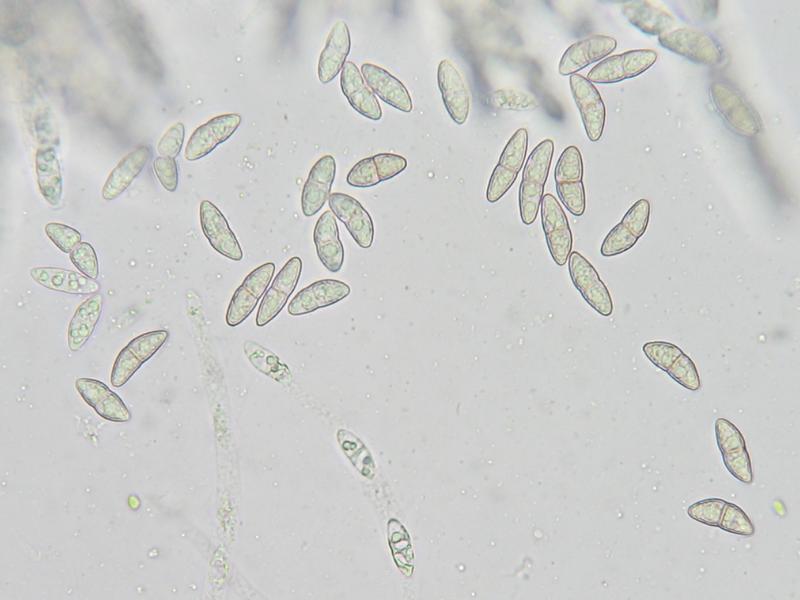
Ascospores: 18-25 x 7-8 µm, 1-septate, constricted at the septum, warted, slightly unsymmetrical, tapering at both ends
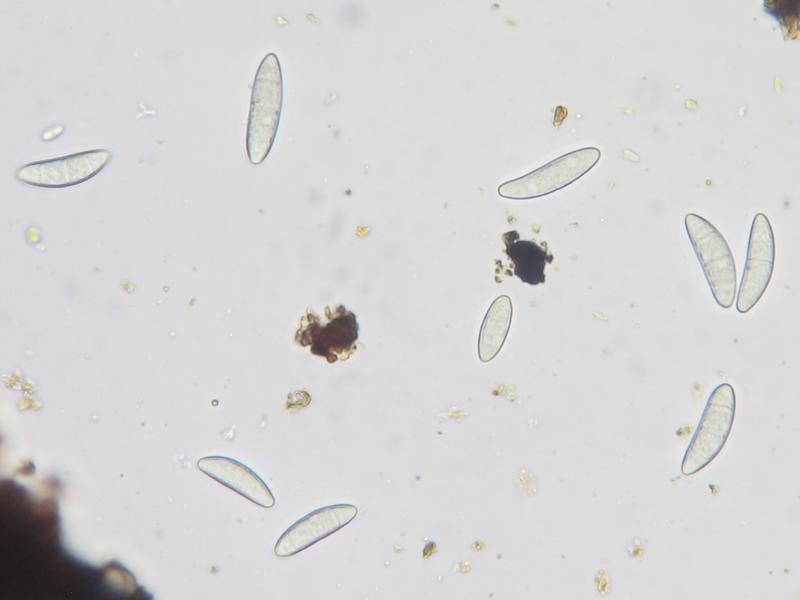
Conidia: 27-33 x (6,5) 7,5-10 µm, 0-3-septate (mostly 3-septate), slightly curved
I know, that Nectriaceae are not studied sufficiently yet and hard to determine. Is there at least a working name or a species complex, where I can put this collection in?
Best regards
Steffen
Steffen

"Cosmospora" is very difficult without culture and molecular data.
I think your fungus could remain in the "flavoviridis" complex and the conidia that you show are not the asexual state of a Cosmospora.
You should cultivate the ascospores of your fungus to know its asexual state.
Good luke,
Christian
thank you for your answer.
How can I cultivate the ascospores? Is it likely to determine the species knowing both states?
Kind regards
Steffen
here is an abstract of a recent publication explaining how cultivate the ascospores.
Cultures of the living specimen were made on PDA (Potato Dextrose
Agar) with 5 mg/l of streptomycin in Petri dishes 9 cm diam. A mass
of ascospores and asci was removed from a perithecium with a fine
needle and placed in a drop of sterile water that was stirred with a
needle to distribute the elements on the slide. A part of the drop
containing ascospores was placed on PDA using a sterile micropipette,
then the Petri dish was incubated at 25°C.
Cheers,
Christian
thank you. Let's see, I am going to try it.
Regards
Steffen
a friend of mine and I tried to cultivate the anamorph of the fungi. He works at a laboratory. We used CPA (Carrot piece agar), which should be one of the most suitible media for macroconidia of Fusarium, and SNA. But both samples were overgrown by Penicillium spec. I think I am not able to get the anamorph. Is there a researcher, who is interested in it? Maybe Amy Rossman, Gary Samuels or you?
Best regards
Steffen