
17-05-2026 19:05
Thomas FlammerI have found this tiny 200 ym cup shaped apothecia
17-05-2026 16:41
Margot en Geert VullingsWe found this Lachnum on an old Rubus stem.Fruitbo
05-04-2026 22:46
 Lothar Krieglsteiner
on wood of Ceratonia, Algarve, 3.4.2026.The color
15-05-2026 13:33
Sylvie Le GoffBonjour à tousJe serais très reconnaissante enve
16-03-2011 14:31
roman vargas albertoHi. I would like some opinion about this Peziza
14-05-2026 05:36
Ethan CrensonHi all, I haven't paid much attention to Lachnu
10-05-2026 23:17
 Andreas Gminder
Hello,today we found in a moist steep decidous for
11-05-2026 12:32
 Bernard CLESSE
Pourriez-vous m'aider à identifier cette héloti
13-05-2026 15:26
 François Freléchoux
Bonjour,Voici une récolte faite il y a quelques j
12-05-2026 15:41
 Nicolas VAN VOOREN
Dear Ascolovers, especially interested in Pezizale
 Hello,
I got this nice asco and I am not sure if my determination is good:
Apothecia up to 7 mm diam, on soil among mosses in wet forrest, mostly Picea around. I don't know how to recognize from exsiccate if it is bryoparasite or not.
Receptacle is in exsiccate pale orange and visibly hairy.
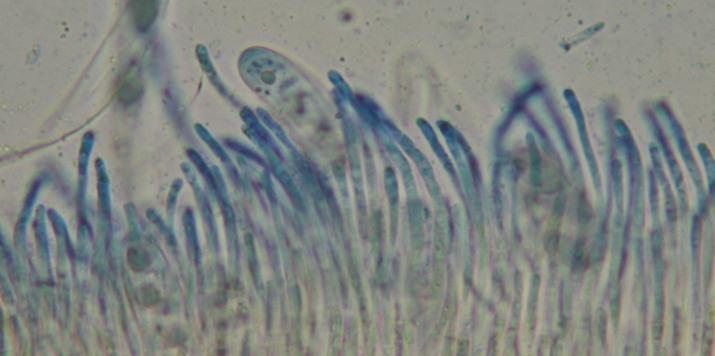
Hairs ca. 6,6–9,4 ? thick (in LACB), hyaline, thickwalled, obtuse, superficial. Ectal excipulum of t. intricata (probably, didn't see it clearly), medúlla t. intricata.
Asci IKI-, contents colored goldbrown in IKI.
Paraphyses filiform, almost not enlarged at apex, straight or slightly curved.
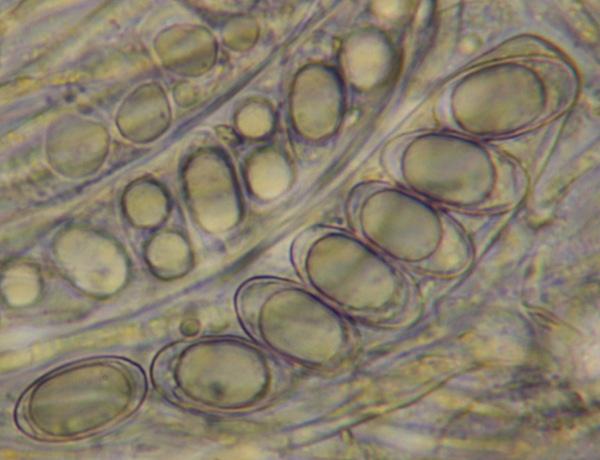
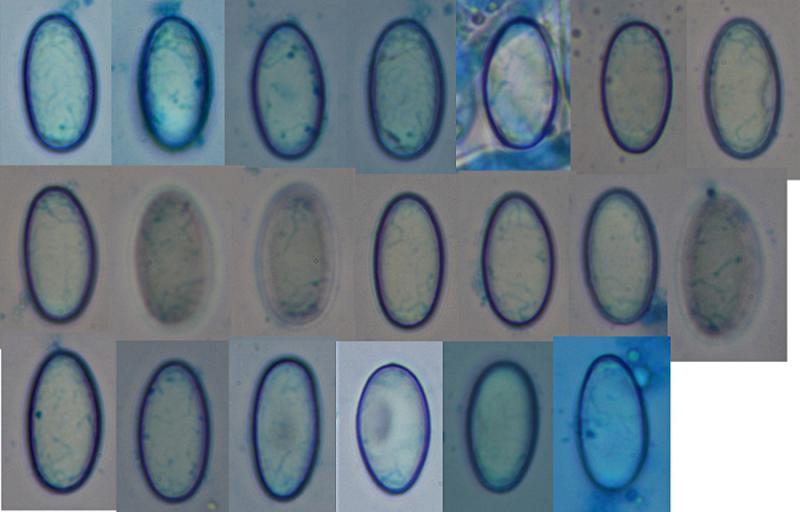
Spores elipsoid, alive probably with two middle-sized guttules, now mostly one big LB, (18.3) 19.2–20.8 × (9.5) 10–11.3 (11.7) ?. In water they look smooth, but in LACB there's very fine ornamentation of short curved lines, sometimes anastomosing. It's very incomplete, mostly only at poles, or just a few lines across the spore, and I observed it only on some spores. At first, I thought the spores are not ornamented but just wrinkled due to LACB and collapsing.
I think it might be Neottiella aphanodictyon (not completely mature), because of the excipulum structure, hairs and ornamentation. Or is there another (better) match?
Thank you in advance.
Tori
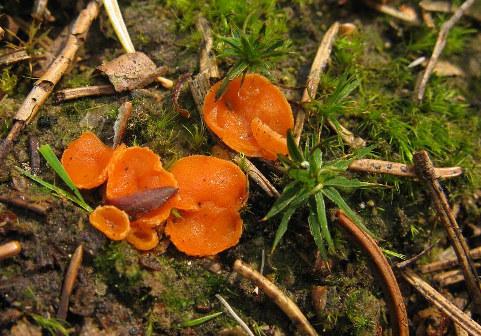
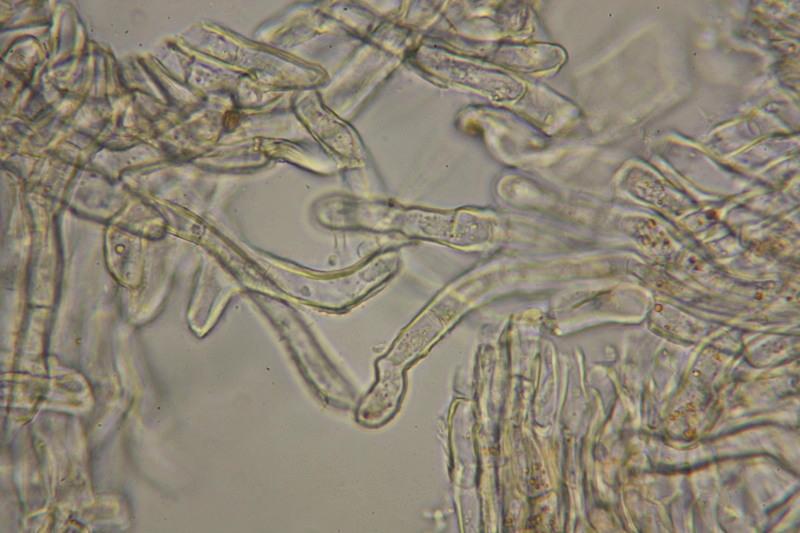
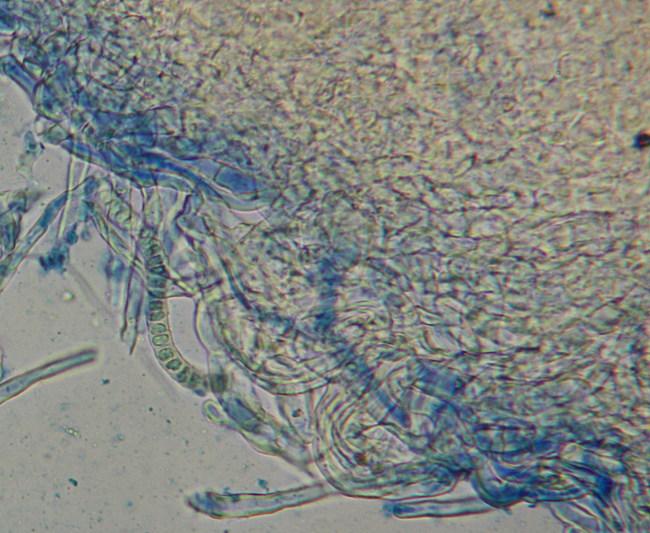
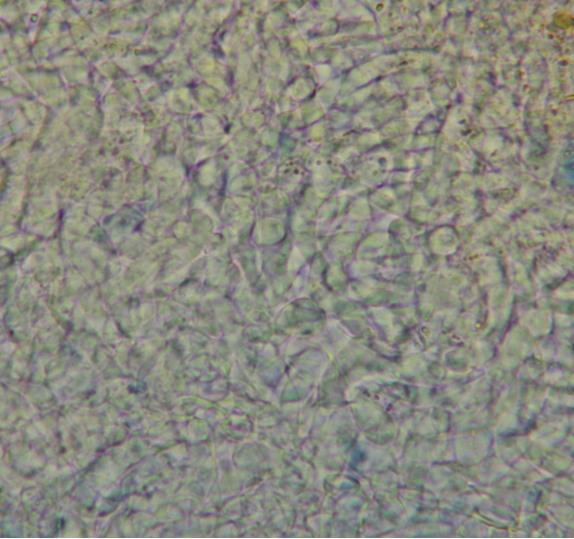
Oui,il semblerait bien que votre espèce corresponde à Neottiella aphanodictyon = Leucoscypha borealis d'autant que la mousse visible sur la photo semble être une polytrichaceae.
L'espèce est peu courante et les spores sont très finement ornées de lignes formant une sorte de réseau incomplet
Gilbert