
23-05-2026 18:57
Sylvie Le GoffBonjour à tousRécolté sur une branchette de Sal
23-05-2026 11:44
 Charles Grapinet
Hello, I am having trouble identifying this copro
22-05-2026 14:44
 Lothar Krieglsteiner
in unripe condition citrine yellow, then soon fadi
22-05-2026 21:35
Steve ClementsBonjour, I expected this find on old wood on our
22-05-2026 18:12
Lothar Krieglsteiner
... in moist chamber from Portugal.As the fungus s
22-05-2026 20:08
Ethan CrensonHello all, Yesterday in NYC I was visiting an e
11-01-2022 16:36
 Jason Karakehian
Hi does anyone have a digital copy of Raitviir A (
20-05-2026 17:47
Margot en Geert VullingsWe found this Mollisia on dead Juncus stems mown l
22-05-2026 14:47
Gernot FriebesHi,superficial ascomata collected on bark of a liv
Arachnopeziza aurata?
Garcia Susana,
15-12-2015 09:51
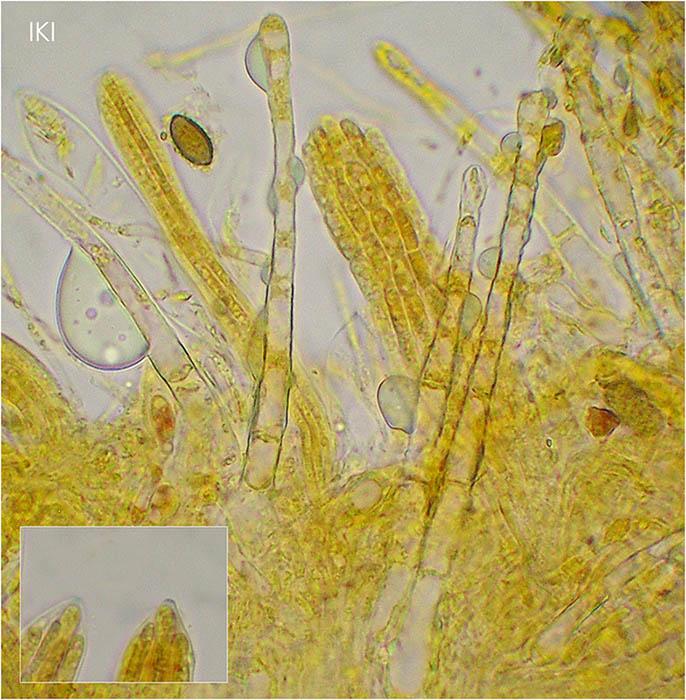
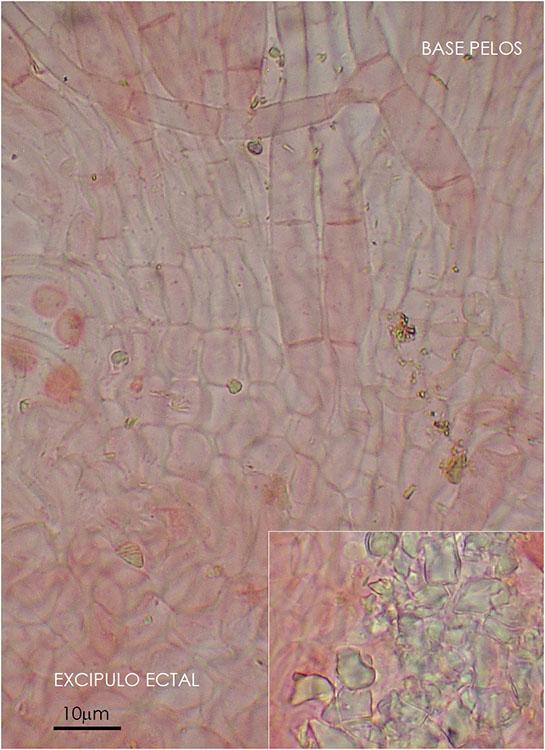
I have found these apothecia whose characteristics make me think at Arachnopeziza aurata. But I find a difference in the shape of hairs: I've seen described A. aurata with hairs that narrows towards the apex, in this case however, there is a widening. The spores, have in this case, narrowing pronounced at the level of the septation (perhaps due to the state of maturation). You think that is A. aurata?
Gracias, un saludo
Susana
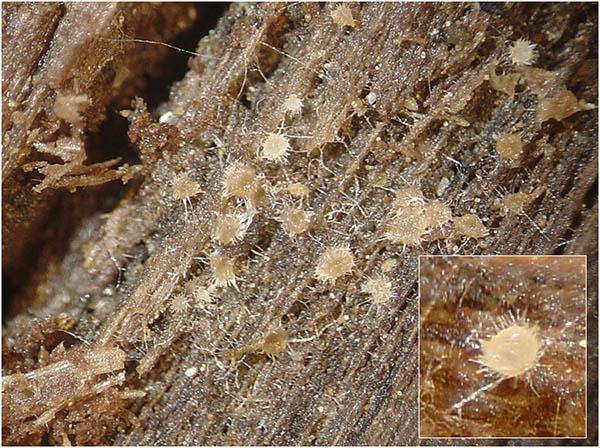
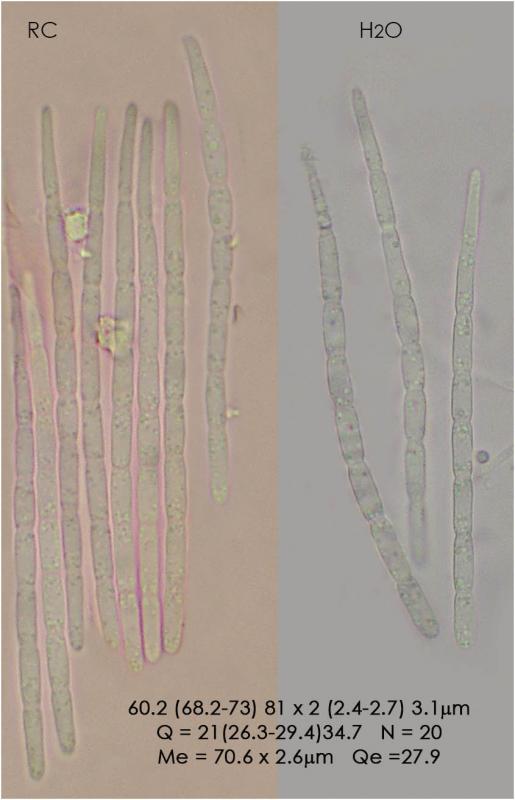
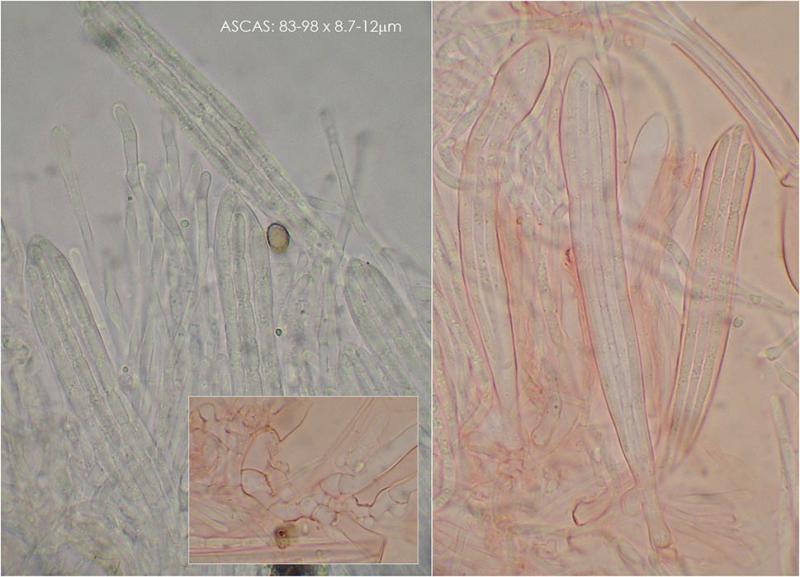
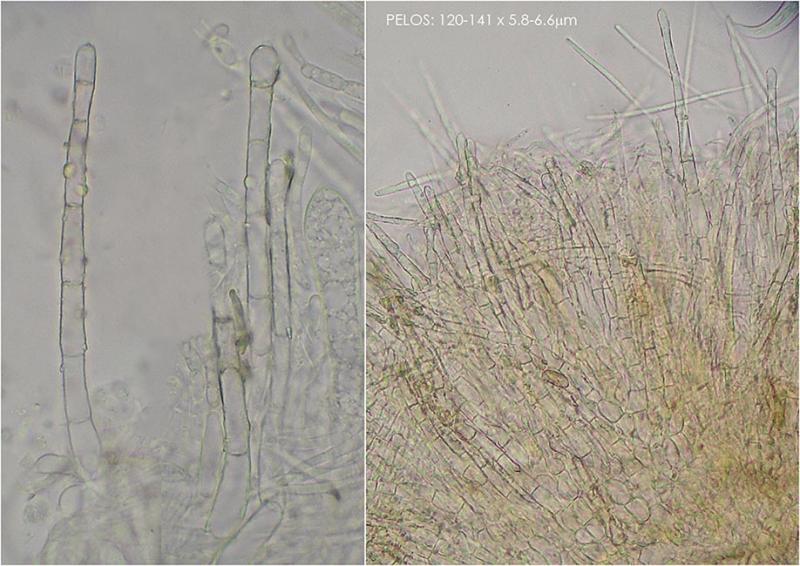
Hans-Otto Baral,
15-12-2015 18:37

Re : Arachnopeziza aurata?
I am not sure. Except for the hairs which partly also taper in your sample, I see no clear difference to A. aurata. But I agree such apically wide hairs I do not see in that species.
What was the substrate?
What was the substrate?
Garcia Susana,
15-12-2015 23:02
Re : Arachnopeziza aurata?
I don't know that substrate is. It was a very small and very damaged piece of wood.
The more likely it is that A. aurata, turning to look at the pictures of the DVd I think that there is no big difference in the hairs.
Thanks Zotto.
The more likely it is that A. aurata, turning to look at the pictures of the DVd I think that there is no big difference in the hairs.
Thanks Zotto.