
08-05-2026 11:55
Gernot FriebesHi,found on a decorticated Picea abies branch stil
11-05-2016 20:37
 Zuzana Sochorová (Egertová)
Hi,this very little ascomycete grew on soil in a m
09-05-2026 07:37
Zuzana Sochorová (Egertová)
Hello,please, could anyone share this paper?Ferná

05-05-2026 22:40
Gernot FriebesHi,I believe this is a Plagiostoma growing on a Sa
06-05-2026 11:25
 Castillo Joseba
Me mandan el material seco de Galicia (España) re
06-05-2026 17:23
Thomas Læssøehttps://svampe.databasen.org/observations/10594257
28-04-2026 20:07
 Lothar Krieglsteiner
... on twig in the air at standing Ceratonia siliq
04-05-2026 18:13
 Stephen Martin Mifsud
ID request for what seems to be a true aquatic fun
04-05-2026 16:39
Stephen Martin Mifsud
ID request: This specimen was collected in Malta o
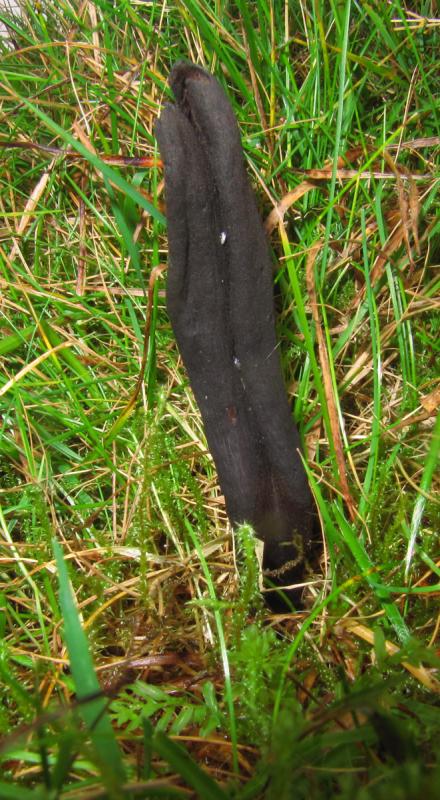
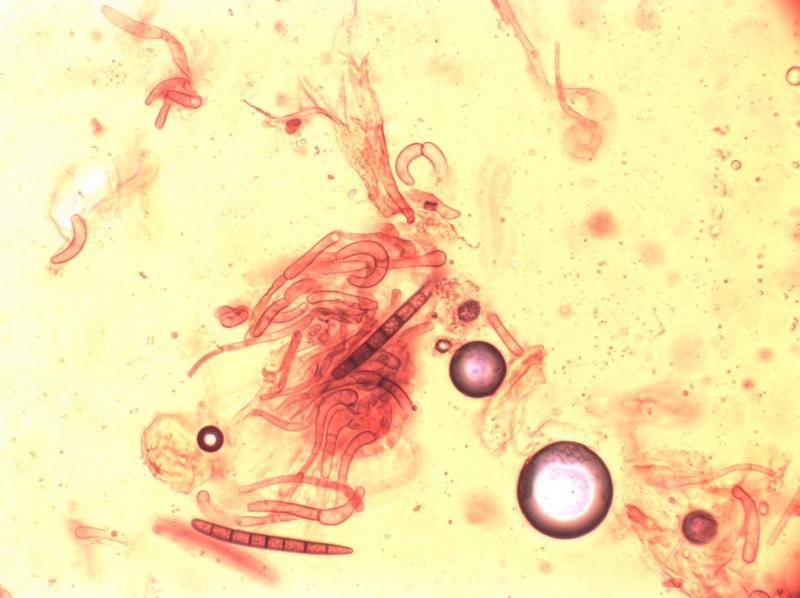
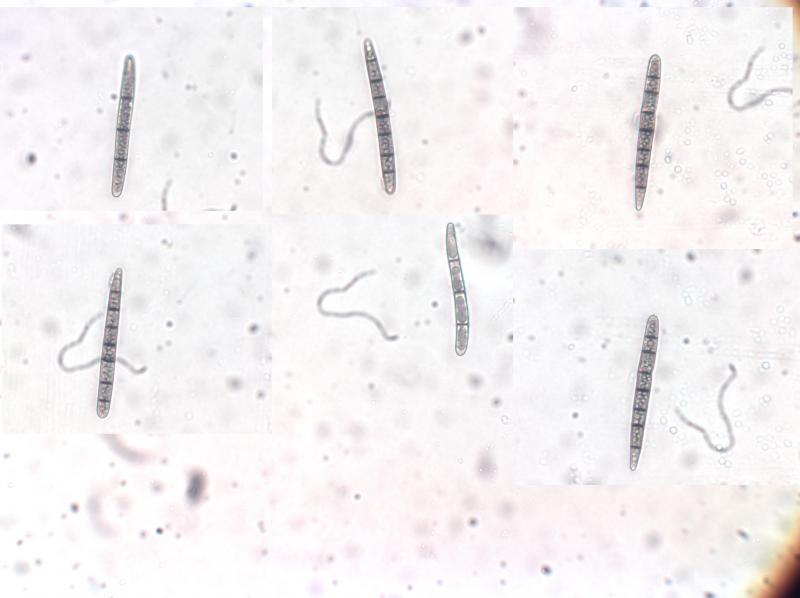
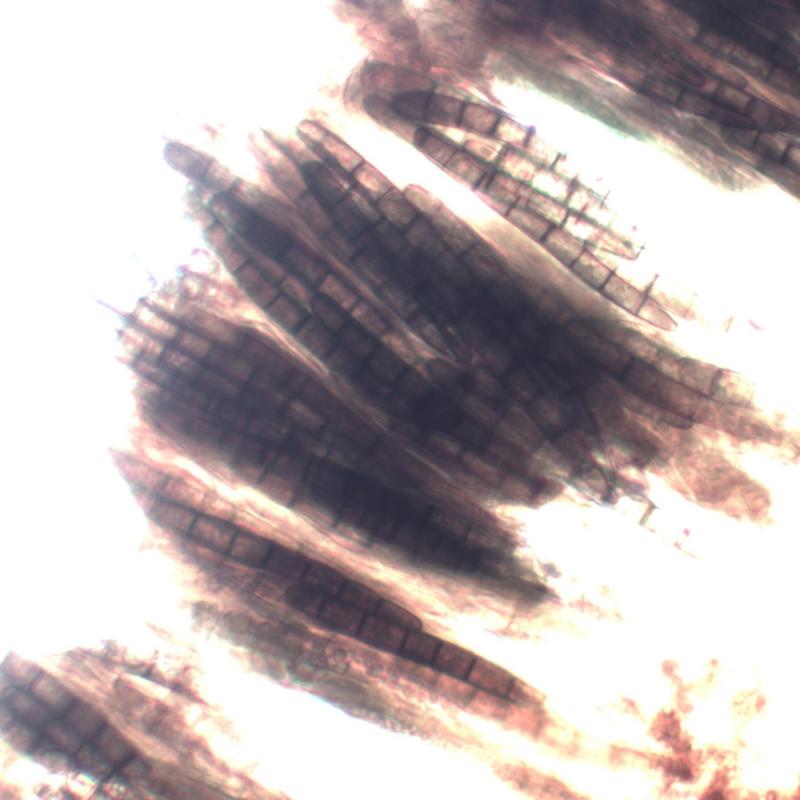
 This was found alongside a Geoglossum hirsutum. With almost no stalk and over 11cm tall it is the largest one I have found. Spores hyaline when immature with 1 - 7 septa, dark with 7 spepta when mature 70 x 6µ. Paraphyses swollen and mostly bent at the top.
Is this G umbratile.
Thanks
Mal


Zotto
Mal
Mal
Thanks for your comments Zotto.
Mal
Hi Malcolm, Zotto:
The morphology of the spores (guttules) and paraphyses is not G. fallax.
The stipe looks smooth, fit into our concept of G. umbratile.
Best regards.
Sabino Arauzo.
And yes indeed, in G. fallax I saw the spores with large drops with some small around, but here they are multiguttulate.
In your work, Sabino, G. nigritum and G. umbratile, are synonyms, and you figured a multiguttulate spore. But my cf. umbratile HB6543 has gutules like fallax and also hyaline spores inside the asci. I compared it otherwise with G. (Hemileucoglossum) elongatum.
Zotto
Hi Zotto:
I have not seen amorphous brown material in paraphyses of G umbratile or closest species. H. elongatum has ephitecium and stipe hairy.
I think that HB6543 belongs to G. fallax - starbaeckii group.
Sabino.
I only wonder why in my HB 1217 no exudate is shown, perhaps I overlooked.
Zotto