
28-04-2026 20:07
 Lothar Krieglsteiner
... on twig in the air at standing Ceratonia siliq
04-05-2026 18:13
 Stephen Martin Mifsud
ID request for what seems to be a true aquatic fun
04-05-2026 16:39
Stephen Martin Mifsud
ID request: This specimen was collected in Malta o
04-05-2026 09:50
 Castillo Joseba
Me mandan el material seco de Galicia,(España) re
02-05-2026 12:42
Alain BRISSARDBonjour à tousJeuidi 30 avril dernier on m'a remi
02-05-2026 13:06
Pauline. PennaBonjour Please can someone help me with this id
01-05-2026 22:45
 Thierry Blondelle
Bonjour à tous, Une récolte sur bouse séchée d
14-04-2026 05:32
Ethan CrensonHi all, A few weeks back a friend pointed out som
28-04-2026 20:33
Vitus SchäfftleinHello, I found Trochila ilicina on Ilex aquifoliu
Hello,
Coccomyces dimorphus, described by Liang et al. (Mycosystema, 19(1), p. 3-6, 2000),
has two types of asci (normal cylindrical and lanceolate) in a ascocarp.
Does anyone know other discomycetes having such dimorphic asci?
Kutsuna
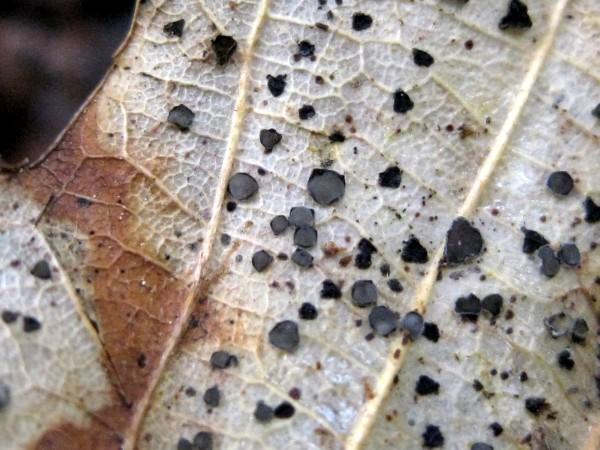

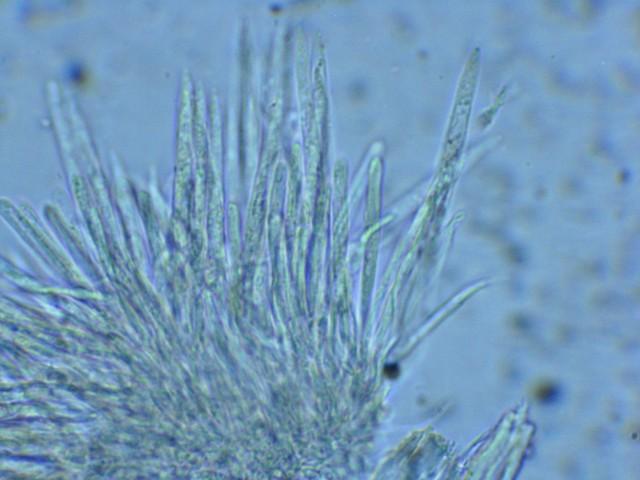
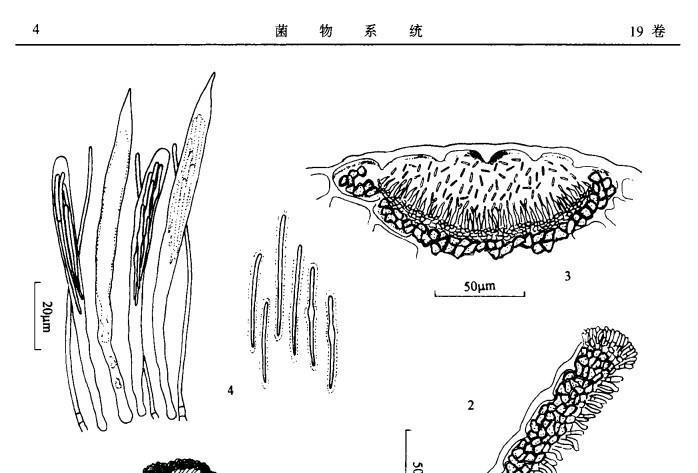

A close study of the acus base woud perhaps clarify. Asci and paraphyses emerge from two separate hyphal systems. Often the ascogenous system carries croziers, the paraphysogen never.
Another possibility would by intrahymenial parasitism by another ascomycete, but this seems to me rather unllikely.
If you have a a pdf of the Liang paper I would be happy to see it. You could, e.g., attach as a nouveau fichier.
Zotto
Both type asci inamyloid, and I can't see croziers.
In Liang's paper, paraphyses are "rare", I can't observe thread-like paraphyses.
I send Liang's paper ?mainly in Chinese??by e-mail.
Kutsuna