
05-04-2026 22:46
 Lothar Krieglsteiner
on wood of Ceratonia, Algarve, 3.4.2026.The color
15-05-2026 13:33
Sylvie Le GoffBonjour à tousJe serais très reconnaissante enve
16-03-2011 14:31
roman vargas albertoHi. I would like some opinion about this Peziza
14-05-2026 05:36
Ethan CrensonHi all, I haven't paid much attention to Lachnu
10-05-2026 23:17
 Andreas Gminder
Hello,today we found in a moist steep decidous for
11-05-2026 12:32
 Bernard CLESSE
Pourriez-vous m'aider à identifier cette héloti
13-05-2026 15:26
 François Freléchoux
Bonjour,Voici une récolte faite il y a quelques j
12-05-2026 15:41
 Nicolas VAN VOOREN
Dear Ascolovers, especially interested in Pezizale
13-05-2026 12:05
 Thierry Blondelle
Bonjour à tous,J'aimerais avoir confirmation de c
28-04-2026 20:07
Lothar Krieglsteiner
... on twig in the air at standing Ceratonia siliq

Does anyone knows the actual taxonomic status of Nectria ellisii C. Booth?
Thanks in advance

The name Nectria ellisii Booth is unchanged although it is not the genus Nectria.
According to Booth's description, it could be the genus Lasionectria.
Regards,
Christian
Cheers,
Christian

 1959-n73-Booth-0001.pdf
this hard to find paper will be very useful to many of us, even though the nomenclature is a bit outdated.
Cheers,
Jacques
Thanks a lot, Chris!
Regards
Maybe this fungus is 'Nectria' ellisii. My collection was made on Iris pseudacorus leaves on a damp place together with Nectriella dacrymycella.
The hairy yellow ascomata are 250-275 microns and the ascospores seem to be faintly striate.
What do you think?
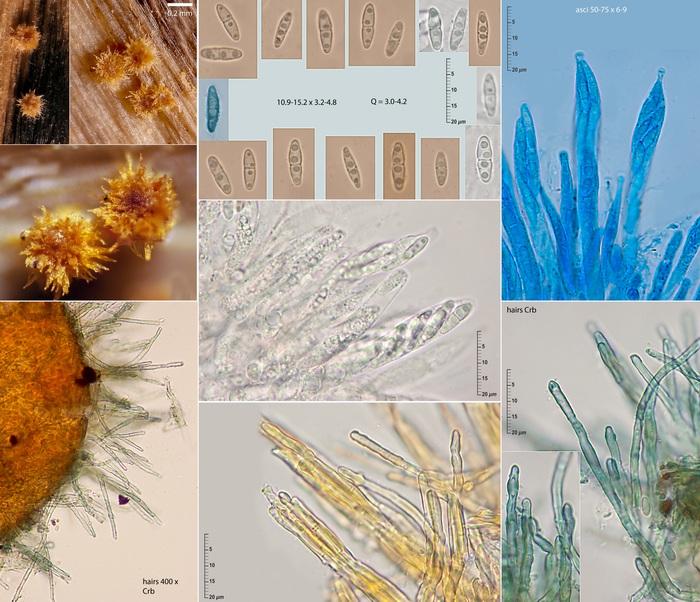
there are two possible genera: Lasionectria or Ijuhya. Hairs of Lasionectria arise from cells of the wall while the hairs of Ijuhya occur from the base of ascomata agglutinated to form teeth, arranged in a stellate fringe around upper margin of perithecia.
I attach two keys of these genera, maybe they will help you.
Regards,
Christian
So I need to cut it. Well, I'll try it but I don't know if I'm to be able with so small ascomata.
Thanks Christian!
Hi Christian
Might you do a better idea with these pics?
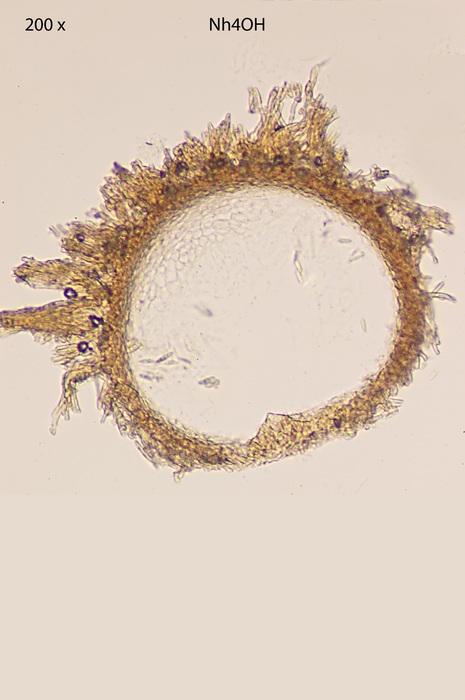
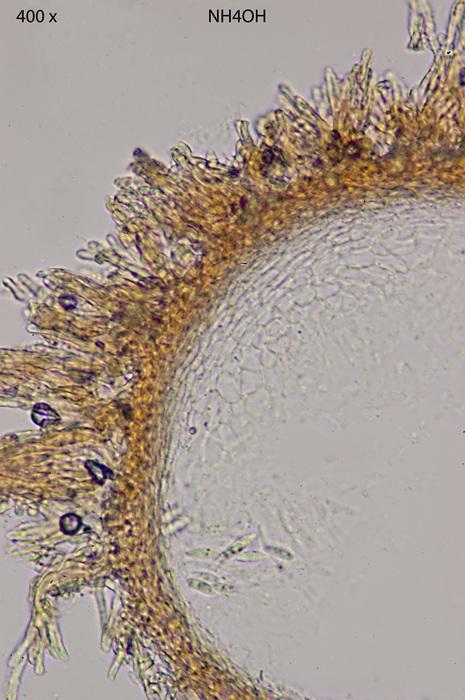
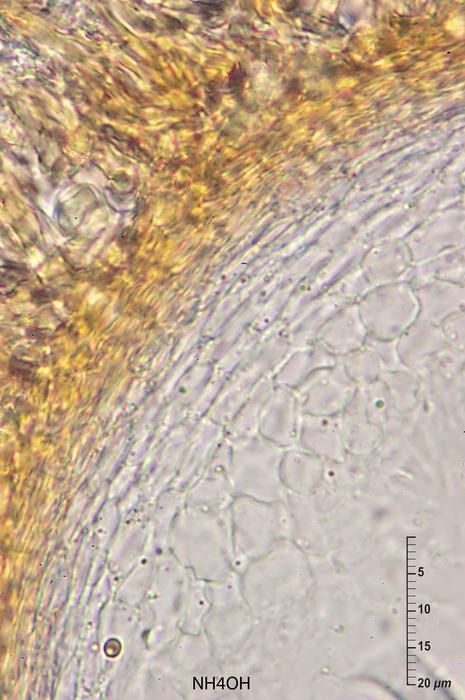
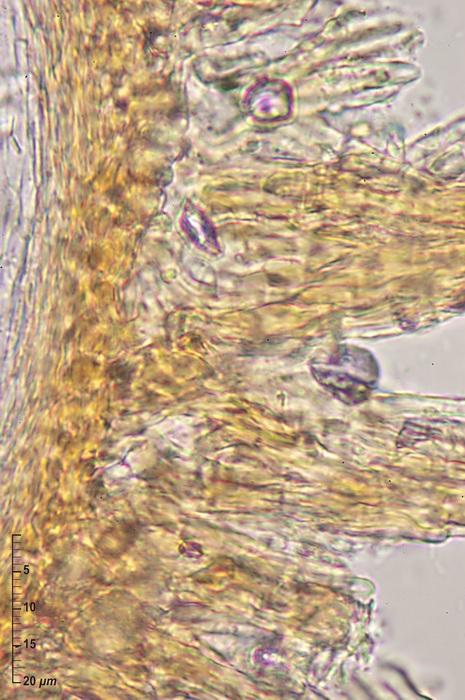
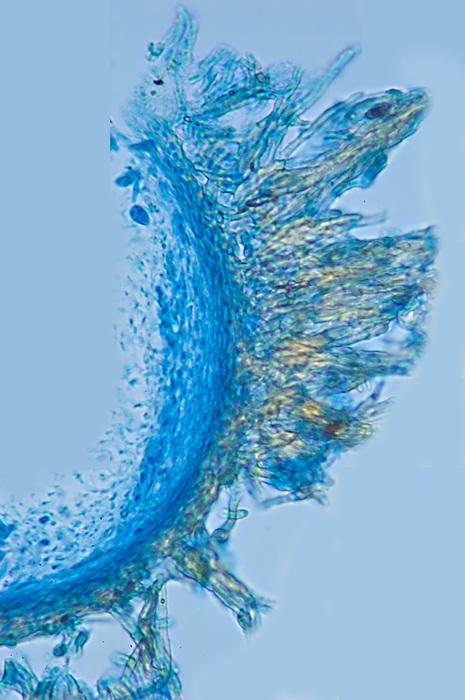
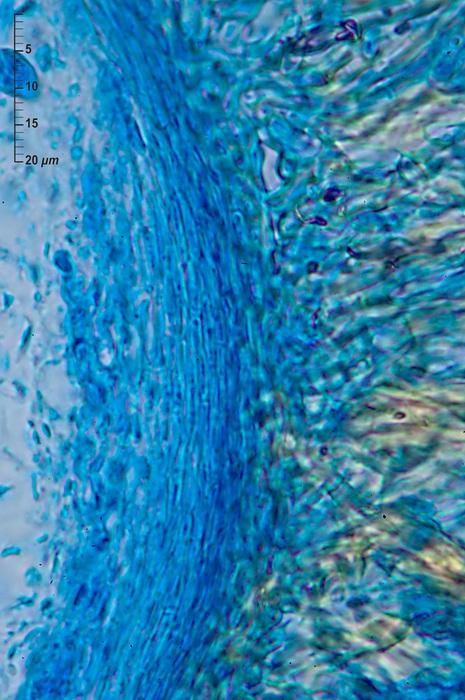
It would be great if you could send me a part of your collection.
Christian
Excuse me, Christian. I wanted to say Ijuhya...
Yes I'll send you my material. Remember that I think the ascospore are ver finely striate.