
16-03-2011 14:31
roman vargas albertoHi. I would like some opinion about this Peziza
14-05-2026 05:36
Ethan CrensonHi all, I haven't paid much attention to Lachnu
10-05-2026 23:17
 Andreas Gminder
Hello,today we found in a moist steep decidous for
11-05-2026 12:32
 Bernard CLESSE
Pourriez-vous m'aider à identifier cette héloti
13-05-2026 15:26
 François Freléchoux
Bonjour,Voici une récolte faite il y a quelques j
12-05-2026 15:41
 Nicolas VAN VOOREN
Dear Ascolovers, especially interested in Pezizale
13-05-2026 12:05
 Thierry Blondelle
Bonjour à tous,J'aimerais avoir confirmation de c
28-04-2026 20:07
 Lothar Krieglsteiner
... on twig in the air at standing Ceratonia siliq
27-04-2026 20:52
Lothar Krieglsteiner
Found on hanging tiwg of Olea europaea in dried-ou
11-05-2026 20:22
Lothar Krieglsteiner
on attached twig of standing Ficus caricaquite uns
 Hello all,
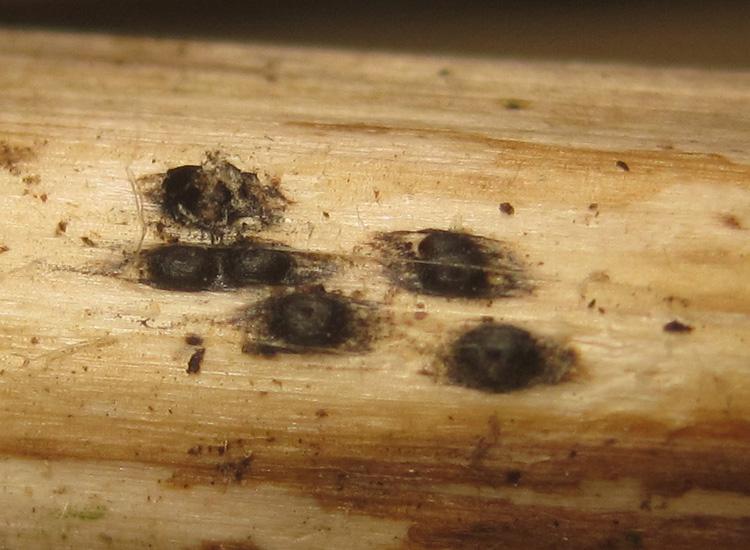
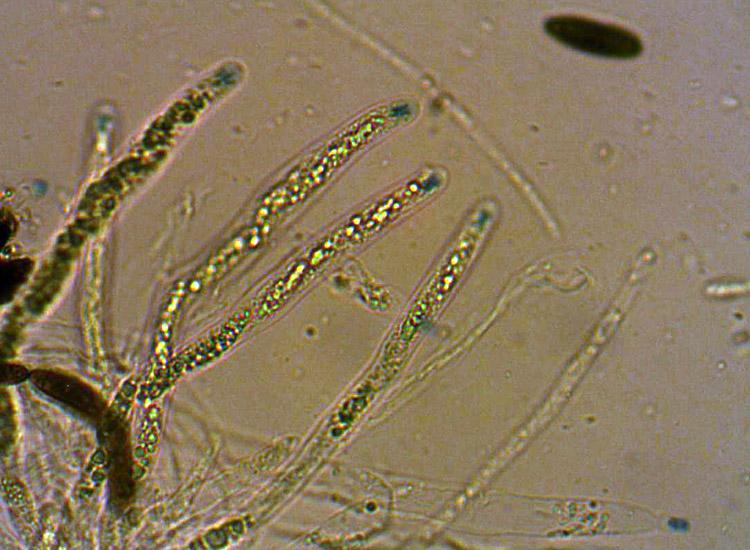
 This was found on a dead Eupatorium stem and the closest I can come is possibly Clypeosphaeria mamillana, though in Ellis that is given for twigs of Acer, Cornus and Quercus. Perithecia initially immersed.
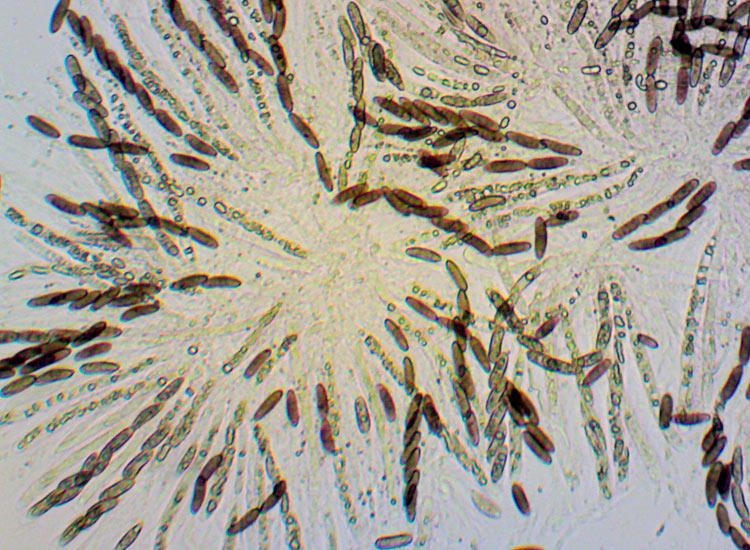
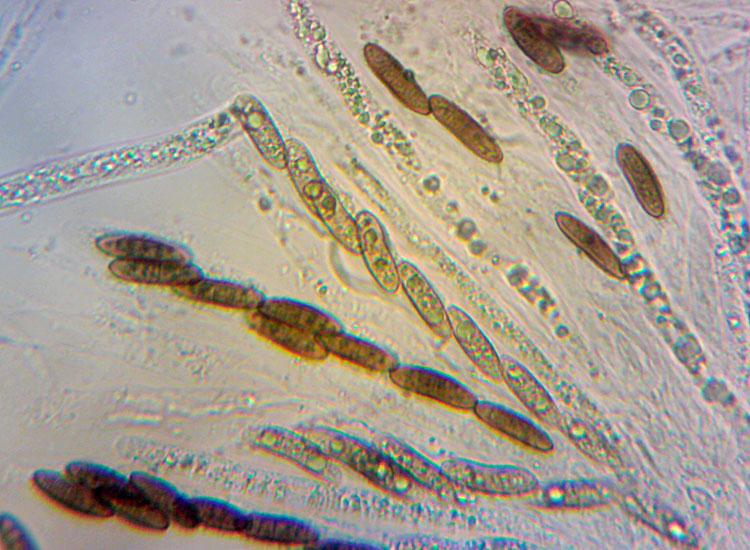
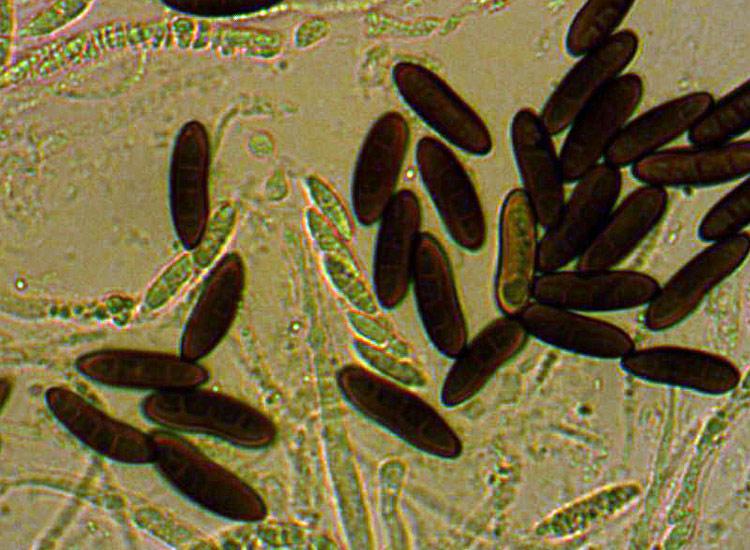
Spores becoming brown and faintly 3-septate, 20-24 x 6(-7) µm.Asci tips immediately blue in Lugols. (Is it correct to describe that as IKI+blue, euamyloid?) I tried adding KOH but wasn;t very successful ....
With regards,
Jenny

Hi Jenny,
Yes it is, I think.
It has already been seen on Rubus, Rosa, Lonicera... why not Eupatorium ?
Alain

Cordialement
Chris