
01-05-2026 22:45
 Thierry Blondelle
Bonjour à tous, Une récolte sur bouse séchée d
28-04-2026 20:07
 Lothar Krieglsteiner
... on twig in the air at standing Ceratonia siliq
14-04-2026 05:32
Ethan CrensonHi all, A few weeks back a friend pointed out som
28-04-2026 20:33
Vitus SchäfftleinHello, I found Trochila ilicina on Ilex aquifoliu

30-04-2026 10:28
Rot BojanHello, by appearance I would say that I am dealing
27-04-2026 18:48
Tony MoverleyCollected 23rd April 2026, Norfolk, EnglandSwarms
27-04-2026 20:52
Lothar Krieglsteiner
Found on hanging tiwg of Olea europaea in dried-ou
28-04-2026 22:51
 Bernard CLESSE
Bonsoir à toutes et tous,Pourriez-vous m'aider à
29-04-2026 08:01
Lothar Krieglsteiner
... on twig attached to small tree of Citrus auran

Dear friends,
here is another collection from Ethiopian mountain rain forest.
I think it is Cookeina colensoi, especially as the shape and size of the spores don't leave much alternatives,or does it?
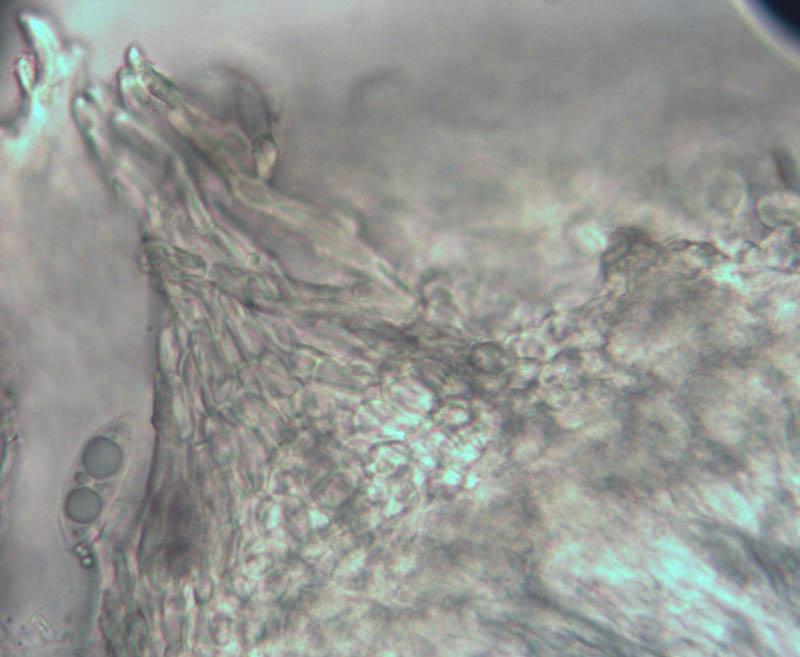
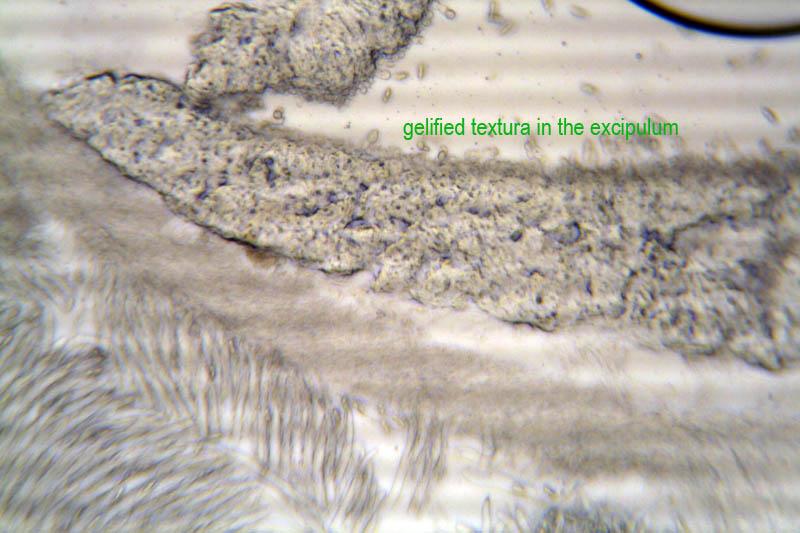
The apothecia are approx. 1-1,5 cm in diameter, centrally stipitate by a short and thin, but well develloped stipe. The stipelength is approx. half of the cup diameter. Hymenium color is alutaceous, comparable to the hymenium of Tarzetta. The exterior is paler, nearly whitish. The margin is finely crenulate to fimbriate.
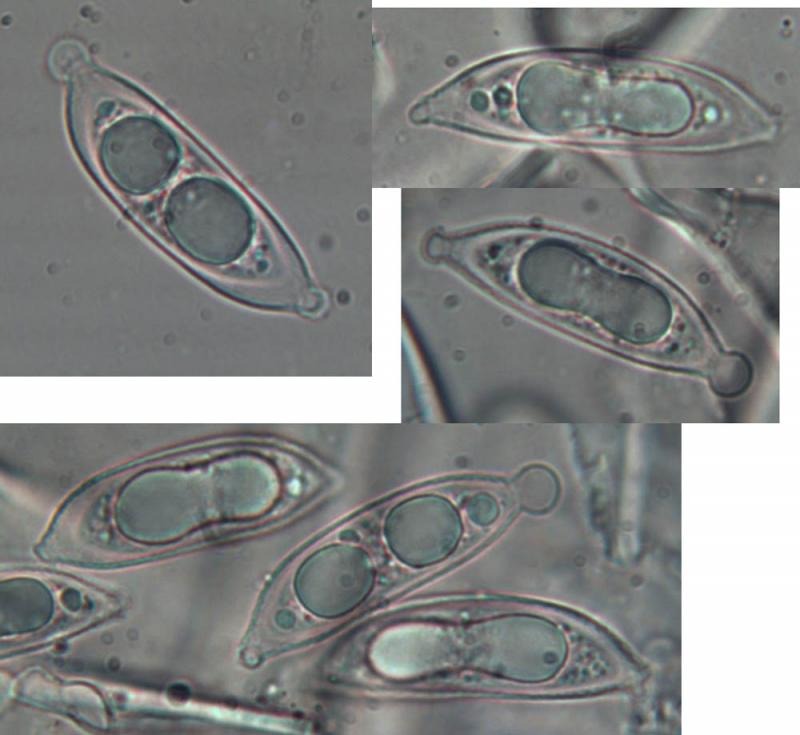
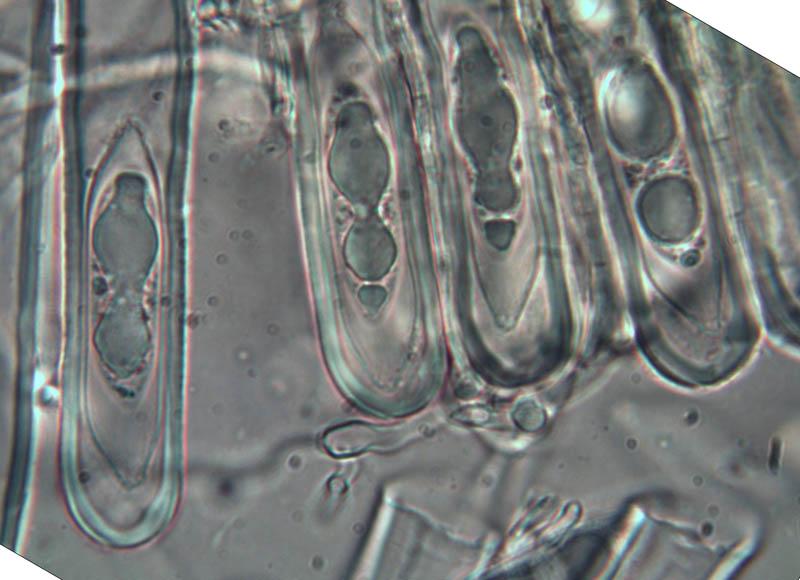
Spores are somewhat fusoid, not symetrical, 33-42 x 10-12 µm, smooth, and with knob-like protrudings at each spore end. These protruding can grow up to 2-3 µm in diameter. It seems that they devellop with spore maturity and may be they are a kind of germination of the spore?
Has someone experience with Cookeina colensoi and can confirm the determination (or cancel it ....)
I have the paper of Moravec, where SEM fotos of the spores are illustrated, showing them as being finely rugulose. I couldn't observe this in my material in light microscope.
best regards,
Andreas

i think this is the best choice! but i would exlude possible striation in cotton-blue because of p. venezuelae, which has also long, narrow spores with apiculi.
best
dirk