
22-04-2026 20:54
 Enrique Rubio
Hi to everybody.This Pyrenopeziza grew in moist le
24-04-2026 03:16
 David Chapados
Found while looking at something else from wood in
22-04-2026 20:17
 Marian Jagers
Is anyone familiar with the Hyphomycetes genus Pse

22-04-2026 01:06
 Richard VALERI
Bonjour à tous.Je vous présente cette Nectria s.
21-04-2026 13:36
Gernot FriebesHi,I am out of ideas for this one. I collected Sal
21-04-2026 13:19
Gernot FriebesHi,this Lophodermium on Typha has ascospores measu
Lamprospora maireana 261214 01
Miguel Ángel Ribes,
19-02-2015 14:16
 I have this semiglobose-turbinate Lamprospora, in a nude soil with some mosses, in an area without vegetation inside a chestnut forest (Castanea) in La Gomera island (Canary Islands). I think it has a very characteristic spores, but I have never seen it before.
Asci octosporic, with croziers, (291.7) 303.1 - 366.7 (380.5) x (22.7) 23.3 - 30.5 (31.8) µm; N = 14; Me = 328.0 x 27.7 µm.
Spores globose with a big guttule and ornamented with big warts, shaped like a flower petals, (20.9) 21.6 - 23.7 (24.6) x (20.8) 21.2 - 23.2 (24.5) µm; Q = 1.0 (1.1); N = 84; Me = 22.6 x 22.1 µm ; Qe = 1.0
Is it necessary some more data to confirm it?
Thank you.
Miguel Á. Ribes.
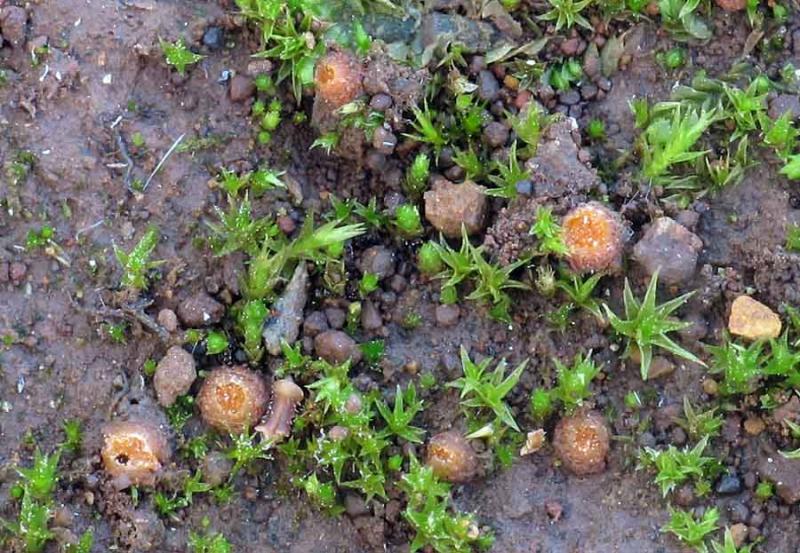
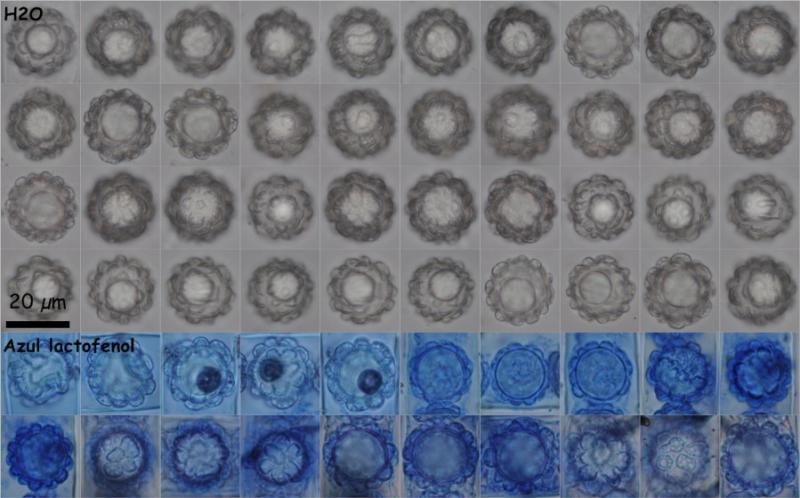
Jan Eckstein,
19-02-2015 15:04
Re : Lamprospora maireana 261214 01
Dear Miguel,
indeed, it is Lamprospora maireana. The large tubercles with internal cavities are unique. Interestingly, this species is associated with the moss Archidium alternifolium in central and northern Europe. In southern Europe it is mostly found near the hepatic Fossombronia whereas the parasitic relationship to Fossombronia could not be established so far. There is no Archidium on your first image but in the upper middle could be a Fossombronia.
with best wishes
Jan
indeed, it is Lamprospora maireana. The large tubercles with internal cavities are unique. Interestingly, this species is associated with the moss Archidium alternifolium in central and northern Europe. In southern Europe it is mostly found near the hepatic Fossombronia whereas the parasitic relationship to Fossombronia could not be established so far. There is no Archidium on your first image but in the upper middle could be a Fossombronia.
with best wishes
Jan
Miguel Ángel Ribes,
19-02-2015 15:45
Re : Lamprospora maireana 261214 01
Thank you Jan, very interesting.
Attached another picture, with all the mosses around.
Cheers.
Attached another picture, with all the mosses around.
Cheers.
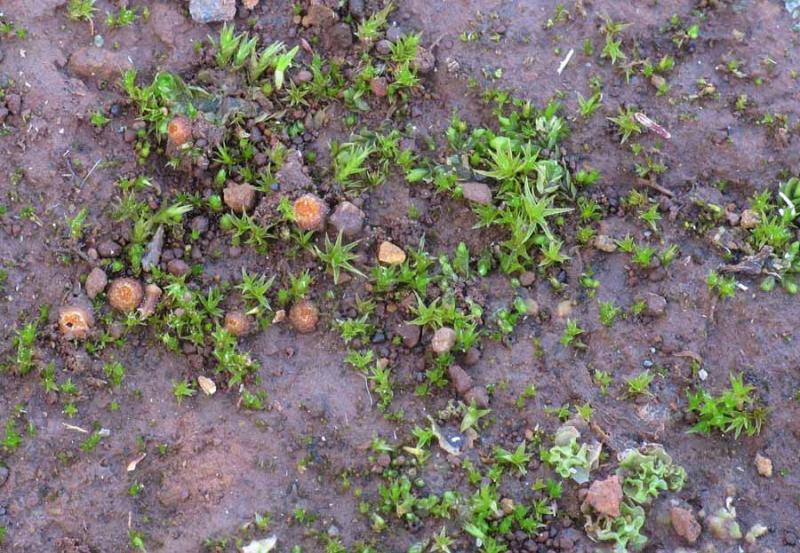
Javier Ormad,
19-02-2015 16:58

Re : Lamprospora maireana 261214 01
Bonito hallazgo.
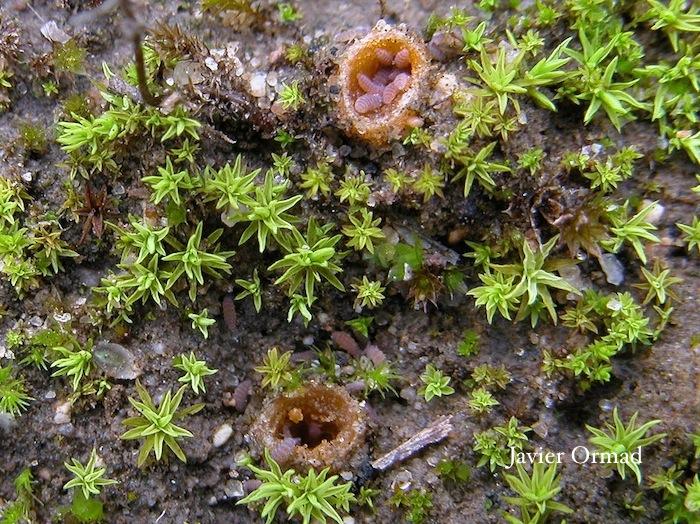
Por aquí también la tenemos asociada a Fossombronia y también a algún colémbolo, jeje
Saludos
Por aquí también la tenemos asociada a Fossombronia y también a algún colémbolo, jeje
Saludos
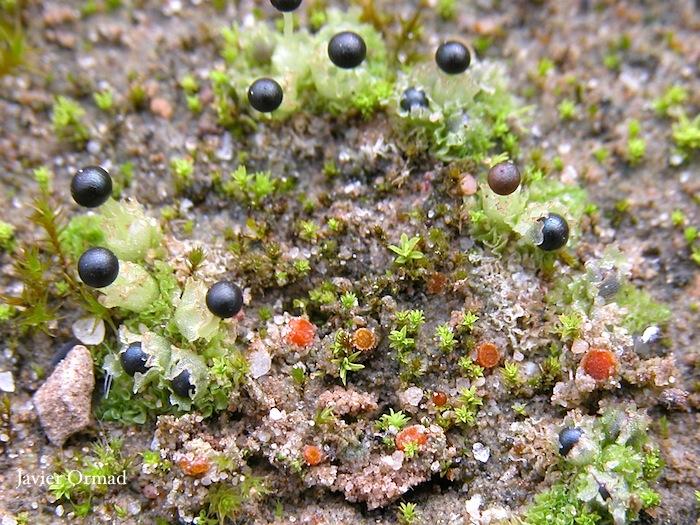
Miguel Ángel Ribes,
19-02-2015 17:17
Re : Lamprospora maireana 261214 01
Gracias Javier
¿Cuál es la Fossombronia, las que parece una lechuga con las bolitas negras o la otra?
¿Cuál es la Fossombronia, las que parece una lechuga con las bolitas negras o la otra?
Gilbert MOYNE,
19-02-2015 17:26
Re : Lamprospora maireana 261214 01
Jamais eu la chance de la rencontrer sur le terrain...
Les spores sont très typiques
Gilbert
Les spores sont très typiques
Gilbert
Javier Ormad,
19-02-2015 17:39
Re : Lamprospora maireana 261214 01
Si.
Ya comentamos entonces (hace 7 años) esa posibilidad de asociación.
Ya comentamos entonces (hace 7 años) esa posibilidad de asociación.
Marcel Vega,
19-02-2015 18:26
Re : Lamprospora maireana 261214 01
Hola Javi,
donde la has recogido?
En Portugal crece frecuentemente con Fossombronia caespitiformis (pero también con A. alternifolium). Como Jan ha escribido ya era imposible de encontrar la infección del musgo Fossombronia aunque tenemos varias colecciónes...
Saludos,
Marcel
donde la has recogido?
En Portugal crece frecuentemente con Fossombronia caespitiformis (pero también con A. alternifolium). Como Jan ha escribido ya era imposible de encontrar la infección del musgo Fossombronia aunque tenemos varias colecciónes...
Saludos,
Marcel
Javier Ormad,
19-02-2015 18:47
Re : Lamprospora maireana 261214 01
Tenemos dos zonas de recolección en la provincia de Valencia, una en la zona de Enguera y otra en La Cañada, Paterna.
Saludos
Saludos
Miguel Ángel Ribes,
19-02-2015 22:25
Re : Lamprospora maireana 261214 01
I have no idea about mosses, but I think in my second macro picture, down right, there is a Fossombronia; but the other it is not Archicium.
Only Lamprospora dicranellae is cited in Canary Islands.
Thaks to all.
Only Lamprospora dicranellae is cited in Canary Islands.
Thaks to all.