19-05-2026 10:27
Patrice TANCHAUDBonjour, récolte récente sur terre retournée i
22-05-2026 13:29
Gernot FriebesHi,I am curious to hear your opinion on this mater
04-06-2026 10:50
 François Freléchoux
Bonjour, J'ai trouvé hier un petit asco observé
04-06-2026 07:02
François Freléchoux
Bonjour, Voici la description d'une espèce qui p
04-06-2026 13:34
Gernot FriebesHi,I am interested to hear your opinion on this Le
04-06-2026 11:36
Gernot FriebesHi,found on Vaccinium myrtillus.Asci: IKI –, 8-s
18-10-2022 00:12
Valencia Lopez Francisco JavierHola amigos/asRecientemente encontré esta colecci
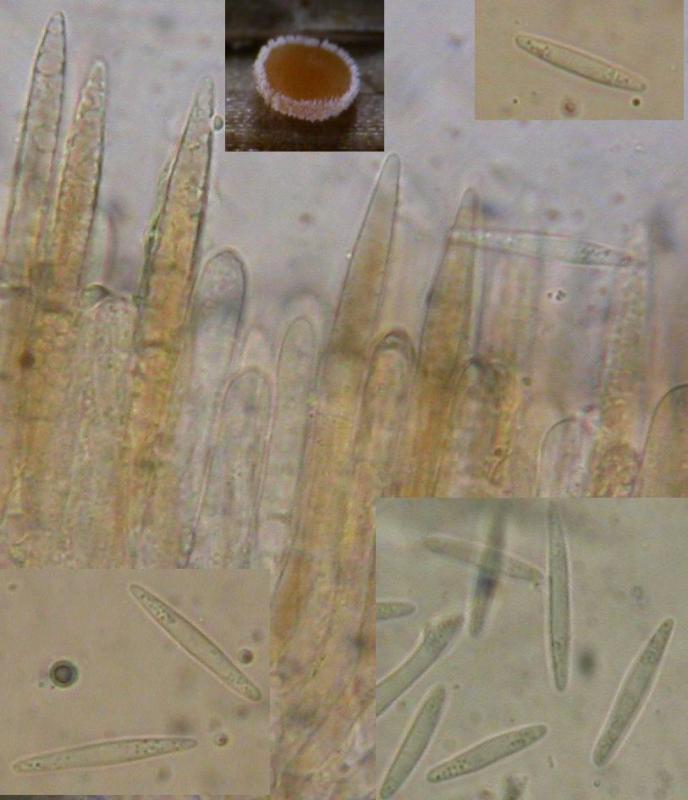
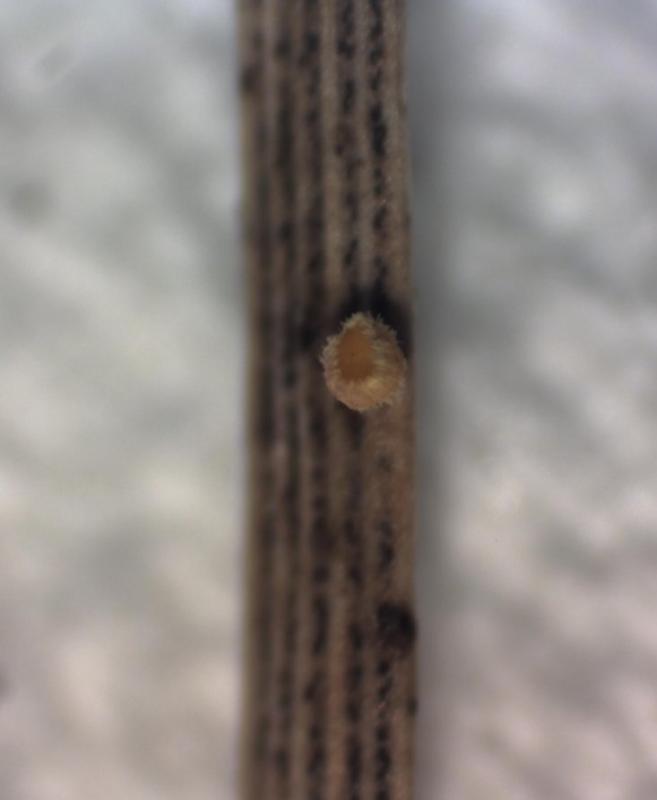
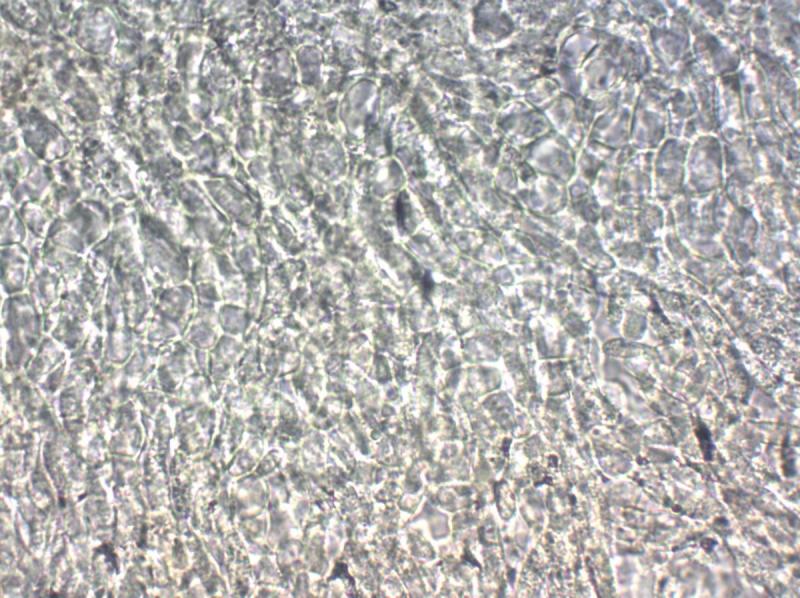
The apothecia are <350 µm diam, with an orange hymenium and a hairy white exterior; they are short-stalked (ca 150 µm). Excipulum is textura angularis.
Asci are 60-75 x 6-7 µm; IKI+ blue; apparently arising from simple septa.
Paraphyses are lanceolate; with abundant, moderately refractive, yellowish VBs; 3-4 µm wide; exceeding the asci by 15-20 µm.
Spores are 12-15(-18) x 3 µm, with 2 large OBs and occasionally a few small OBs.
Hairs are <50 x 3 µm, granular throughout, with rounded apices.
I initially thought it was L. imbecille, but the paraphyses with abundant VBs and the size of the spores seem to suggest L. juncinum. What do others think?
Marcus
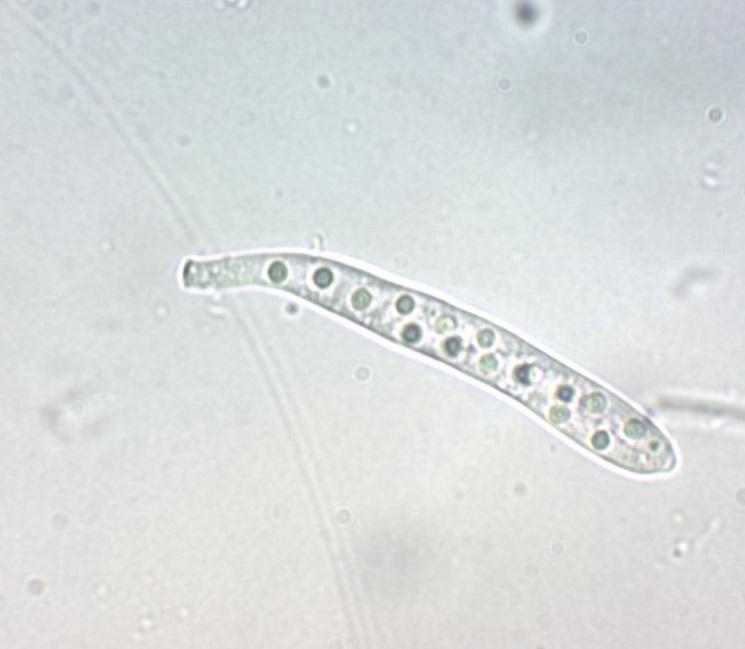
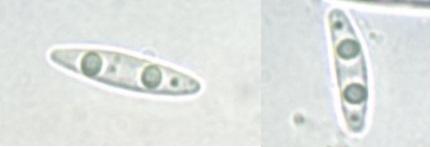
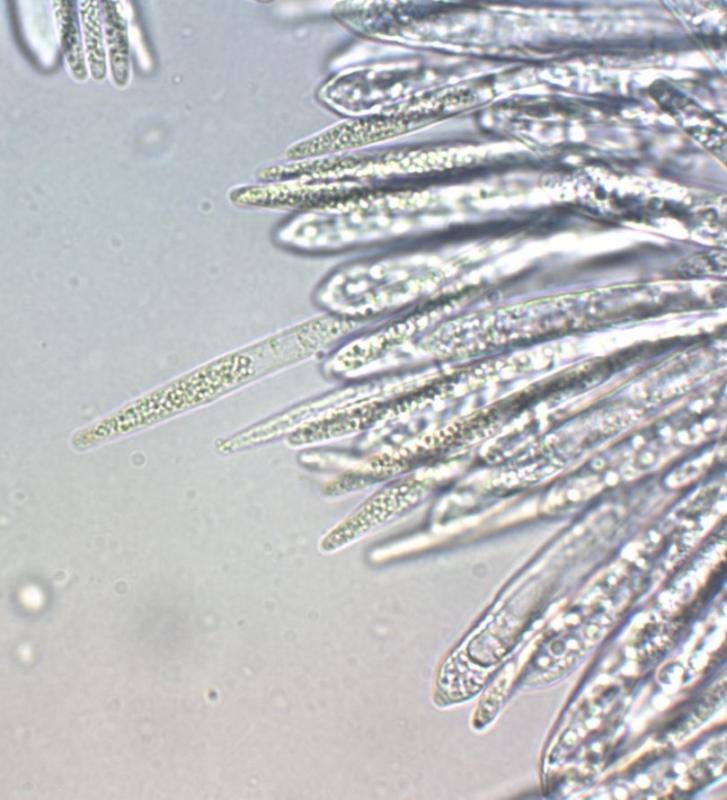
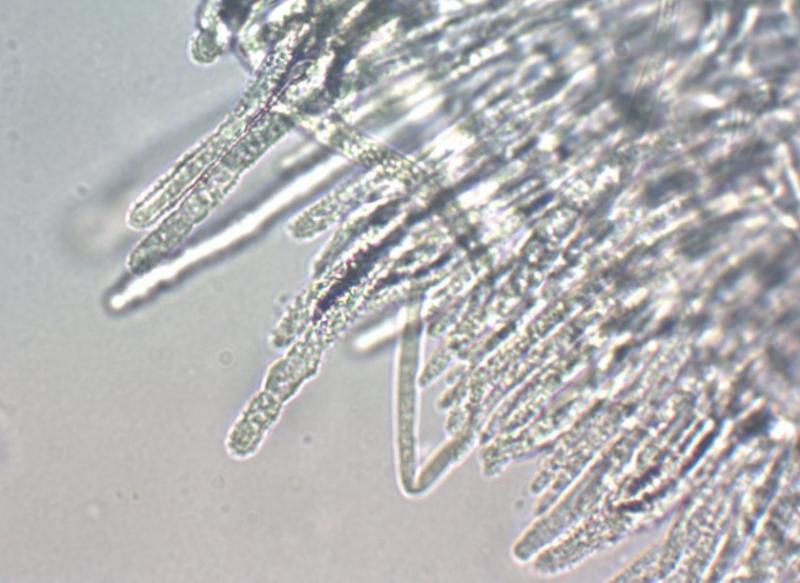

Yes, I see what you mean about the oil bodies. Most of the collections that you and others illustrate do indeed have spores with more, smaller OBs. Though some of the spores in your collection HB 9514-4a look similar to mine.
In other characters it seems to fit L. juncinum pretty well.
Marcus

Hi Marcus, and all,
The color of your apo suggests a nearly overmature fungus and the ascus shown is dead (no Pars Sporifera) , which can explain the fusion of the smaller LBs in the spores as Zotto said and the less refringent VBs in the paraphyses as in this collection from Britanny.
Amitiés
Michel
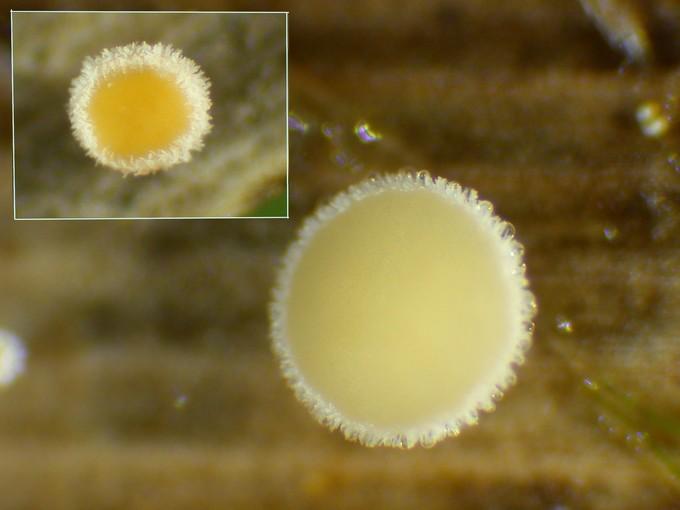
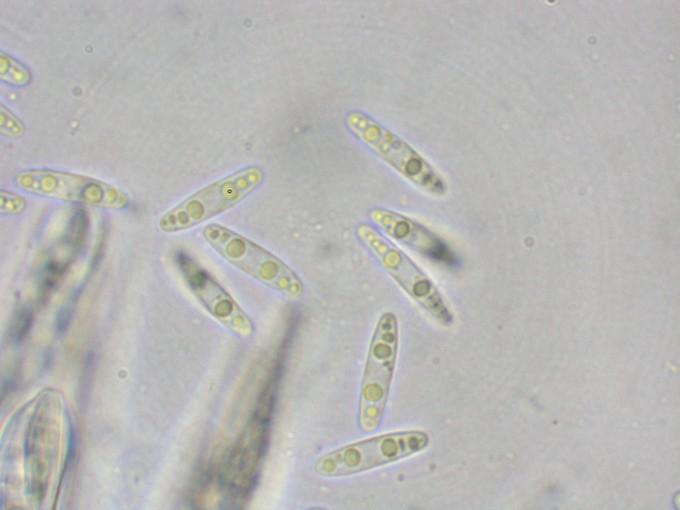
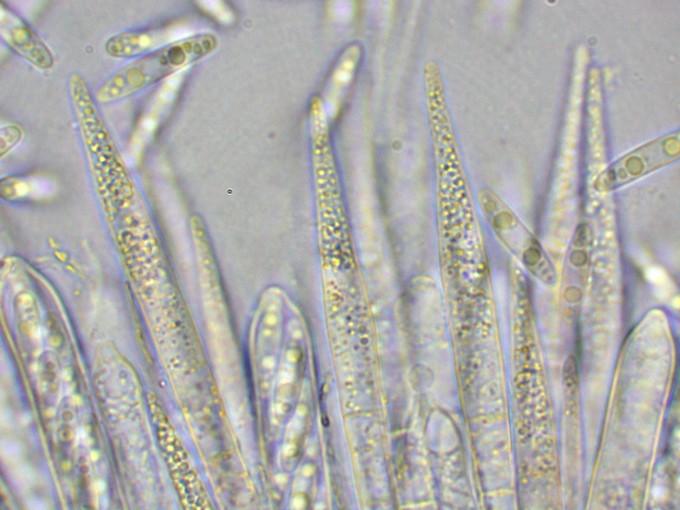
There are indeed differences among the collections. Your spore contetns look quite close to Marc's. A problem is also Nina's finds with croziers. And what about those with yellow disc and yellow VBs in the paraphyses?
Zotto
Zotto & Michel
Thanks for your advice.
I examined two apothecia and my notes indicate that the spores were fairly constant in terms of their guttulation.
I notice that Lachnum juncinum was originally described from Australia by Brian Spooner. I wonder how the Australian material compares to collections from Europe?
Marcus
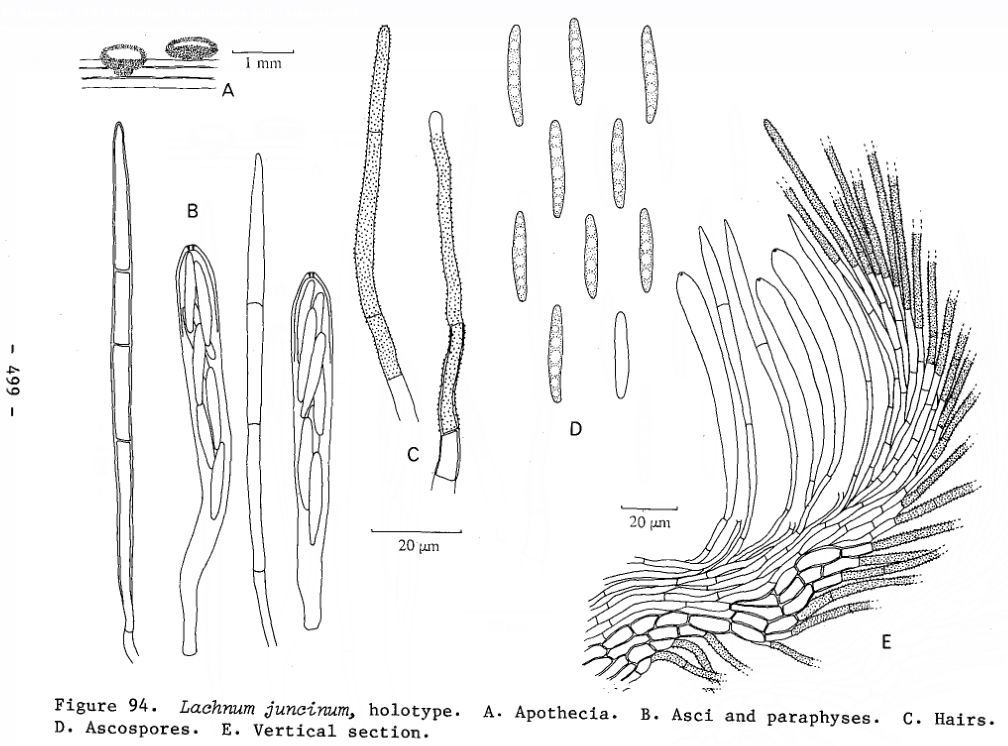 Lachnum-juncinum-Spooner-1987-1-0001.jpg
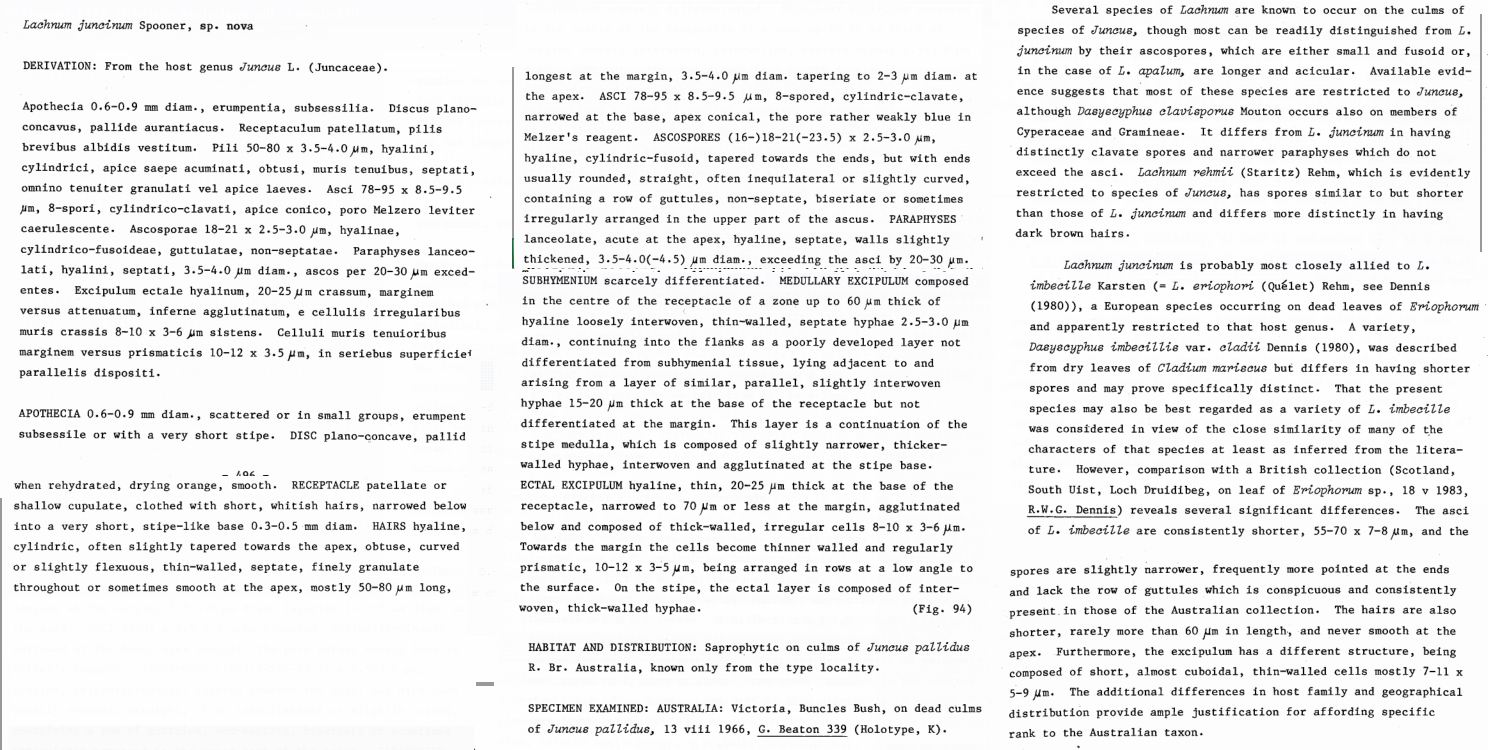 Lachnum-juncinum-Spooner-1987-2-0001.jpg
Apothecia have an orange hymenium and white hairy exterior. They are ca 200 µm diam, with a stalk ca 150 µm.
The excipulum is a textura angularis/prismatica.
Asci are 55-80 x 5-6 µm, arising from simple septa.
Spores are fusiform, 13-17(19) x 2-3 µm, with 2-3(-4) moderately large oil bodies.
Paraphyses are lanceolate, shortly exceeding asci, 4-5 µm wide, septate, with abundant small VBs.
Hairs are
I'm sure that both of my collections would have been named Dasyscyphus imbecillis (Lachnum imbecille) using standard British floras; the collection on Cladium would perhaps have been referred to var. cladii. However, based on Zotto's images and key I'm reasonably confident that both collections are L. juncinum, although the spores have relatively few OBs compared to most of the images provided by Zotto and others.
I wonder how many previous records of L. imbecille from Britain are actually L. juncinum?
Marcus
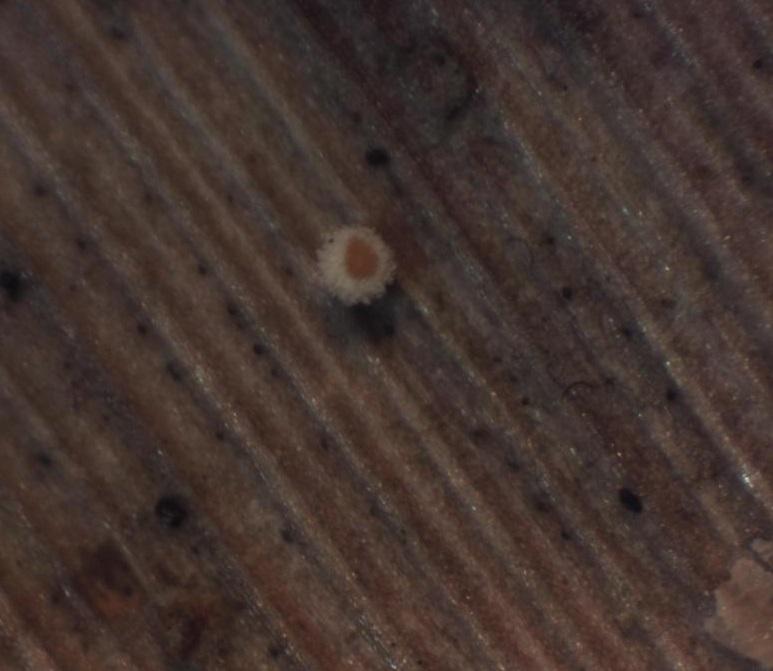
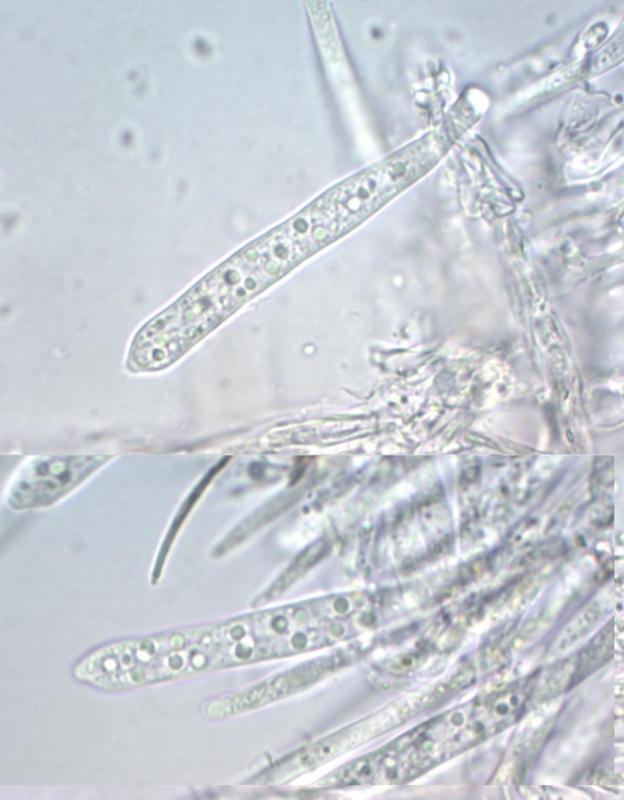
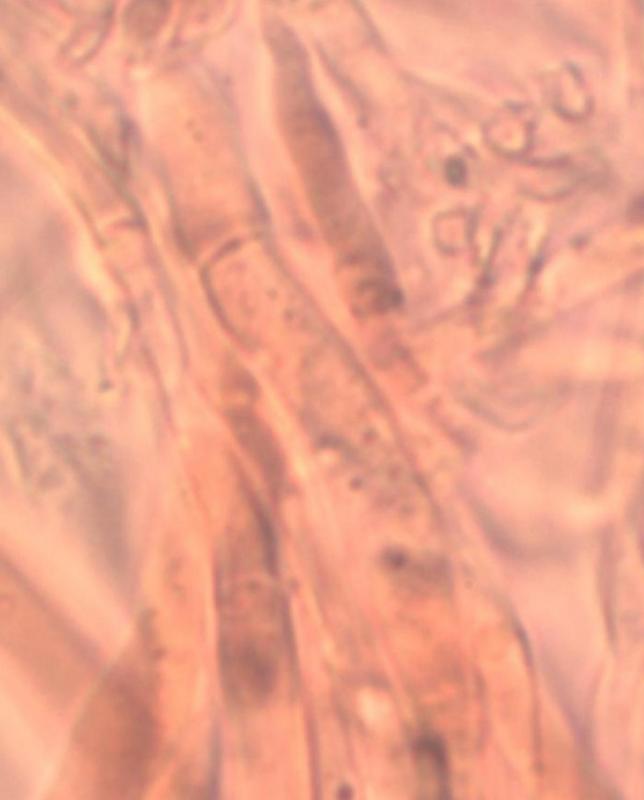
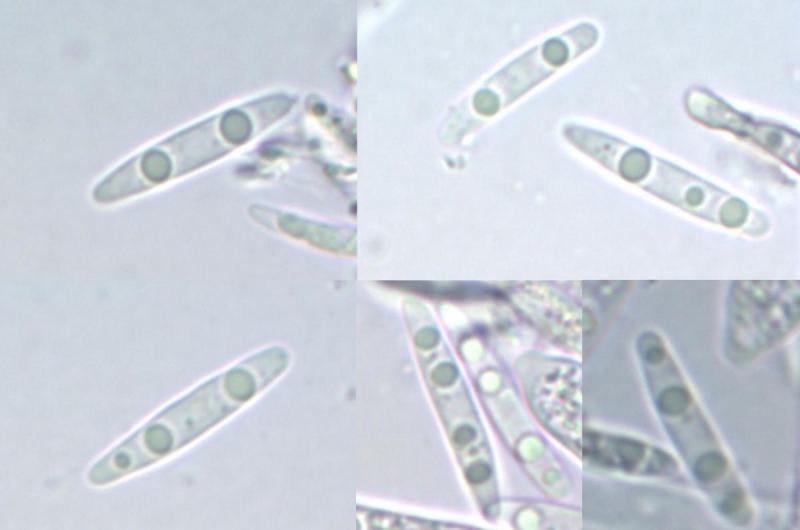
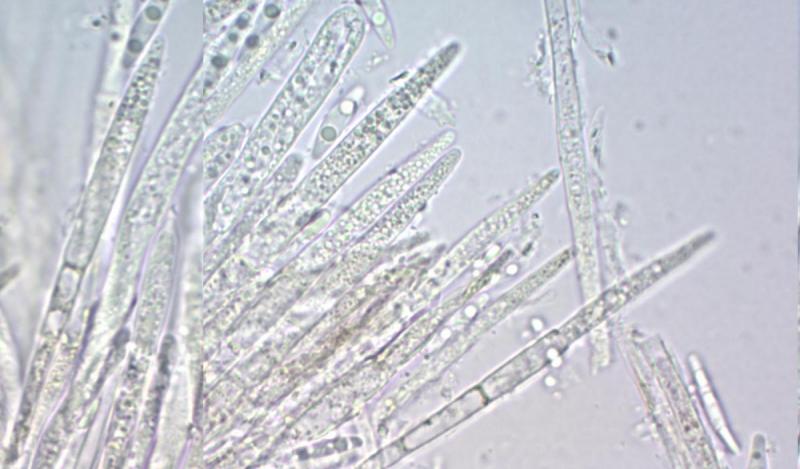
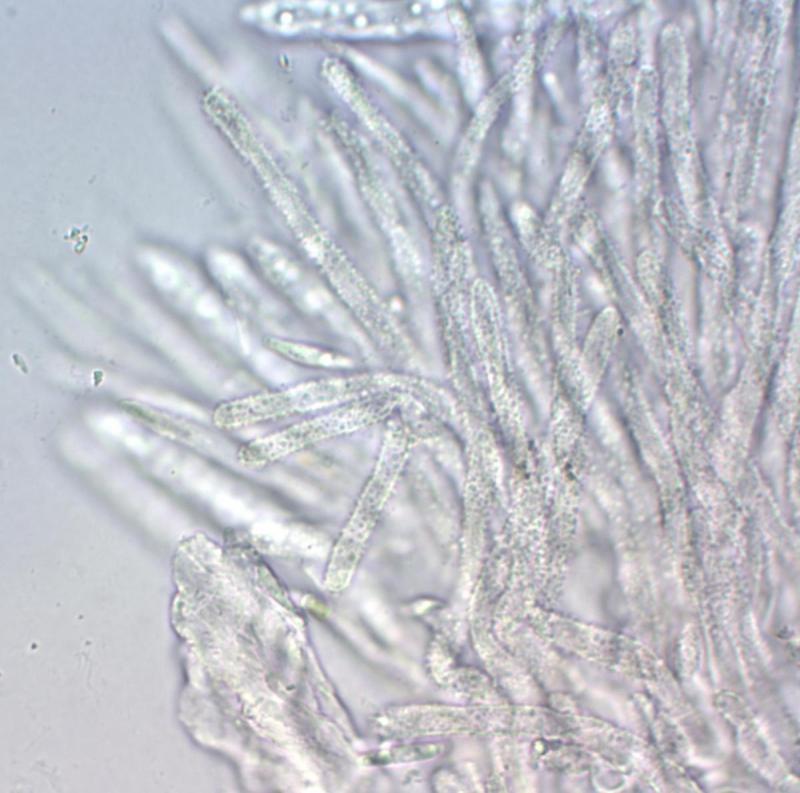
The two big LBs in your spores are possibly somewhat secondary, it looks so to me. This is always difficult if the material is not in optimum vital state.
Zotto