
20-04-2026 22:00
 Malcolm Greaves
These pale yellow, hairy ascos were growing on cul
19-04-2026 21:23
Steve ClementsBonjour, I found this anamorphic fungus on old pl
19-04-2026 20:46
Steve Clements1 mm diameter approx spherical conidiophores on pl
12-04-2026 17:56
 Hardware Tony
Found on dead stems in February earlier this year
17-04-2026 19:16
 Enrique Rubio
Hi to everybodyI would appreciate any assistance r
14-04-2026 05:32
Ethan CrensonHi all, A few weeks back a friend pointed out som
17-04-2026 15:14
 Bruno Coué
Bonjour.Récoltes du 16/04/2026, sur feuilles mort
12-04-2026 15:52
Gernot FriebesHi,I'm looking for help with this anamorph collect
14-04-2026 21:52
Gernot FriebesHi,found on dead leaves of Carex elata. Conidia: 4
16-04-2026 22:09
Buckwheat PeteHello, I'd like to ask about this older specimen:
Gibellula arachnophila f pleiopus?
Miguel Ángel Ribes,
13-02-2014 00:42
 Hi again
I think this is more interesting.
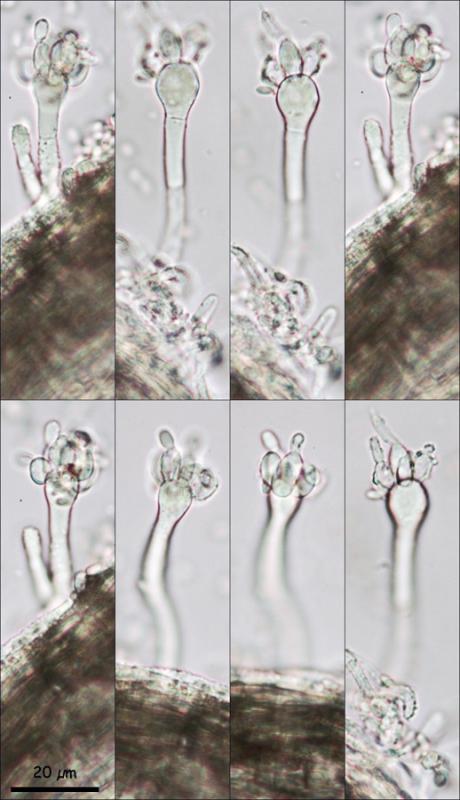
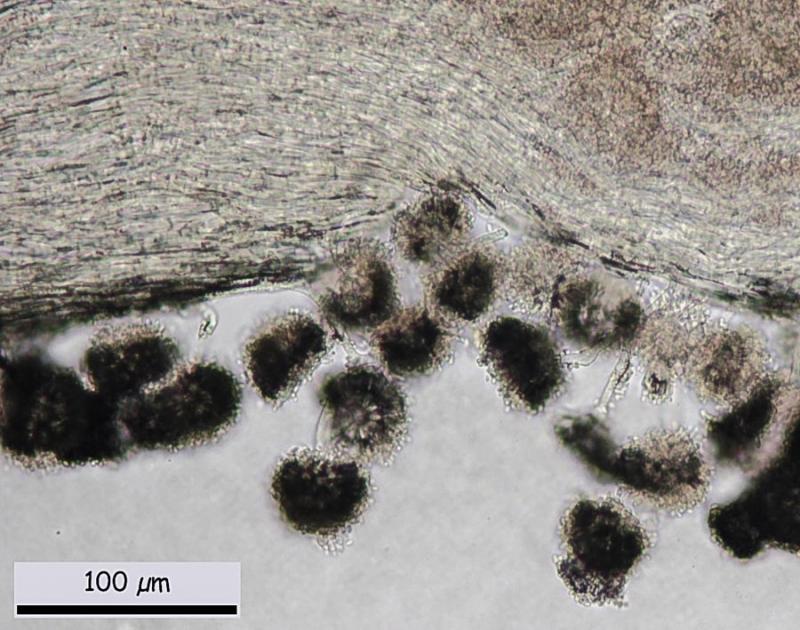
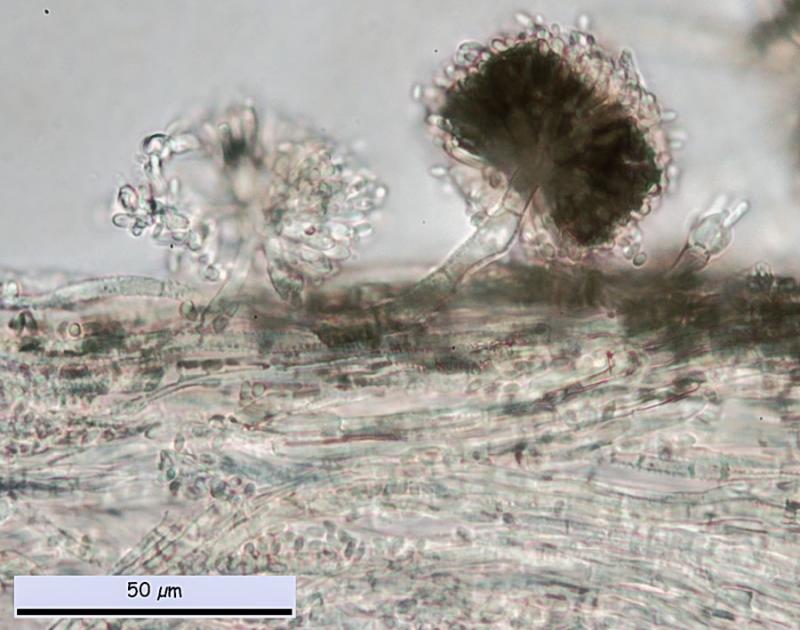
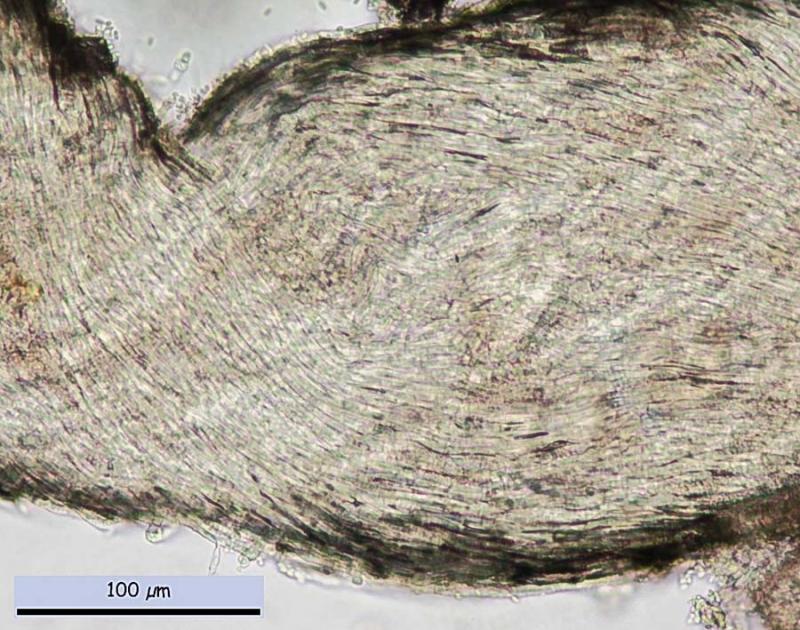
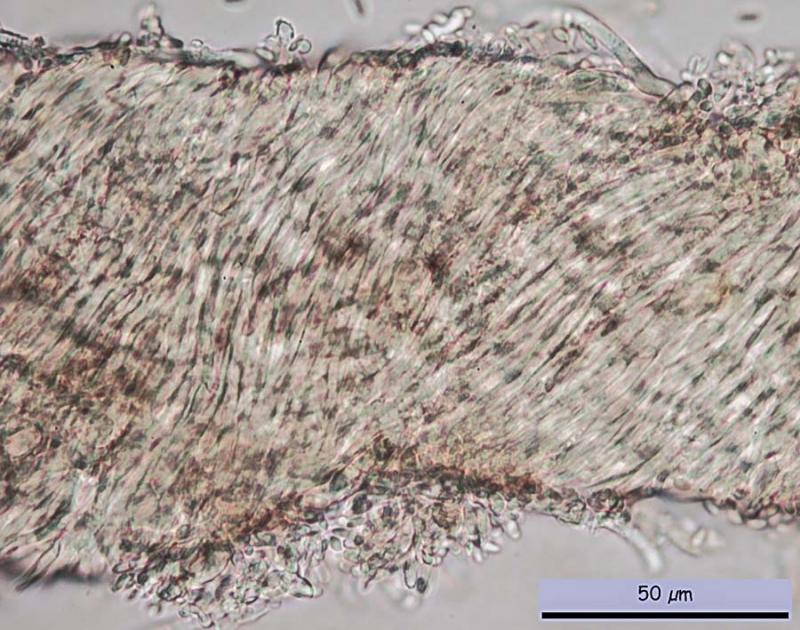
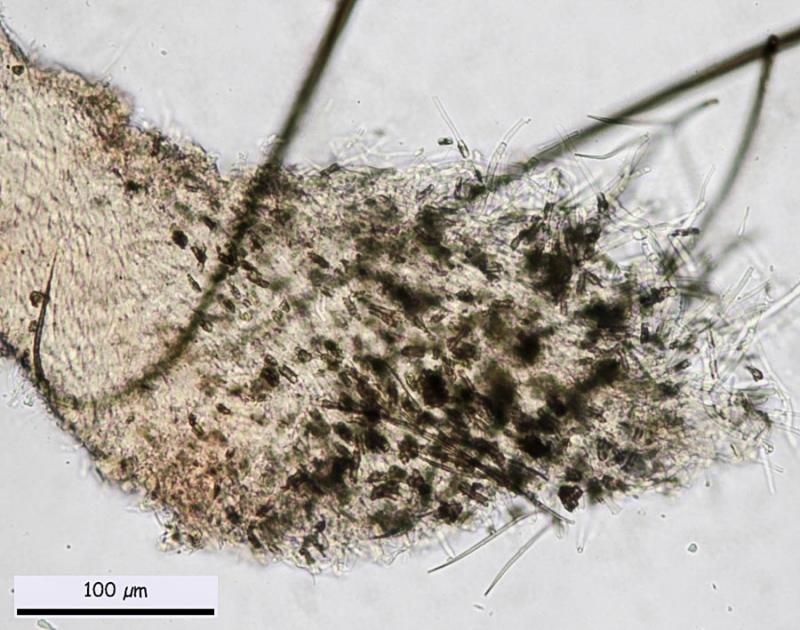
On a spider, 2,5-3 mm tall, light pink synemmata.
Conidiospores:
(3.48) 3.87 - 4.52 (4.98) x (1.65) 1.89 - 2.20 (2.41) µm
Q = (1.61) 1.86 - 2.30 (2.58) ; N = 46
Me = 4.18 x 2.03 µm ; Qe = 2.07
Thanks in advance
Miguel Á. Ribes
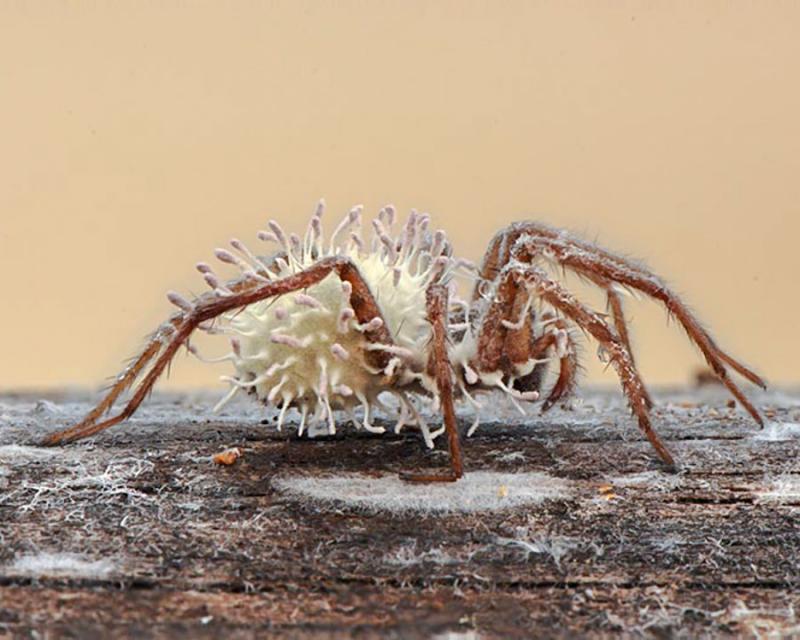
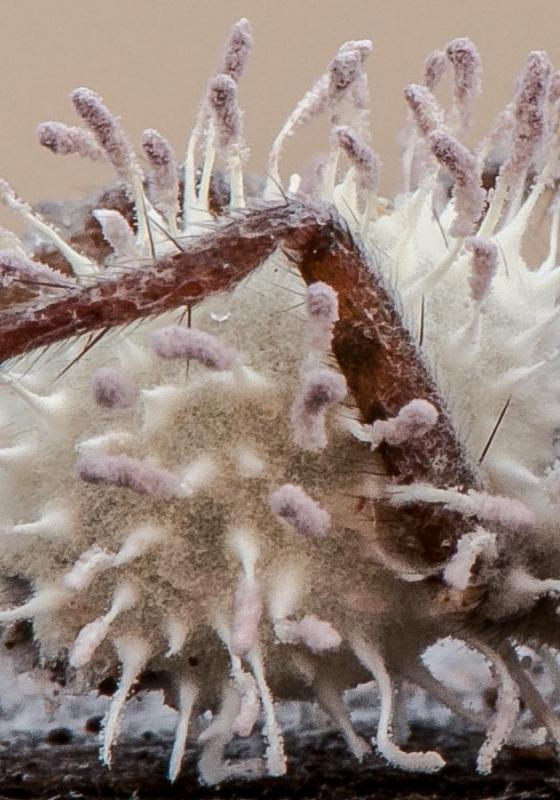
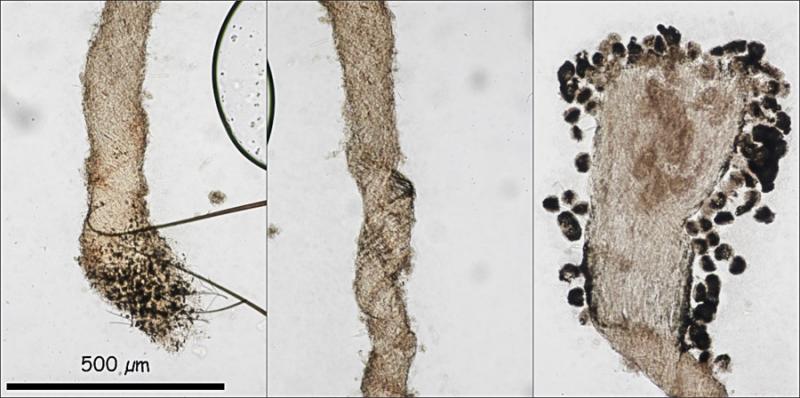
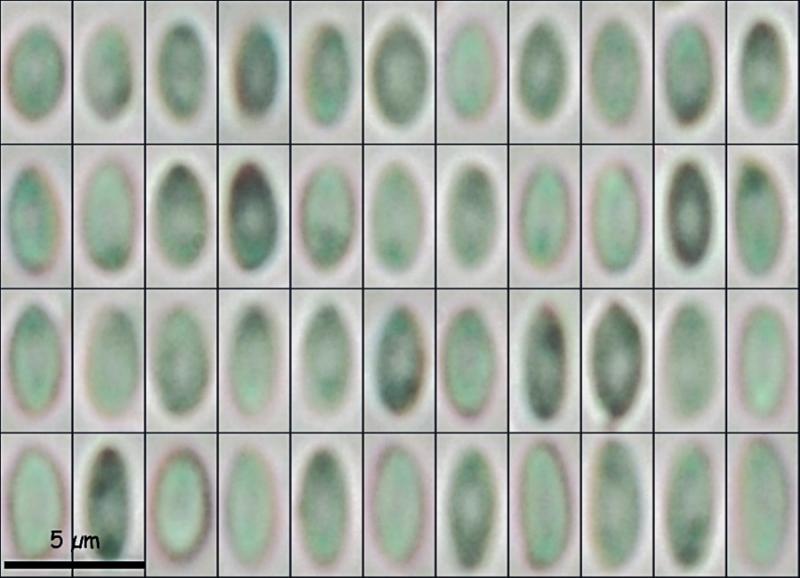
Nicolas VAN VOOREN,
13-02-2014 07:35

Re : Gibellula arachnophila f pleiopus?
Hi Miguel.
I think your collection matches Gibellula pulchra. The conidiophores of G. leiopus are very short and the conidia are a little bit more longer (4-5 µm).
I'm going to send to you a paper of A. Kubátová about G. leiopus.
I think your collection matches Gibellula pulchra. The conidiophores of G. leiopus are very short and the conidia are a little bit more longer (4-5 µm).
I'm going to send to you a paper of A. Kubátová about G. leiopus.
Miguel Ángel Ribes,
13-02-2014 09:17
Re : Gibellula arachnophila f pleiopus?
Hi Nicolas
It looks like G. pulchra, more than G. leiopus, but I am not capable to distinguish both species . I have found more papers and pictures about G. pulchra in the internet, wich requires a more careful reading.
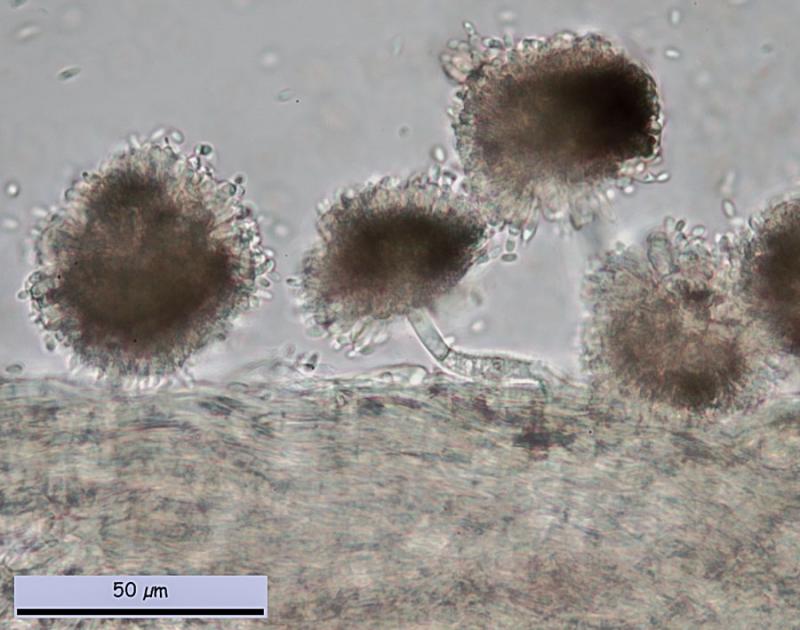
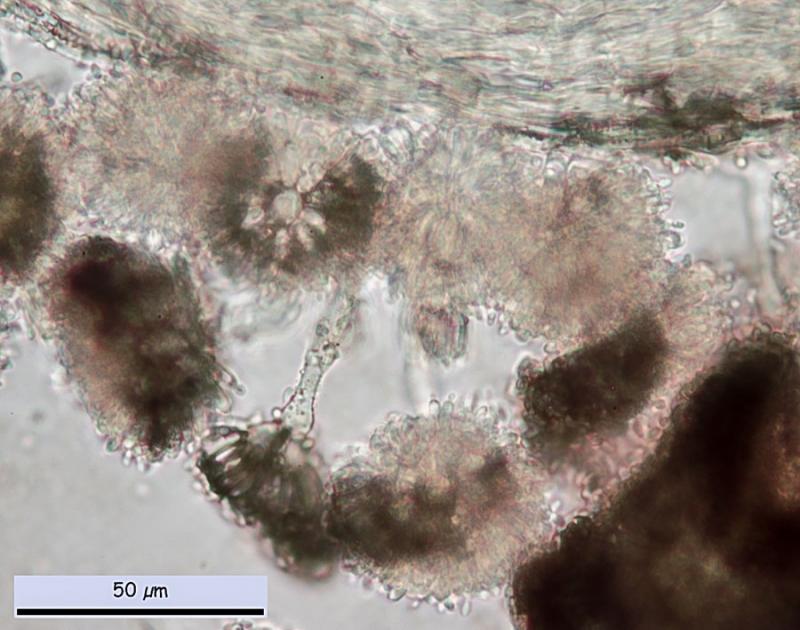
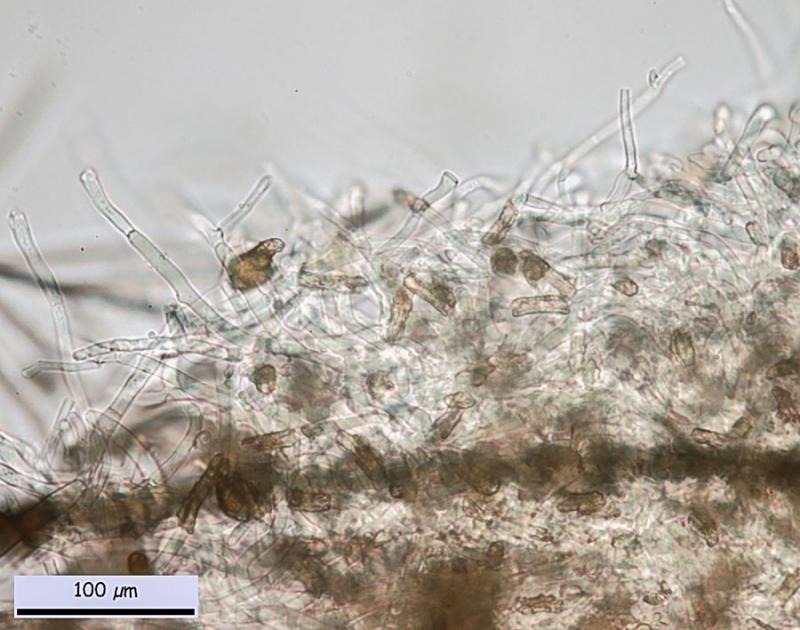
But, what is the picture nº 5, which was present mainly in the stem, while conidiophores (pictures 6-9) where present mainly in the cap?
Thanks about the paper.
Miguel Á. Ribes
It looks like G. pulchra, more than G. leiopus, but I am not capable to distinguish both species . I have found more papers and pictures about G. pulchra in the internet, wich requires a more careful reading.
But, what is the picture nº 5, which was present mainly in the stem, while conidiophores (pictures 6-9) where present mainly in the cap?
Thanks about the paper.
Miguel Á. Ribes
Nicolas VAN VOOREN,
13-02-2014 15:08
Re : Gibellula arachnophila f pleiopus?
Conidiophores can be present on the stem, this is what is shown on the 5th picture.
Miguel Ángel Ribes,
13-02-2014 22:12
Re : Gibellula arachnophila f pleiopus?
Ooops, I thought conidiophores were pictures 6-9 ( like in G. pulchra), and picture 5 are ¿? another type of conidiophores, more similar to G. pleiopus ones.