
24-03-2026 21:37
Elisabeth StöckliBonsoir,Sur bois (tronc) très pourri de conifère
25-03-2026 10:35
Hulda Caroline HolteHello,I collected this species growing on a dead b
26-03-2026 15:31
 Åke Widgren
Hello,I found this one in October last year, on r


25-03-2026 22:23
 Marc Detollenaere
Dear Forum,On a debarked stem of Tilia, we found s
24-03-2026 15:44
Åge OterhalsI hope someone can confirm the name of this collec
25-03-2026 20:53
François BartholomeeusenDear forum members,On 23 March 2026, I found sever
23-03-2026 20:16
 Miguel Ángel Ribes
Good eveningI'm unable to identify this Coprotus o
25-03-2026 15:06
 Bernard CLESSE
Bonjour à toutes et tous,Pourriez-vous me confirm
I would like to have your opinion to this Hyaloscypha(?) species. Could it be H. fuckelii ssp. fuckelii?
Substrate: Deciduous wood, probably Fraxinus
Macroscopic description:
Apothecia mostly 0.6-0.8 mm in diameter. Color whiteish translucent to somewhat yellowish/ochre. Margin with conspicuous hairs.
Microscopic description:
Asci 35-45 x 6-7 µm, pleurorhynch, pore amyloid. Paraphyses filiform with 2-2.5 µm diameter and sometimes slightly broder at apex. Spores variable in size and shape, mostly ellipsoid with two small drops, 6-9 x 2-2.5. Hairs straight or slightly sinuous, I measured up to 90 µm in length, basal cells slightly brownish (see photos).
Thank you for any help
Stefan
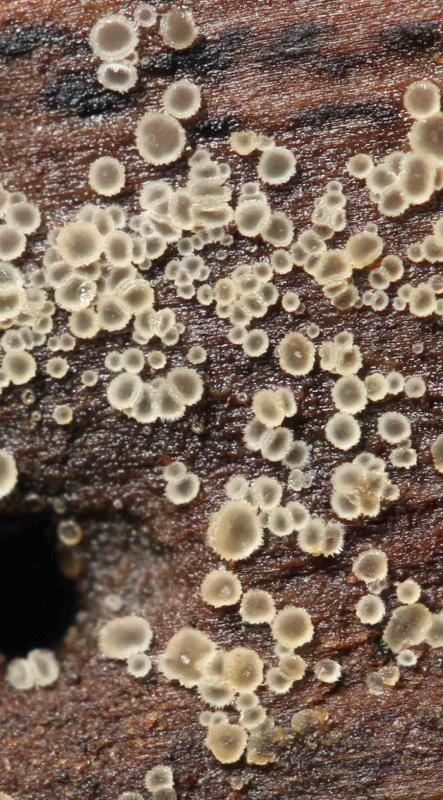
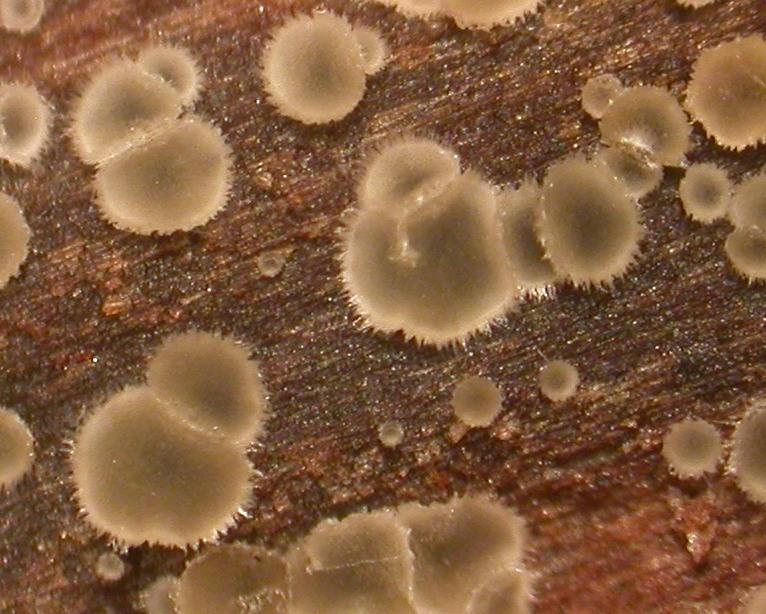
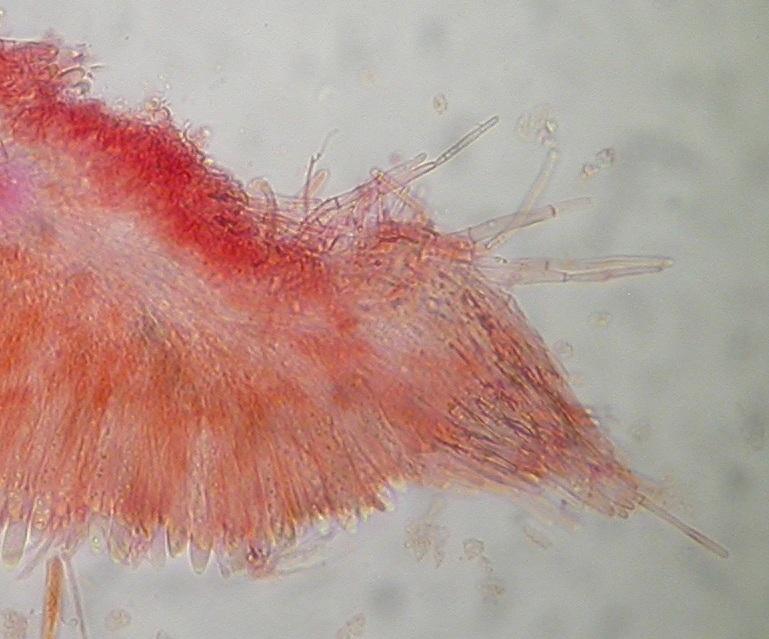
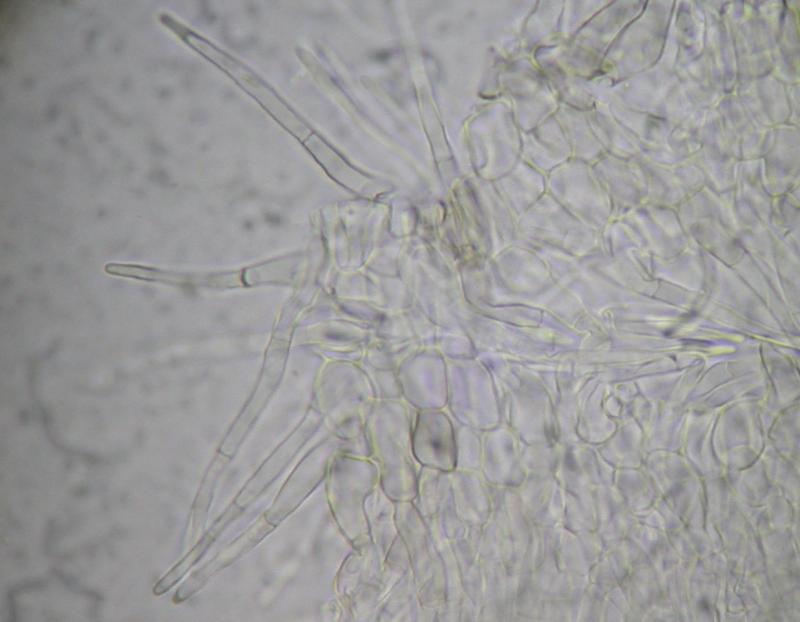
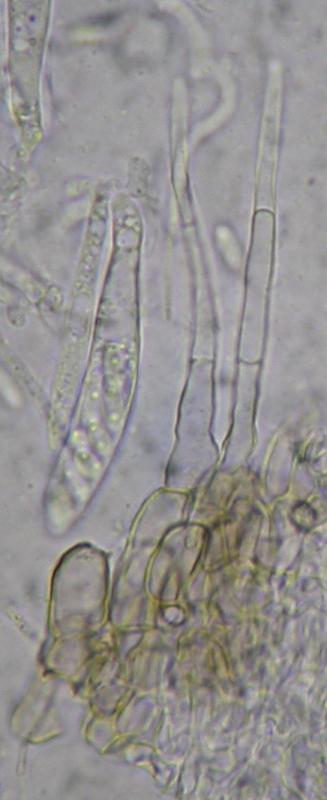
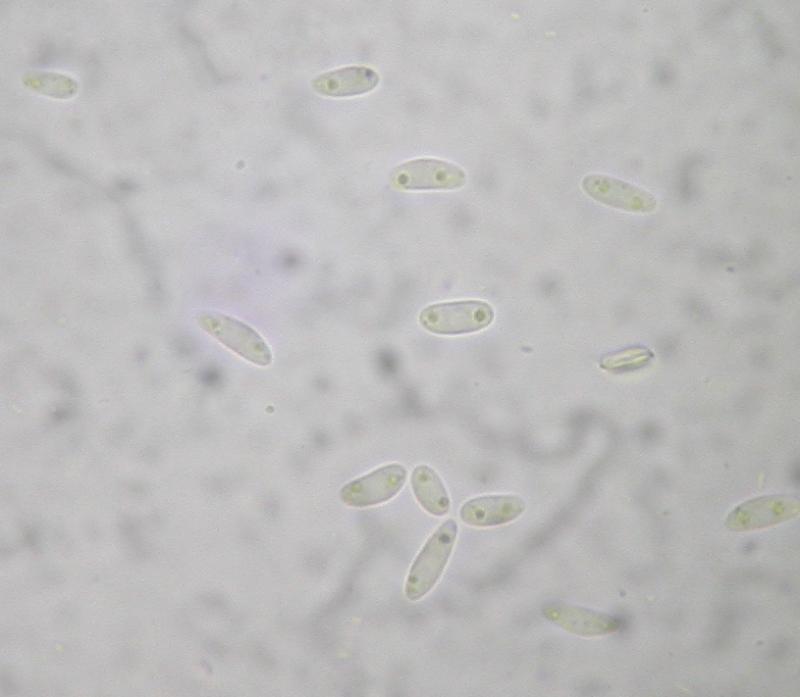

that is Protounguicularia barbata (= Olla transiens).
The partially present glassy tips of the hairs are typical, also the spores and their droplets. The asci should be simple-septae but with basal protuberances.
Zotto
Thanks a lot for your identification! Is this glassy tip the only character to separate Olla/Protounguicularia from Hyaloscypha species?
Stefan
Maybe it is genetically clearly different. I thought the species should belong in Olla, but that was also not the best idea, the differences are too great...
Zotto
Stefan