
24-03-2026 21:37
Elisabeth StöckliBonsoir,Sur bois (tronc) très pourri de conifère
25-03-2026 10:35
Hulda Caroline HolteHello,I collected this species growing on a dead b
26-03-2026 15:31
 Åke Widgren
Hello,I found this one in October last year, on r


25-03-2026 22:23
 Marc Detollenaere
Dear Forum,On a debarked stem of Tilia, we found s
24-03-2026 15:44
Åge OterhalsI hope someone can confirm the name of this collec
25-03-2026 20:53
François BartholomeeusenDear forum members,On 23 March 2026, I found sever
23-03-2026 20:16
 Miguel Ángel Ribes
Good eveningI'm unable to identify this Coprotus o
25-03-2026 15:06
 Bernard CLESSE
Bonjour à toutes et tous,Pourriez-vous me confirm
I hope someone can help me with this one.
Ecology: On oak cupule
Macroscopic description:
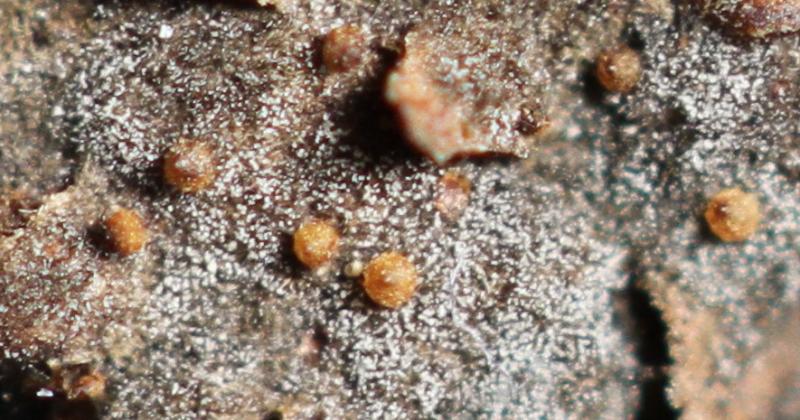
Perithecia slightly pyriform, about 0.35 mm in diameter and 0.4 mm in height, with a brown-orange colour (no colour change in KOH). Seated superficial on the cupule surface without an obvious subiculum. The ostiole is distinctly cone-shaped and slightly darker in colour than the surrounding perithecial wall.
Microscopic description:
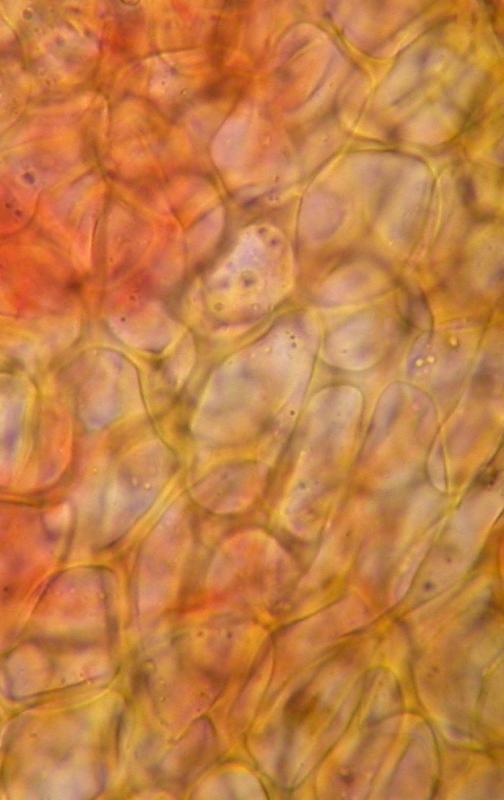
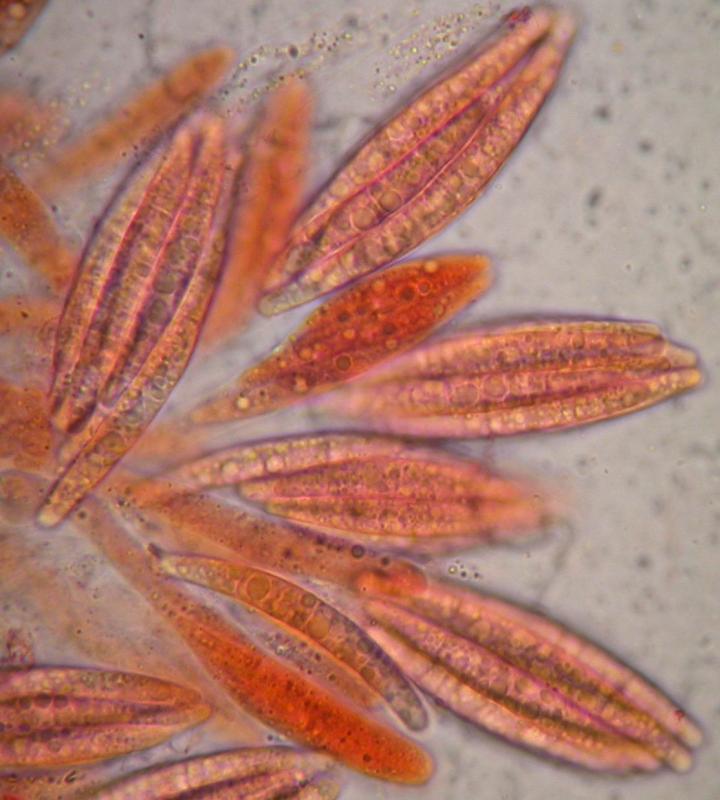
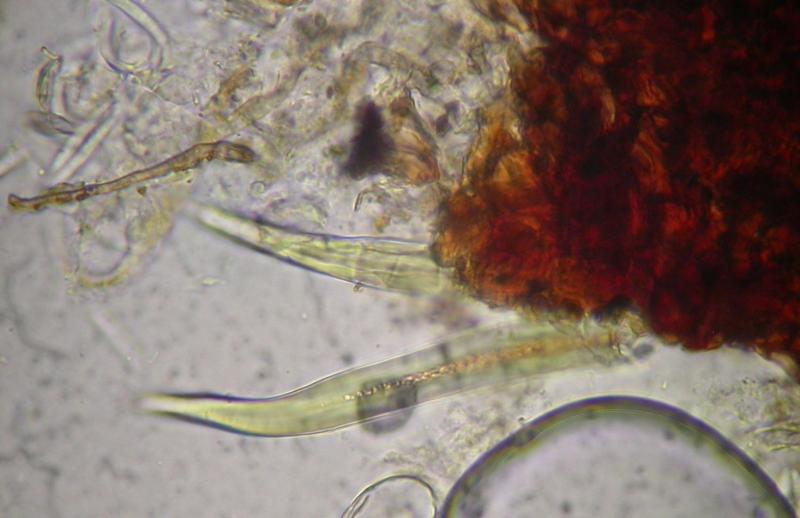
Perithecial wall consists of round to angular, somewhat thickwalled brown cells of usually 20-30 µm of diameter. At the perithecium base I observed very thickwalled hairlike Elements > 100 µm long and about 10 µm in diameter (see photo). Asci extremely thinwalled, nearly invisibly surrounding spores, spore-bearing part about 70 x 20 µm, no iodine reactions. Spores 50-55 x 5-6 µm, yellowish, 3-septate and often bent, with many oildrops.
Thanks for any help
Stefan

You should re-name the title of your message with the word "Calonectria" in order to be attractive for the specialists oh this genus.
Alain
Thanks a lot, Alain

Alain is right, it is a Calonectria, most likely C. pyrochroa which can occur on various substrates but is often present at this season on dead acorn cupules of Quercus in the litter. The greenish refractive hairs are those of the host, I had fallen into the trap too!
Cheers,
Jacques
I already had a weak suspicion that the hairs do not belong to the fungus. Thanks a lot for the identification.
Stefan