
23-05-2026 11:44
 Charles Grapinet
Hello, I am having trouble identifying this copro
25-05-2026 16:44
François BartholomeeusenHi forum members,During an excursion organised by
25-05-2026 16:35
 Bernard CLESSE
Bonjour à toutes et tous,J'ai trouvé récemment,
22-05-2026 13:29
Gernot FriebesHi,I am curious to hear your opinion on this mater
23-05-2026 18:57
Sylvie Le GoffBonjour à tousRécolté sur une branchette de Sal
22-05-2026 14:44
 Lothar Krieglsteiner
in unripe condition citrine yellow, then soon fadi
22-05-2026 21:35
Steve ClementsBonjour, I expected this find on old wood on our
22-05-2026 18:12
Lothar Krieglsteiner
... in moist chamber from Portugal.As the fungus s
22-05-2026 20:08
Ethan CrensonHello all, Yesterday in NYC I was visiting an e
Using the limited literature I have available, I think it's an Anthostomella species.
The perithecia are ca 0.1-0.2 mm across . Asci are cylindrical, 65-80 x 5-6 µm. Tips stain blue in Melzer's. Spores are uniseriate in the ascus, brown, 8-10 x 3-4 µm. I can't see any sign of an appendage on the spores.
If anyone has any suggestions, I would be very grateful.
Merci
Marcus
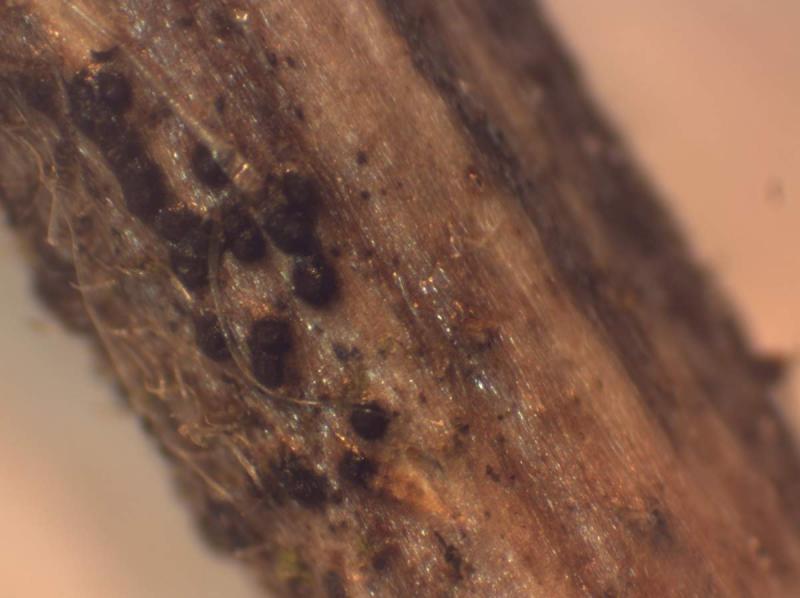
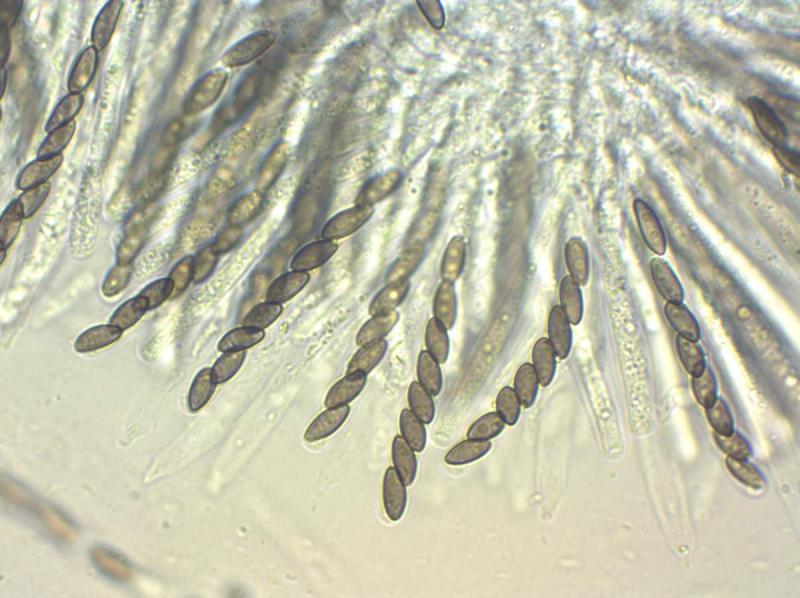
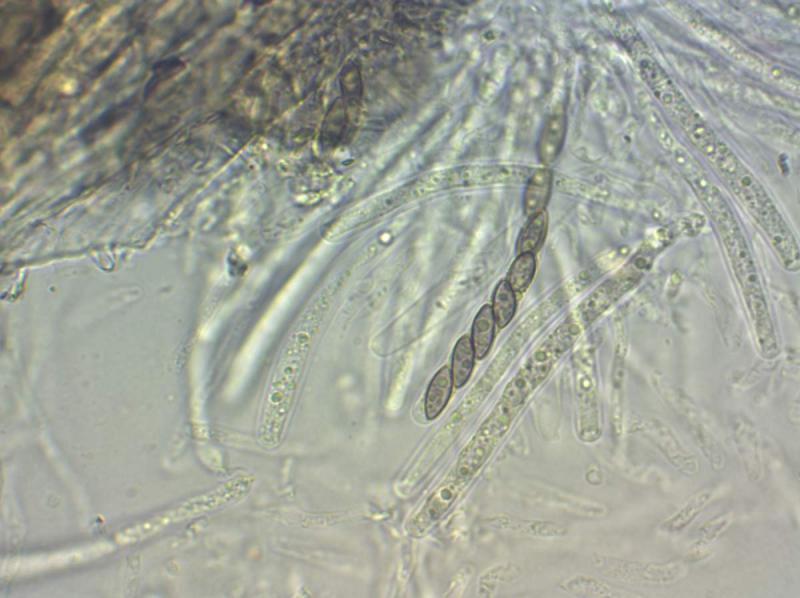
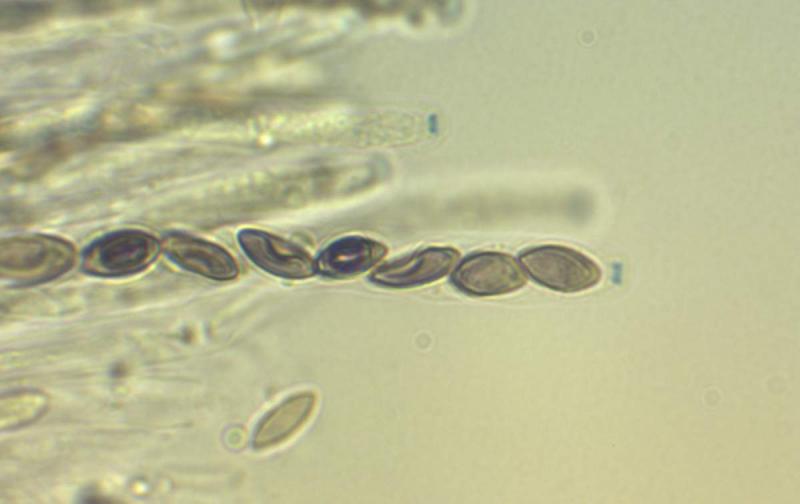
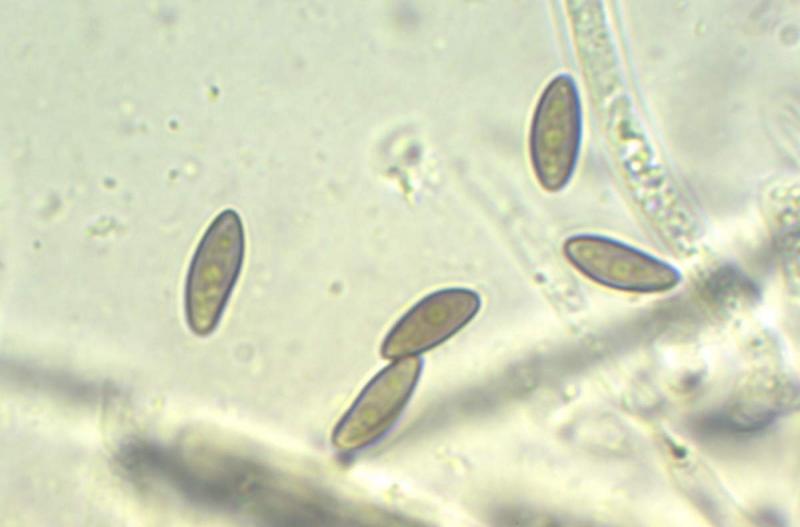

can you see a (possibly faint) germination slit on the spores? Anthostomella has a tendency to appear on monocot's, though not exclusively. A. limitata is plurivorous, and has spores in this size range, but for the time being I am being cautious . . .
I can send you Sheila Francis' Anthostomella monograph (Mycol. Pap. 139 (1975) ) if you are interested . . .
best wishes
Chris

microscopy fits well Anthostomella but in that genus ascomata are typically imersed under a clypeus. It is not clear to me on your photo whether ascomata are superficial or immersed in the substrate. Otherwise I agree with Chris that A. limitata would be a possible candidate. The signature of this species is a spiralling germ slit to the ascospores, often hard to make out, try a very thin slide in 3% KOH, it may help. Also try to make a vertical section across the fungus to see if it is immersed under a clypeus.
Good luck,
Jacques
Hi Chris
It would be great if you could send me the Anthostomella monograph.
I couldn't see a germ slit on the spores but didn't look very closely.
A. limitata does seem to be a possibility. I considered A. tomicoides and A. clypeoides, which have also been recorded on a range of host species, but the spores aren't right.
Marcus
Thanks for your suggestions. I'll have a closer look.
The perithecia are superficial.
Marcus
I'd be very interested in the Anthostomella monograph as well. Thanks in advance!
Best wishes,
Gernot
I'd be also very interested in the Anthostomella monograph as well. Thanks in advance!
Best wishes,
Francis